
Meta Ads for Service Businesses: The Only Structure That Still Works in 2026
 Digital PratikGrowth Marketing Consultant
 The structure that works now is deliberately boring: one campaign, broad targeting, and a high volume of creatives that each speak to one specific cohort.
You stop engineering audiences and start engineering context.
The complexity moved out of the ad account and into the creative brief, which is where it should have been all along.
Give each test about ten days before you judge it.
Most Meta ads advice for service businesses is three years out of date. It is still teaching audience stacking, interest layering, lookalike ladders and campaign structures that need a diagram to explain.
That approach made sense when the platform needed help finding people. It does not need that help any more, and the effort you spend there is effort you are not spending on the only lever that still moves: the creative.
What actually changed
Meta rolled out a major ranking and delivery change that landed in the middle of 2026. The practical effect for anyone running ads is that the winning ad is now dead simple and hyper-contextual to one cohort.
Straight problem, straight pain point, full context. Production value became optional.
Context did not.
I have been teaching broad targeting plus creative volume for three years, back when it sounded like laziness. It stopped sounding like laziness the moment the platform got good enough at finding people that telling it who to look for became a handicap rather than a help.
When you narrow an audience now, you are mostly telling a very good system to ignore people it would have found for you.
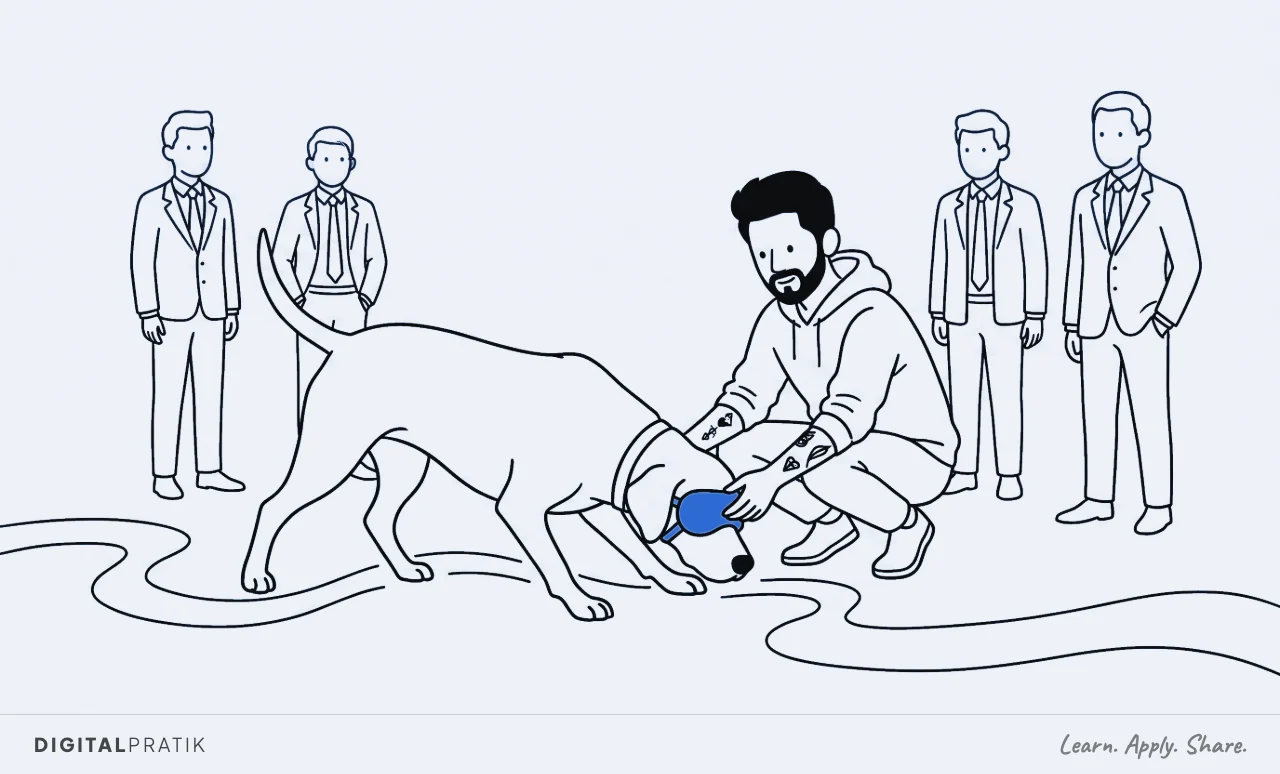
The structure, in full
Here is the whole thing. It fits in a paragraph, which is part of the point.
- One campaign. Whatever objective actually matches your conversion event. For most service businesses that is leads or a booked call, not traffic and not engagement.
- Broad targeting. Country, language, age band if your service genuinely has one. Nothing else. No interests, no behaviours, no stacked lookalikes.
- One ad set, or very few. Splitting budget across many ad sets in a small account just fragments the learning.
- Many creatives. This is where all your effort goes. Each one names a specific cohort and speaks to that cohort's exact situation.
- A ten-day read. Then kill, keep or scale based on cost per actual result, not on clicks.
The part of the structure that is not in the ad account
Everything above is the visible half. The half that decides whether it works is which awareness level each of your creatives is pitched at, and that lives nowhere in the interface.
There are five levels a person can be standing in. Unaware, they do not know they have the problem.
Problem aware, they feel it but do not know a solution exists. Solution aware, they know solutions exist but not that yours does.
Product aware, they know you specifically. Most aware, they are ready and just need a reason to move now.
Bracket those and you get the funnel language everyone uses. Unaware and problem aware are the top of the funnel.
Solution aware and product aware are the middle. Most aware is the bottom.
Worth knowing that the awareness levels came first and the top, middle and bottom vocabulary arrived later. They are the same idea renamed.
| Level | What they know | Funnel stage |
|---|---|---|
| Unaware | Nothing. Not even that there is a problem. | Top |
| Problem aware | They feel the pain. No idea a fix exists. | Top |
| Solution aware | Solutions exist. Yours is not one they know. | Middle |
| Product aware | They know you. | Middle |
| Most aware | Ready. Waiting on a reason. | Bottom |
Here is why this belongs in a structure article rather than a copywriting one. The funnel is not something you build in the ad account.
There is no setting for it. It is simply which level your message is pitched at, and it counts the same whether the message is a paid ad or an organic post.
So when you plan fifteen creatives, you are not only spreading them across fifteen cohorts. You are spreading them across levels.
If all fifteen speak to people who are already ready to buy, you have built fifteen bottom-of-funnel ads, and you will burn through that small pool and watch performance collapse in a fortnight. That is the real cause of what everyone calls creative fatigue, and I have written it up properly in why your ads stop working after two weeks.
The levels themselves get a full treatment in the five market awareness levels. If you only read one other thing after this page, read that one.
Where retargeting sits, and why it goes first
Before you spend anything trying to reach strangers, spend on the people who already came and left. It is the cheapest return available to you and it is almost always positive, for the simple reason that you already paid to get that traffic once.
Practically: put a pixel for every platform you might advertise on into your pages, not just the one you are running today. Then retarget visitors everywhere they go.
Most businesses install one pixel, run one platform, and quietly waste the audience they have already bought.
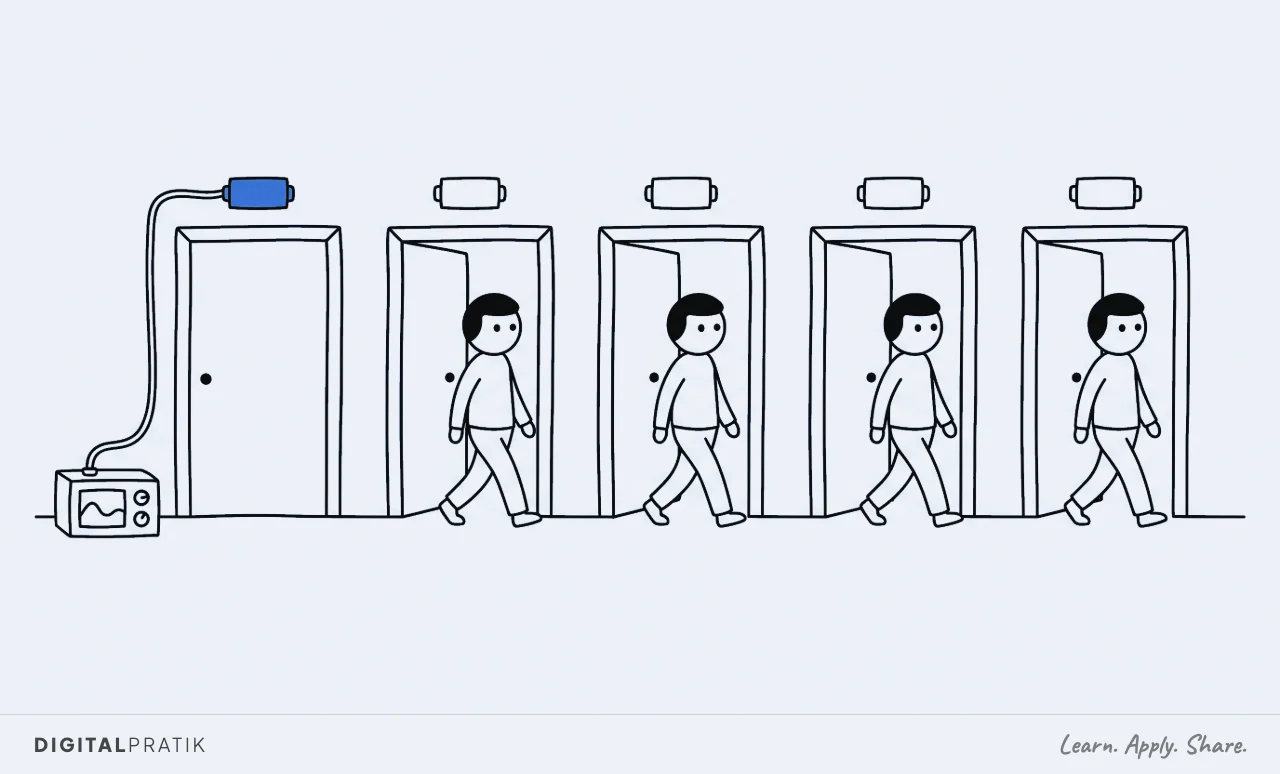
This is also the answer to a question people ask about broad targeting. Broad is for finding new people.
Retargeting is for finishing the job with people you already found. They are not competing strategies, they are two different stages, and running the second one badly is what makes the first one look expensive.
The mechanics are in the shadow funnel.
Why creative volume, specifically
A single ad, no matter how good, speaks to one version of your buyer. A service business rarely has one version of a buyer.
A physiotherapy clinic is talking to a runner with a knee problem, a woman in her forties with back pain from a desk, a post-surgery patient, and a parent who cannot pick up their kid. Those are four different conversations.
One ad that tries to hold all four holds none of them.
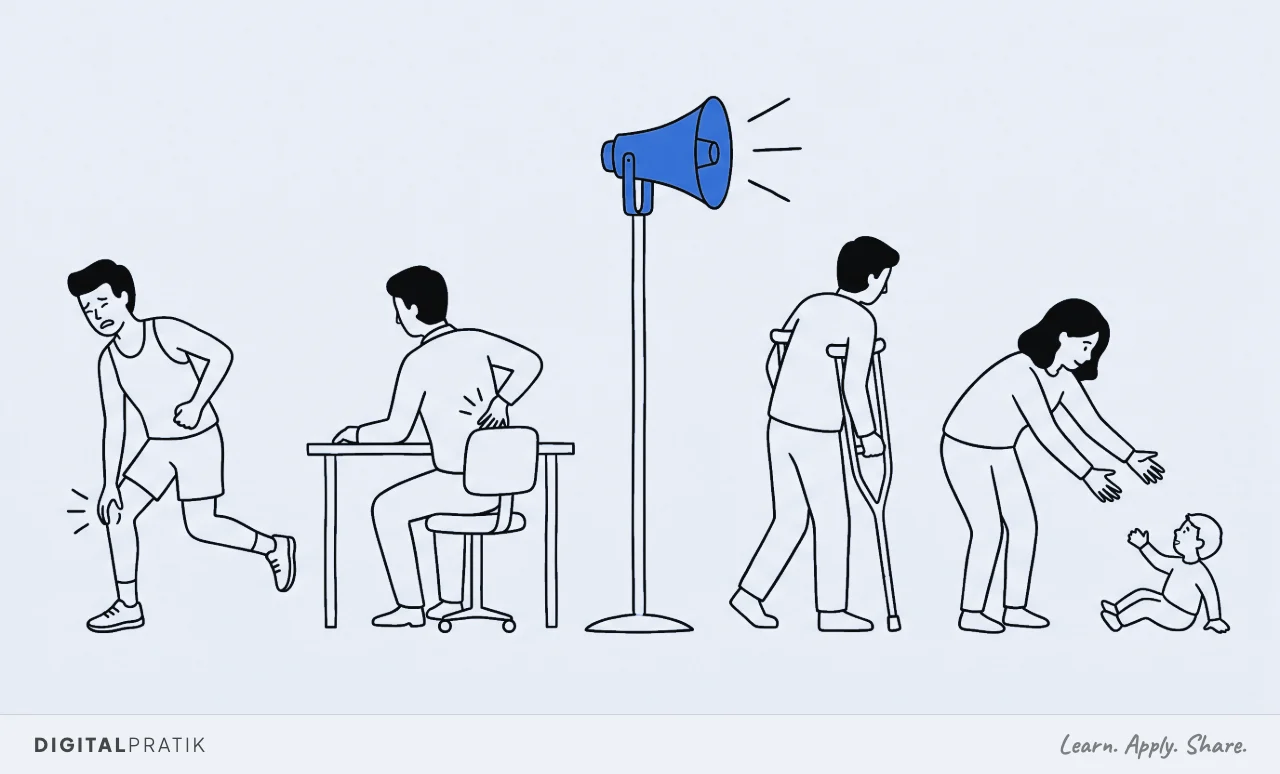
So you make four ads. Then eight.
Then fifteen. Not fifteen different offers, fifteen different openings into the same offer.
This is the part people resist because it sounds like a lot of work, and then they discover it is much less work than they thought once they stop treating every creative as a fresh production.
The modular ad: how to make volume cheap
The structure we run on our own account solves the volume problem directly. You record one common body, the part that explains the offer, and you keep it identical for everyone.
Then you swap only the first five to seven seconds with a real story that belongs to that specific cohort.
So the opening might be "On a call this week: the co-founder of a hospitality insurance provider who had this exact problem and wanted a CFO dashboard." For another cohort, the same ad opens with the managing director of a Dubai company and a renewals problem. Everything after those seven seconds is the same recorded body.
A new cohort costs you one new seven-second opening. Not a new ad.
That is the difference between testing three angles a month and testing fifteen.
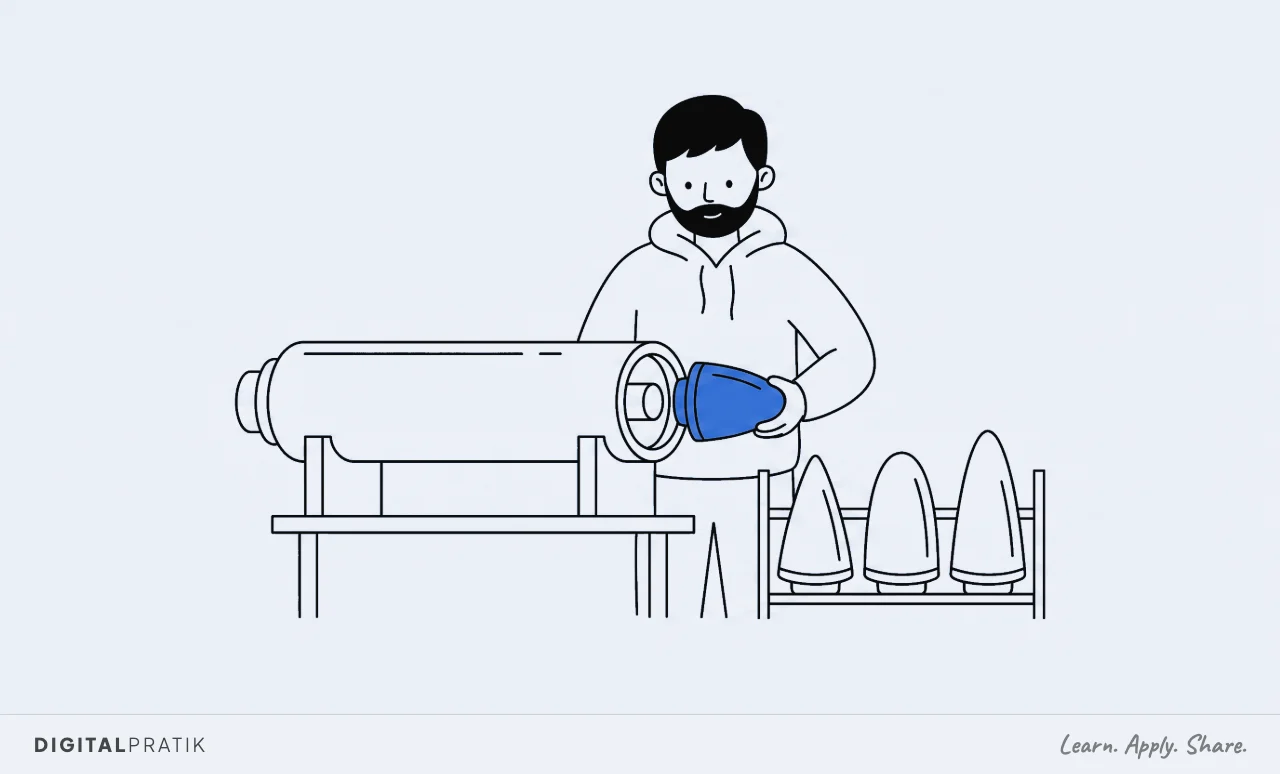
Simple beats produced, more often than you would expect
The pattern repeats often enough in the accounts we run that I now expect it. A heavily edited, emotionally produced video ad, with real budget behind it, quietly under-delivers.
A plain contextual ad written for one narrow cohort, made in an afternoon with almost no production, overtakes it within days.
That is not an argument against good creative. It is an argument that context outranks polish.
The over-produced ad is beautiful and speaks to nobody in particular. The plain one names a specific person's specific Tuesday, and that person stops scrolling.
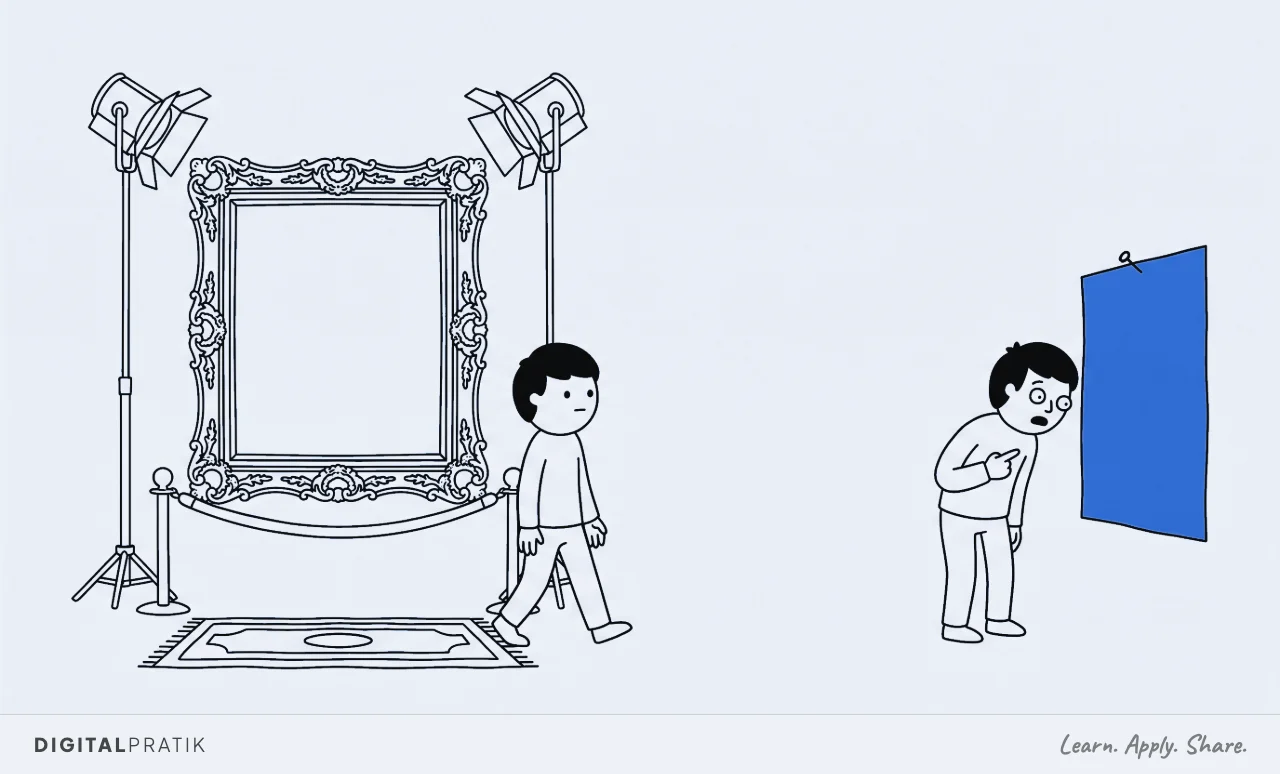
The mechanism is simple once you accept it. In a feed, the first decision anybody makes is whether something is about them, and they make it faster than you can show them a nice transition.
Polish signals "this is an ad". Specificity signals "this is about me".
The second one wins that half-second.
So do not read this as never produce anything. Read it as stop assuming production value causes performance.
Make the polished ad when you have a specific reason for it, not as the default setting.
Reading about a system and running one are different jobs. If your business does AED 10 million a year or more, this is what a working session looks like.
What to actually put in each creative
The pattern is: name the cohort, name their situation in their words, then the offer. The naming is the whole trick.
"If you own a window installation company doing a million a year, we made this scaling roadmap for you." One product, a thousand cohort versions.
Or: "If you are a video editor using Premiere Pro." Then run the same ad again for Final Cut. Again for CapCut.
Same creative, one variable changed. Each version feels handmade to the person who sees it because, functionally, it was.
None of that is writing, though. It is the output of research you did first.
Before anything gets written I want five things on paper: the top pains in the customer's own words, the things they actually want, the concrete outcomes of buying, the awareness level they are standing in, and how tired their market already is of hearing this promise. When ads are not converting, that missing research is nearly always the cause, and the ad account is nearly always blamed instead.
The full checklist is in the five things to research before any ad.
The last of those five deserves a word here because it changes the ad structurally, not just cosmetically. In a market that has never heard your promise, a plain claim works.
In a market that has heard it a thousand times, the same claim is invisible and you have to compete on mechanism or on proof instead. Same offer, same cohort, completely different ad, decided entirely by how worn out the market is.
That is market sophistication, and getting it wrong looks exactly like a targeting problem.
| Opening line | What changed | |
|---|---|---|
| Cohort A | If you run a clinic and your front desk is drowning in calls | The role and the symptom |
| Cohort B | If you are a consultant and every deal still routes through you | The role and the symptom |
| Cohort C | If you own an agency stuck at the same revenue for two years | The role and the symptom |
The ten-day rule
Give a test about ten days before judging it. Not three.
Three days of data on a small service-business budget is noise wearing a costume, and killing an ad on day three is how people end up convinced that nothing works.
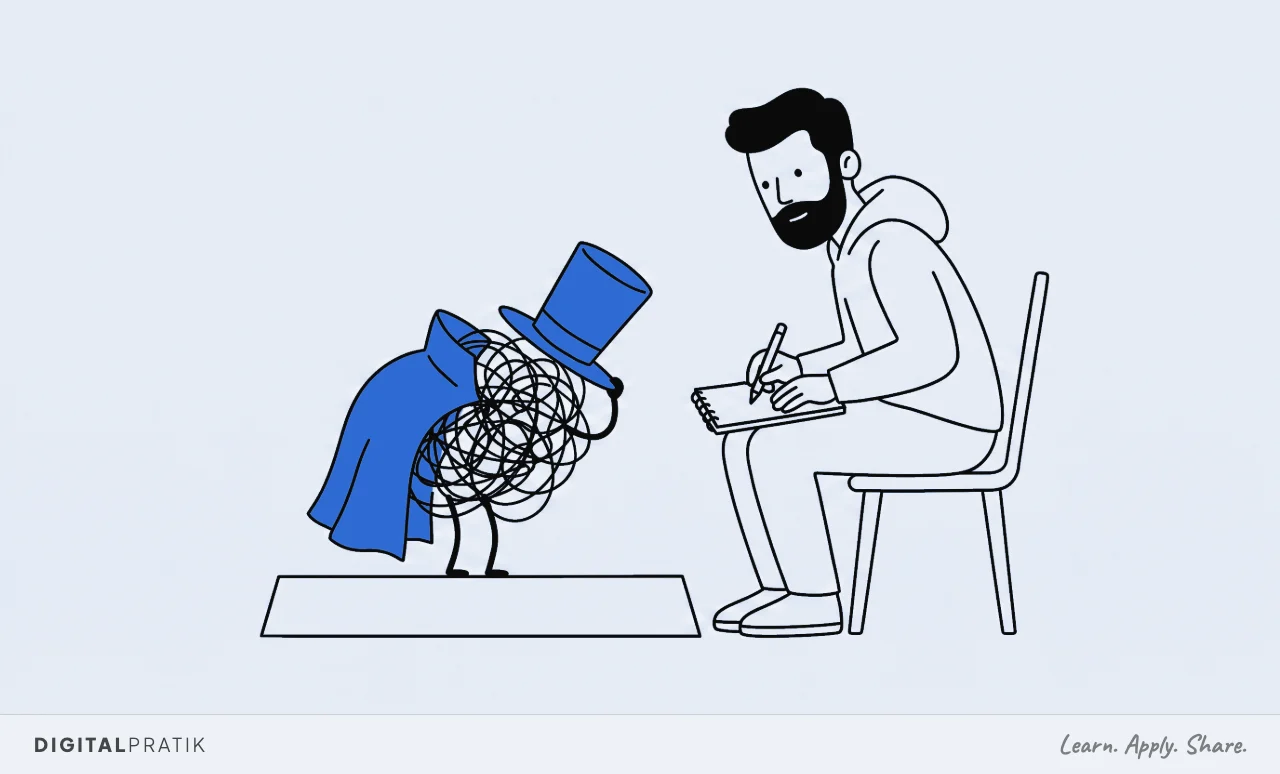
Ten days also matches something more important: for most service businesses the sale does not happen in the ad. It happens on a call two weeks later.
Judging an ad on the same-day conversion rate misreads the entire mechanism, which is a mistake I have written about at length in the $5k a month Meta ads mistake.
How new tests get into the campaign
One campaign does not mean one set of creatives forever. It means new tests go inside the campaign you already have, rather than into a new campaign that has to learn everything from scratch.
The rhythm I run is simple. Every week, schedule two or three new dedicated creative tests built from actual market research, not from a brainstorm.
They go live overnight so a full day of data starts clean. They sit alongside the ads already running, and they either beat the number or they do not.
I have written the testing structure out in testing creative inside one campaign.
The thing that makes this work is deciding your base number before you look at anything. Pick the cost per real outcome you need in order to make money, write it down, and then judge every angle against that one line.
Without it you will end up comparing ads to each other and congratulating yourself on the least bad one.
When the account as a whole is beating that number, put the budget up by roughly twenty percent and leave it. Not double.
Twenty percent, then let it settle, then look again. Scaling in big jumps throws the campaign back into learning and you pay for that education twice.
Friction, and the leads you actually wanted
A structure question that gets misfiled as a landing page question: how hard should it be to become a lead?
Your process does not create qualified leads. It filters for them.
That is worth sitting with, because most people try to fix lead quality by changing targeting when the real lever is what they ask someone to do.
Good friction raises quality. A video on the page that has to be watched, an application with real questions in it, a required phone number.
Bad friction just costs you money without improving anything. A page that takes six seconds to load is not filtering for serious people, it is filtering for patient people, and patience is not a buying signal.
The diagnostic is three lines long. Too many bad leads, add friction.
Not enough leads at all, remove friction. Almost no friction and the leads are still bad, then it is not friction, your targeting or your offer is off.
This is also the honest way to choose between a form inside the platform and sending people to your own page. One is cheaper per lead and worse per lead, the other is the reverse, and which one is right depends entirely on whether your problem right now is volume or quality.
The comparison is in lead ads versus a landing page.
What to read, and in what order
Read cost per actual result, by angle. For a local service business that is cost per booked appointment.
Not cost per click, not cost per lead if a lead means an email address, and definitely not the ROAS number the platform reports.
- Cost per real outcome. The thing that turns into money.
- Hook rate. How many people stopped. This tells you if the first three seconds work.
- Hold rate. How many stayed. This tells you if the body works.
- Volume of results, not just cost. A cheap angle that produces two results a month is not a winner, it is a curiosity.
On a live ad we are running for a UAE audience right now, hook rate sits around 41 percent and hold rate around 17 percent. Those are numbers from our own account, not benchmarks I am handing you.
Your numbers will be different, and the point of watching them is to compare your ads to each other, not to somebody else's screenshot.
And read all of it knowing the dashboard is not the scoreboard. The platform is reporting on its own performance, using its own method, and it is not a neutral party.
The attribution window is short, so anything that takes a fortnight to close gets under-credited. The numbers are modelled and sampled rather than counted.
Cross-device journeys break, so the phone that saw the ad and the laptop that booked look like two strangers.
The failure mode that costs the most is the greedy one. A person can see five of your ads across a week, and the platform will hand the entire credit to the last one they clicked.
So the ad that opened the loop looks like a failure and gets killed, and the ad that collected the cheque looks like a genius. Kill enough openers and eventually the closer has nobody left to close.
You do not need a big measurement stack to survive this. You need one number you trust from your own side, whether that is booked calls in your calendar or closed deals in your CRM, and you need to check the platform against it rather than the other way round.
That is the whole argument in true ROI versus reported ROAS, and a real multi-touch journey is walked through in reading a real customer journey.
What this structure will not fix
It will not fix a weak offer. Meta is an amplifier, not a magician.
If the offer is mid, ads just help more people ignore you faster, and no campaign structure has ever rescued that. Before you spend anything meaningful, the offer has to be something a cold stranger would feel a bit stupid saying no to.
It will not fix a broken follow-up either. I have watched businesses blame ad quality for a problem that was entirely the twenty-six hours between someone applying and anyone contacting them.
If you are not sure which of those is your actual problem, that diagnosis is worth doing before you touch the ad account at all.
It will not fix delivery capacity, and this one is the quietest. If you are already at the edge of what you can actually deliver, more leads do not become more revenue, they become a longer queue, slower replies and a worse experience for the clients you already have.
Turning ads up in that situation reliably makes the business worse while every number on the dashboard improves.
And it will not fix a budget that is too small to learn anything. Below a certain daily spend you are not running a test, you are collecting anecdotes, and no structure rescues that.
What to spend when you are starting from nothing is its own question and I have answered it in the Meta ads budget article.
The uncomfortable part
The skill that used to be valuable, media buying, has collapsed to near zero. The skill that is now scarce is creative strategy: knowing which cohorts exist, what they actually say about their problem, and how to say it back to them.
That is a research job and a listening job, not a settings job.
Which is genuinely uncomfortable for a lot of people who built a career on knowing where the buttons are. The buttons stopped mattering.
What people are saying in their own words started mattering more than it ever has.
Frequently asked questions
Generally no, not as your primary structure. Broad targeting with a high volume of cohort-specific creatives outperforms audience engineering in most service business accounts now. The platform finds the people. Your job is to make an ad specific enough that the right people respond, which is what tells the platform who to look for.
Enough to cover your genuinely distinct buyer cohorts, which for most service businesses is somewhere between eight and fifteen. The important thing is that each one names a different cohort rather than being a cosmetic variation of the same message. Fifteen versions of the same ad with different colours is not creative volume.
No, and it frequently hurts. A heavily produced emotional video will often under-deliver against a plain contextual ad that names one specific cohort and was made in an afternoon. Context outranks polish, because the first thing a person decides in a feed is whether something is about them, and polish signals advertisement while specificity signals relevance. Produce something when you have a reason to, not by default.
It sits alongside it and it comes first in priority, not last. Broad targeting is how you find people who have never heard of you. Retargeting is how you finish the job with the people you already paid to reach once, which makes it the cheapest return in the account and almost always a positive one. Put a pixel for every platform you might advertise on into your pages, not only the platform you are running today.
The one that matches the event that actually turns into money, usually leads or a booked call. Optimising for link clicks or engagement because those numbers look better is the most common self-inflicted wound in a service business ad account. You reliably get what you optimise for.
Install this in your business
An article gives you the map. A working session gives you the system, built around what you actually sell and who actually buys it.