
When to Kill an Ad, When to Leave It Alone, and How to Tell the Difference
 Digital PratikGrowth Marketing Consultant
 Give an ad about ten days and enough results to mean something before you judge it.
Kill it when the cost per real outcome is clearly worse than your account average over that window and the hook rate is weak.
Leave it alone when the numbers are simply noisy, and never kill an ad on its own reported return alone, because some of your best ads open the loop and get no credit for the sale.
Pausing underperformers feels like discipline. It looks like the responsible thing a careful operator does on a Monday morning.
It is also the most common way people destroy an account that was about to work.
The waiting rule
About ten days, and enough results that a number means something. Both conditions, not either.
Ten days with two conversions tells you nothing. Two hundred conversions in three days tells you plenty.
Most service businesses are in the first situation, which is exactly why the ten-day rule exists: on the budgets most of them run, a shorter window is reading randomness and calling it a decision.
There is a second reason for ten days that people miss. In a service business the sale usually happens on a call a week or two after the click.
Judging on same-day conversions misreads the entire mechanism.

What to actually read
Three numbers, in this order.
- Cost per real outcome. The thing that becomes money. A booked call, not a click and not an email address.
- Hook rate. How many people stopped. This tells you whether the opening works.
- Hold rate. How many stayed. This tells you whether the body works.
Those last two are the diagnostic pair. Low hook rate means rewrite the opening and ignore everything else.
Good hook rate with a low hold rate means the opening is writing a cheque the body cannot cash. Both good but nothing converting means the problem is downstream, on your page or in your offer, and no amount of ad editing fixes it.
Reading about a system and running one are different jobs. If your business does AED 10 million a year or more, this is what a working session looks like.
Three ads, and what to do with each
Decide your target cost per result before you open anything. Say it is 100.
Now here are three ads mid-flight and the honest call on each.
| Spent | Results | Cost per result | Call | |
|---|---|---|---|---|
| Ad A | 120 | 0 | no data yet | Leave it alone |
| Ad B | 300 | 1 | 300 | Watch, do not touch yet |
| Ad C | 500 | 6 | 83 | Scale it |
Ad A is the one people kill, and killing it is close to a coin toss dressed as a decision. It has not spent enough to produce a single result at your target, so a zero there means nothing at all.
You are reading noise.
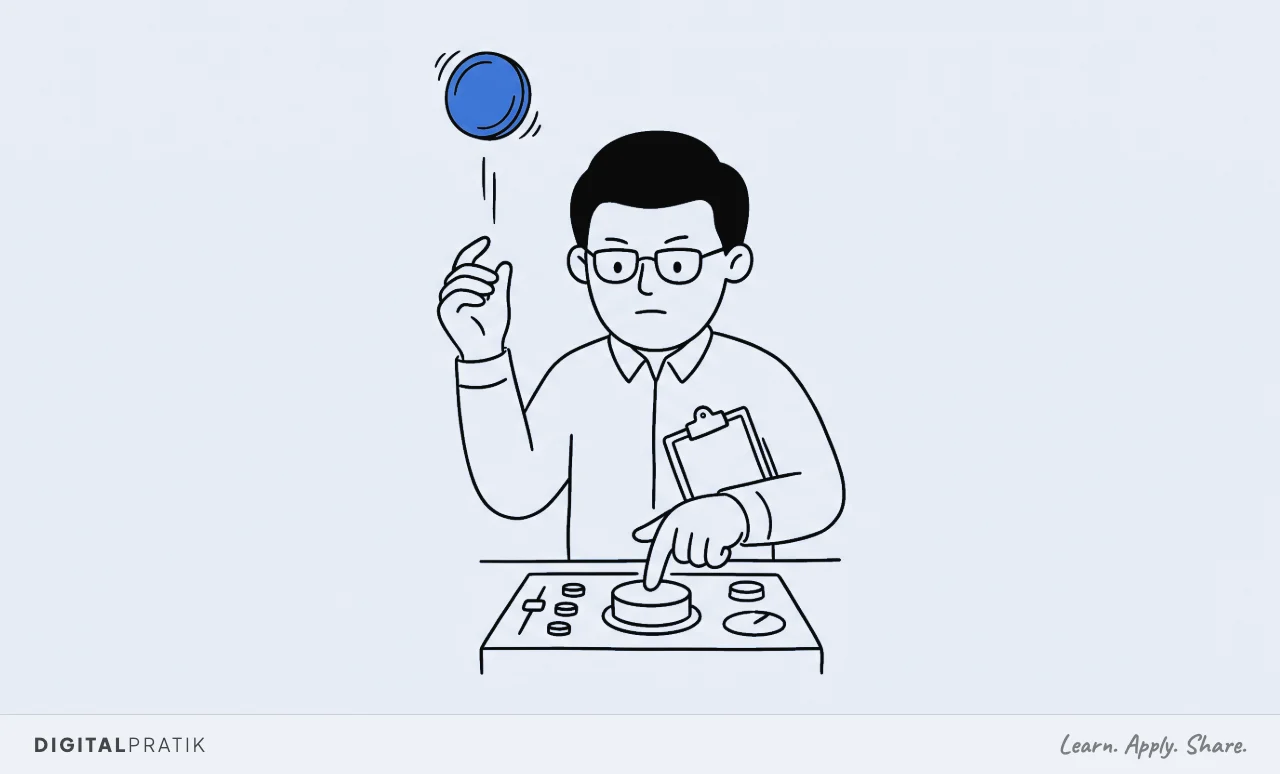
Ad B is the genuinely hard one. Three times your target looks awful, but one result is one result, and a single early conversion can be luck in either direction.
This is the one to leave running to the end of your window and then judge.
Ad C is beating target with enough results behind it to believe. Put budget up by around a fifth and leave it, rather than doubling it and throwing it back into learning.
The ads you must not kill on their own numbers
This is the expensive one. The platform credits the last ad clicked, so ads that opened the loop or broke an objection a week earlier report nothing at all.
Sort by return, pause the zeros, and you have just removed the awareness and the trust work, leaving one closing ad that now has to do four jobs alone. It will not.
I go through a real four-touch purchase in the $5k a month mistake, and it is the single most useful thing to understand before you pause anything.
| What you see | Do this | |
|---|---|---|
| Kill | Bad cost per outcome, weak hook rate, 10 days | Pause. It is not close. |
| Rewrite | Weak hook rate, everything else fine | New opening, same body |
| Fix downstream | Strong hook and hold, no conversions | The page or the offer, not the ad |
| Leave alone | Steady numbers, stable frequency | Nothing. Stop touching it. |
| Investigate | Zero return but the account works | Check the full path first |
What to do instead of killing
Often the right move is not a pause, it is a different door into the same room. If an angle has stopped producing because the cohort has seen it, a new cohort opening on the same body costs you almost nothing and behaves like a fresh ad.
And when something does genuinely work, do not just leave it running, mine it. Most of your creative effort should go into reworking winners rather than inventing new concepts.
The emotional part
The hardest ad to kill is the one you are proud of. The best-produced thing in the account is very often not the best performing thing in the account, and I have watched people defend an expensive video for a month because of what it cost to make.
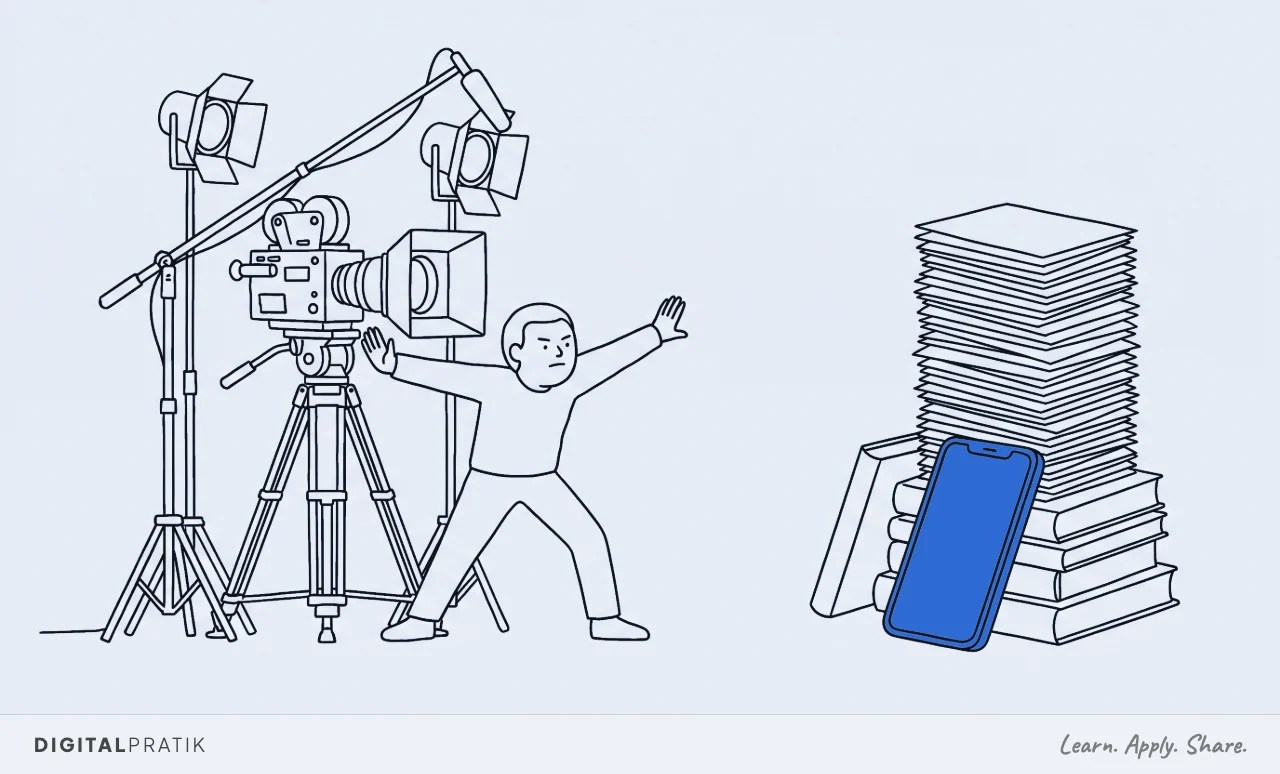
Sunk cost is not a metric. If the plain contextual ad shot on a phone is beating the produced one, that is information, not an insult.
Keep the graveyard
Do not delete what you pause. An ad that exhausted its cohort in February will often work again in September, because new people age into that cohort every month.
Keep a folder of everything that ever worked, with a note on why you paused it. It is the cheapest creative library you will ever build, and future you will be grateful.
Before you pause anything, read a real customer journey, because the ad you are about to kill may be the one opening the loop.
Frequently asked questions
About ten days, and long enough to produce enough results that the numbers mean something. Both conditions matter. Ten days with two conversions tells you nothing, and on the budgets most service businesses run, a shorter window is reading randomness rather than performance.
Cost per real outcome, meaning the event that turns into money, such as a booked call. Not clicks, not cost per email address, and never the platform's reported return in isolation. Hook rate and hold rate then tell you which part of the ad is the problem.
Because the platform credits the last ad clicked, so ads that built awareness or broke an objection days earlier report nothing. Pausing all the zeros removes the trust-building work and leaves one closing ad doing four jobs at once, which is how a working account suddenly stops working.
No. Keep them with a note on why you paused. An angle that exhausted its cohort in one month often works again months later because new people age into that cohort continuously. A library of things that once worked is the cheapest creative asset you will build.
Probably not, and the difficulty is emotional rather than analytical. Production cost is a sunk cost, not a performance metric. A plain contextual ad beating an expensive one is information about what your audience responds to, and the useful response is to make more plain contextual ads.
Install this in your business
An article gives you the map. A working session gives you the system, built around what you actually sell and who actually buys it.