
Cohort Creative: Why One Ad for Everyone Beats Nobody
 Digital PratikGrowth Marketing Consultant
 Cohort creative means taking one strong creative and changing exactly one element so it names a specific group: "late thirties single mother", "video editor using Premiere Pro", "clinic owner drowning in front desk calls".
Fifteen cohorts becomes fifteen versions.
Post them as fifteen slides of one Instagram carousel and the per-slide engagement data tells you which cohort responds, free, before you spend on ads.
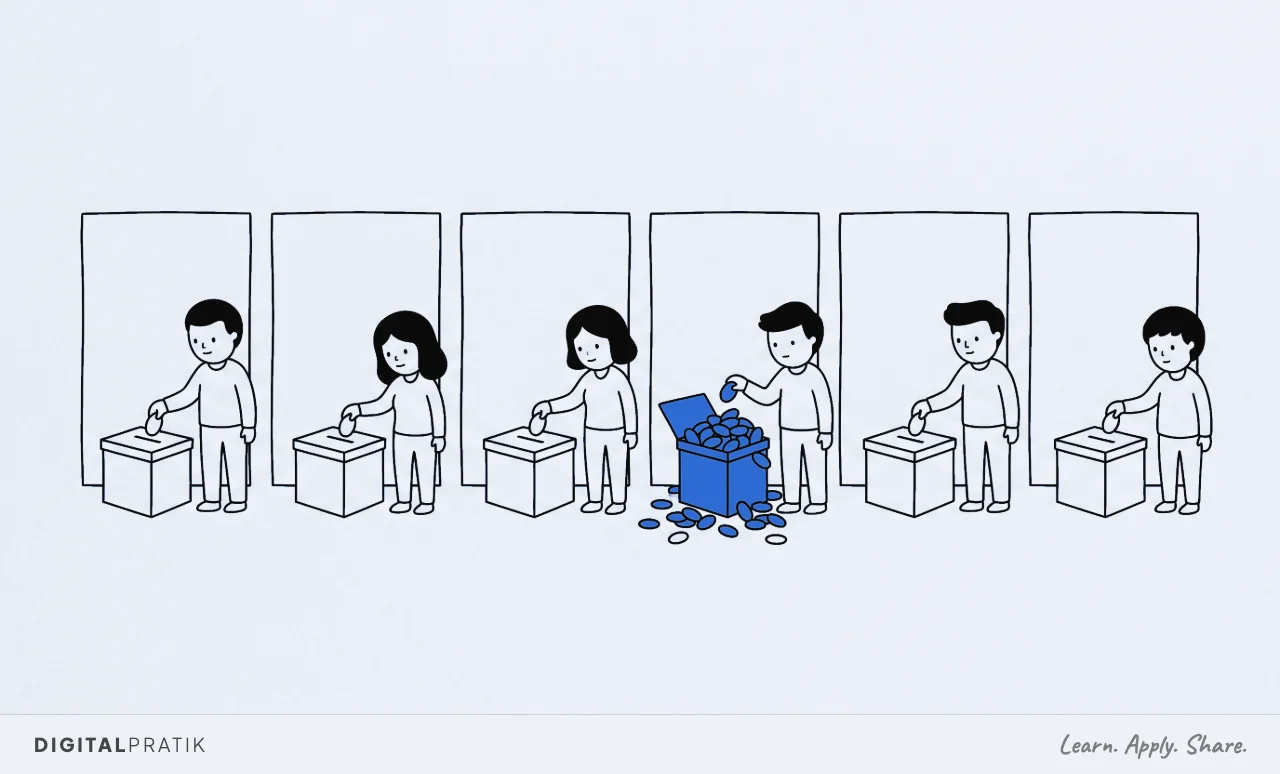
An ad written for everyone is written for nobody. That is not a clever line, it is a description of what happens in a feed.
Someone spends a fraction of a second deciding whether a thing is about them. Generic loses that decision every time, no matter how well made it is.
The move, in three steps
This is a system I taught my own creative strategist on a call and it has been quietly running in our accounts since. It is simple enough to start this week.
- Start with one strong creative. An image or a piece that already performed organically. You are not inventing from scratch, you are multiplying something that already earned attention.
- Change exactly one element. Textual or visual, and it must name the cohort. "Late thirties mother". "Late thirties single mother". "Early thirties mother". Yes, those are three different cohorts and they will perform differently.
- Put all fifteen as slides of one carousel. Fifteen cohorts, fifteen slides, one post.
The intelligence layer most people never find
Here is the part that makes this more than a production trick. Instagram shows per-slide engagement inside a carousel's insights.
Open the post, view insights, tap into engagement, and you can see how each individual slide performed.
Which means the carousel is not just content. It is a survey.
It tells you, slide by slide, which cohort leaned in, and it does that on organic reach, before you have committed any ad budget.
I found this while reviewing carousels my team had made and have used it quietly ever since. When a carousel goes big, the data gets loud.
One of ours hit roughly 8,600 engagements with around 8,000 shares, and the per-slide view showed exactly where people leaned in.
Why this beats a normal creative test
A normal creative test costs money and time. You put budget behind fifteen unknowns, you wait, and you find out that eleven of them were never going to work.
That is an expensive way to learn something the organic feed would have told you for free.
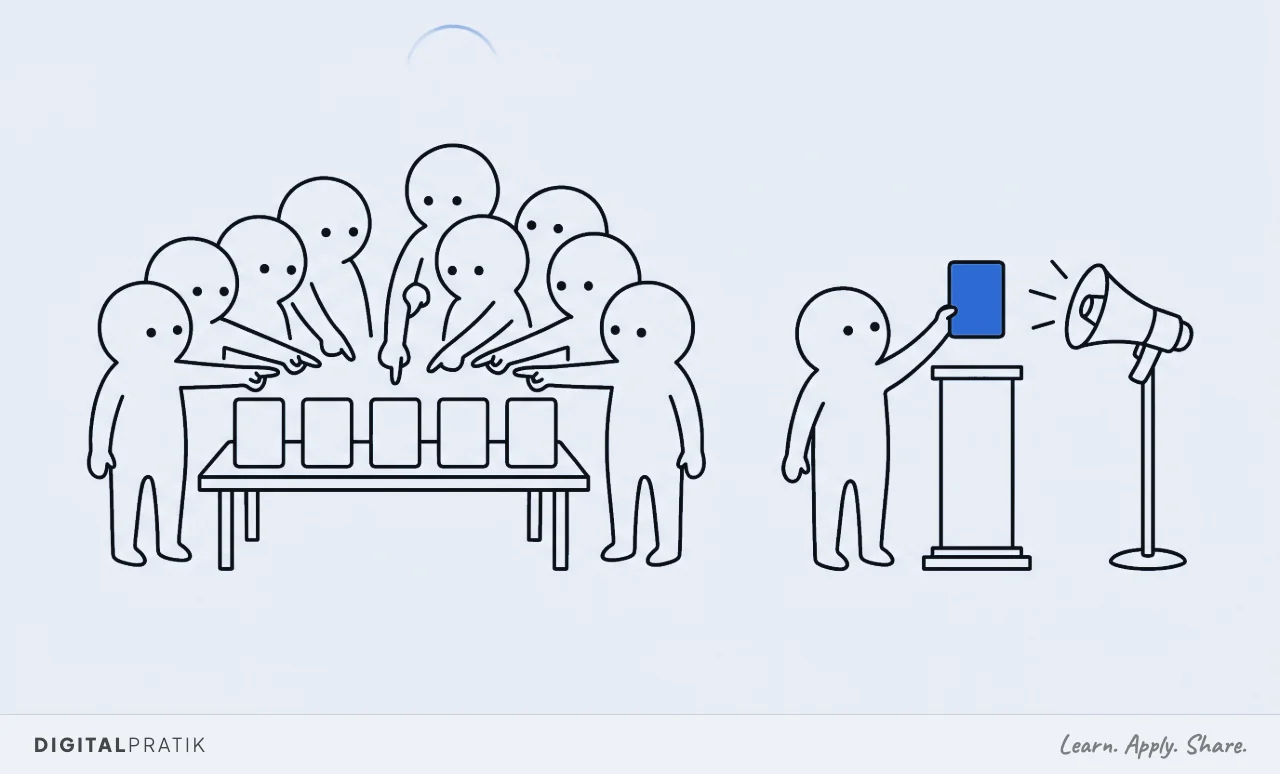
Running the cohort variations organically first flips the order. The market picks the angle, then you pay to amplify a choice that has already been validated.
The winning slide is not a hypothesis, it is pre-validated ad creative.
| Paid-first | Organic-first | |
|---|---|---|
| Cost to learn | Full ad spend across 15 unknowns | Zero |
| Time to signal | Around ten days | Often 48 hours |
| What you learn | Cost per result by angle | Which cohort leans in |
| Risk | You fund eleven losers | You fund the winner only |
Reading about a system and running one are different jobs. If your business does AED 10 million a year or more, this is what a working session looks like.
Where the cohort ideas come from
Not from a brainstorm. From listening to conversations that are already happening.
A casual mention of plantar fasciitis in a client group chat became a cohort angle on the spot. Nobody was doing strategy, someone was just talking.
The habit that matters is noticing that a specific complaint in specific words is a cohort waiting to be written.
- Sales and discovery calls. The single richest source. Record them, with consent, and mine the phrasing.
- Client group chats. People describe problems casually there in a way they never do on a form.
- Comments on your own posts. Especially the ones that start with "this is so me".
- Reviews, yours and everyone else's. People explain their situation before they explain their verdict.
What a good cohort line sounds like
Specific enough that the wrong person knows immediately it is not for them. "If you own a window installation company doing a million a year, we made this scaling roadmap for you." That is one product with a thousand possible cohort versions, and every version reads as though it was made for one company.
Or, from an account we run: "The 40s reality check: at 42, recovery stops being about rest. It becomes about knowing exactly which muscle stopped doing its job, and most people never find out." That is not a physio ad.
That is an ad for one person at one age with one specific frustration.
How this connects to the ads
Once the organic slide data has picked a cohort, you move that angle into paid with confidence rather than hope. Then the paid data comes back and tells you which angle produces the cheapest real result, and you hand that signal back to the organic side to explore further.
That back and forth is the actual system. Neither side guesses, each side feeds the other, and it does not stop.
I have written the full loop up separately, and it is the reason cohort creative is not just a production hack but an operating rhythm.
The objection I hear most
"Will people notice I am running fifteen near-identical ads?" Almost never, because they only see the one written for them. The overlap you are imagining exists in your ads manager, not in anybody's feed.
The second objection is that it feels manipulative. It is not.
You are not saying anything untrue, you are saying the true thing in the words that particular person uses. That is just clear communication with the effort put in on your side instead of theirs.
Start with this
Take your single best performing organic image from the last three months. List five cohorts from your last thirty enquiries.
Make five versions, one element changed each time. Post them as a five-slide carousel this week and read the per-slide data on Thursday.
That is a two-hour job and it will tell you more about your market than a month of guessing in the ads manager. It is also the raw material for a lead magnet built from something real.
The five inputs to gather first are in what to research before any ad.
Frequently asked questions
It is taking one strong creative and changing exactly one element so it names a specific group of people, such as a role, a life stage or a symptom. Fifteen cohorts produce fifteen versions of the same creative, each of which reads to its cohort as though it was made specifically for them.
Open the post, view its insights, and tap into the engagement breakdown, which shows performance per slide. Ignore the first slide because everyone who sees the post sees it, and look at the spikes on later slides where people had to actively swipe to arrive.
Because organic reach tells you which angle resonates at no cost, usually within a couple of days. Testing fifteen unknowns with paid budget means funding eleven losers to find the winner. Testing organically first means you only put spend behind an angle the market has already picked.
Almost never, because each person only sees the version written for their cohort. The apparent repetition exists in your ads manager, not in anyone else's feed.
From conversations already happening: sales calls, client group chats, comments on your posts, and reviews. A casual mention of a specific complaint in specific words is a cohort waiting to be written. Brainstormed personas rarely produce the same specificity.
Install this in your business
An article gives you the map. A working session gives you the system, built around what you actually sell and who actually buys it.