
The $5k a Month Meta Ads Mistake Almost Nobody Catches
 Digital PratikGrowth Marketing Consultant
 The mistake is killing ads that show zero return because Meta attributes the sale to whichever ad was clicked last.
In a real buying journey somebody clicks four ads over a week: one opens the loop, one builds trust, one breaks the objection, and one collects the cheque.
The platform credits the fourth.
If you kill the first three for poor ROAS, you have just killed the engine that made the fourth one work.
This is the single most expensive habit I see in service business ad accounts, and the reason it survives is that it looks like discipline. You open the account, you sort by return, you pause the underperformers.
That is what a responsible operator does. Except in a multi-touch buying journey, that exact behaviour dismantles the thing that was working.
A real journey, step by step
Let me walk you through an actual purchase from one of our own campaigns, because the abstract version never lands.
A sale comes in. Ads Manager shows one sale, attributed to an ad called "04 unlock".
Clean and simple. If that were all you had, you would conclude that "04 unlock" is your winner and the rest of the campaign is dead weight.
Now open the same sale inside a proper tracking tool and look at the whole path. The person did not enter the funnel that day.
They entered a week earlier by clicking a completely different ad from a different campaign. They did not buy.
Three days later they clicked another ad, a video testimonial from real attendees of a previous workshop. They did not buy.
Two minutes later they clicked the same ad again. Still no purchase.
Two days after that, at six in the morning, they clicked a third ad. Nothing.
That evening, they clicked "04 unlock", went to the checkout page, and bought.
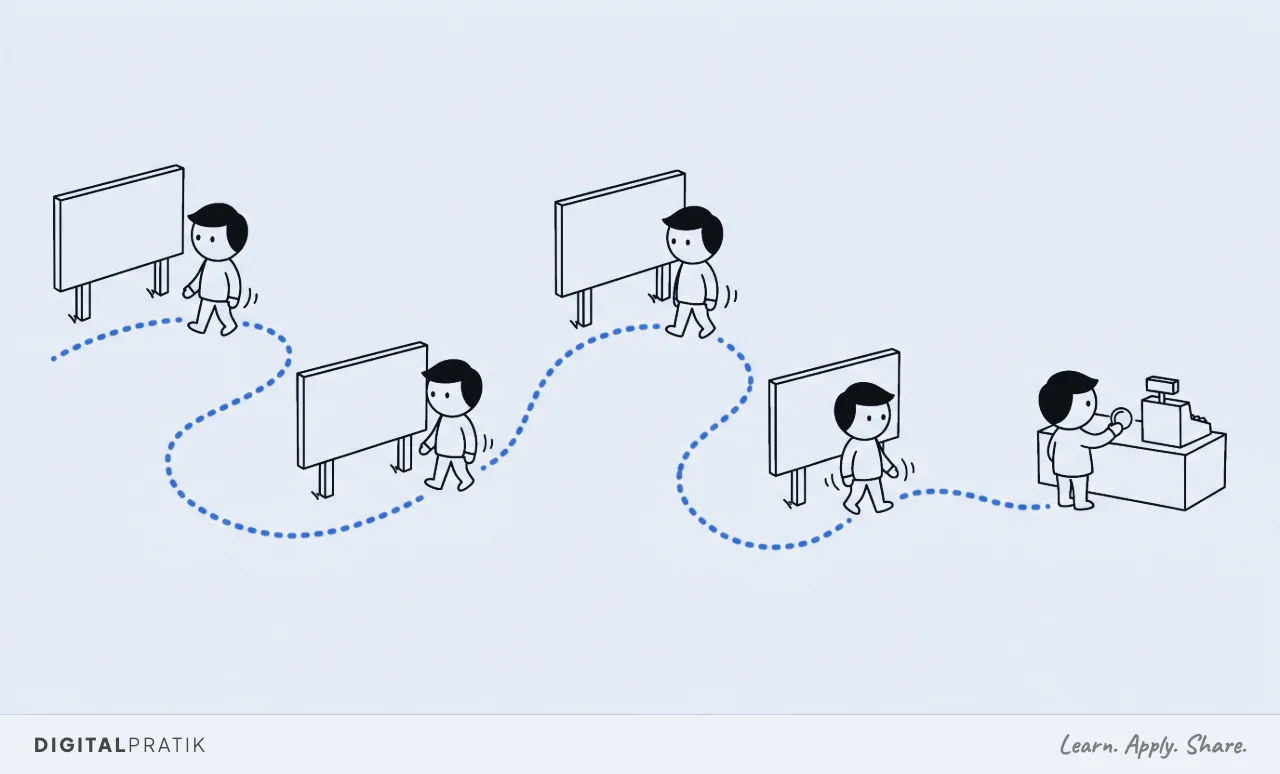
Four ads. One purchase.
All the credit to the last one.
Not every ad is a conversion ad
This is the part that has to sink in. A lot of ad content is doing brand building.
Someone sees it, does not act, and then weeks later wants the product, goes to Instagram, clicks the bio link and buys there. That attribution never reaches your ad at all unless you are tracking the full path.
So in any decent account there are at least three jobs happening. There are ads that make people aware you exist.
There are ads that make people believe you, usually testimonial and proof content. And there are ads that convert someone who is already sold, which are the ones that get the credit.
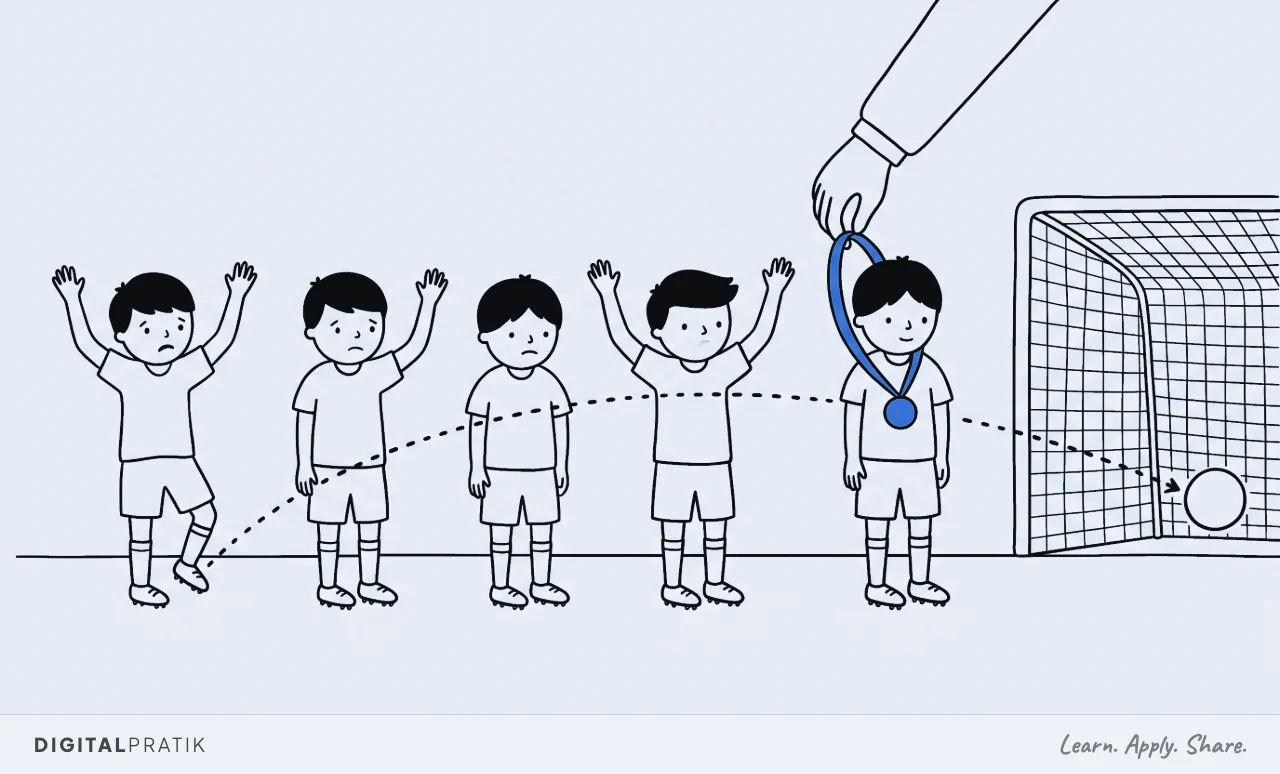
Judging all three by the same last-click number is like judging a football team by who touched the ball last before the goal. Technically accurate.
Completely useless for deciding who to keep.
Why this hits service businesses hardest
If you sell a $40 product, the journey is often short enough that last-click is roughly right. If you sell a $5,000 service that requires a call, the journey is never short.
Nobody books a call with a stranger to spend five thousand dollars because they saw one ad on a Tuesday.
The higher your price, the more touches sit between the first click and the money, and the more wrong last-click attribution becomes. It is precisely the businesses with the most to lose that are getting the most misleading picture.
Reading about a system and running one are different jobs. If your business does AED 10 million a year or more, this is what a working session looks like.
How to actually see it
You need a tracking layer that records the full path per person rather than the platform's own report. There are a few tools that do this well and I use one of them daily.
The specific tool matters less than the capability: you want to open a single sale and see every touchpoint that led to it, with dates and ad names.
- Install path-level tracking across the site and the checkout or booking flow.
- Wait for real volume. A handful of sales will not show you a pattern.
- Open individual sales and read the whole journey, not the summary. This is the step people skip and it is the one that changes your mind.
- Classify your ads by job: opener, trust builder, objection breaker, closer.
- Feed the data back to the pixel so the platform optimises against the real outcome rather than its own partial view.
That last step is the one people miss. Sending the enriched conversion data back improves the platform's own optimisation, which then finds more of the right people, which produces more data.
It becomes a loop that compounds rather than a report you read.
The client conversation
If you run ads for other people, this is also the conversation that saves accounts. A client looks at Ads Manager, sees ads with no return, and asks why you are still spending on them.
"Trust me" is not an answer. Opening the tracking tool and walking them through one real customer journey is.
What you are actually saying is: Facebook ads are working, but only if you consider last-click attribution. Then you show them the four touches.
I have never had that conversation go badly, because the evidence is not an argument, it is a screen.
| Ads Manager says | Path tracking says | |
|---|---|---|
| Ad 1 | No return, pause it | First touch, opened the loop |
| Ad 2 | No return, pause it | Testimonial, built the trust |
| Ad 3 | No return, pause it | Broke the last objection |
| Ad 4 | Excellent return, scale it | Collected the cheque |
What to do before you have the tooling
Not everyone can install path tracking this week. In the meantime, two habits get you most of the protection.
First, ask every person who books how they first heard of you, in a free text field, and read the answers yourself. It is imperfect and self-reported and it will still surprise you.
Second, stop judging any single ad on its own return and start judging the account. If total spend is producing acceptable total cost per booked client, the account is working, even when individual ads look ugly.
The wider point
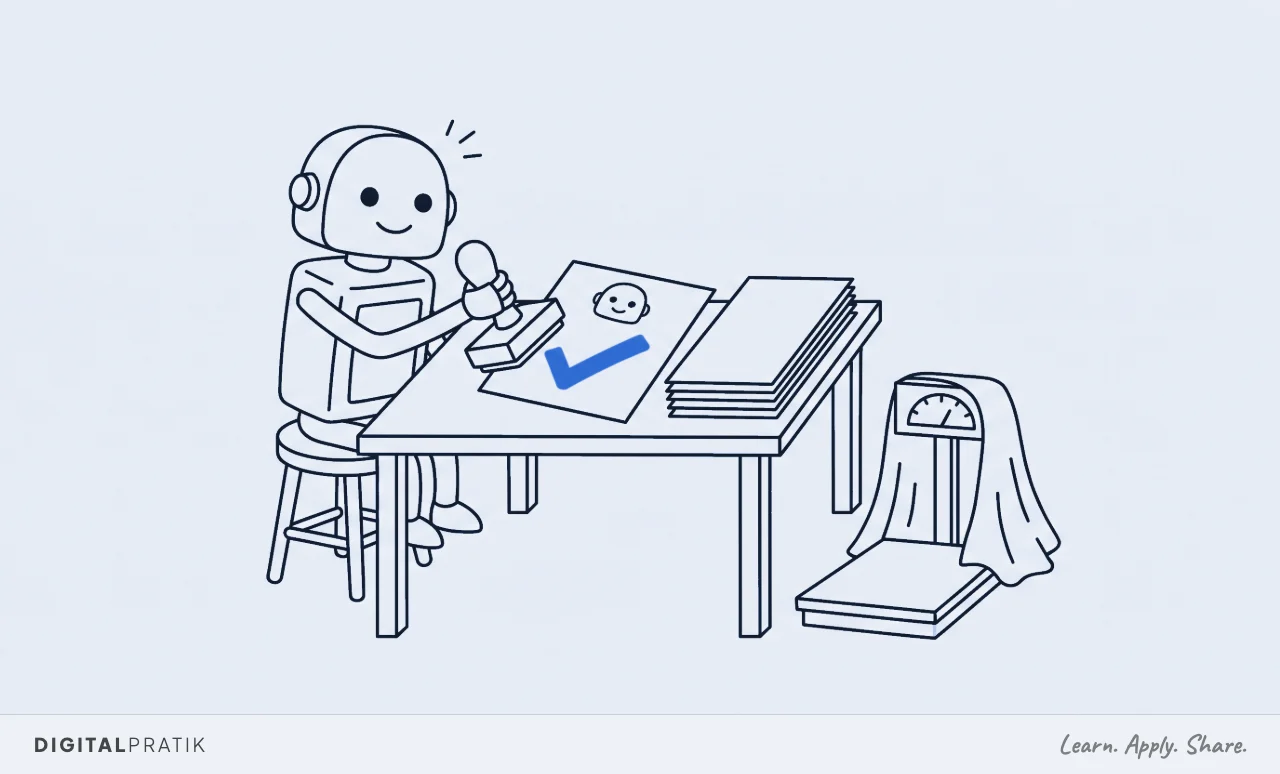
The platform is not your source of truth. It is one participant reporting on its own performance using a method that suits it.
That is not a conspiracy, it is a limitation, and the fix is to own your own measurement.
Once you do, a lot of other decisions get easier, because you start seeing what a client is actually worth and how long they take to pay back. That is the foundation everything else in a paid account sits on, and the sequencing behind it is the 3A Machine.
Frequently asked questions
Because those ads are doing awareness and trust work rather than closing. Meta attributes the sale to the last ad clicked, so ads that opened the loop or broke an objection days earlier report nothing. The account works because of them, not despite them.
Reported ROAS is the platform crediting itself using last-click attribution within its own window. True ROI traces the whole path a buyer took across every touch, including the ones the platform cannot see, such as someone returning later through an Instagram bio link. The two frequently disagree, and the second one is the one that matches your bank account.
To see the full path properly, yes, you need something that records touchpoints per person rather than relying on the platform report. Before you have that, you can get partial protection by asking every booking how they first heard of you and by judging your total account cost per client instead of individual ad return.
It affects them more. On a small budget every ad matters, so pausing three ads that looked like failures can remove most of your awareness and trust coverage at once. The higher your price and the longer your sales cycle, the more wrong last-click attribution becomes.
Read individual sales to understand the pattern, classify your ads by the job they actually do, and send the enriched conversion data back to the pixel. That last step lets the platform optimise against the real outcome rather than its own partial view, which improves delivery over time.
Install this in your business
An article gives you the map. A working session gives you the system, built around what you actually sell and who actually buys it.