
Proof Beats Promise: Why Cold Traffic Needs Evidence, Not Adjectives
 Digital PratikGrowth Marketing Consultant
 Everyone in your market promises the same outcome, so your promise is not what sets you apart.
Your proof is.
If you want a unique position, add more proof rather than inventing a different promise.
As a rough rule, most high-performing ads are about proof rather than about the founder, and the more your proof looks like the person watching, the harder it is to dismiss.
Go and read your three closest competitors' ads. They promise more clients, better results, less stress, faster growth.
You promise the same things, possibly in slightly better English. That similarity is not a failure of imagination, it is what happens in any market where everyone actually does roughly the same job.
Why this matters more as you spend more
On a small budget you are reaching the warm edge of your market: people who half know you, or who are actively shopping. They arrive with some trust already.
Scale up and you reach people who have never heard of you and have been let down by someone in your category before. Trust is the real obstacle to scaling paid ads, and proof is how you beat it.
That is why the ad that carried you to a modest spend stops carrying you past it.
The proof continuum
Not all proof is equal. The ranking is essentially "how hard would this be to fake", and the audience feels that ranking whether or not they could articulate it.
- In person beats virtual. Someone in a room is harder to manufacture than someone on a call.
- Live beats recorded. Recorded can be edited. Live cannot.
- A person who looks like the prospect beats one who does not. Same industry, same size, same stage.
- The exact result they want beats a result that is merely close. Adjacent is not the same as theirs.
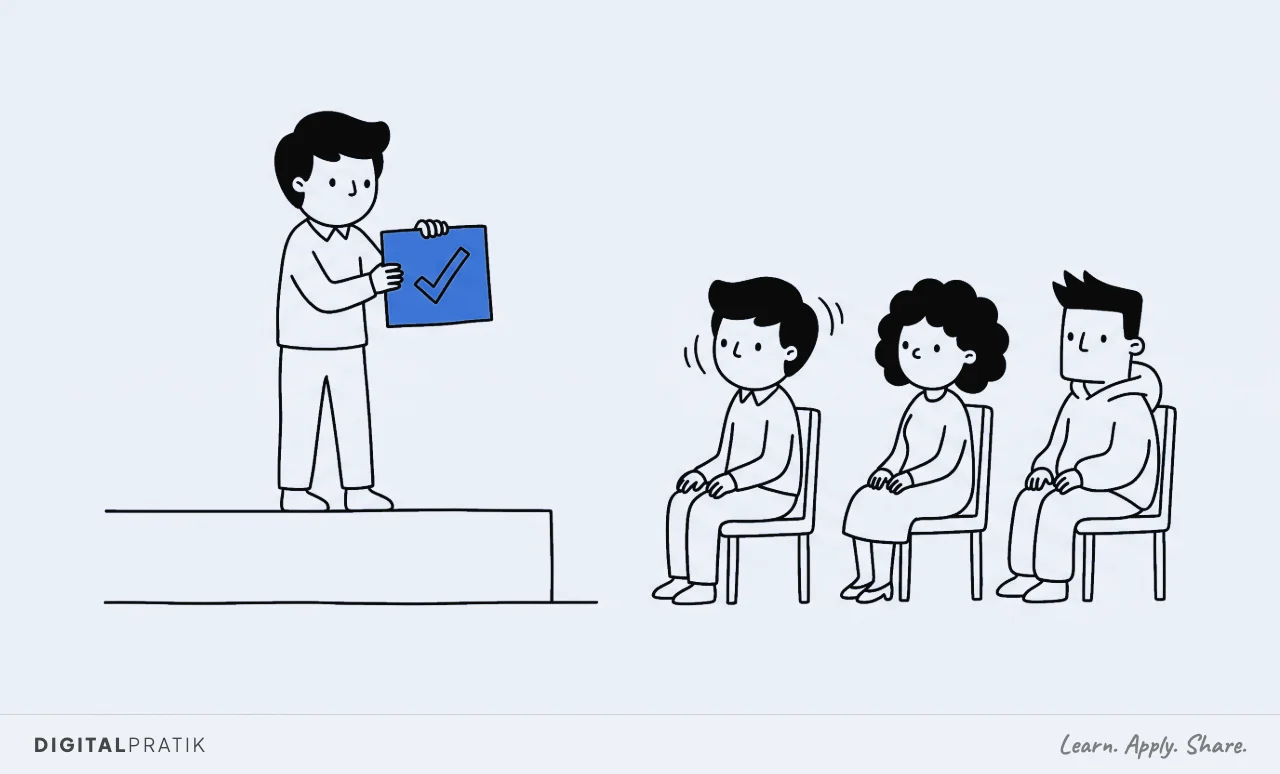
The gold standard sits at the top of all four: someone who looks exactly like your buyer, on a stage, saying the specific number they moved. You are not claiming anything.
They are.
Most of your ads should not be about you
As a rough working rule, roughly eighty percent of high-performing ads in a mature account are about proof rather than about the founder. Founder-led content matters, and it does a different job: it builds the brand that lowers your acquisition cost over years.
But in the ad account, the person who convinces a stranger is usually another customer.
That is uncomfortable for anyone who built a personal brand, because your instinct is that people buy you. They do, eventually.
They do not buy you the first time they see you in a feed at 11pm.
Reading about a system and running one are different jobs. If your business does AED 10 million a year or more, this is what a working session looks like.
What counts as proof when you are early
The obvious objection: what if I do not have a wall of case studies yet. Fair, and the answer is not to invent one.
There is more proof available than people think.
- Process proof. Showing the actual system, the actual dashboard, the actual screen. Specific beats polished.
- Volume proof. How many of these you have done, even without naming anyone.
- Your own numbers. If you have run the thing on yourself, that is a case study. It is the one I lean on most.
- Screenshots of real conversations. With permission, and with names removed.
- Specificity itself. Knowing a buyer's exact frustration in their exact words is a form of proof. It signals you have been in the room.
Count your proof, it takes ten minutes
Most founders think they have a proof problem. Almost none of them have counted, and counting changes what you do next.
Make two columns. On the left, every distinct kind of buyer you sell to.
On the right, how many pieces of proof you hold featuring somebody of that kind, saying the outcome that kind actually wants.
| Kind of buyer | Proof you actually hold | Gap |
|---|---|---|
| Solo consultant | 4 | covered |
| Small agency | 1 | thin |
| Clinic owner | 0 | nothing to show them |
| Professional firm | 0 | nothing to show them |
A count like that reframes the problem immediately. You do not have a proof shortage, you have a proof distribution problem.
Four pieces sitting on one kind of buyer while two others get nothing.
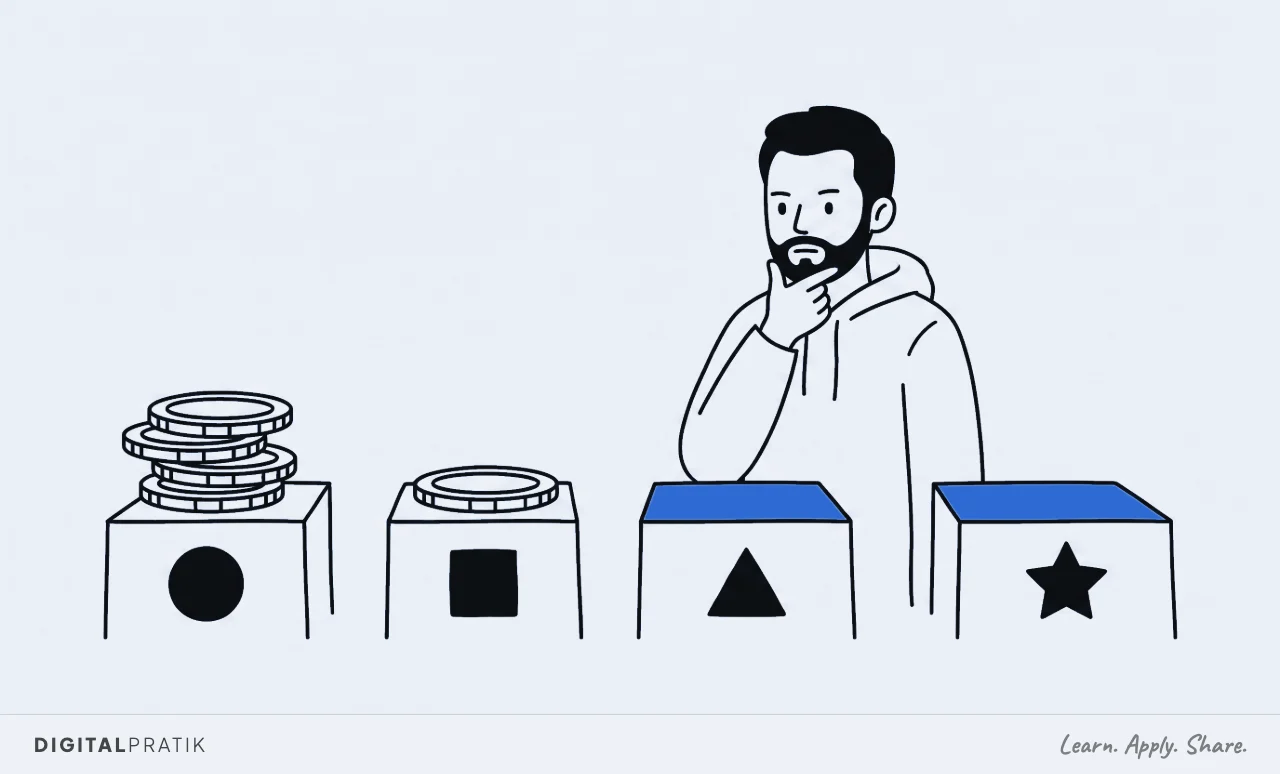
And it tells you exactly what to go and get. Not "more testimonials", which is a task nobody ever completes.
One piece of proof from a clinic owner, this month, which is a task you can actually finish.
Do the same count on the served side. If you have worked with forty clients and hold three usable pieces of proof, the constraint was never results, it was that nobody asked at the moment the client was happiest.
That is a process gap, and it is much cheaper to fix than a results gap.
The trap: manufactured proof
I will be blunt about this because the industry is full of it. Rented offices, hired cars, invented numbers, testimonials from people who never bought anything.
It works briefly and then it does not, and the reputational cost lands exactly when you have the most to lose.
There is also a practical argument. Fake proof cannot be specific, because specifics are checkable.
So it always ends up vague, and vague proof does not convert anyway. You get the ethical cost and none of the benefit.
How to build the ad
Open on the prospect's pain in their own words. Then let the proof answer it.
Then the offer, briefly. That order, because a stranger has to recognise their own problem before they care who solved it.
Do not open on your credentials. Nobody in a feed is looking for your credentials.
They are looking for whether this is about them, which is a decision they make in about a second, and I have written up how that decision works in the hooks article.
Frequently asked questions
Because everyone in your market promises the same outcome, so a promise cannot differentiate you. Proof can, because it is specific and checkable. If you want a stronger position in a crowded market, add more proof rather than trying to invent a promise nobody else is making.
Someone who looks exactly like your buyer, saying the specific result they got, ideally in person or live rather than in an edited recording. The ranking follows how hard something would be to fake, and audiences feel that ranking even when they could not explain it.
Use process proof, volume, your own numbers from running the thing on yourself, and screenshots of real conversations with permission and names removed. Specificity is itself a form of proof, because knowing a buyer's exact frustration in their exact words signals you have been in the room.
Mostly clients. As a rough rule, around eighty percent of high-performing ads in a mature account are proof-led rather than founder-led. Founder content still matters, but it does the slower job of building a brand that lowers acquisition cost over years, not the job of convincing a stranger tonight.
Not for long, and it has a practical flaw beyond the obvious one. Invented proof cannot be specific, because specifics are checkable, so it ends up vague. Vague proof does not convert. You take the reputational risk and get none of the benefit.
Install this in your business
An article gives you the map. A working session gives you the system, built around what you actually sell and who actually buys it.