
Meta Ads Budget: What to Spend When You Are Starting From Zero
 Digital PratikGrowth Marketing Consultant
 There is no universal starting number, and anyone who gives you one is guessing about your business.
Your budget comes from three things: what a client is worth to you over their lifetime, how long they take to pay back what you spent to get them, and how much cash you can have tied up in that gap.
Work those out and the number falls out.
Spend before your offer converts and the size of the budget will not matter.
I get asked for a starting budget constantly and I keep refusing to give a number, which frustrates people. So let me explain why the number is the wrong thing to ask for, and then give you the calculation that actually produces yours.
Why a universal number cannot exist
Two service businesses, both wanting to start ads. One sells a $400 one-off service.
The other sells a $6,000 engagement that renews annually. The correct starting budgets for those two businesses are not in the same universe, and no article can know which one you are.
The only honest general statement is this: your budget is downstream of what a client is worth. Get that number first, and the budget stops being a mystery.
Step one: fix the offer, not the budget
Before any of this matters, the offer has to convert. Meta is an amplifier, not a magician.
If the offer is mid, ads just help more people ignore you faster, and you will have paid for the privilege of learning that at scale.
The practical test: have you sold this thing, at this price, to strangers who did not already know you? If the answer is no, your money is better spent finding that out through conversations than through a campaign.
Spending to test an unproven offer is the most common way service businesses conclude that ads do not work.
Step two: work out what a client is worth
Not what they pay you the first time. What they are worth over the whole relationship, including renewals, additional services and referrals if you can attribute them honestly.
Most service businesses badly underestimate this, which is why they badly underspend. If a client pays $2,000 and stays for two years at that rate, you are not competing for a $2,000 customer.
You are competing for a $4,000 one, and you can pay considerably more to acquire them than the person who only counts the first invoice.
Step three: the payback window
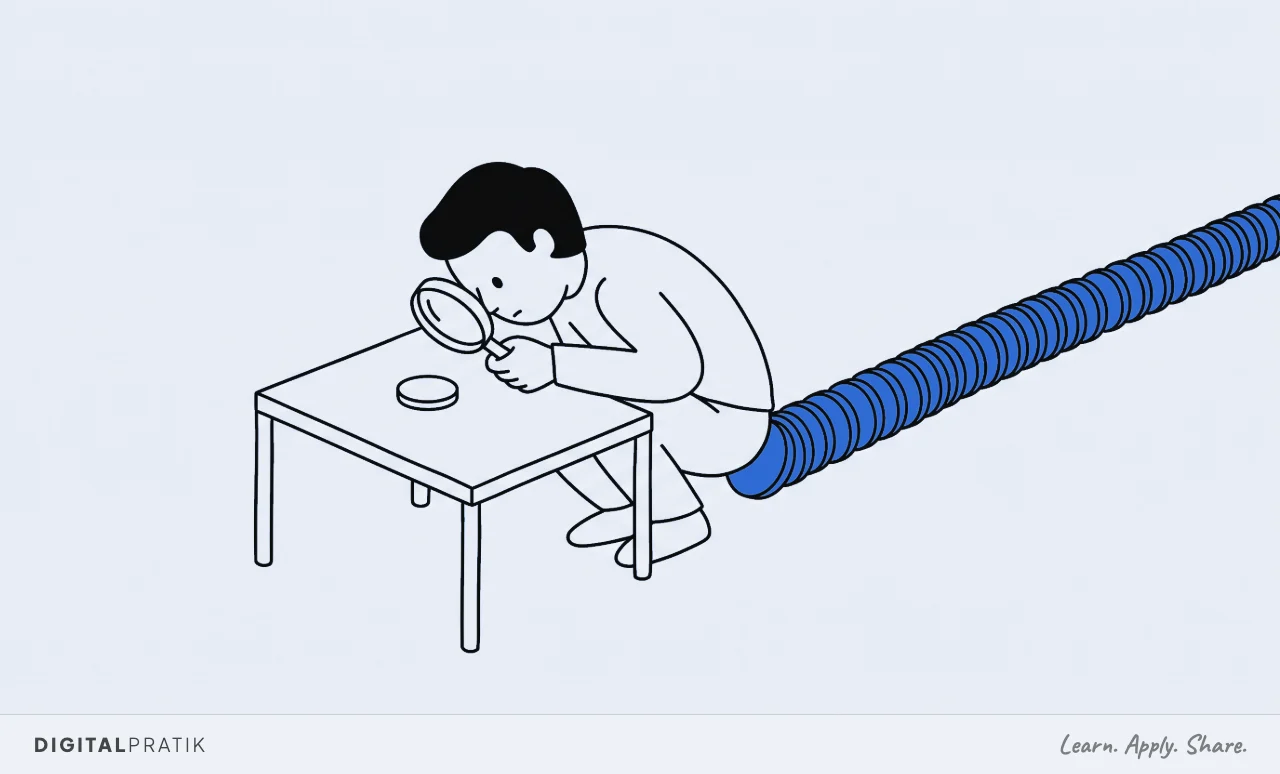
This is the number that actually decides how fast you can grow, and almost nobody calculates it.
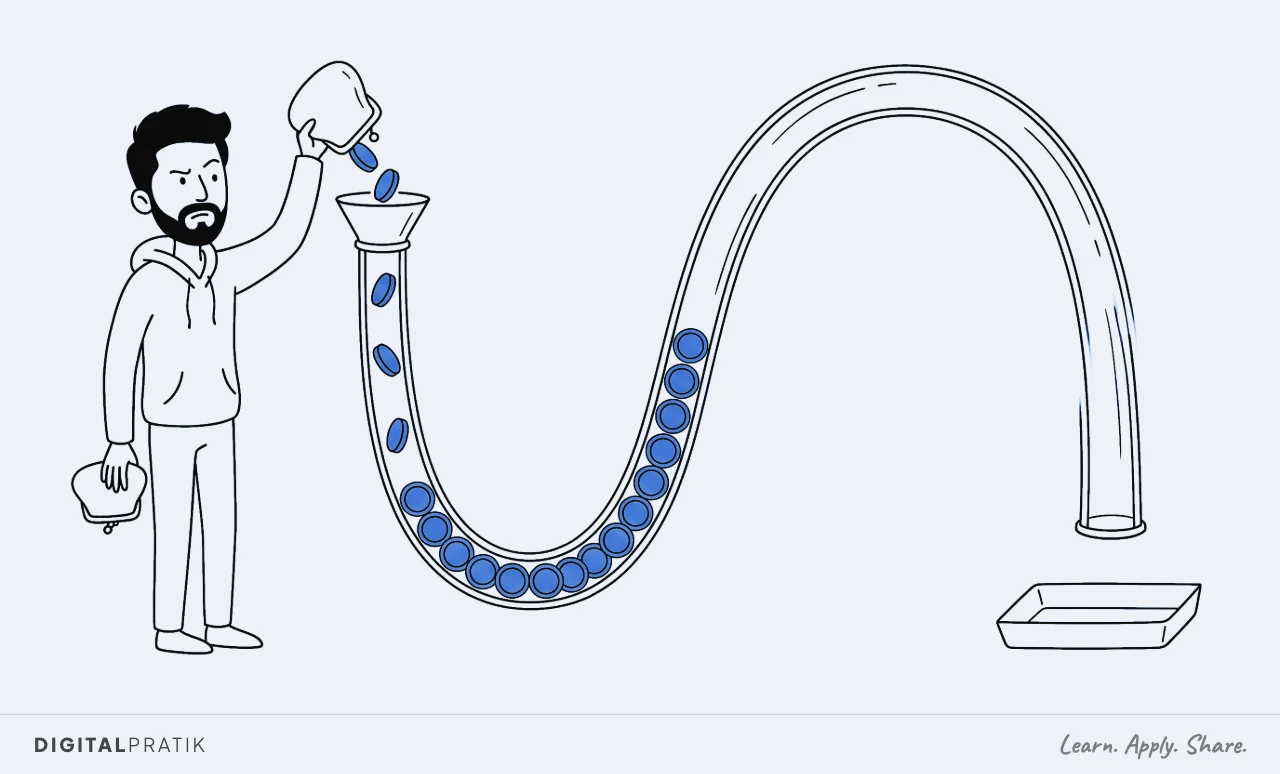
Payback is how long it takes for a client to return the money you spent acquiring them. If you spend $500 to get a client who pays $250 a month, you are paid back in two months.
Everything after that is profit, but for those two months that $500 is gone from your bank account.
Now scale that. Ten clients a month means $5,000 out and a two-month wait.
Thirty clients a month means $15,000 out. The constraint is not whether the ads work, it is whether you can float the gap.
Businesses with working ads run out of cash all the time, and this is why.
| Payback in 1 month | Payback in 6 months | |
|---|---|---|
| Cost per client | $500 | $500 |
| Clients per month | 20 | 20 |
| Cash tied up at steady state | About $10,000 | About $60,000 |
| Growth speed | Fast | Cash constrained |
Both of those businesses are profitable. Only one of them can grow quickly without external money.
Shortening payback, usually by taking more of the fee upfront, is often a bigger lever than reducing cost per client.
Reading about a system and running one are different jobs. If your business does AED 10 million a year or more, this is what a working session looks like.
Step four: budget for a readable test
Now the practical constraint. A test needs to produce enough results to tell you something, over about ten days.
If your realistic cost per booked call is going to land somewhere around $50, and you need maybe fifteen to twenty results before a number means anything, then a ten-day test needs to be able to produce that. A budget that produces two results in ten days has not told you your ads do not work.
It has told you nothing at all, and you will probably misread the nothing as a failure.
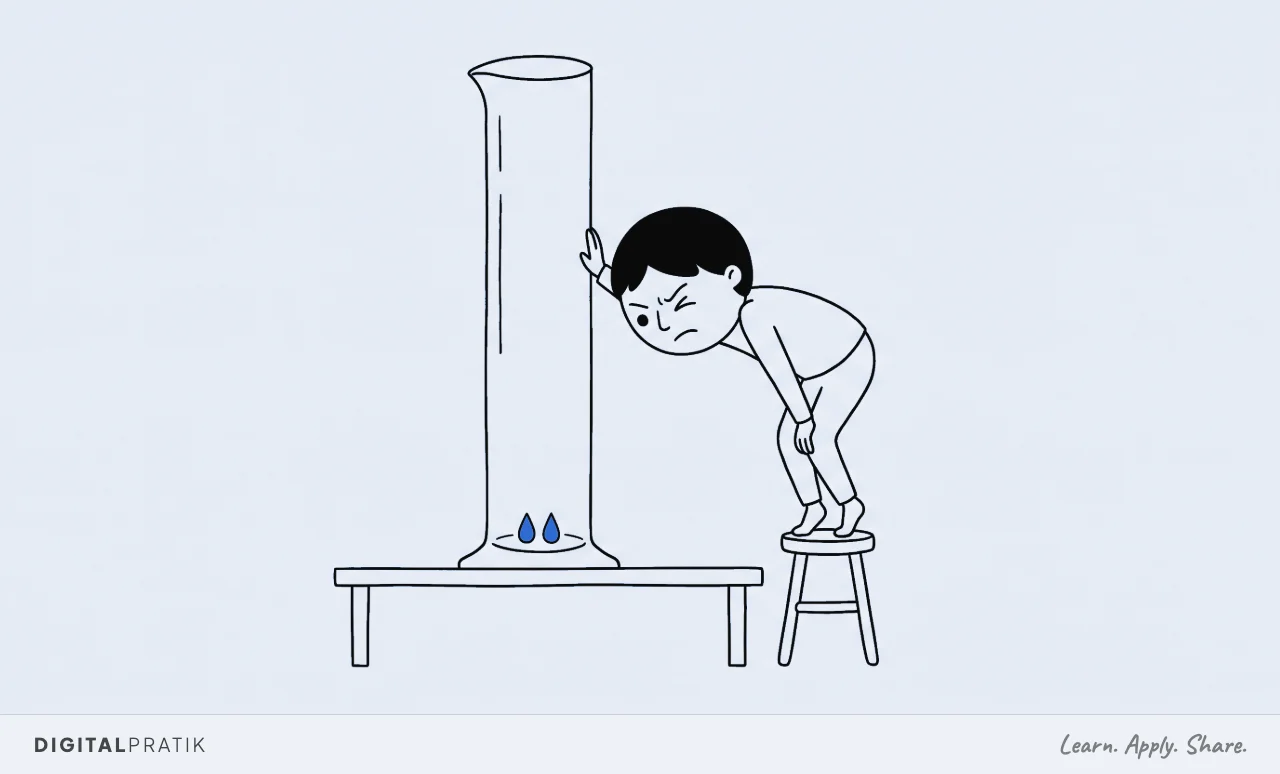
This is the real minimum: not a fixed rupee or dollar figure, but whatever produces a readable signal in your market at your likely cost per result. If you cannot afford that, run fewer cohort angles at a time rather than starving all of them.
What about the first month specifically
Treat month one as tuition, not as a profit centre. You are buying information: which cohorts respond, what your actual cost per result is, where people drop out of the booking flow.
That information is what makes month three profitable.
Budget an amount you can lose entirely without it affecting the business. If there is no such amount, you are not ready for paid acquisition yet, and that is a real answer rather than a soft one.
The scaling question
When it works, people want to know how fast to increase. The honest answer is: as fast as your cash and your delivery capacity allow, which is usually slower than your ambition and faster than your nerve.
Watch two things as you scale. Cost per result will drift upward, because you are reaching colder and more sceptical people the more you spend.
And your delivery capacity will hit a ceiling that nobody plans for until it arrives. Doubling spend into a delivery bottleneck is how good businesses acquire clients they then fail.
The number, if you insist
Here is the closest I will get. Work out what a client is worth over their lifetime.
Decide the maximum you are willing to pay to acquire one, which for most service businesses lands somewhere under a third of that. Estimate how many results you need for a readable ten-day test.
Multiply.
That is your starting budget, and it is yours, derived from your business, which is why it is worth more than any number I could have given you in the first paragraph. Before you raise it, make sure you can actually see what produced a sale.
Frequently asked questions
There is no universal minimum. The practical floor is whatever produces enough results in a ten-day test for the numbers to mean something at your likely cost per result. A budget that produces two results in ten days has told you nothing, and people usually misread that nothing as proof that ads do not work.
No. Meta amplifies whatever you have, so an offer that does not convert just gets ignored faster and at greater cost. The test is whether you have sold this thing at this price to strangers who did not already know you. If not, conversations are a cheaper way to find that out than a campaign.
Payback is how long a client takes to return what you spent acquiring them. It decides how much cash is tied up as you scale, so two equally profitable businesses can have completely different growth speeds. Shortening payback, usually by taking more of the fee upfront, is often a bigger lever than reducing acquisition cost.
It depends on lifetime value rather than first sale value, and most service businesses badly underestimate lifetime value, which is why they underspend. As a rough discipline, many service businesses set a ceiling somewhere under a third of expected lifetime value, then work backwards to the budget from there.
As fast as your cash position and your delivery capacity allow. Watch for cost per result drifting up as you reach colder audiences, which is a creative and proof problem rather than a budget one, and watch your delivery ceiling. Doubling spend into a delivery bottleneck produces clients you then fail.
Install this in your business
An article gives you the map. A working session gives you the system, built around what you actually sell and who actually buys it.