
The Five Market Awareness Levels: Why Your Ad Is Talking to the Wrong Person
 Digital PratikGrowth Marketing Consultant
 There are five: unaware, problem aware, solution aware, product or brand aware, and most aware.
The first two are top of funnel, the middle two are middle of funnel, and the last is bottom of funnel.
Almost every ad in a struggling account speaks only to the most aware level, which is a tiny pool.
Writing for the other four is where growth actually comes from.
This is the single most useful thing I teach, and I teach it before anything about hooks, budgets or targeting, because everything else sits on top of it. If you get this wrong, no amount of creative volume saves you.
The five levels
Write these down in this order, because the order is the point. Each one is a different person with a different question in their head.
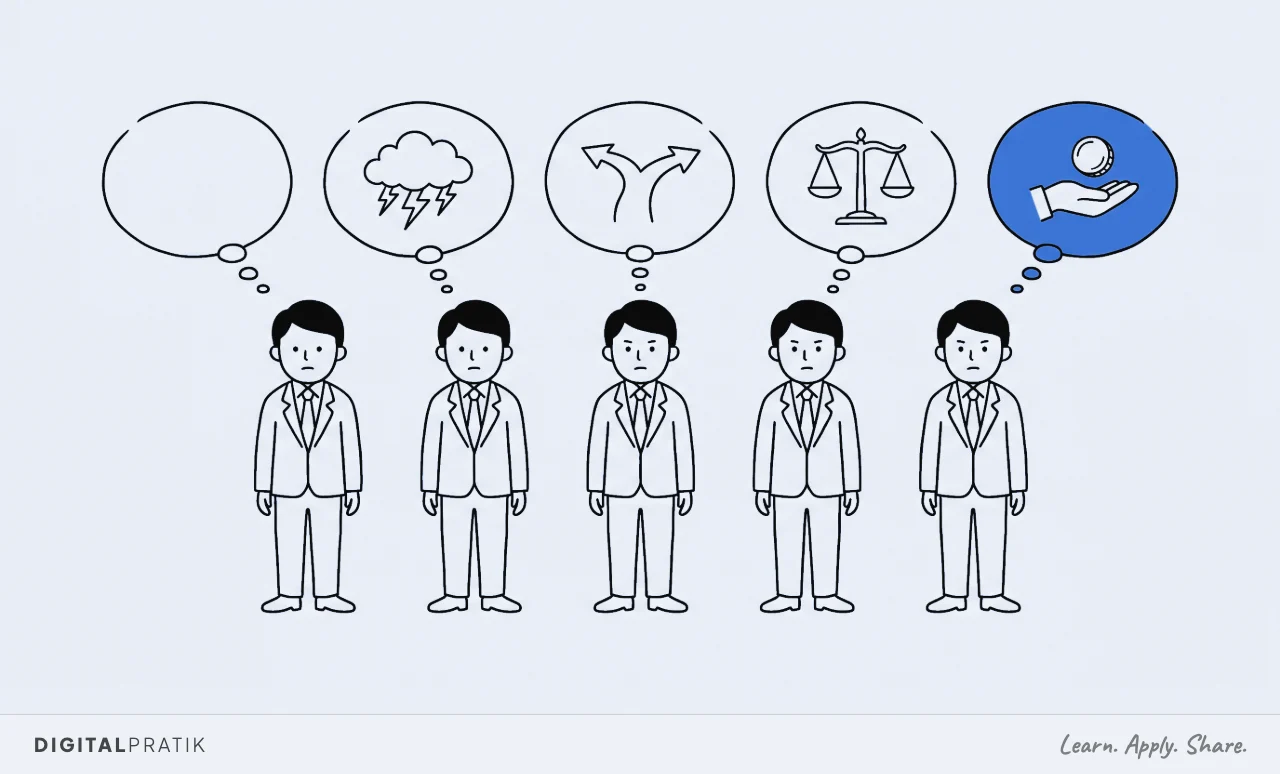
- Unaware. They do not know they have a problem. Nothing is wrong as far as they are concerned.
- Problem aware. They feel the pain. They do not know it has a name or a fix.
- Solution aware. They know fixes exist. They do not know about you.
- Product aware, or brand aware. They know you specifically. They are weighing you up.
- Most aware. Ready. They need the offer and a reason to move now.
How they map to the funnel
Now bracket them. This is the part that turns a list into a working tool.
| Levels | Funnel stage | Size of the pool |
|---|---|---|
| Unaware, problem aware | Top of funnel | Enormous |
| Solution aware, brand aware | Middle of funnel | Moderate |
| Most aware | Bottom of funnel | Small |
A note on the vocabulary, because it confuses people. The awareness levels came first.
Top of funnel, middle of funnel and bottom of funnel came later, and they are the same idea renamed. You do not need both sets of words, you just need to recognise them when someone uses either.
The same thing happened to the word for a group of people. Segment, consumer segment, niche, industry, cohort.
All the same thing. Someone new arrives, needs to sound different, invents a new word for an old idea.
Do not let the vocabulary make you think there is more to learn than there is.
The funnel is not a structure you build
This trips up almost everybody, so let me be blunt about it. Your funnel is not campaigns and ad sets.
It is not a diagram in a slide deck. It is not something you configure.
The funnel is which awareness level your message is pitched at. That is all it is.
And it applies to your organic content exactly as much as to your paid ads, which means you cannot build your way out of a messaging problem inside an ads manager.
The default failure
The default failure is assuming the person watching is further down the funnel than they actually are.
Take a microphone. If you were selling one, you might say "this is our brand's new model, buy it".
Or "this is the black version, our latest variation, buy it". Or "listen to the sound quality, the bass, the treble, buy it".
Every one of those assumes the viewer already knows your brand and already has a microphone problem. Most viewers have neither.
I would not buy that microphone, because I already have one and my voice carries anyway. Nothing in those three messages was written for me, or for the vast majority of people who saw them.
You would never walk up to a stranger in the street and open with "this is our latest model". But that is what most ad accounts say, all day, to everybody.

What to actually write at each level
Here is the practical translation, and it is worth having somewhere you can see it when you brief creative.
Unaware
Do not sell. Name something they have normalised and tell them it is not normal.
"You have started assuming the stiffness in the morning is just your age. It usually is not." This ad does not mention your service for most of its length, and it reaches people who were never going to search for you because they had not decided anything was wrong.
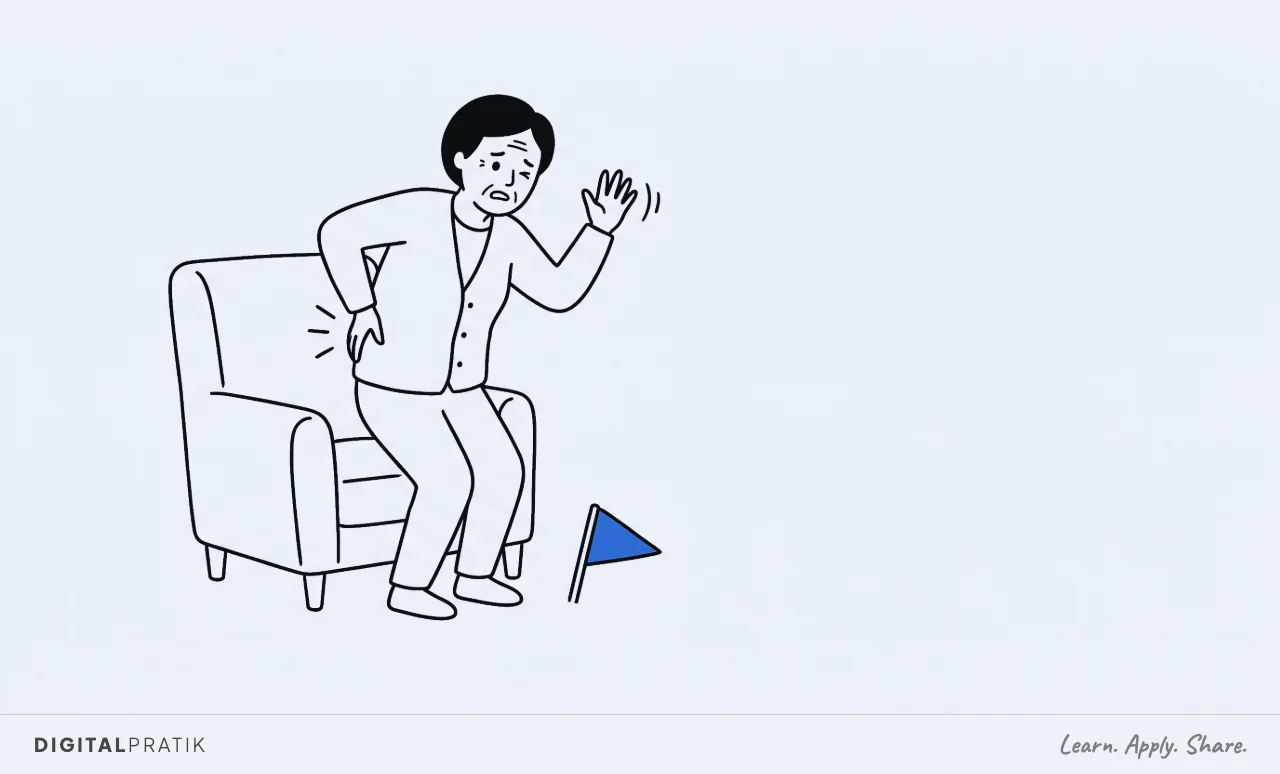
Problem aware
Give the thing a name and say it has a fix. People sit in pain for years partly because they do not know their problem is a category with specialists in it.
Naming it is a genuine service and it converts.
Solution aware
They know fixes exist and have probably tried one. This is where you differentiate on mechanism: why your approach is different from the thing that already failed them.
Repeating the generic promise here is fatal, because the generic promise is what disappointed them.
Product or brand aware
They know you. Now it is proof.
Someone who looks like them, with the result they want. Not adjectives about yourself.
Proof is not all equally convincing either, and the ranking is fairly stable. In person beats virtual, live beats recorded, someone who resembles the prospect beats someone who does not, and the exact outcome they are after beats one that is merely adjacent.
Your promise is not what makes you different, because everyone in your market is promising the same thing. Your proof is.
That is the argument in proof beats promise.
Most aware
The offer, plainly, with a reason to act now. This is the easiest ad to write, which is exactly why everyone writes only this one.
Notice what did not change across those five. Not the offer, not the audience settings, not the product.
Only what the message assumes the reader already knows. That is the entire lever, and it is free.
A word on where the raw material comes from, because none of these five write themselves. Each one needs the customer's actual words about their pain and what they want, and those live in sales calls, client group chats, reviews and the first message a prospect ever sent you.
Not in a keyword tool and not in a workshop. The pre-work is in the five things to research before any ad.
Reading about a system and running one are different jobs. If your business does AED 10 million a year or more, this is what a working session looks like.
Why this is the real cause of ad fatigue
Because if all your ads are bottom of funnel, you are retargeting a small pool of ready buyers over and over. It works for a fortnight.
Then it stops, because that pool has seen everything you have, while the enormous untapped audience above it still does not know you exist.
That is the whole mechanism, and I have written it up on its own in why your ads stop working after two weeks. If you only read one other thing after this, read that.
The same person is not the same person
One more layer, and it is the reason I call this contextual messaging rather than just awareness.
Somebody who sees your ad at eight in the evening while having dinner with their family is in a different state from the same human being at nine. Same person, same demographic, different receptivity entirely.
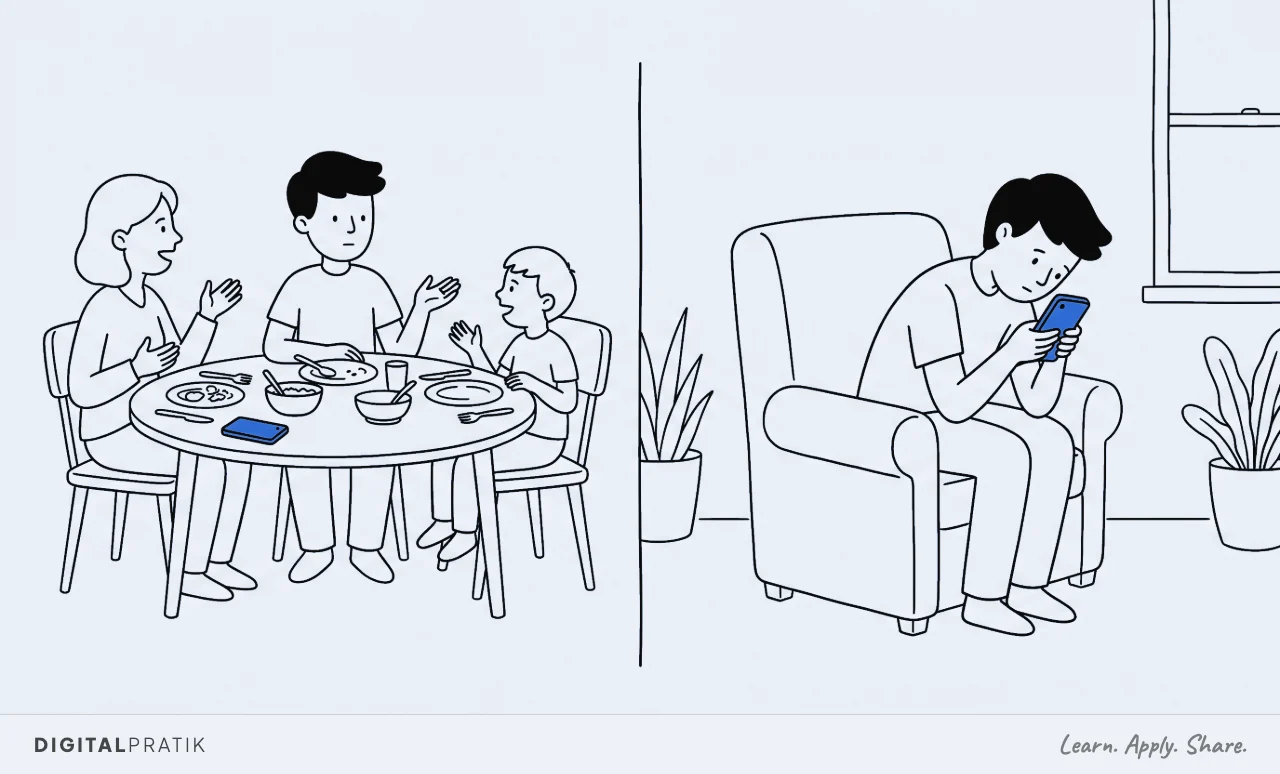
This is the bit that makes demographic targeting feel so unsatisfying once you have seen it. Age, city and job title are fixed attributes.
Receptivity is not. You are advertising to a state, and no settings panel has ever contained a field for the state somebody is in.
And the number of times they have already encountered you changes their level. Someone on their fourth touchpoint is not where they were on their first.
So a cohort is not a demographic. It is a person, at an awareness level, at a moment.
That is covered further in the contextual messaging article.
That has a consequence people miss when they audit an account. You cannot fix awareness once and consider it handled, because your own advertising keeps moving people through the levels.
The person who was unaware in March is problem aware by May precisely because your top-of-funnel ad worked. If your account still only speaks at the level it did in March, it is now mistimed for the audience it built.
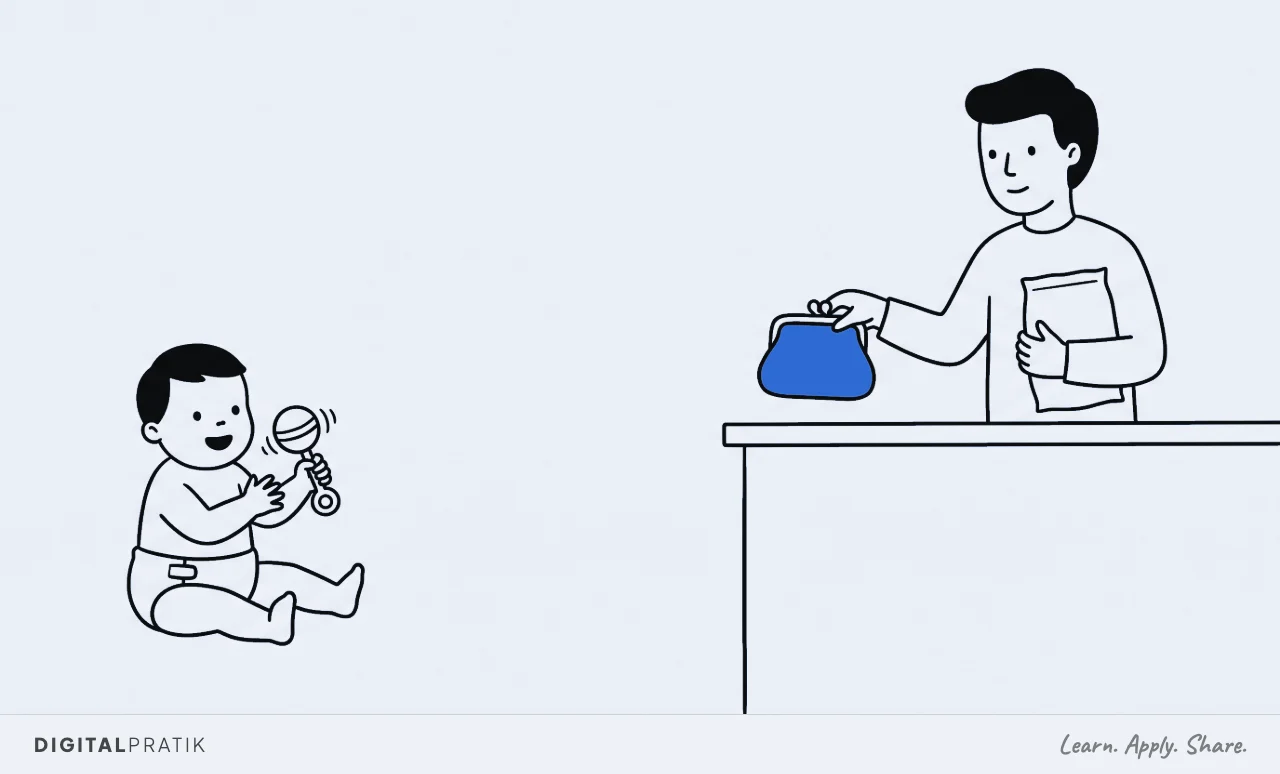
There is a second question hiding underneath the level, and it is worth asking at the same time: is this person even the right role? Babies are the consumers of a diaper.
Parents are the customers. One of them experiences the problem and the other one buys.
Get that wrong and no amount of awareness tuning helps, because you are pitching a real pain to somebody who has no authority to solve it. That distinction gets its own treatment in consumer versus customer.
What each level costs you to ignore
It is worth being concrete about the price of skipping a level, because "make top of funnel content" is advice everybody nods at and nobody acts on.
Ignore unaware and your total addressable market is capped at people who have already worked out they have a problem. In most categories that is a small fraction of the people who actually have it.
Everybody with back pain who has decided it is just age, everybody with a marketing problem who has decided they are simply bad at marketing. They are not in your market as far as your ads are concerned, and they could be.
Ignore problem aware and you hand those people to whoever names their problem first. Naming it is a real service, and the person who does it becomes the authority by default.
This is the cheapest authority available and almost nobody takes it.
Ignore solution aware and you lose to whoever explains why they are different. These people have already tried something that failed, so a generic promise actively reminds them of the disappointment.
Ignore brand aware and you get the worst outcome of all: people who know you, are interested, and quietly never move, because nothing ever gave them the confidence to. They do not tell you.
They just stop appearing.
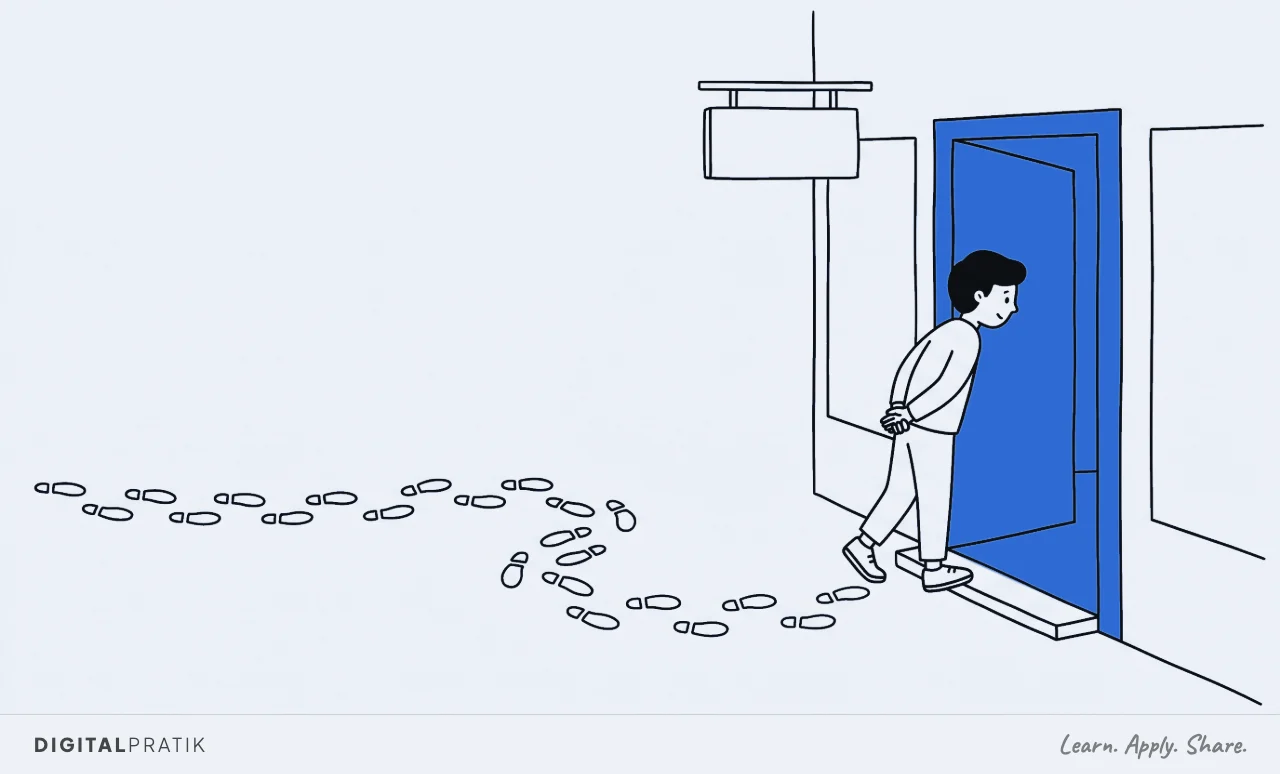
And there is a cost at the other end that nobody talks about, which is over-serving most aware. Keep pushing the offer at people who are already convinced and you do not accelerate them, you irritate them.
They have decided. What they are waiting on is usually a practical detail or a moment in their own year, and neither of those is unlocked by a sixth reminder.
Meanwhile every rupee spent there is a rupee not spent building the pool that replaces them.
Why nobody writes the top-of-funnel ad
Three reasons, and they are all understandable.
It does not feel like marketing. An ad that never mentions your service feels like you are giving something away for nothing, and there is no obvious moment where the money happens.
It looks worse on the dashboard. A top-of-funnel ad opens a loop that closes weeks later somewhere else, so under last-click reporting it shows a poor return and gets paused by a sensible person doing sensible things.
That trap is the whole subject of the $5k a month article, and it is the single most common way a working funnel gets dismantled.
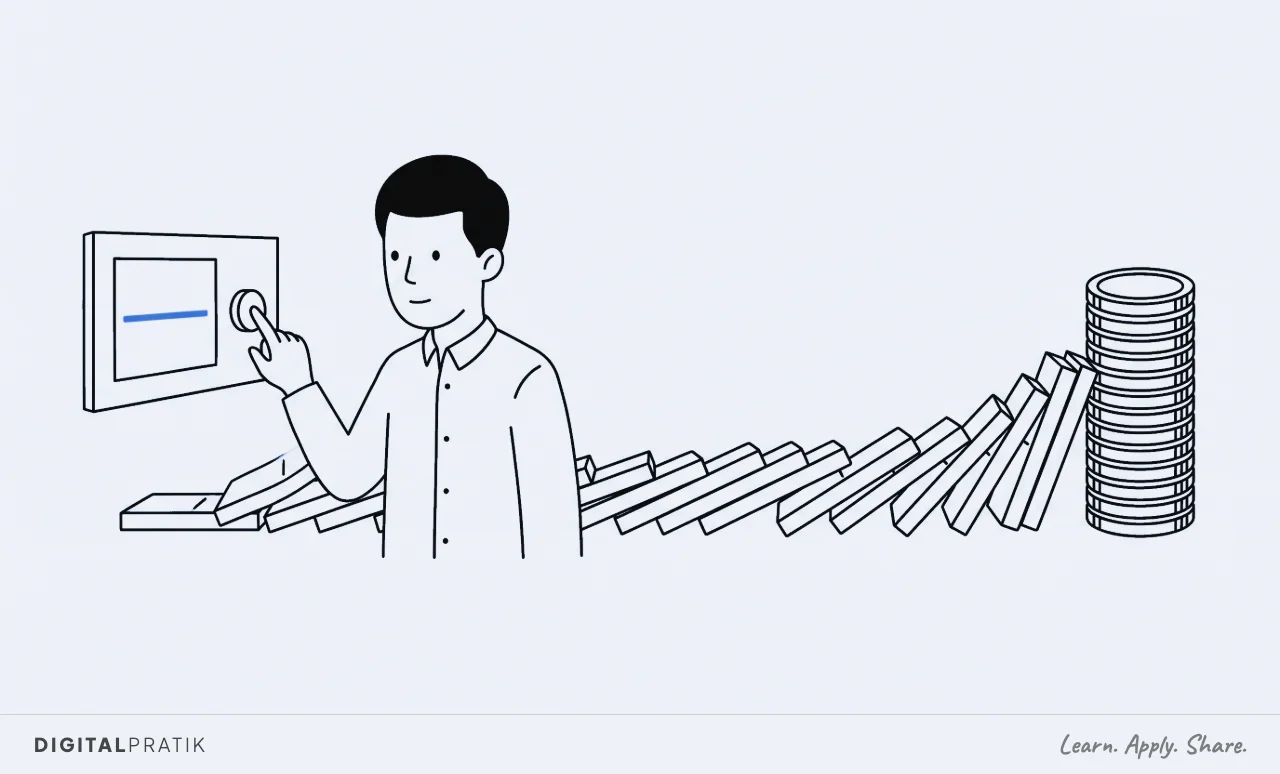
And it is harder to write. The bottom-of-funnel ad writes itself: here is what we do, here is the offer, book a call.
The unaware ad requires you to know something genuinely useful about your buyer's life that they have not articulated themselves. That is a research job, not a copywriting job, and it is why the five research inputs come first.
A worked example, one business, five ads
Abstract frameworks are easy to agree with and hard to use, so here is the same business across all five levels. A consultant who fixes client acquisition for professional service firms.
Unaware
"Most firm owners think their bad months are seasonal. Then they look at three years of data and find the pattern is not the calendar, it is what they were doing eight weeks earlier." No offer, no call to action beyond reading.
It reaches somebody who had filed the problem under bad luck.
Problem aware
"If your pipeline goes quiet every time you get busy delivering, that is not a discipline problem, it is a structural one, and it has a name." The person feels this every quarter. Nobody has told them it is a known thing with a known fix.
Solution aware
"You have probably tried outsourcing lead generation and it did not stick. Here is the specific reason it does not work for firms under a certain size, and what replaces it." This one exists to differentiate from the thing that already failed them.
Brand aware
Proof. A firm that looks like theirs, in their words, describing what changed.
Not adjectives about the consultant. This is covered in proof beats promise.
Most aware
"Two slots this month. Here is what the first thirty days looks like." Short, direct, no persuasion.
This is the only ad most accounts contain.
How much budget goes where
I will not give you a universal split, because it depends on how well known you already are and how long your sales cycle runs. But the shape is worth stating.
If you are unknown, most of your effort belongs above the bottom. You are building the pool that your closing ads will later convert, and there is currently no pool.
If you are well known in your category, you can weight harder toward the middle and bottom, because the top has been fed for years.
The failure mode almost everybody has is the same regardless: nearly all budget at the bottom, in a business nobody has heard of. That combination produces exactly what you would predict.
A good fortnight, then a wall.
One more input changes the mix, and it is the one people forget to check: how tired the market already is of your promise. Awareness tells you what this person knows.
Sophistication tells you what they have already heard, from everyone else, a hundred times.
In a fresh market a plain claim at the right level does the job on its own. In an exhausted one the same claim is invisible, and you have to compete on mechanism or on proof instead.
So two businesses can be talking to the identical awareness level and need completely different ads, purely because one market has been advertised at for a decade and the other has not. That is market sophistication, and it sits beside this framework rather than underneath it.
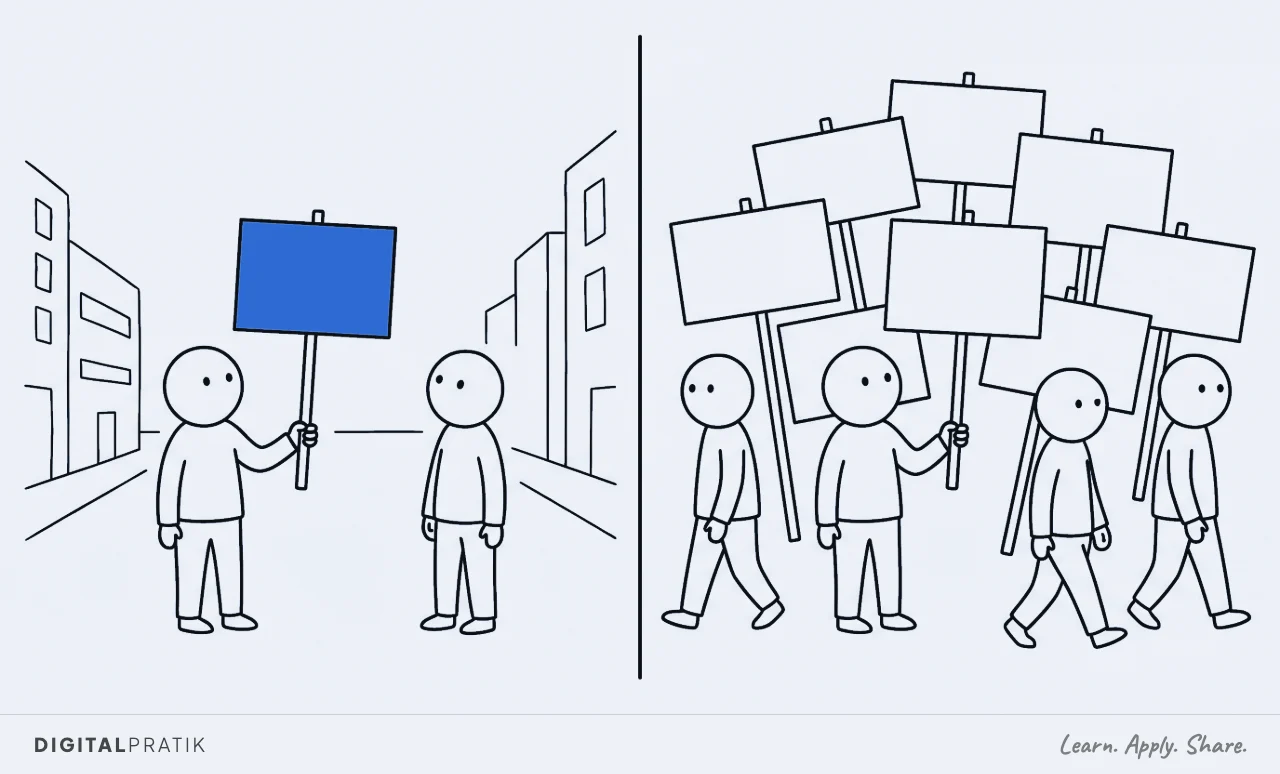
Practically, run both checks in the same sitting. What does this person know, and what are they sick of hearing.
If you only ask the first one you will write a correctly targeted ad that still sounds like everyone else.
| Level | The ad's job | What it is not |
|---|---|---|
| Unaware | Make them notice a problem | A sales pitch |
| Problem aware | Name it, say it is fixable | A feature list |
| Solution aware | Differentiate the mechanism | The generic promise |
| Brand aware | Prove it with someone like them | Adjectives about you |
| Most aware | The offer, and a reason now | More education |
This applies to organic too, which is the part people forget
The funnel is a messaging idea, not an advertising one, so your content sits on exactly the same five levels.
Most founder content lives at solution aware and brand aware, because that is where it is most comfortable to talk: here is how I think, here is what we do, here is a client win. Very little of it is unaware, which is precisely why so much founder content is enjoyed by peers and ignored by buyers.
There is also a practical advantage to fixing this organically first. Organic is free, so you can find out which top-of-funnel angles land before you put budget behind them.
That loop between the two sides is in the cohort creative article.
How to audit your own account this week
This takes twenty minutes and it is uncomfortable in a useful way.
- List your last ten ads and last ten posts. Both, because organic sits on the same five levels.
- Label each one with the awareness level it was written for. Be honest rather than generous.
- Count them. Most people find eight or nine sitting at most aware.
- Write one unaware ad and one problem aware ad this week. Just two. Do not sell in either.
- Give them ten days and judge on cost per real outcome, not on how it feels.
When you run the count, the number itself matters less than which levels are empty. Eight at most aware and two at brand aware is a different problem from a flat spread with nothing at the top.
The first is an account that only knows how to close. The second is an account that has stopped feeding itself.
Do not fix it by deleting the bottom-of-funnel ads. They are not the problem, and they are usually the only things currently producing revenue.
Add above them. The bottom of your funnel is not too big, the top of it is missing, and those two sentences lead to completely different actions.
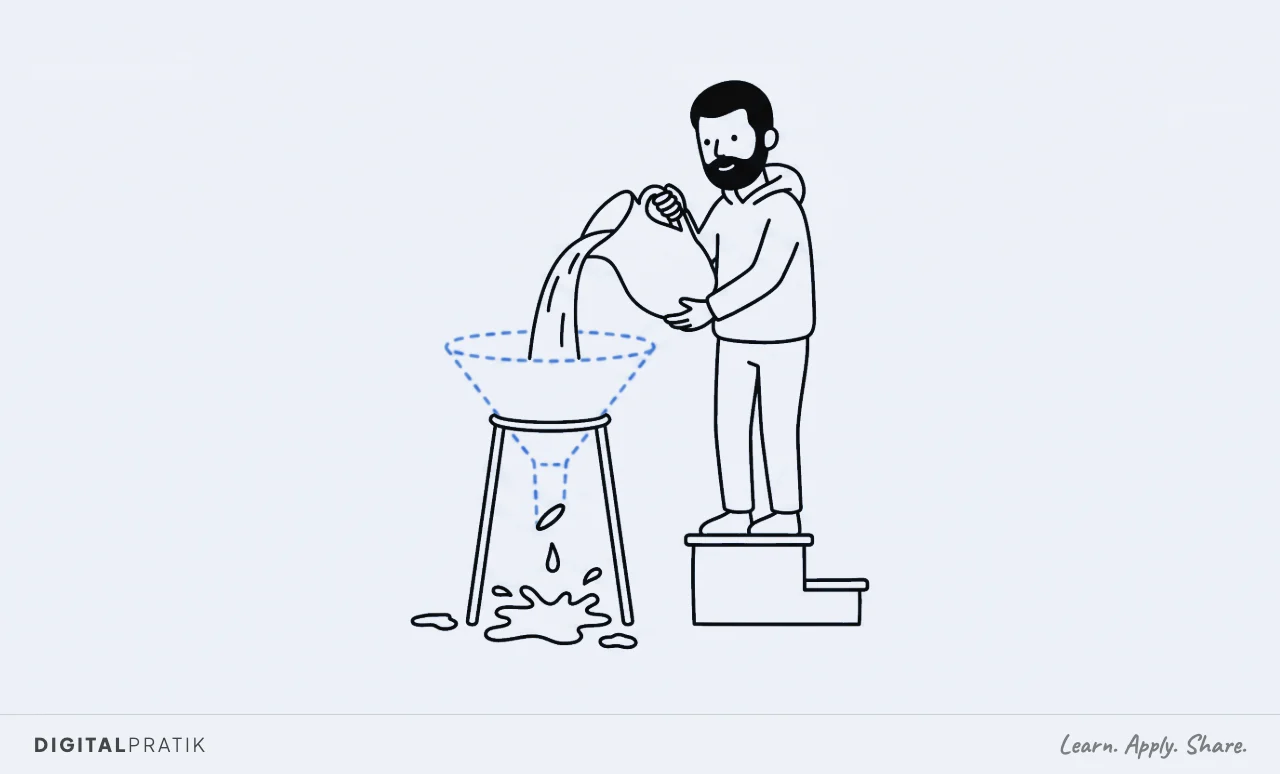
Then run the same audit again in a quarter, not next week. Awareness moves at the speed of your own publishing, so the honest measure of whether this worked is whether the new pool exists three months from now, not whether the two new ads had a good Tuesday.
Where this comes from
Credit where it belongs. The awareness levels come from Eugene Schwartz and his book Breakthrough Advertising.
He is the original on this, and I have learned a great deal from that book. If you want the source rather than my working version of it, that is the source.
I will be honest about the reading experience though. It is a dense old text and it is heavy going.
Plenty of people buy it, get forty pages in and quietly put it down, and that is not a failure on their part.

So what is above is not a summary of his book. It is how I actually use the idea, in live accounts, this year, in the funnel language people currently speak.
That is the version that survives contact with a real ad account, and the two things are worth keeping separate in your head.
The one thing to take away
Before you write anything, ask: what does this person already know? Then write for that person rather than for the person you wish had found you.
Almost every messaging problem I get asked about resolves to that single question, and almost nobody asks it, because the ready-to-buy ad is the easiest one to write and the one that feels most like selling.
Frequently asked questions
Unaware, problem aware, solution aware, product or brand aware, and most aware. They describe what a person already knows at the moment they see your message, and each one needs a completely different ad. The default failure is assuming everyone is further down the list than they actually are.
Unaware and problem aware are top of funnel. Solution aware and brand aware are middle of funnel. Most aware is bottom of funnel. The awareness levels came first and the funnel vocabulary came later, so they are the same idea under two sets of words.
No, and this is the most common misunderstanding. The funnel is which awareness level your message is pitched at, not how you organise campaigns and ad sets. It applies to organic content exactly as much as to paid, which is why you cannot fix a messaging problem inside an ads manager.
It should not sell. Name something the person has normalised and tell them it is not normal, without mentioning your service for most of its length. That reaches people who were never going to search for you, because they had not yet decided anything was wrong.
Because they open the loop rather than close it, so they show worse immediate conversion and better cost per result over a longer window. Judging them on last-click return kills them in week one, which quietly removes the thing that was feeding your bottom of funnel.
Install this in your business
An article gives you the map. A working session gives you the system, built around what you actually sell and who actually buys it.