
Why Your Ads Stop Working After Two Weeks (And the Fix That Is Not "New Creative")
 Digital PratikGrowth Marketing Consultant
 The real reason is that every ad you make speaks to people who are already ready to buy.
That is a small pool at the bottom of your funnel, you retarget it until it has seen everything, and performance drops.
Meanwhile the far larger audience that does not yet know you exist has never heard from you.
The fix is not a new ad, it is a message pitched at a different awareness level.
The pattern is so consistent you can set a calendar reminder for it. An ad launches, performs a bit, and somewhere around day ten to fourteen the cost per result starts climbing.
By day twenty it is not worth running. The standard diagnosis is creative fatigue and the standard prescription is new creative, and both are usually wrong.
The actual cause: every ad you make is a closing ad
Look at your last ten ads honestly. Almost all of them are written for somebody who already knows they have the problem, already knows solutions exist, already knows who you are, and is more or less ready to buy.
Book a call. Limited spots.
Here is what we do.
That person is the bottom of your funnel, and there are not many of them. You show them an ad, then another ad, then you retarget them, then you retarget them again.
It works for a fortnight because that pool was warm. Then it stops, because that pool has now seen everything you have.
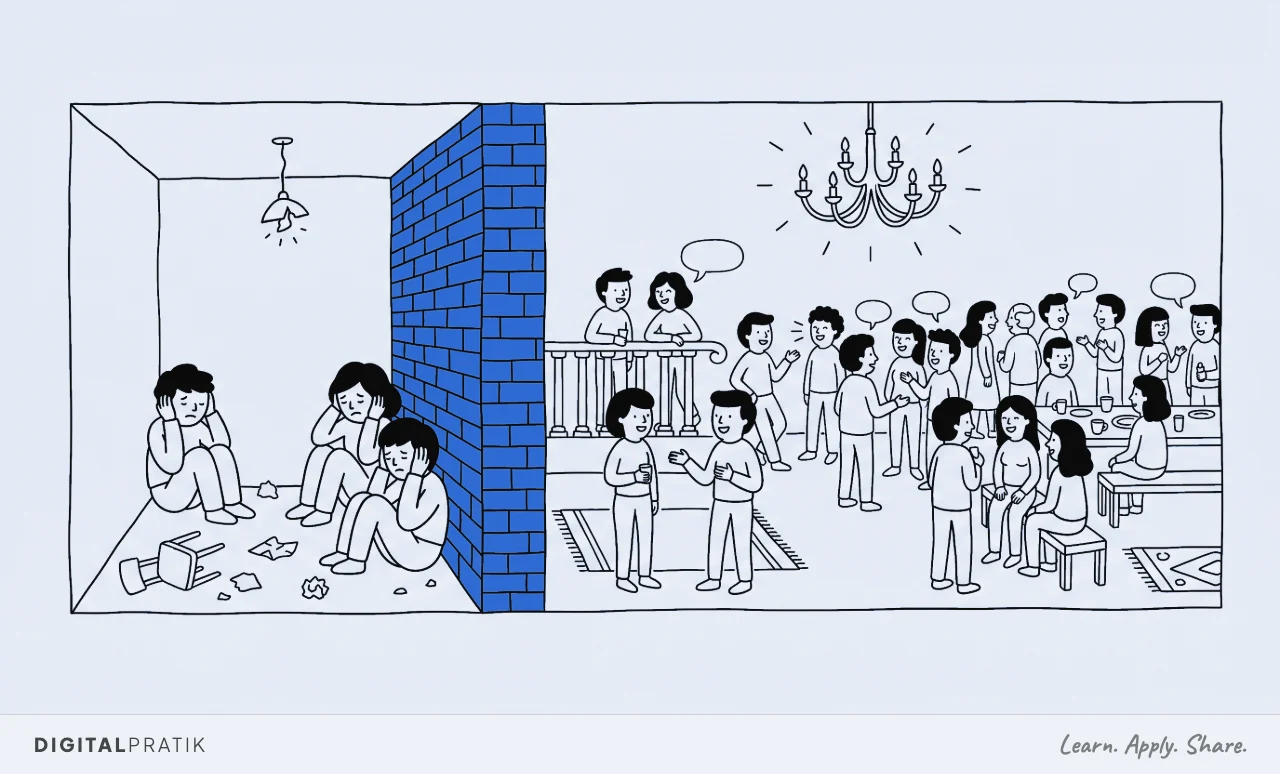
Meanwhile there is a far bigger audience out there who have the problem and have never heard of you, and nothing in your account is speaking to them at all. They do not know you exist.
That is not an algorithm problem. That is a messaging problem you built yourself, one ad at a time.
The five awareness levels, which is what this is really about
People sit at one of five levels of awareness at any moment, and your ad has to be pitched at the level they are actually at rather than the level you wish they were at.
- Unaware. They do not know they have a problem.
- Problem aware. They feel the pain. They do not know a fix exists.
- Solution aware. They know fixes exist. They do not know about you.
- Product or brand aware. They know you specifically.
- Most aware. Ready. They need the offer and a reason to move now.
Bracket those. The first two are top of funnel.
The middle two are middle of funnel. The last one is bottom of funnel, and it is where essentially all of your ads currently live.
The default failure is assuming the person watching already knows you and already has the problem. You would never say to a stranger in the street "this is our latest model, buy it".
But that is what most ad accounts say all day.
| Awareness level | Your account probably has | |
|---|---|---|
| Top | Unaware and problem aware | Almost nothing |
| Middle | Solution aware, brand aware | A little |
| Bottom | Most aware | Everything |
Why a fortnight, specifically
The two week thing is not folklore. It falls out of the arithmetic once you see how small the bottom of your funnel actually is.
Say your reachable market is 100,000 people. The slice that is ready to buy right now, knows the problem, knows the solutions, knows you, is a few percent at most.
Call it 3 percent, which is generous. That is 3,000 people.
Your budget reaches, say, 2,000 people a day. Every one of your ads is written for that ready-to-buy 3 percent.
So in under two days you have technically covered the whole pool once, and within a fortnight the people in it have seen your ads five, six, seven times.
| People | What your ads say to them | |
|---|---|---|
| Ready to buy now | 3,000 | Everything you have made |
| Everyone else | 97,000 | Nothing at all |
That is the whole mechanism. It works brilliantly at first because you are speaking to the readiest people in the market, and then it stops, because there is nobody left in that room and you never built a door to the other 97,000.
Which is also why the new creative does not save you. A new ad shown to the same exhausted 3,000 is a new coat of paint on a room you have already emptied.
Why the standard fix fails
You make a new ad. Different design, different edit, same message to the same cohort.
It runs for ten days, declines, and you conclude that ads on this platform just burn out fast now.
They did not burn out. You showed the same people the same argument in a new outfit.
Nothing about the audience situation changed, so nothing about the result changed.
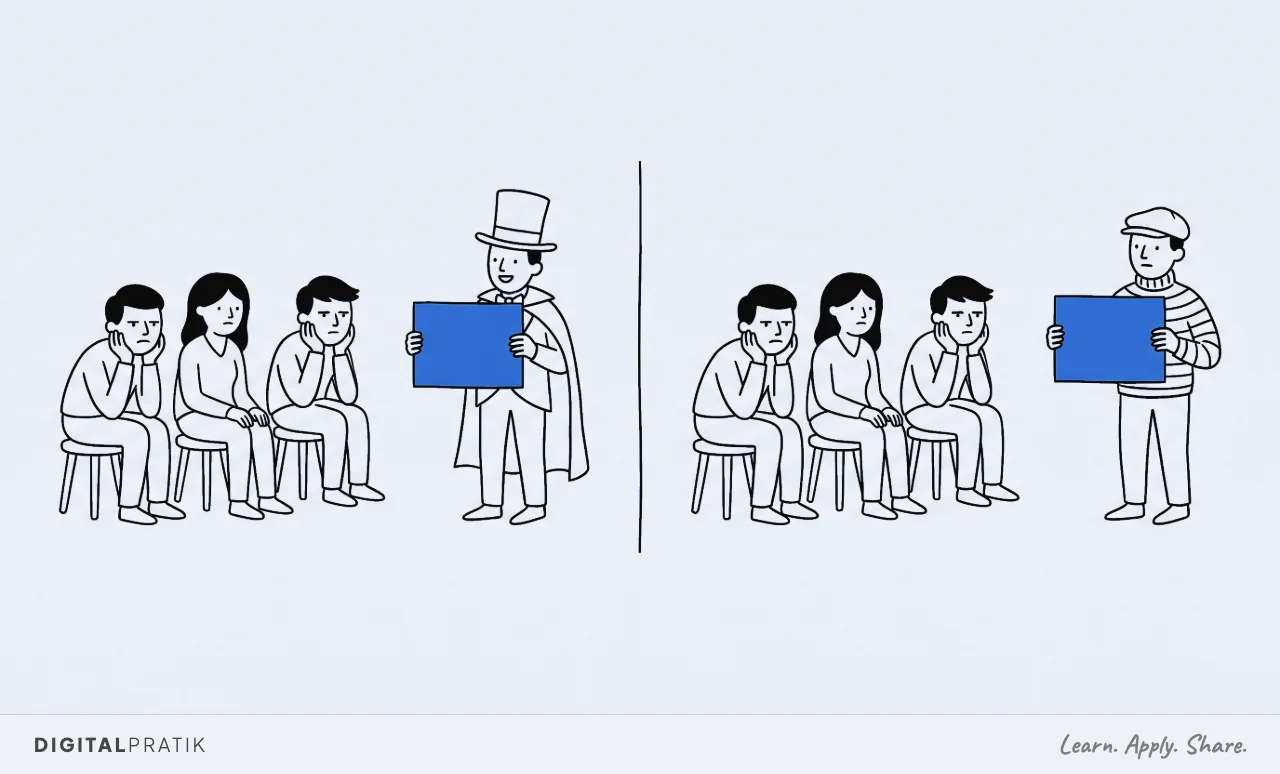
The specific error is treating the creative as the variable when the cohort was the variable all along. Once you have that the right way round, the fix is obvious and much cheaper.
The actual fix: open a new market
Not a new ad for the same people. A message aimed at somebody who has never heard of you and does not yet know this is a solvable problem.
For a physiotherapy clinic, the bottom-of-funnel ad says book an assessment. The top-of-funnel version does not mention the clinic for most of its length.
It says: if you are in your forties and you have started assuming the stiffness in the morning is just age, it usually is not, and here is what is actually happening. That reaches somebody who was never going to search for a physio, because they had not yet decided they needed one.
Same business, same offer underneath, completely different job. And crucially, a completely different pool of people, which is why it does not fatigue on the same schedule.
- Unaware ad. Name a symptom they have normalised. Do not sell anything.
- Problem aware ad. Name the problem precisely and say it has a name and a fix.
- Solution aware ad. Show why your approach differs from the one they tried.
- Brand aware ad. Proof. Someone who looks like them, with their result.
- Most aware ad. The offer. This is the only one most people ever make.
Once you have that spread, the modular production trick makes it cheap to run many versions of each: one common body, a swapped opening. That system is in the cohort creative article, and it is worth reading after this rather than before, because building fifteen variations of a bottom-of-funnel ad just gets you to the same wall faster.
Reading about a system and running one are different jobs. If your business does AED 10 million a year or more, this is what a working session looks like.
Why narrow targeting makes it worse
If you narrowed your audience with interests and lookalikes on top of only writing bottom-of-funnel ads, you built a small pool twice over. You will hit this wall in two to three weeks, every time, and it will feel like the platform is broken.
Broad targeting does not eliminate the problem, but it delays it substantially, because the system keeps finding people you never would have described. That is one of the practical arguments for broad that gets lost in the theoretical ones, and I go through it properly in broad vs detailed targeting.
The rotation approach
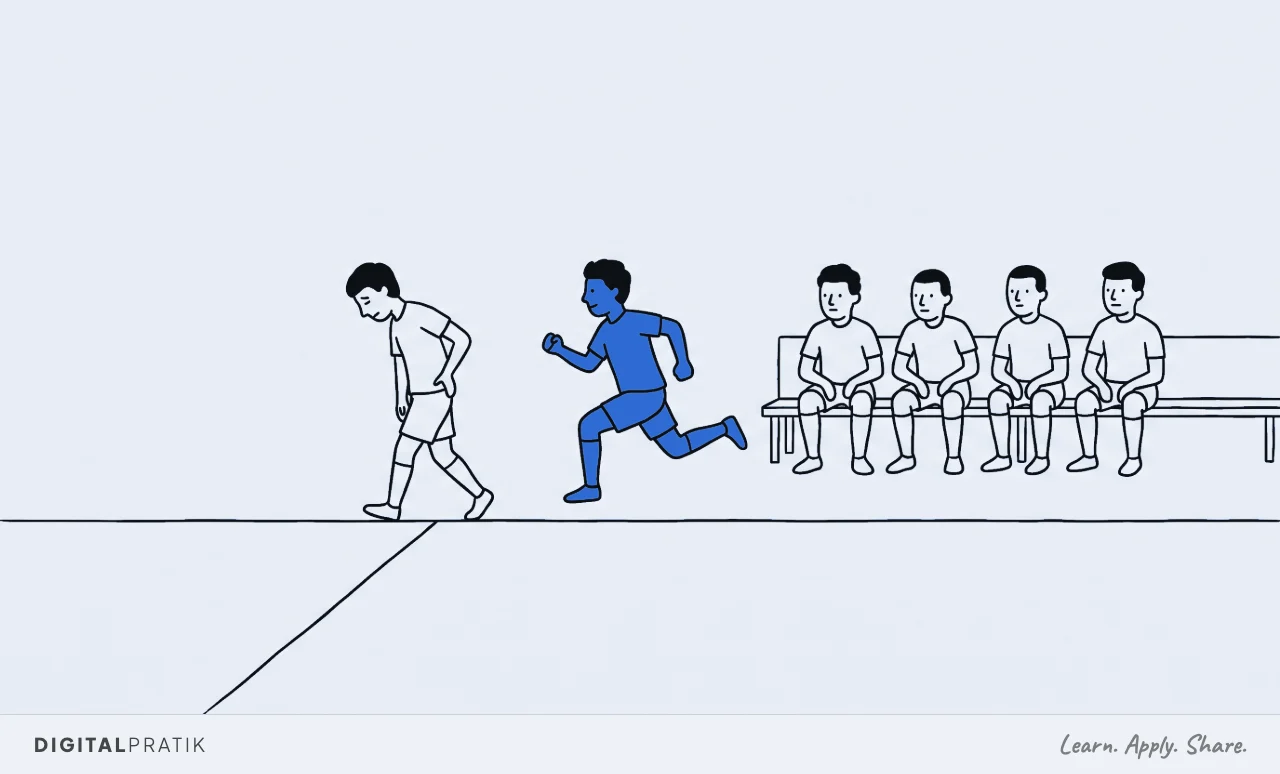
Once you have eight to fifteen cohort angles, this problem changes shape. Instead of one ad dying and a scramble to replace it, you have a rotating bench.
Angles rise and fall on their own schedule, the account average stays steadier, and no single decline is an emergency.
- Run several cohort angles at once rather than one hero ad.
- Give each about ten days before judging it.
- Retire on evidence, not on a calendar. Some angles run for months.
- Keep a bench. Two or three untested cohort openings ready to go.
- Bring good ones back. An exhausted cohort is not exhausted forever. New people enter it every month.
When it really is the creative
To be fair to the standard diagnosis, sometimes it is right. Genuine creative problems look like this: the ad referenced something no longer current, the offer changed but the ad did not, or the hook was always weak and only worked while the audience was fresh and forgiving.
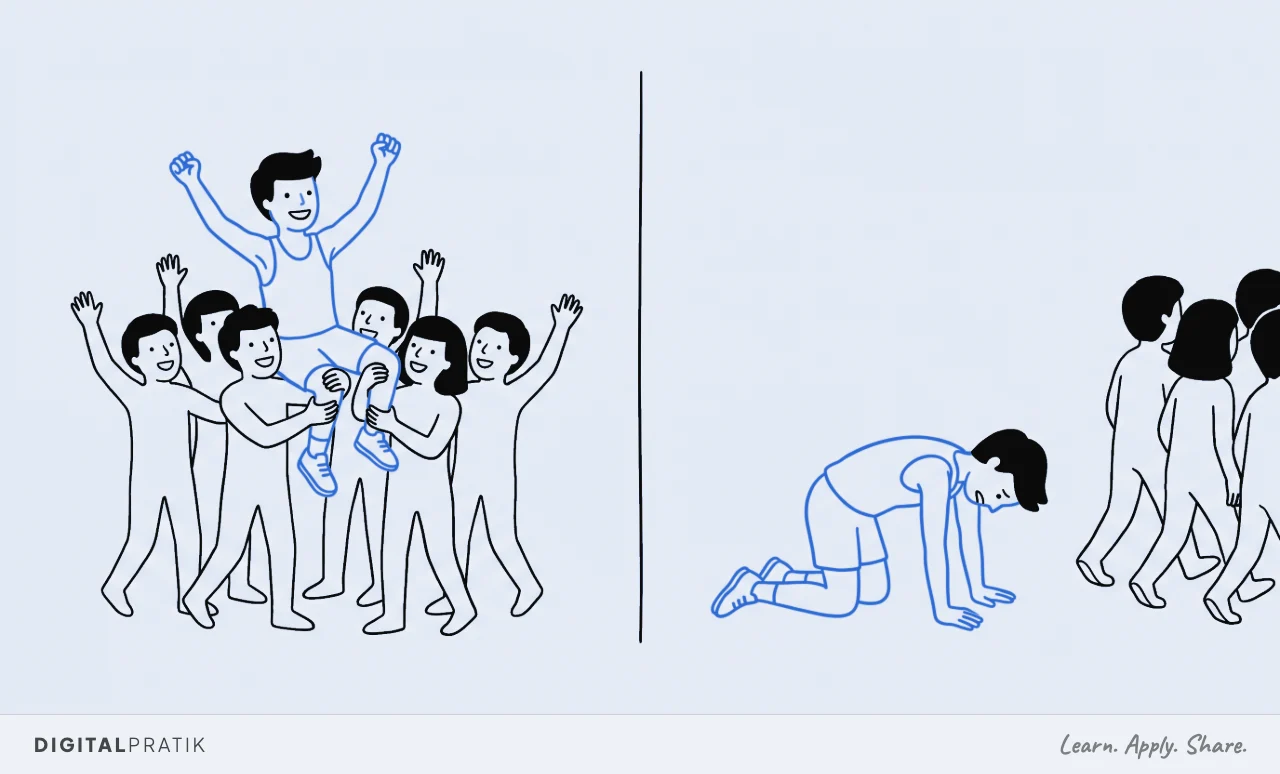
That last one is worth checking honestly. If your hook rate was mediocre from day one and results still came in early, you were being carried by a warm audience rather than by the ad.
When the easy part of the pool ran out, the weak hook got exposed. That is a real creative problem, and it means going back to the opening three seconds, which I cover in the hooks article.
What not to do
Do not restructure the campaign. Splitting into more ad sets, rebuilding audiences, changing the objective mid-flight: these feel like action and they mostly reset your learning while changing nothing about the underlying cause.
Do not panic-increase budget into a declining ad either. More spend against an exhausted cohort just raises frequency faster and makes the decline steeper.
The one-sentence version
When an ad stops working, ask who has never heard of you, not what the ad should look like instead.
Frequently asked questions
Because almost every ad you make is written for someone already ready to buy, which is a small pool at the bottom of your funnel. You retarget it until it has seen everything, and performance drops. The much larger audience who have the problem but have never heard of you was never spoken to at all.
Unaware, problem aware, solution aware, product or brand aware, and most aware. The first two are top of funnel, the middle two are middle of funnel, and the last is bottom of funnel. Most ad accounts contain nothing but bottom-of-funnel messaging, which is why they fatigue so quickly.
Because a new design carrying the same bottom-of-funnel message reaches the same exhausted pool. It runs for ten days and declines identically. The variable was the awareness level you were speaking to, not the creative, so the fix is a message aimed at someone who does not yet know you exist.
Often yes, months later, because the pool refills as people become problem aware, change roles or develop the symptom. An angle that exhausted in March can work again in September, so keep your winners rather than deleting them.
No, it usually makes it worse. Spending more against an exhausted cohort raises frequency faster and steepens the decline. Restructuring the campaign is equally unhelpful, because it resets learning while leaving the underlying cause untouched.
Install this in your business
An article gives you the map. A working session gives you the system, built around what you actually sell and who actually buys it.