
How Many Ad Creatives Do You Actually Need? The Volume Question, Answered
 Digital PratikGrowth Marketing Consultant
 The right number is one creative per genuinely distinct buyer cohort in your market, which for most service businesses lands between eight and fifteen.
It is a coverage question, not a testing-volume question.
Fifteen colour variations of the same message is one creative.
Eight creatives that each name a different person in a different situation is eight.
Every time someone asks how many creatives they need, they want a number they can put in a plan. Three a week.
Twenty a month. I understand the impulse and the number is not the useful part, because two accounts running twenty creatives a month can be doing completely different things.
The question underneath the question
What people are really asking is: how do I stop guessing. And the answer is coverage.
If you have five distinct types of buyer and you are running two ads, three types of buyer are seeing an ad that was written for somebody else. They scroll.
You conclude ads do not work for your industry.
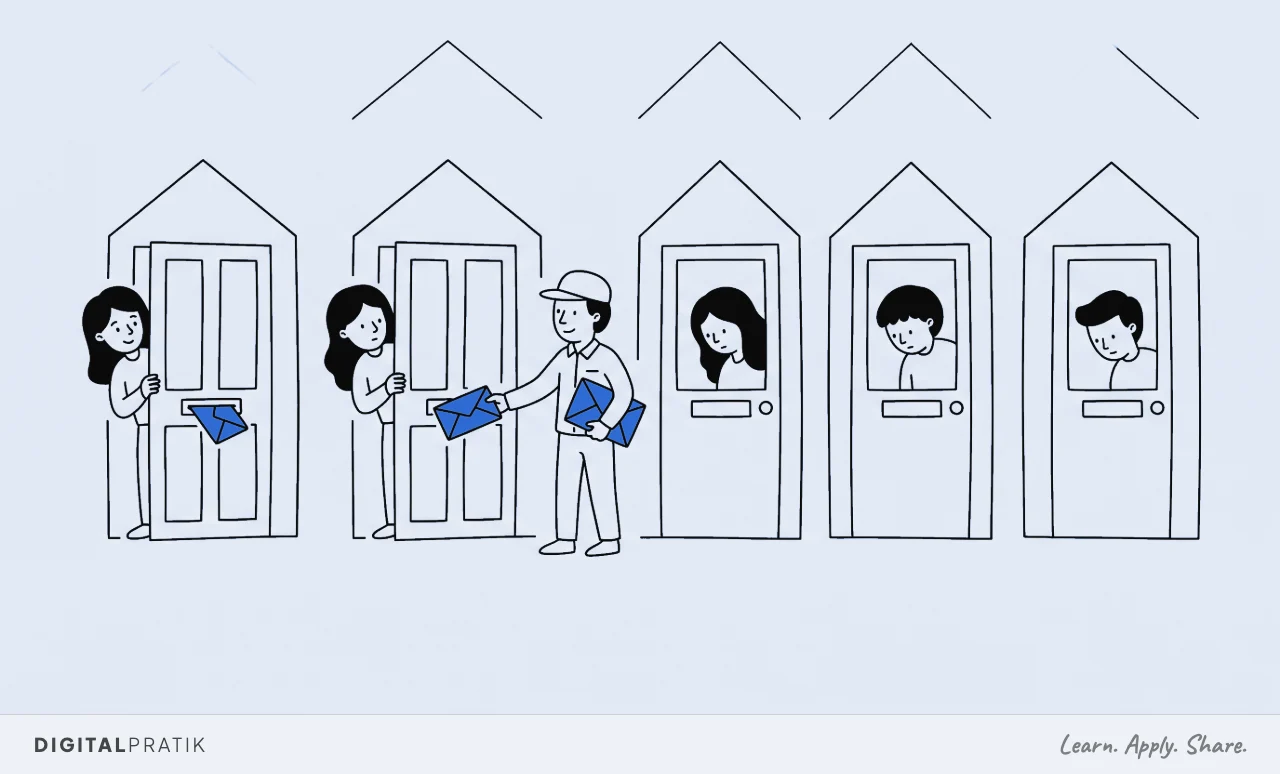
So before counting creatives, count cohorts. That is a research exercise, and it takes an afternoon.
How to count your cohorts
Open the last thirty enquiries you received. Read the first message each person sent, before any of your framing got involved.
Group them by the problem they described in their own words.
You will find fewer groups than you expect and they will be more specific than your marketing currently is. A physio clinic does not have "people with pain".
It has the desk worker in their late thirties whose back hurts by 3pm, the runner with a knee that goes at kilometre eight, the person whose first step out of bed hurts, the post-surgery patient following a protocol, and the parent who cannot lift their kid. Five cohorts, five completely different opening lines.
- Role or identity. What they call themselves. Video editor, clinic owner, consultant, new mother.
- Situation. The specific circumstance the problem shows up in.
- Symptom in their words. Not your clinical or professional term. Theirs.
- Stage. Just noticed it, lived with it for years, already tried three things.
The coverage arithmetic
The number is not a matter of taste. It is coverage, and you can work it out on paper in five minutes.
Say you have honestly identified five distinct kinds of buyer. If you are running two ads, then three of those five kinds are looking at an ad written for somebody else.
They scroll, and you conclude that ads do not work in your industry.
| Ads running | Kinds of buyer covered | Kinds seeing an ad meant for someone else |
|---|---|---|
| 2 | 2 of 5 | 3 |
| 5 | 5 of 5 | 0 |
| 15 | 5 of 5, three angles each | 0 |
Five gets you coverage. Fifteen gets you coverage plus the ability to find out which angle works for each kind of buyer, which is the part that compounds.
That is where the number comes from, and it is why the honest answer to "how many" is another question: how many kinds of buyer do you actually have?
Do this before you argue about production budgets. Most people discover they have more distinct buyers than ads, which means the shortage was never creative quality.
It was arithmetic.
What counts as a different creative
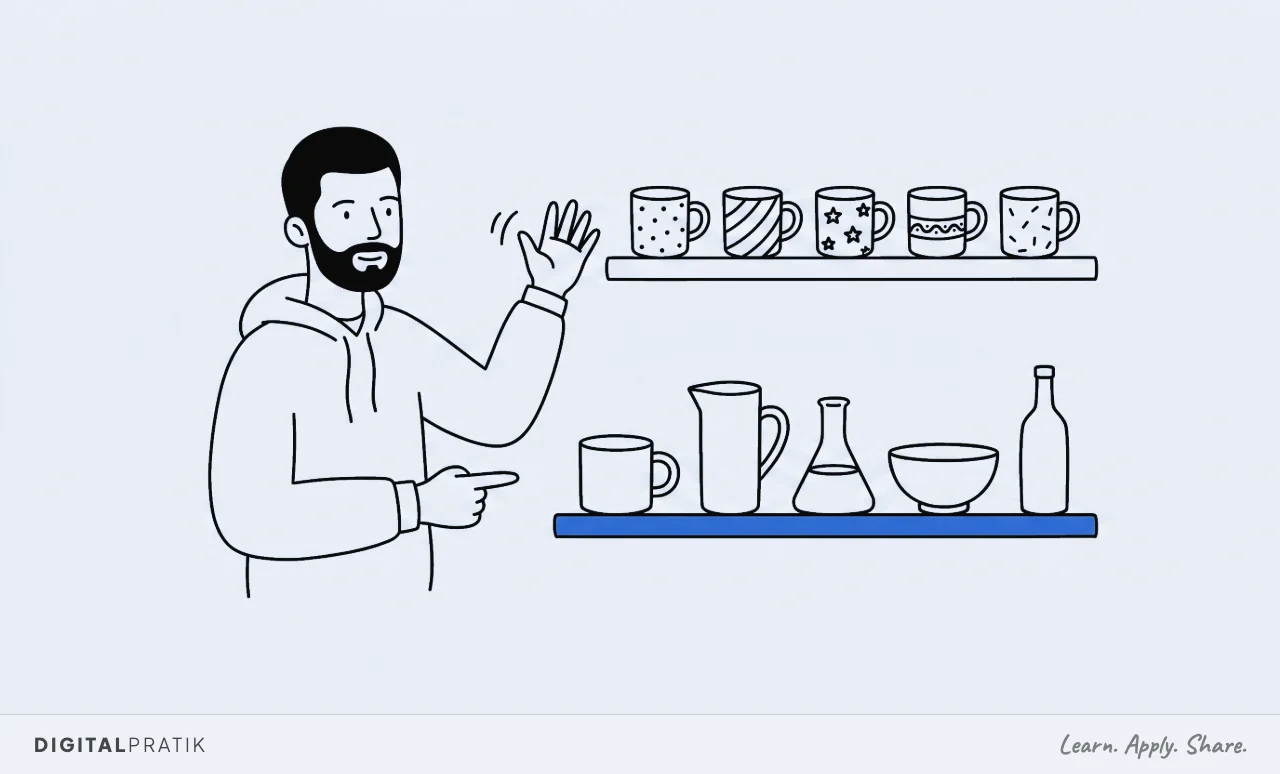
A different person. That is it.
Same offer, same body, same design, different person named in the opening: that is a different creative, and it will perform differently.
A different colour, a different font, a different stock photo of the same idea: that is not a different creative in any way that matters. It will produce almost identical results and you will have burned a week finding that out.
| Change made | New creative? | |
|---|---|---|
| A | Background colour swapped | No |
| B | Headline reworded, same meaning | No |
| C | Opening names a different role | Yes |
| D | Opening names a different symptom | Yes |
| E | Whole offer changed | Different test entirely |
Making volume cheap
The reason people run two creatives instead of twelve is production cost, and that cost is mostly self-inflicted. If every creative is a fresh shoot, twelve is impossible.
If every creative is one recorded body with a swapped opening, twelve is an afternoon.
On our own ads, the body is recorded once and is identical for everybody. Only the first five to seven seconds change, carrying a real story from a real call that belongs to that cohort.
A new cohort costs one new seven-second opening.
For images it is even cheaper. Take one creative that already looks good, and change exactly one element that names the cohort.
Fifteen cohorts, fifteen versions of the same design.
Reading about a system and running one are different jobs. If your business does AED 10 million a year or more, this is what a working session looks like.
Test them for free first
Here is the part that changes the economics. Put your fifteen cohort variations as fifteen slides of one Instagram carousel and post it organically.
Instagram shows per-slide engagement inside a carousel's insights. That means the carousel itself tells you which cohort resonates, slide by slide, before you have spent anything on ads.
The first slide is always inflated because everyone sees it, so ignore it and look at the spikes after.
One of ours went to roughly 8,600 engagements with around 8,000 shares, and the per-slide view showed exactly where people leaned in. The winning slide is pre-validated ad creative.
You are no longer guessing which of fifteen to put budget behind, you are promoting something the market already picked. I cover this properly in the cohort creative article.
How many to run at once in the ad account
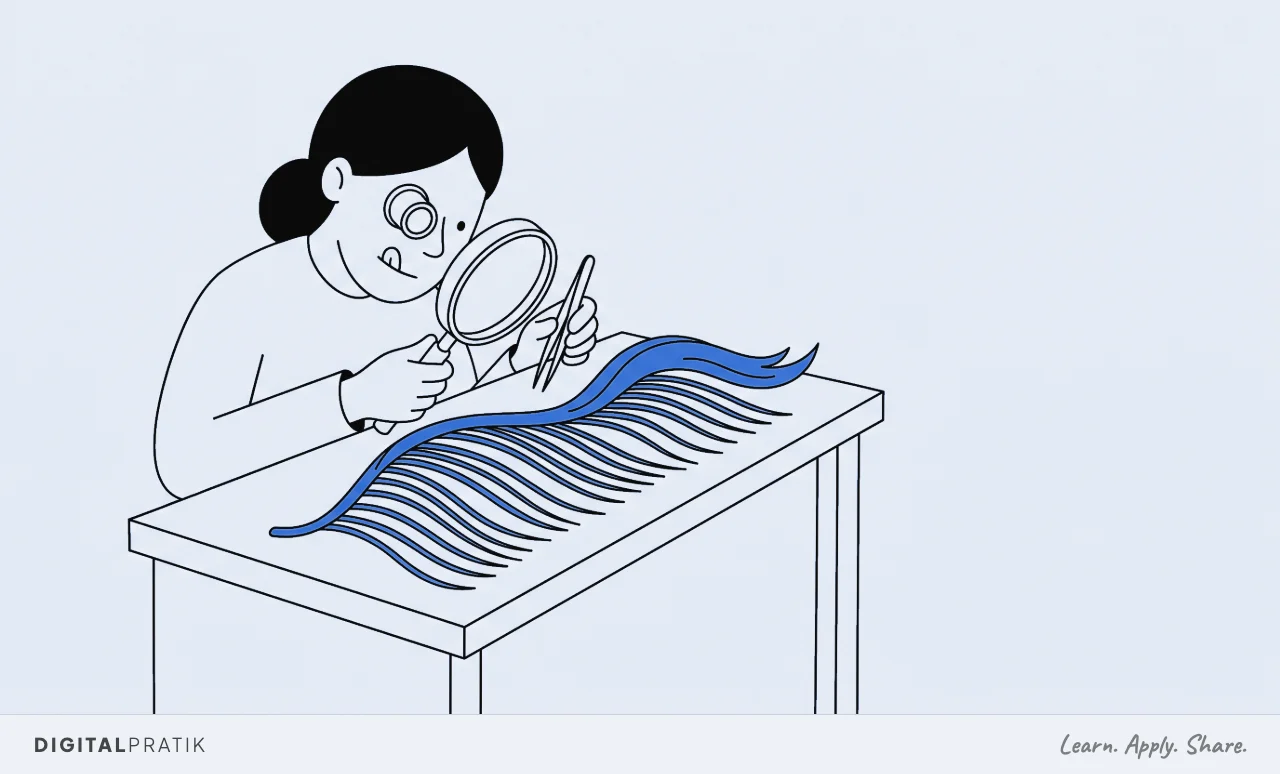
Run enough to cover your cohorts, in one campaign, and give the test about ten days. For most service businesses that is somewhere between eight and fifteen live at a time.
Not because eight to fifteen is magic, but because that is how many genuinely distinct cohorts most service businesses turn out to have.
If you find yourself with forty, you are probably splitting hairs. If you find yourself with three, you probably have not read your enquiries properly yet.
What about budget per creative
I am not going to give you a per-creative budget number, because it depends entirely on what a client is worth to you and how long they take to pay back. Anyone handing you a universal figure is guessing on your behalf.
What I will say is that if your total budget is small enough that fifteen creatives each get almost nothing, run fewer cohorts rather than starving all of them. Coverage matters, but so does giving each angle enough data to say something.
The refresh question
People ask how often to refresh creative, expecting a schedule. There is no schedule.
When an angle stops producing, the usual reason is that the cohort has seen it, not that the creative got stale in some general way.
The right move then is not a new ad about the same thing. It is an ad about the same offer for a different cohort.
That distinction matters more than it sounds and I have written it up separately in why ads stop working after two weeks.
The honest summary
Stop asking how many. Ask who is not currently being spoken to.
Then make the ad for them, using their words, and let the platform do the finding. The number falls out of that question rather than the other way round.
Frequently asked questions
Enough to cover your genuinely distinct buyer cohorts, which for most service businesses is eight to fifteen. Run them in one campaign with broad targeting and give the test about ten days. The number comes from your cohort count, not from a general best practice.
No. A cosmetic change produces near-identical results and wastes a testing cycle. A new creative means a different person is named in the opening: a different role, a different symptom, a different situation. That is what actually changes performance.
Build them modularly. Record one common body that explains your offer and keep it identical, then swap only the first five to seven seconds for each cohort. For image ads, take one design that already performs and change exactly one element that names the cohort.
Post the variations as slides of one Instagram carousel and read the per-slide engagement in the post insights. That tells you which cohort leans in before any ad spend. Ignore the first slide, which is always inflated, and look at the spikes after it.
If you have more than about fifteen you are usually splitting hairs rather than finding real distinctions, and each angle ends up with too little budget to produce a readable signal. If you have fewer than five, you probably have not read your actual enquiry messages closely enough yet.
Install this in your business
An article gives you the map. A working session gives you the system, built around what you actually sell and who actually buys it.