
The 3A Machine: AI to Build, Automation to Run, Ads to Scale
 Digital PratikGrowth Marketing Consultant
 The 3A Machine is three moves in a fixed order: AI to build, automation to run, ads to scale.
You use AI to build the assets you used to pay a team for, automation to make those assets run without you in the chair, and ads to pour fuel on the result once it actually works.
The order is the framework.
Ads on a machine that still needs you in every step will only make you lose money faster.
This is the spine of everything I build. Not three tools I happen to like.
One system where each move makes the next one stronger, run in an order that most founders get exactly backwards.
Why a machine and not a tactic
Most founders chase one shiny tool at a time and wonder why nothing compounds. They buy the ad course, then the funnel builder, then the AI subscription, then the automation platform, and at the end of the year they have twelve logins and the same revenue.
Each purchase was defensible on its own. None of them fed the next one.
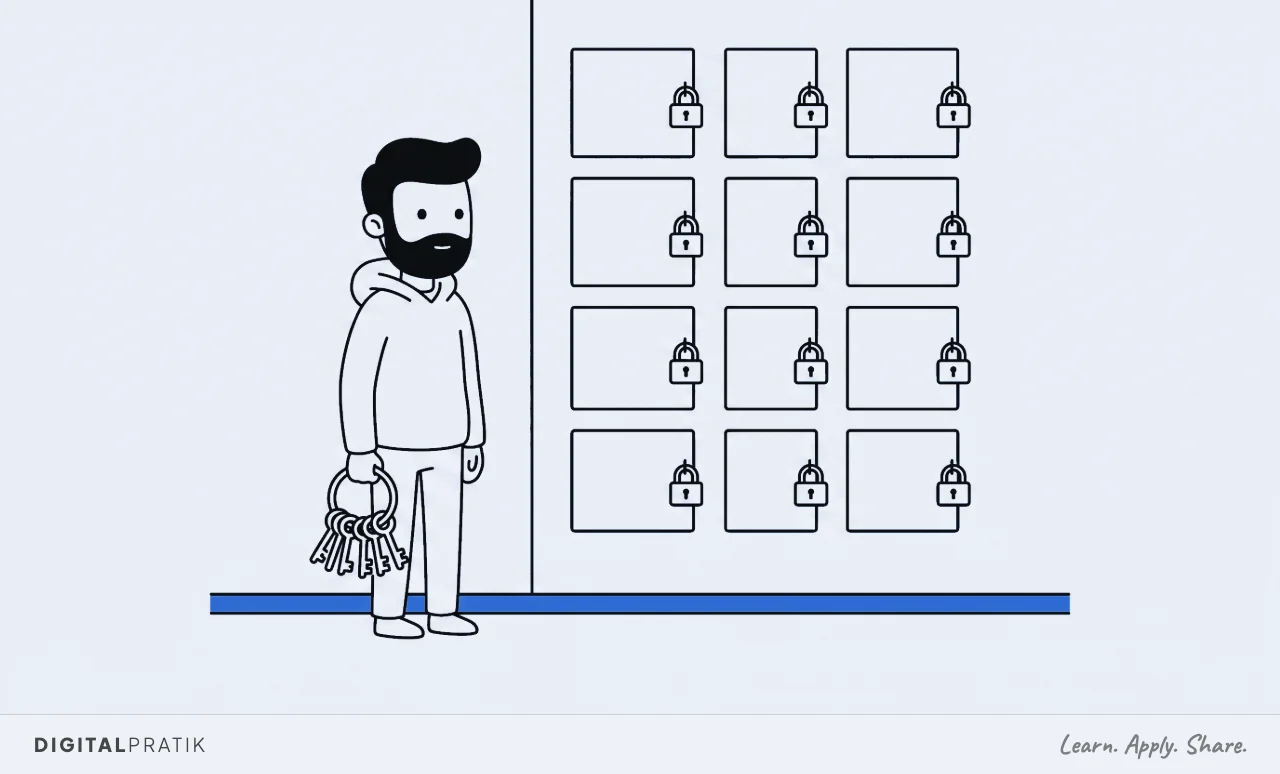
The 3A Machine fixes that by refusing to treat the three as separate purchases. AI, automation and ads are three stages of one pipeline, and each stage only works because the one before it did its job.
That is the entire idea, and it is why I keep calling it a machine rather than a stack.
I run a Dubai company that builds these for founder-led service businesses, and I have run this on myself first every single time. Everything below is the order I actually use, including the parts where I got it wrong before I understood the order.
A is for AI, and AI is for building
The first A is the cheapest leverage available to a founder right now, and most people are using it for the wrong thing entirely. They use AI to answer questions.
The unlock is using it to build the assets you used to pay a team for.
The offer. The funnel copy.
The ad scripts. The dashboards.
The reporting. The operating brain that every other part of the machine reads before it acts.
Work that used to take a month and a small agency takes a night. Speed is the first unfair advantage, and it is available to you today with no hiring, no contracts and no runway.
The build list, in the order I do it
- The offer. Before anything else. What you sell, to whom, against which problem. Everything downstream is decoration if this is vague.
- The operating brain. One plain text file that holds who you are, who you serve, what you sell, how you sound and what you never do. Every agent you ever run reads it first.
- The assets. Landing page, ad scripts, follow up sequences, proposal templates, reporting. The things that used to be quotes from freelancers.
- The measurement. The handful of numbers you will actually look at. Build this before you spend, not after you panic.
The operating brain is the part people skip
My business has a brain and it is a text file. It sits at the root of my system and every AI agent I run reads it before it does anything.
It holds who I am, how I talk, what we sell, who the client is, the rules and the do-nots. So when any agent acts, it acts like me rather than like a generic robot.
This matters because the bottleneck of AI is not intelligence, it is context. The model is brilliant and amnesiac.
It forgets you the second the chat ends. The founders winning with this are the ones who solved memory by writing their business down in a way a machine can read on every single task.
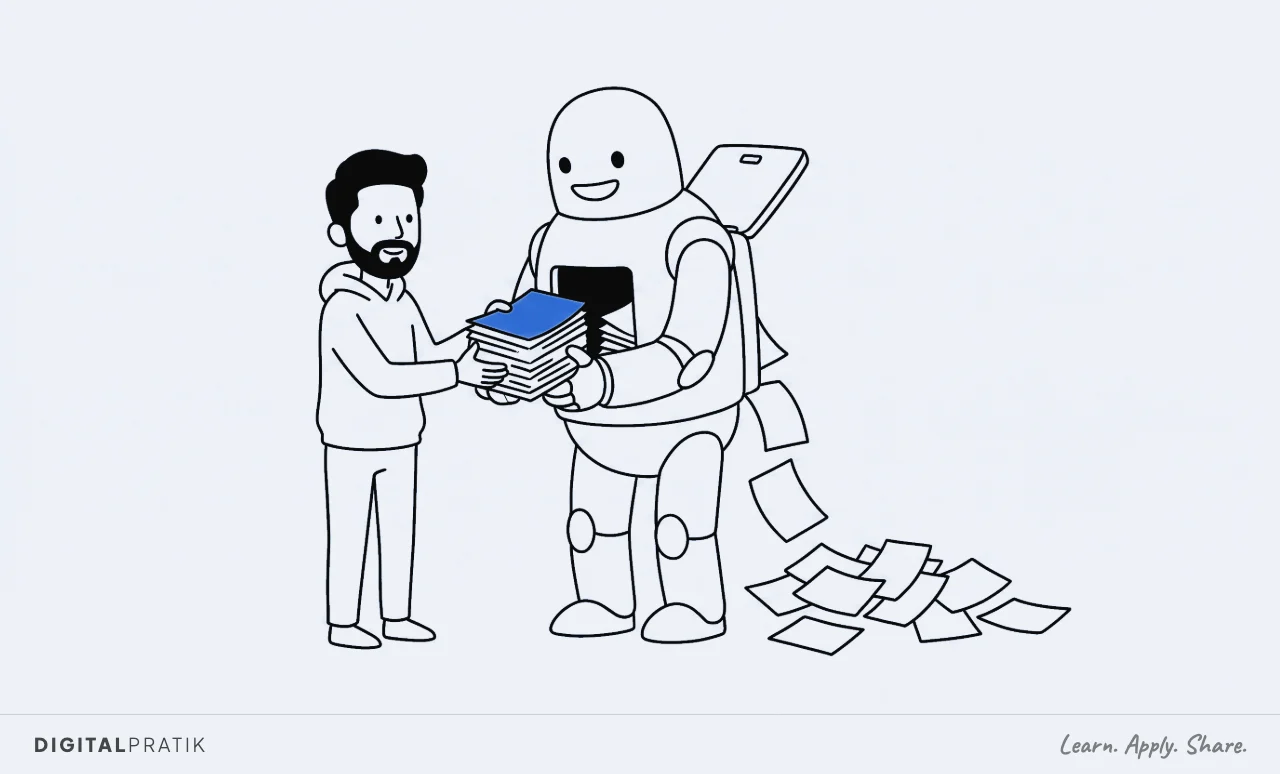
Think of it as onboarding a new hire who never sleeps, never forgets, and reads the handbook before every action. You would never let a new employee talk to clients untrained.
People let raw AI represent their brand with zero context and then wonder why the output sounds hollow. Start with five sections: who you are, who you serve, what you sell, how you sound, what you never do.
Every time it gets something wrong, you do not just fix the reply, you fix the file. The mistake becomes a rule and the brain gets sharper every week.
Where the first A stops
AI builds. It does not decide what is worth building.
It will write you a beautiful funnel for an offer nobody wants, at speed, without complaint. Taste, judgment and the decision about which problem you are solving stay yours, and they get more valuable as production gets cheaper, not less.
I have written a whole piece on what AI actually takes and what it hands back.
A is for automation, and automation is for running
Here is the trap in the first A. A built asset still needs a human babysitter unless you wire it to run itself.
You can use AI to build a magnificent follow up sequence and then spend your evenings personally pasting it into a CRM. You have not bought leverage.
You have bought a faster hamster wheel.
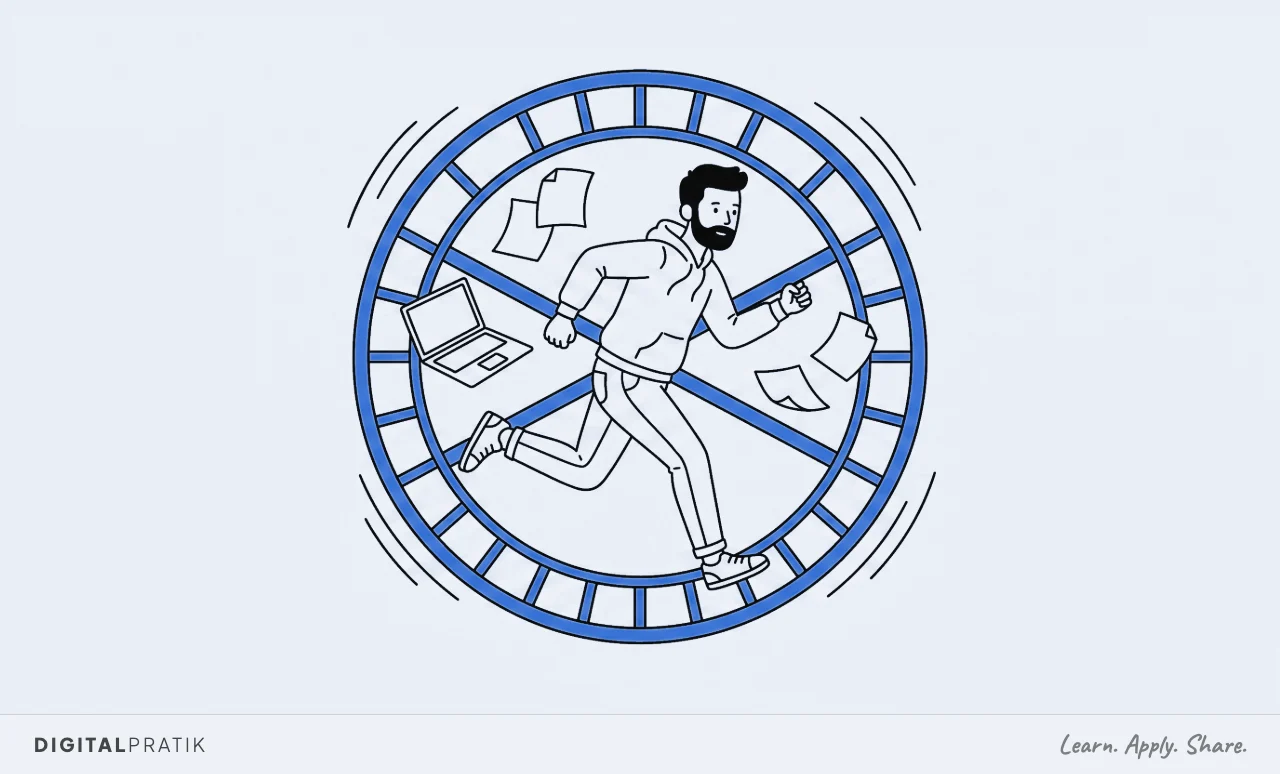
Automation is the move that removes you from the daily grind: the follow ups, the receipts, the reporting, the routing, the chasing. It is the difference between owning a business and owning a job.
If the whole thing stops when you sleep, you own a job with better branding.
The belief underneath this is the one I run my own company on. Founder-dependence caps scale.
A service business stalls because sales, delivery and every decision route through one person, and that person has a fixed number of hours. Everything in the second A exists to take the founder out of the loop, in that order of priority.
What to wire first
Start where the leak is measurable and the result shows up the same week, which in almost every service business is intake. A lead arrives, it sits in someone inbox, you are on a call, and by the time anyone responds they have already hired whoever answered first.
Speed to lead is not a marketing nicety, it is the difference between a client and a near miss. Fix that, prove it fast, then expand outward.
I go through the full order in what to automate first, and what to leave alone.
The gate that makes the whole thing safe
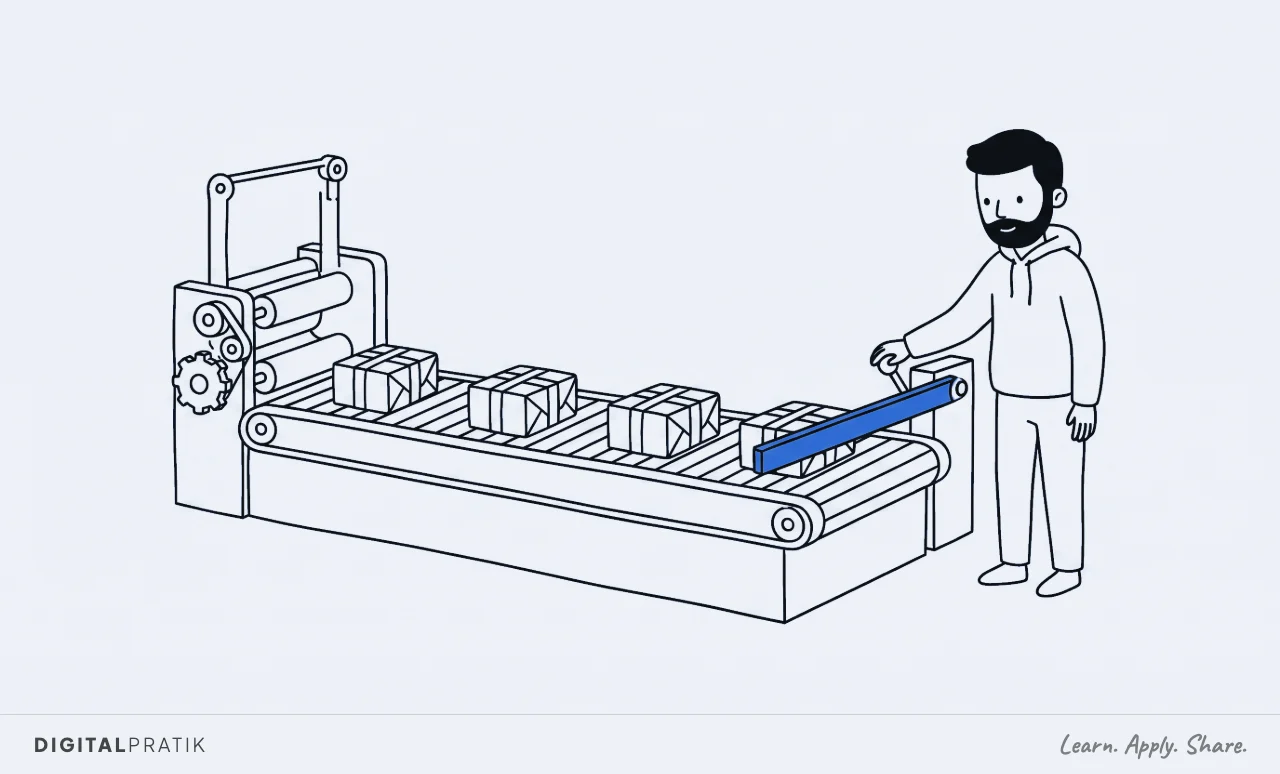
The thing that stops automation becoming a disaster is one design choice. The system does all the work right up to the final irreversible action, then stops and waits for your yes.
It drafts the reply, you approve the send. It builds the campaign, you approve the launch.
Anything reversible and cheap runs free. Anything that touches money, reputation or another human gets gated.
That is the human gate, and I would build it before I built the autopilot.
A is for ads, and ads are for scaling
Once the machine genuinely works without you, you pour fuel on it. Meta ads are the multiplier, and they are the fastest way I know to turn a working system into a bigger one.
But here is the trap almost everybody walks into. You do not run ads on a broken machine. Ads scale what already exists. If your offer is weak, ads get it ignored faster and at a higher cost.
If your follow up is manual, ads bury you. If you cannot deliver what you sell, ads hand you a reputation problem with a receipt attached.
Meta is an amplifier, not a magician.
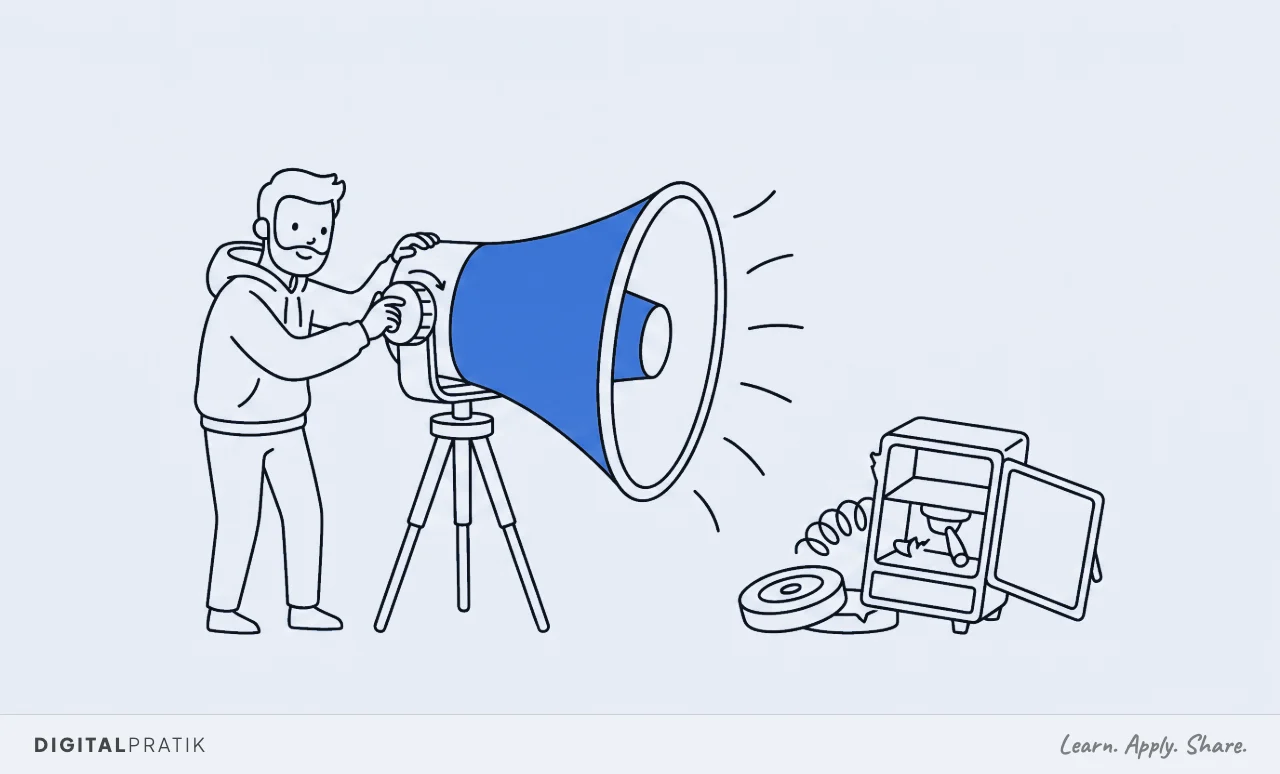
That is why ads are the third A and not the first. Almost every founder who tells me ads did not work for them was running ads at stage three on a business that had not finished stage one.
The ads were fine. The machine underneath them was not.
What actually breaks when you turn the budget up
Scaling is not a volume knob. As you spend more you reach colder and more skeptical people, and the thing that carries a cold audience is proof rather than adjectives.
The account that worked at a small budget often stops working at a larger one for reasons that have nothing to do with the media buying, which I have covered in what actually breaks when you increase the budget and why cold traffic needs evidence.
The other half of the third A is creative. Media buying skill has collapsed to near zero because the platform now does the optimisation that used to be your edge.
What is left is creative as the new targeting: the message, the cohort it is pitched at, and how many genuinely different swings you take.
The mistake that looks like ad fatigue
One specific failure shows up so reliably in the third A that it is worth naming inside the framework. Ads stop working after a couple of weeks, everyone blames creative fatigue, and everyone makes a new advert for the same audience.
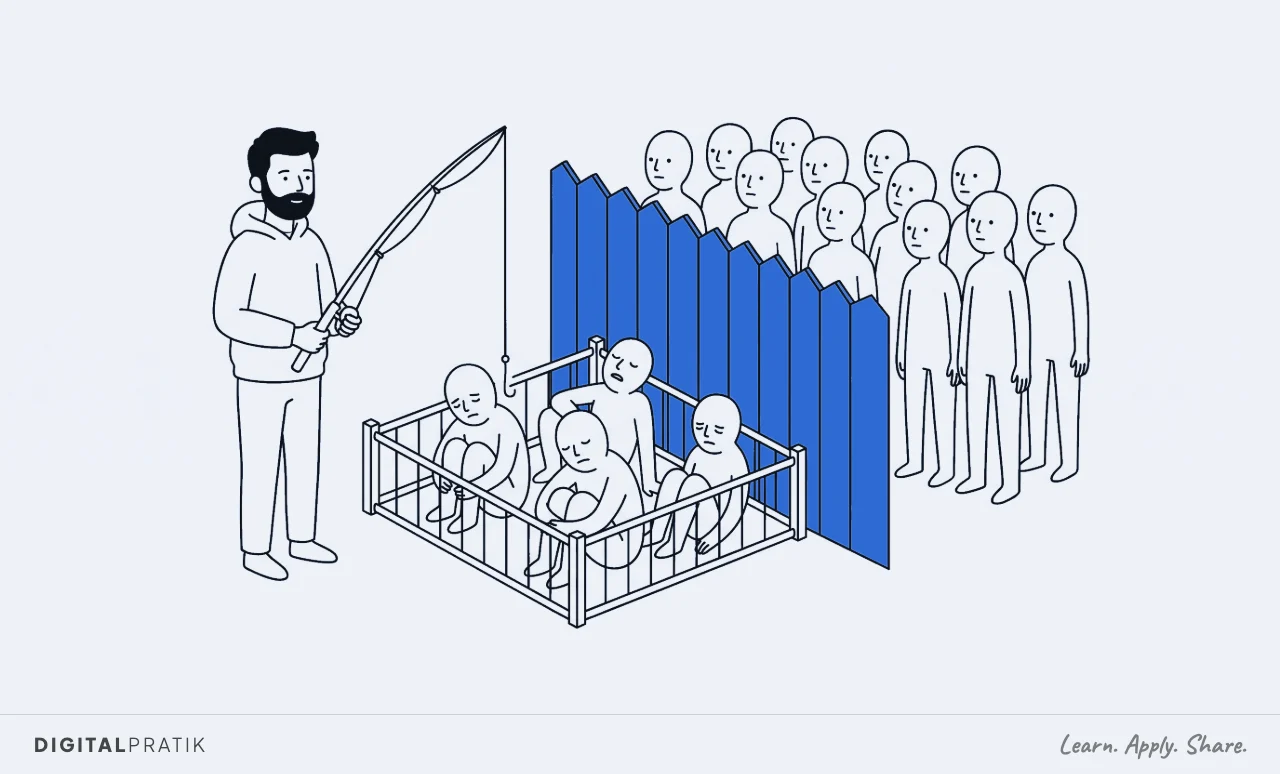
Usually that is not what happened. What happened is that every advert you have ever made is pitched at people who are already ready to buy, so you keep re-reaching a small pool until it is exhausted while the far larger group who do not yet know they have a problem never hears from you at all.
The fix is messaging pitched at the earlier stages rather than a fresh creative for the same tired audience. The full version is in why your ads stop working after two weeks and the map underneath it is the five market awareness levels.
The order is the whole framework
If you remember one thing, remember this. Build, then run, then scale.
Founders do it backwards almost universally, and the backwards version has a predictable failure story.
They buy ads first because ads feel like action. They get a handful of sales, which proves the demand is real.
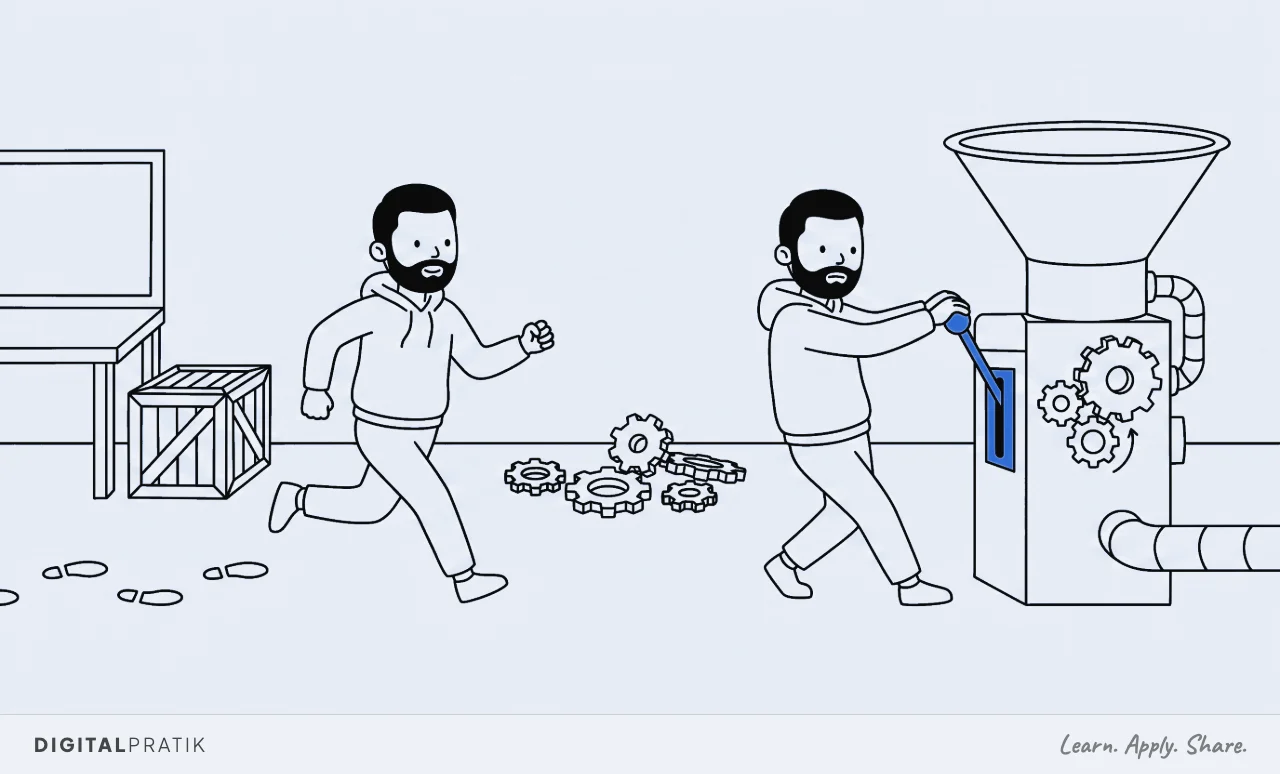
Then they burn out filling those orders by hand, because nothing was automated and nothing was built to run without them. Delivery slips, quality drops, the reviews get shaky, and they conclude that ads do not work or that their market is too competitive.
Neither is true. They ran the third A on a business that had not done the first two.
| The job | Skip it and you get | |
|---|---|---|
| AI | Build the assets | Agency bills for a night of work |
| Automation | Run them without you | A faster hamster wheel |
| Ads | Multiply what works | A perfect machine nobody sees |
Read that last column again, because both failure modes are real and I see them in roughly equal numbers. AI without automation is a faster hamster wheel.
Automation without ads is a beautiful system with no traffic pointed at it. The machine only pays when all three run in sequence.
Reading about a system and running one are different jobs. If your business does AED 10 million a year or more, this is what a working session looks like.
Which A is your weak one
The diagnostic is short and slightly uncomfortable. Ask which of the three you are worst at, and be honest rather than flattering.
That answer is your next ninety days, and it is almost never the A you were about to spend money on.
- If AI is your weak A, you are still buying things you could build. Your costs are structurally too high and your speed is capped by other people calendars.
- If automation is your weak A, you are the bottleneck. Revenue grows and your life gets worse in direct proportion. This is the most common one.
- If ads are your weak A, you have a working machine that only your existing network knows about. This is the nicest problem on the list and the fastest to fix.
There is a fourth answer that people give and it is usually wrong: "all three". If everything is weak, the correct move is still to fix them in order, because a fix in the second A is worth nothing until the first A has produced something worth running.
How this connects to the three problems
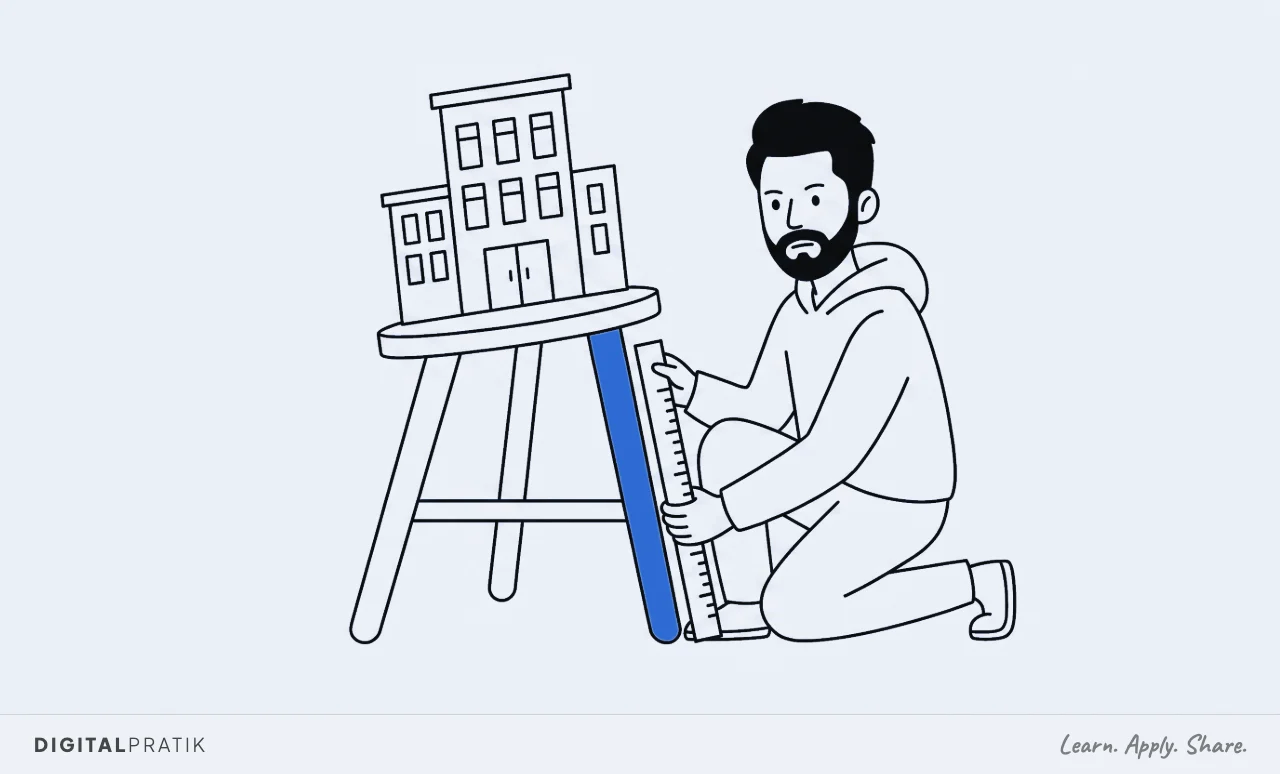
The 3A Machine is how you build. It does not tell you what to sell.
That comes from a separate framework, and it is worth naming here because the two get confused constantly.
Every market has a hundred problems. Only three are the kind a customer will gladly hand you money to solve, over and over, without being convinced: acquisition, conversion and capacity.
Acquisition is "I do not have enough new clients". Conversion is "I get inquiries and they do not buy".
Capacity is "we have leads, we are closing them, and I am the bottleneck".
You do not pick which one you solve. Your market picks for you.
Read the first messages from your last ten paying clients and sort them into those three piles. The biggest pile is what business you are actually in.
The 3A Machine then runs against whichever one you found.
Most of you are not stuck because you lack a strategy. You are stuck because you are solving the wrong problem, at speed, with good tools.
The stack question, and why it is the wrong first question
The most common question I get about this is which tools I use. It is the wrong question and it is wrong in an instructive way, so it is worth answering properly rather than dodging.
People assume the tool is the magic. It is not.
When people see my knowledge base they assume the note taking app is the product, and the app is just a pretty way to look at notes. What actually makes it work is your knowledge stored as plain text, a way for an AI to search it by meaning, and a model that reasons over it in your voice.
The application is optional. The system is everything.
The same is true across all three A's. Two businesses running an identical stack in a different order get completely different outcomes, and one of them will tell you the tools do not work.
Stop shopping for tools. Start feeding the machine.
The practical version of that: decide the sequence first, then pick the cheapest thing that does each job, then only upgrade when a specific limit is actually hurting you. Almost nobody is held back by their software.
Nearly everybody is held back by their order of operations.
The three A's are not equally hard
Worth setting expectations, because the difficulty is uneven and people budget as though it is not.
The first A is the easiest it has ever been and getting easier every month. Work that genuinely required a team five years ago is now a focused evening for a founder who can describe what they want clearly.
This is the part where the change is real rather than hyped.
The second A is the hardest and it is the one people underestimate badly. Not technically hard.
Hard because it forces you to write down how your business actually works, and most businesses discover during that exercise that the process nobody had documented was also the process nobody agreed on. The automation is quick.
The clarity it demands is the work.
The third A is the most expensive to get wrong and the fastest to show you whether the first two worked. It is also the only one where the feedback is immediate and financial, which is why founders like it and why they reach for it too early.
What the 3A Machine is not
It is not a software stack. Nobody has ever solved a growth problem by buying the same tools as someone whose business works.
The tools are downstream of the sequence, and two businesses running the identical stack in a different order get wildly different outcomes.
It is not a promise that you remove humans. Every part of the machine that touches money, reputation or a real person keeps a person on it deliberately.
What you remove is the grunt work in between, which is most of it.
It is not a one weekend project. The build is fast now in a way it genuinely was not five years ago, but the sequencing takes discipline, and the discipline is the part people skip because it is less fun than buying something.
And it is not a way to fix a business that has no demand. If nobody wants what you sell, the machine will help you discover that faster and more expensively than you would have otherwise.
That is a feature, but it is not the feature people are hoping for.
The honest version of building one
I checked my own system against the five AI architectures that everyone posts infographics about, publicly, and I published the scorecard including the parts I had not built. Retrieval over my knowledge base: done.
An agent team with an engine that grades its own work: mostly. Multimodal: half, and I said so rather than pretending.
Automated testing of answer quality: my weakest area at the time, and I named it out loud before anyone could catch it.
I mention that because the failure mode with the first A is theatre. Anyone can post a diagram.
Very few people can open the actual system behind it, and the gap between those two groups widens every week. Honesty about what you have not built is what makes the things you have built believable.
I would rather show a real sixty percent than fake a perfect hundred.
Do the same on your own machine. Write the three A's down, mark honestly what exists, what half exists and what is imaginary, and then go build the smallest real version of the weakest one.
The ninety day version
If you want the compressed shape of it, here is what I would do with a service business that is already earning and already stuck.
- Weeks one to three. Name the problem you solve from your own client conversations, not from your aspirations. Rewrite the offer around it. Write the operating brain file.
- Weeks four to seven. Build the assets with AI. Landing page, follow up, proposal, reporting. Do not perfect them. Get them real.
- Weeks eight to ten. Wire intake first, then follow up, then reporting. Put the human gate on anything irreversible. Test it with deliberately messy inputs before a real client does.
- Weeks eleven to thirteen. Only now, turn on ads. Start small enough that a bad week is survivable, and measure against your own numbers rather than the platform dashboard.
That last point matters more than it sounds. The platform is not your source of truth, and a founder who scales on reported numbers alone eventually kills the ad that was doing the real work.
Set up true ROI measurement before the budget goes up, not after.
Who this is actually for
I build these for founder-led service businesses doing thirty thousand a month or more. Consultancies, agencies, professional service firms.
Deliberately not people selling information products, because the delivery problem is different and the third A behaves differently when there is no capacity constraint.
The reason for that floor is not snobbery. Below it, the honest advice is usually that you have an offer problem rather than a machine problem, and building a machine around an offer that has not proven itself is an expensive way to find that out.
A business under thirty thousand a month almost always needs to fix what it sells and who it sells to first.
Above it, the pattern is remarkably consistent: demand exists, the founder is the constraint, and the business has quietly stopped growing at a number that has more to do with one person calendar than with the market.
Start with the weak A tonight
The whole framework fits in one line: AI to build, automation to run, ads to scale. The value is not in the line, it is in refusing to run it out of order when running it out of order feels faster.
Pick your weakest A. Give it the next ninety days.
That is the whole assignment, and it is the same one I give myself every time something in my own business stops compounding.
Frequently asked questions
It is a three stage growth system for service businesses: AI to build, automation to run, ads to scale. You use AI to build the assets you would otherwise pay a team for, automation to make those assets run without the founder in the chair, and paid ads to multiply the result once the machine works on its own. The order is the framework, not a preference.
Because ads amplify whatever already exists. If the offer is weak, ads get it ignored faster and at a higher cost per person. If delivery and follow up are still manual, more leads makes the business worse rather than better. Running ads on an unfinished machine is the single most common and most expensive sequencing mistake in a service business.
You can, and you will get real value from the speed, but you will not get leverage. Using AI to produce more work that you still process by hand gives you a faster hamster wheel: more output, the same trapped founder, and usually longer days. Automation is the stage that converts speed into freedom.
The first two stages stand alone and will make a business calmer and more profitable on its own. What you lose is the multiplier. A fully automated machine with no traffic pointed at it is a quiet, perfect system that nobody sees, which is a genuinely nice problem to have and still a ceiling.
Ask which one you are worst at and answer honestly. If you are still buying things you could build, it is AI. If revenue grows and your life gets worse, it is automation, which is the most common answer. If the machine works but only your existing network knows about it, it is ads, which is the fastest of the three to fix.
Install this in your business
An article gives you the map. A working session gives you the system, built around what you actually sell and who actually buys it.