
What to Automate First in a Service Business (And What to Leave Alone)
 Digital PratikGrowth Marketing Consultant
 Automate intake first.
It is where a service business leaks the most money, the leak is measurable, and the result shows up the same week, which buys you the confidence to keep going.
After that: documents and proposals, then follow up and collections, then reporting.
Leave alone anything that carries your judgment, and gate anything that moves money or speaks to a real person.
Most automation projects die because they start in the wrong place. Not because the tooling was wrong, because the first win took three months to show up and everyone quietly lost interest.
The rule that decides the order
Pick the leak that is obvious, measurable, and produces a result the same week. That is it.
Not the biggest theoretical saving, not the most interesting build. The one you can point at on Friday and say "that used to take four hours and it took eleven minutes".
The reason is political rather than technical. The first automation has to earn the right to build the second one, whether you are convincing a team, a client, or the part of yourself that thinks this is all a distraction from doing real work.
A fast, provable win buys you everything after it. A six week project that saves a theoretical twenty hours a month buys you nothing until it lands, and most of them do not land.
Automate intake first
Here is the leak, and almost nobody sees it happening. A new lead calls or fills in a form.
It lands in someone inbox. The person who can answer is with a client, in court, on site, on a call.
By the time anyone follows up, the prospect has already hired whoever answered first.

Speed to lead decides more deals than quality does, which is unfair and true. People hire the firm that responds, not the best firm, particularly when the problem is urgent or emotional.
If your service is bought under any kind of pressure, this is where the money is going.
What automating intake actually means
- Capture everything, instantly, from every channel. Phone, web form, email, messaging. One place, no exceptions, no "we mostly get them by email".
- Qualify against your own criteria. Not generic scoring. Your definition of a good client, encoded.
- Respond immediately, in your voice, with something genuinely useful rather than a receipt that says we have received your enquiry.
- Route the real ones to a human fast, and flag the borderline ones for a look instead of turning them away.
That last point is where people get it wrong. The temptation is to let the system reject anyone who fails the criteria.
Do not. A borderline lead gets flagged for a human glance, because your criteria are a decent guess rather than a law of physics, and the cost of wrongly rejecting a good client dwarfs the cost of a thirty second look.
The consulting value here is not the software, it is encoding your judgment about what makes a good client. That is the part nobody can buy off a shelf, and it is the same judgment I write about in who is a high-ticket client, really.
Then documents and proposals
The second one is the most wasteful thing in most professional service buildings, and everyone treats it as normal. Expensive people assembling documents by hand from templates.
Contracts, engagement letters, proposals, reports, filings. Either done by professionals whose time is worth far more, or by juniors who should be learning something else.
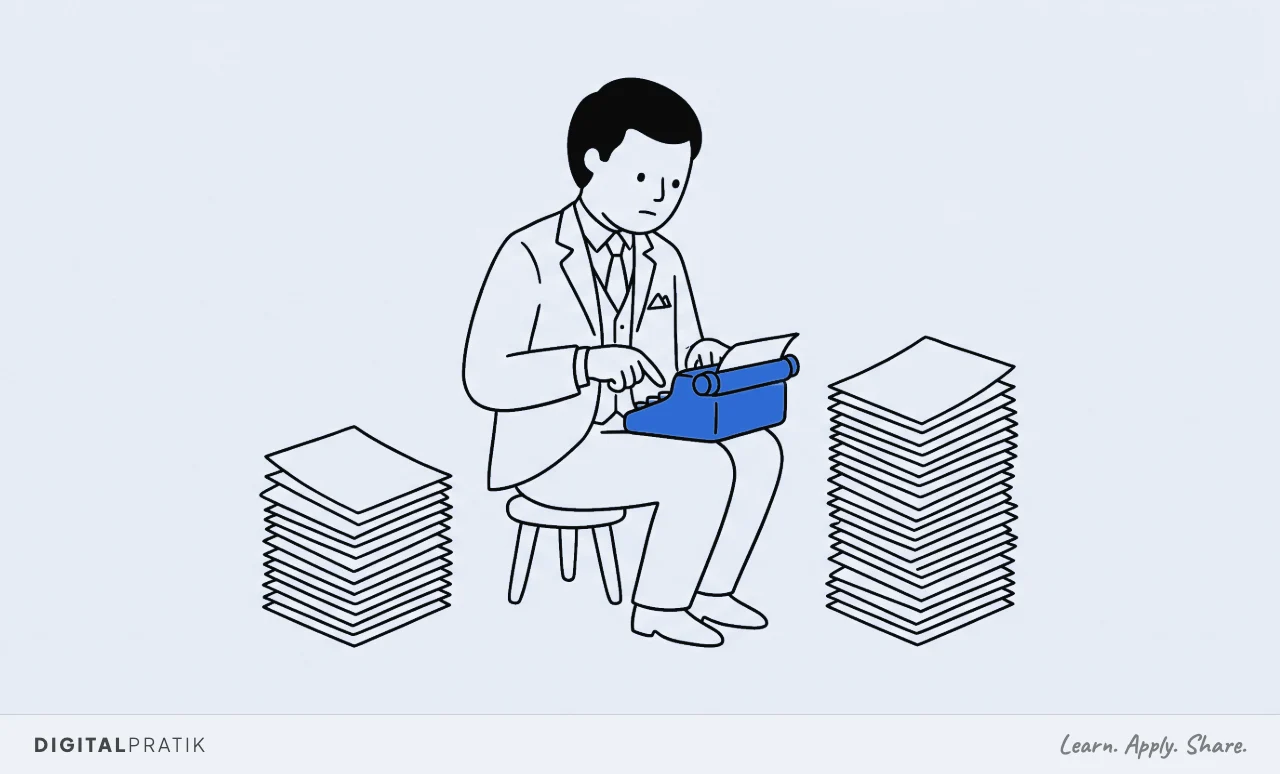
Intake data flows straight into the right template. The right sections get selected by the type of work.
A draft appears in minutes instead of hours, ready for a human to review and approve. You are not replacing their judgment, you are removing the typing.
A forty minute engagement letter becomes a three minute review, and across every piece of work the firm takes on, that is a new person worth of capacity with no salary attached.
The line that makes conservative businesses say yes is simple: your team stops typing and starts advising. Nothing leaves without a signature.
They keep total control and lose only the grunt work.
Then follow up and collections
Two different jobs, same reason they come third: both are things humans avoid emotionally rather than practically, which means automation gets adopted instead of resented.
Follow up is where most of the revenue in a service business already is, sitting in people who were interested and never got chased properly. Collections is the other half.
Firms are often excellent at earning money and terrible at collecting it. The work gets done, the invoice goes out, and then it sits, because chasing payment feels awkward and slightly beneath everyone, so the debt ages while the business looks profitable on paper.
A system that tracks every invoice, sends polite and relentless reminders in your own voice, and escalates on a clear path removes the awkwardness entirely. Nobody has to be the bad guy.
Getting paid meaningfully faster across the whole book is a real cash flow swing, and cash flow is oxygen.
Reading about a system and running one are different jobs. If your business does AED 10 million a year or more, this is what a working session looks like.
Then reporting, and only then
Reporting comes fourth and it hurts to put it there, because it is the one founders want first. A dashboard is satisfying, it demos beautifully, and it changes nothing on its own.
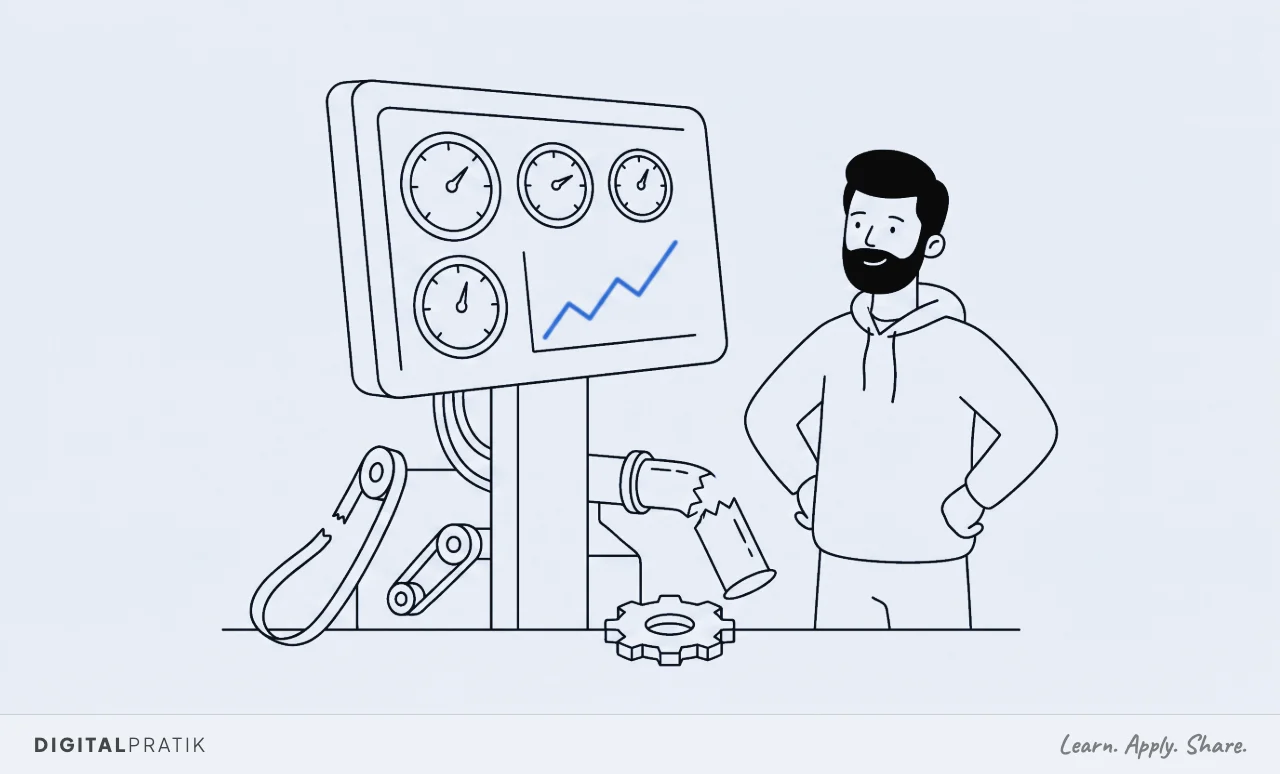
Build it once the operations underneath it are real, because a dashboard over a broken process just tells you faster that the process is broken. When you do build it, keep it to the handful of numbers you will genuinely act on.
I have written the short list in the five numbers a founder should see every morning.
Put a number on the bleeding before you pick
The order above is the general answer. Your order comes from arithmetic, and it takes about ten minutes.
For each candidate, write down hours a week, then multiply by 4.3 to get a month. Say intake admin is eating six hours a week.
That is roughly 26 hours a month, which is most of a working week, gone, every month, on chasing details somebody could have typed in themselves.
Now price it. Not at what you pay an assistant, at what an hour of the person doing it is actually worth.
If that is a founder hour, use what a founder hour is worth to the business, and be honest rather than modest.
| Task | Hours a week | Hours a month | What automating 80% gives back |
|---|---|---|---|
| Intake | 6 | ~26 | ~21 hours |
| Documents and proposals | 3 | ~13 | ~10 hours |
| Follow-up and collections | 2 | ~9 | ~7 hours |
| Reporting | 2 | ~9 | ~7 hours |
Two things fall straight out of a table like that. The first is that the biggest number is rarely the task that annoys you most, and annoyance is what most people automate first.
The second is that the total is usually alarming, which is the point of writing it down.
Do the one at the top. Do not do all four, and do not start with reporting because it is the most fun to build.
What to leave alone
This half of the question gets almost no attention and it is where the damage happens. There are three categories I would not automate, and one I would automate carefully with a gate on it.
The judgment they are paying for
Whatever your clients actually hire you for, keep it human. Not because a machine could not attempt it, but because that judgment is the product.
Automate the assembly around it and leave the decision itself alone. The strategy call, the diagnosis, the moment where you tell someone the thing they did not want to hear.
That is the business.
The relationship moments
The first real conversation. The apology when something went wrong.
The call where a client is anxious about money. Automating these is technically easy and reputationally expensive.
People forgive slow. They do not forgive feeling processed.
Anything you cannot yet describe
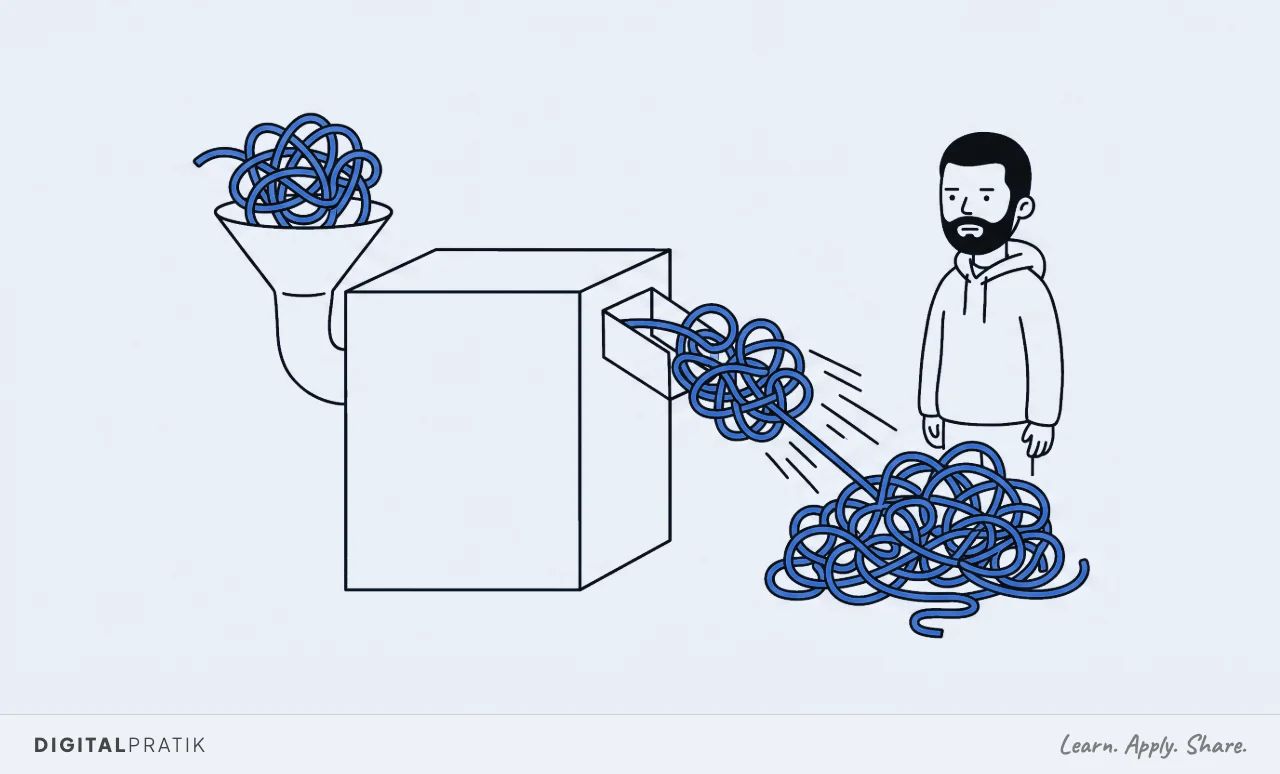
If you cannot write the workflow down step by step as a human does it today, you are not ready to automate it. Every attempt to automate a process nobody has articulated produces a system that encodes the confusion and then runs it faster.
Write it on paper first. You will usually find the process itself was the problem.
And the things that need a gate
Anything that moves money, sends a message to a real person, or cannot be undone gets built, but it stops and waits for a human yes before the final action. That is not a lack of trust in the system.
It is the design choice that lets you let everything else run free. The full argument is in the human gate.
The order in one table
| Why here | Human stays on | |
|---|---|---|
| Intake | Biggest leak, result in a week | Borderline leads, the real talk |
| Documents | Expensive people doing assembly work | Review and signature, always |
| Follow up and collections | Removes a task humans avoid emotionally | Anything sensitive or firm in tone |
| Reporting | Only useful once the operations are real | The decision the number implies |
A caution about doing all four at once
You will be tempted, because the full picture is genuinely exciting and each piece makes the others better. Resist it for the same reason you would not hire four people in one week.
You cannot tell what is working, you cannot tell what broke, and when something goes wrong you will be debugging four systems and their four joins simultaneously.
Build one. Prove it with real cases.
Then the next. The sequence is slower on paper and considerably faster in practice, which is the same lesson the whole 3A Machine is built on.
Start where it bleeds
If you take one thing: automate where the money is visibly leaking and where you can prove the fix inside a week. In nearly every service business that is intake, and it is the project that funds everything after it in credibility as much as in cash.
Then keep going in order, and keep a person on every decision your clients are actually paying for.
Frequently asked questions
Client intake. It is where the most money leaks, the leak is easy to measure, and the improvement shows up within the first week. Leads that sit in an inbox while someone is busy get hired away by whoever responded first, so capturing, qualifying and responding instantly is the highest return first project in almost every service business.
The judgment your clients are paying for, the relationship moments such as a first real conversation or an apology, and any process you cannot yet write down step by step. Automating an undocumented process just encodes the existing confusion and runs it faster.
Because a dashboard built over a broken process only tells you faster that the process is broken. Reporting is genuinely valuable once the operations underneath it are real and consistent, and premature dashboards tend to become decoration that nobody acts on.
No. When multiple systems go live together you cannot tell which one produced a result or which one broke, and you end up debugging several processes and the joins between them at the same time. One at a time, proven with real cases, is slower on paper and considerably faster in practice.
Write it out on paper exactly as a human does it today, including the awkward exceptions. If you cannot, it is not ready. Very often the act of writing it down reveals that the process itself, rather than the lack of software, was the actual problem.
Install this in your business
An article gives you the map. A working session gives you the system, built around what you actually sell and who actually buys it.