
AI Will Not Take Your Job. The Person Using It Will Take Your Clients
 Digital PratikGrowth Marketing Consultant
 AI is not coming for your job. A person who uses it better than you is coming for your clients. That is a very different threat and the good news is that you can become that person.
AI removes the production bottleneck, the writing, building, analysing and repetitive thinking.
What it does not remove is taste, judgment, relationships and the courage to decide, and those get more valuable rather than less.
Let me settle the fear a lot of people are carrying around, because the way it is usually framed makes it feel like weather rather than a choice.
What actually happens in these waves
Every wave of technology felt like the end of work and ended up multiplying it. The spreadsheet did not kill accountants, it let one accountant do the work of ten and created entire categories of job that did not exist before it.
The camera did not kill artists.
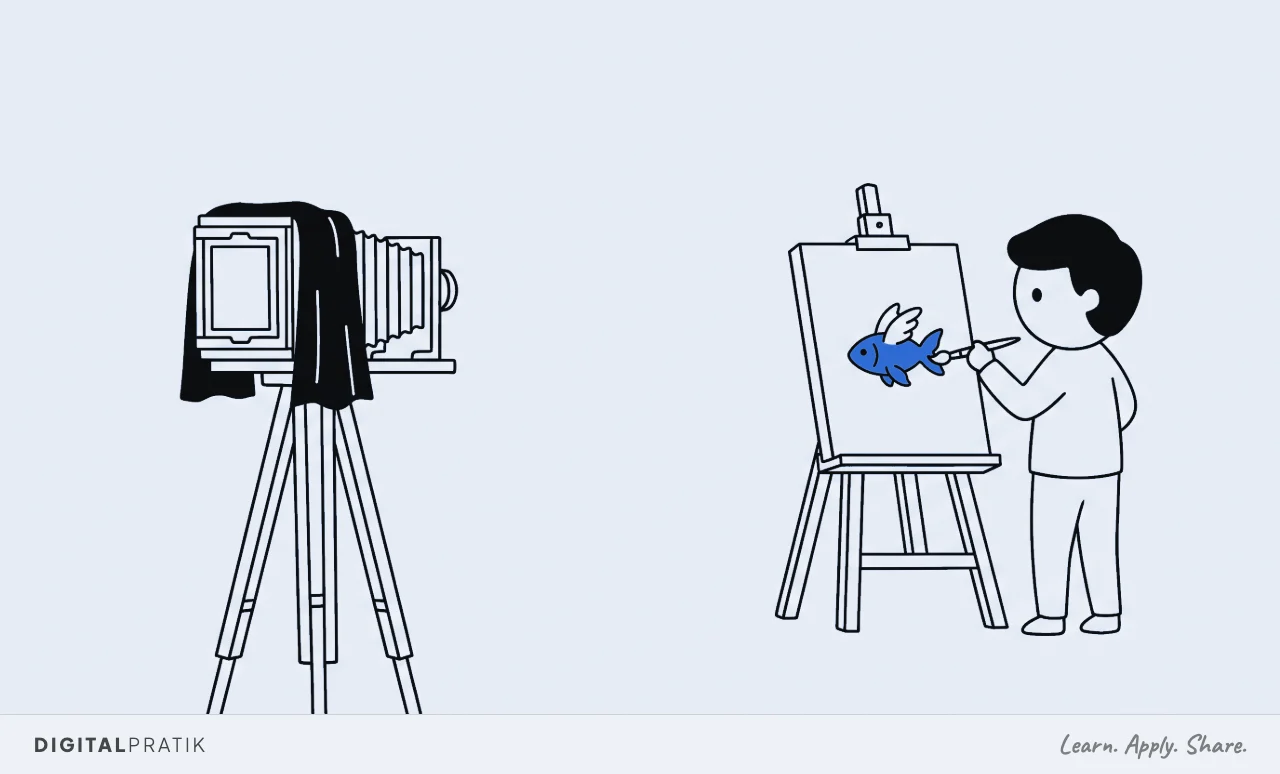
The pattern is the same each time. The tool removes the grunt work and raises the ceiling on what one person can produce.
What gets destroyed is not the profession, it is the portion of the profession that was mechanical, and the people who were only doing the mechanical part.
AI is the biggest version of that so far, which is why it feels different. It is not different in kind, only in scale and in speed.
What it removes
The production bottleneck. The writing, the building, the analysing, the repetitive thinking, the first draft of everything.
Work that used to consume the bulk of a week and required either your own hours or someone else salary.
This is genuinely enormous and I do not want to soften it. If your value was that you could produce a competent version of something faster than the person next to you, that advantage is now available to everyone for the price of a subscription.
Pretending otherwise does nobody any favours.
What it does not remove
Taste. Judgment.
Relationships. The courage to decide.
And these become more valuable rather than less, for a reason that is worth understanding properly.
When everybody has the same cheap production power, production stops being a differentiator by definition. The only edge left is the human layer on top: knowing which of the ten good options is the right one, knowing what the client actually meant rather than what they said, being willing to make a call with incomplete information and own the outcome.
AI will write you a beautiful campaign for the wrong audience without hesitating or complaining. It will build you a perfect funnel for an offer nobody wants.
The decision about what is worth building at all was always the valuable part, and it is now the only part that is scarce.
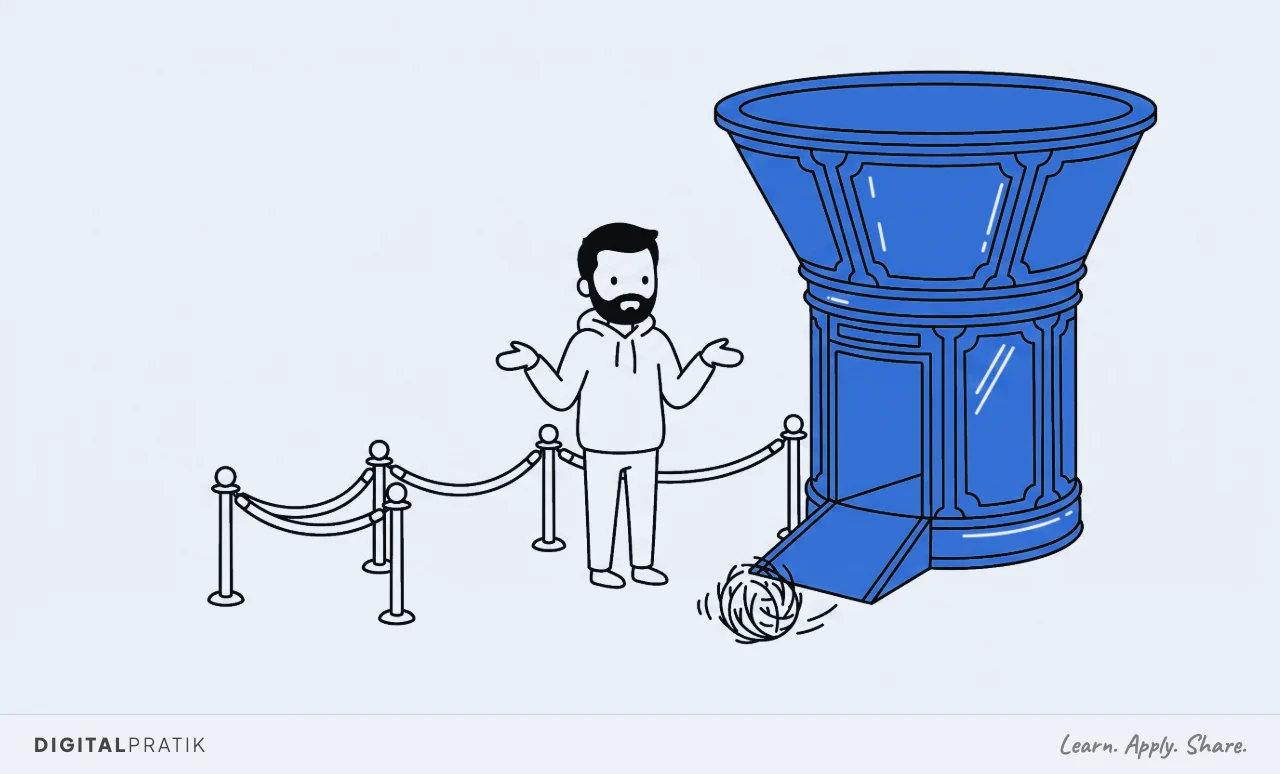
The part of your work that is genuinely safe
People want a list, so here is mine, and it is shorter and more specific than the reassuring versions you will read elsewhere.
- Knowing which of ten good options is right. Producing ten is now free. Choosing correctly is not, and it is the part clients are actually paying for.
- Hearing what someone meant. Clients rarely describe their real problem in their first message. Reading the gap between what was said and what is true is a human skill and it is where most of the value in a service business sits.
- Being accountable. Somebody has to own the outcome and answer for it. A system cannot, and no amount of capability changes that.
- Deciding with incomplete information. Most real business decisions are made without enough data, on a deadline. That is nerve, not analysis.
If most of your week is those four things, this wave makes you considerably more powerful. If most of your week is producing things that somebody else specified, that is the part to move up from, starting now rather than eventually.
The question is not the one you are asking
The question is not "will AI replace me". It is "am I the person who wields it, or the person who refused to".
Those are two different futures and the distance between them widens every month.
One of those people is quietly becoming a one person company, shipping like an organisation several times their size. The other is falling behind while insisting it is a fad, and getting more confident about that position as the evidence accumulates against it, which is how these things usually go.
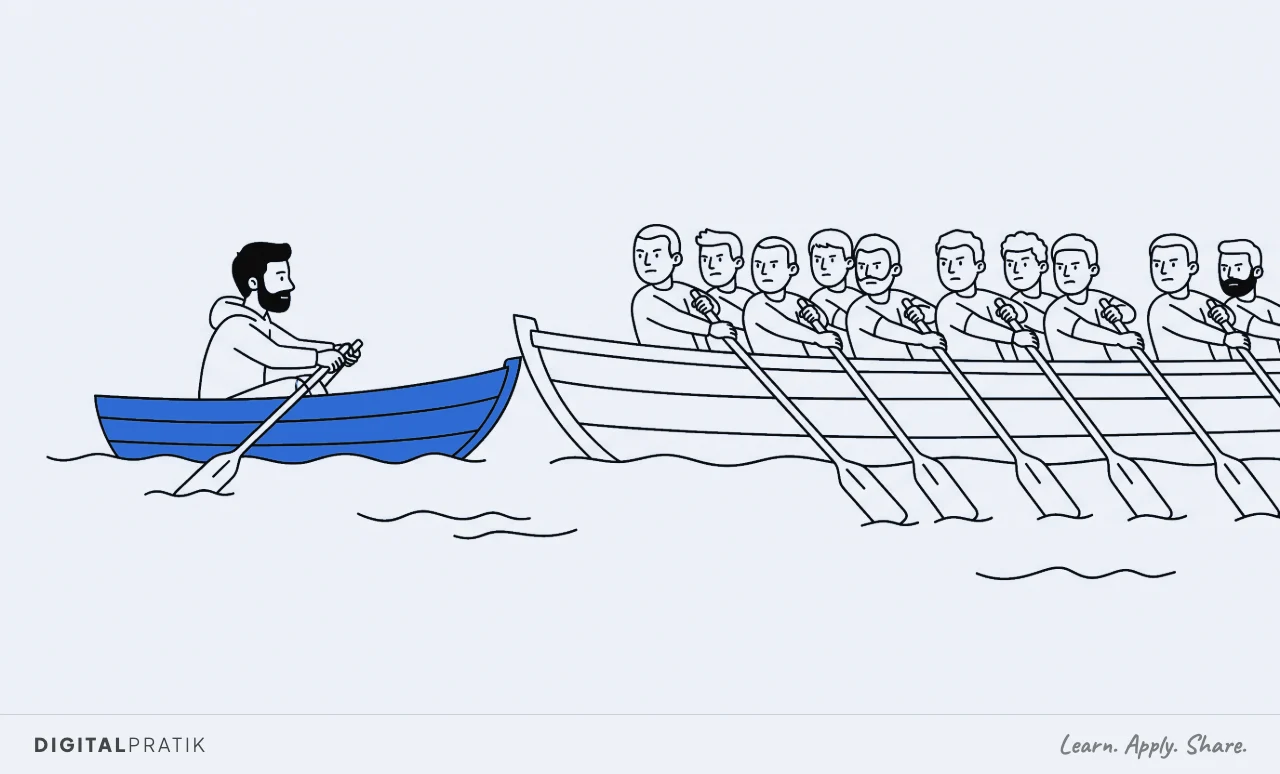
Nobody is coming to force you into either group. That is the uncomfortable part.
It is entirely a decision, made mostly by default.
Reading about a system and running one are different jobs. If your business does AED 10 million a year or more, this is what a working session looks like.
You do not need to become a programmer
This is the single most common misreading and it stops a lot of capable people from starting. The skill is not coding.
The skill is direction.
Learn to direct AI the way you would direct a team. Give it a role.
Give it context. Give it tools.
Check its work. That is a management skill, not an engineering one, and if you have ever briefed a freelancer well you already have most of it.
- Give it a role. One lane, described in a sentence. Vague briefs produce vague work from humans too.
- Give it context. Who you are, who the client is, how you sound, what you never say. Written down once, reused forever.
- Give it tools. Access to the real data and the ability to take the real action, otherwise it can only advise.
- Check its work. Against a standard you can state, not a vague feeling that something is off.
That is the new literacy, and it is closer to hiring than to programming. I go through what it looks like in practice in building a team of AI agents.
What this means for your clients specifically
Here is the version that matters if you sell services. Your clients are not going to fire you and hire a model.
They are going to hire the competitor who uses one, because that competitor will respond faster, propose sooner, produce more options, and charge less for the parts that got cheap.
You will not lose the pitch because the work was worse. You will lose it because they had answered the enquiry within four minutes and had a tailored proposal out the same day while you were still scheduling a discovery call.
Speed to lead was always a competitive weapon. It just got a great deal cheaper to buy.
That is why I keep pointing people at intake as the first thing to fix rather than the flashy things. It is where the loss is actually happening.
The order is in what to automate first.
On credentials, since it comes up
I do not have a degree. I left college three times, by choice, and I have spent sixteen years in this industry building things anyway.
I hire for courage and execution rather than credentials, and that bias has been right far more often than it has been wrong.
It matters here because the people who move fastest on this are rarely the most qualified. They are the ones willing to look stupid for a fortnight while they learn something in public.
The barrier is almost never capability. It is the discomfort of being a beginner again in front of people who think of you as an expert.
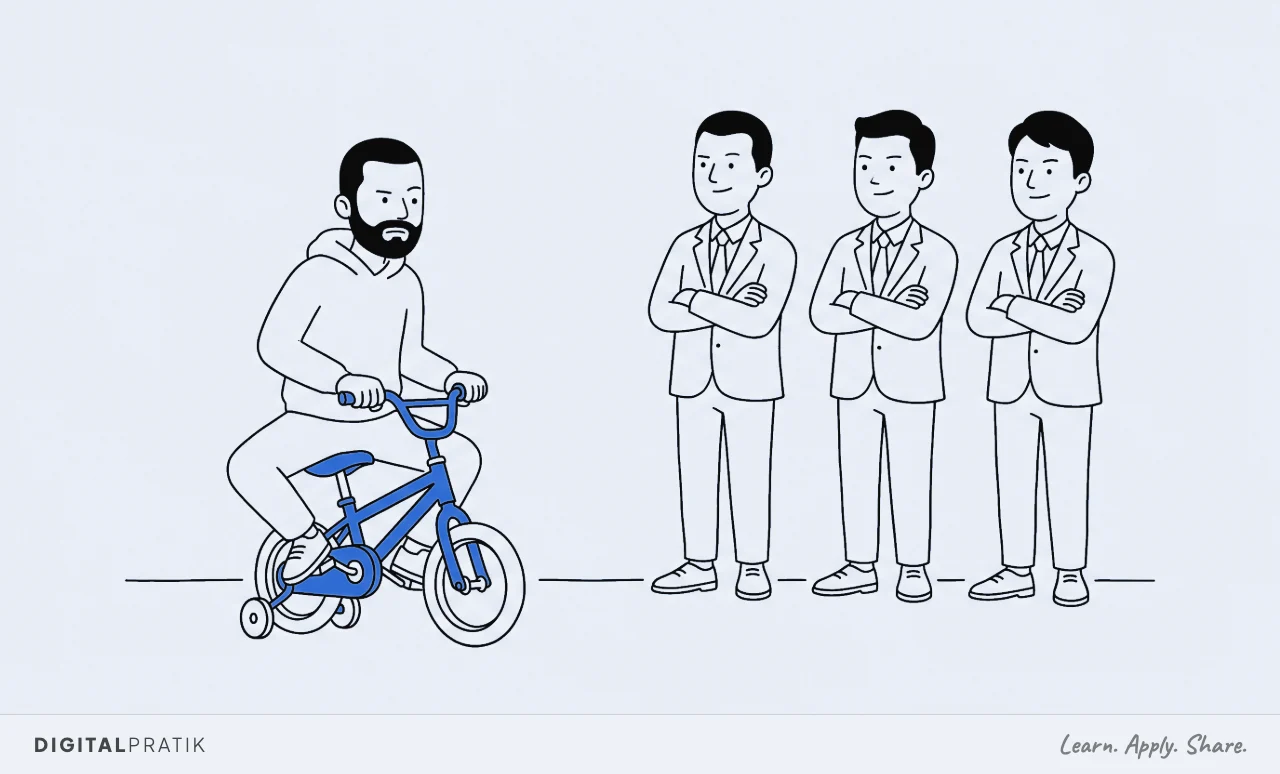
Regret is the biggest poison there is. Move.
Start this week, small
Do not start by trying to transform the business. Take one thing you do every week that is mostly production rather than judgment, and hand the production part over while keeping the judgment.
Write down the context once. Check the output honestly.
Fix the context rather than the output when it is wrong.
That single loop, run for a month, will teach you more than any amount of reading about whether this is a bubble. And it moves you into the group that is not waiting to find out.
The job is not going away. It is going to whoever learns the tool first.
Frequently asked questions
Not directly. What takes your clients is a competitor who learned to direct AI while you were deciding whether it mattered. Every previous wave of technology removed grunt work and raised what one person could produce, and the people displaced were the ones whose value was mostly the mechanical part of the job.
The production bottleneck: the writing, the building, the analysing, the repetitive thinking and the first draft of nearly everything. If your competitive advantage was producing a competent version of something faster than the person next to you, that advantage is now available to everyone cheaply.
Taste, judgment, relationships and the willingness to make a decision and own it. When everyone has the same cheap production capability, production stops being a differentiator by definition, so the human layer on top is the only remaining edge and it is genuinely scarce.
No. The skill is direction rather than engineering: give the AI a clear role, give it the context about your business, give it access to real tools, and check its work against a standard you can state. If you have ever briefed a freelancer well, you already have most of what is required.
Take one weekly task that is mostly production rather than judgment, hand over the production part and keep the judgment. Write the context down once so it is reusable, check the output honestly, and when something is wrong fix the context rather than the individual output. One month of that loop teaches more than any amount of reading.
Install this in your business
An article gives you the map. A working session gives you the system, built around what you actually sell and who actually buys it.