
The Value Equation: How to Build an Offer a Cold Stranger Cannot Refuse
 Digital PratikGrowth Marketing Consultant
 The value equation says an offer is worth the dream outcome multiplied by how likely the buyer thinks it is to work for them, divided by how long it takes and how much effort it costs them.
Four dials.
You push the first two up and the last two down.
Price is not in the equation at all, which is why cutting it is the weakest move available to you.
Almost every founder who tells me their offer is not converting reaches for the same lever first. They lower the price.
It is the most available lever, it feels decisive, and it is the one that does the most damage.
Here is the sentence I would tattoo on the inside of most people's eyelids. You are trying to sell a solution.
Your customer is buying a transformation. The gap between those two things is where value collapses, and money collapses with it.
Value is not something your offer inherently has. It is something you engineer.
This article is how.
What the value equation actually is
It is not a formula you compute. It is a diagnostic, and every variable in it is a lever you can pull.
The value of an offer is the dream outcome multiplied by the perceived likelihood that it will happen for them, divided by the time delay before they get it and the effort and sacrifice it costs them along the way.
Four dials. Two on the top that you push up.
Two underneath that you push down. That is the whole thing.

| Dial | Which way | The question the buyer is actually asking |
|---|---|---|
| Dream outcome | Up | Is what you are describing the thing I actually want? |
| Perceived likelihood | Up | Will this work for someone like me, specifically? |
| Time delay | Down | How long until I feel something change? |
| Effort and sacrifice | Down | What do I have to do, give up, or risk? |
Most businesses obsess over the first dial and completely ignore the other three. They rewrite the headline for the fifth time while the offer still takes four months to show a result and demands eleven things from the buyer.
The headline was never the problem.
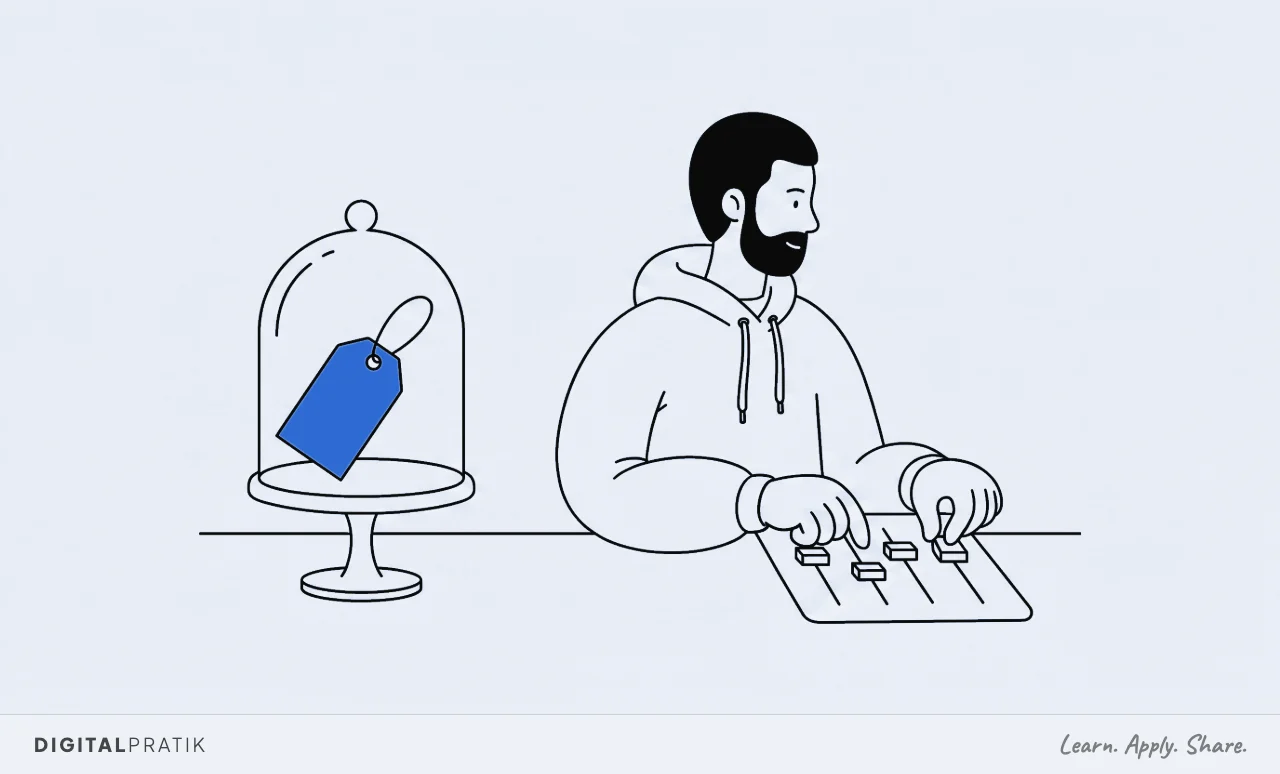
Notice what is not in the equation. Price.
Price is what you ask for. Value is what they perceive.
Those are two separate numbers and confusing them is the root of most bad offers.
Dial one: the dream outcome
The dream outcome is not your service. It is the future state your buyer is trying to reach, and you have to drill past the first answer to find it.
Nobody wants social media management. They want to open their payment dashboard and see the business working without them standing over it.
Nobody wants a physiotherapy package. They want to pick up their child without thinking about it first.
The service is the means. The dream is the end, and the end is what they are paying for.
For business buyers this is not softer, it is just denominated differently. The deepest desire is usually some mix of money, time, and not feeling like the whole thing rests on them.
Quantify it where you honestly can. Speak to what the outcome does for them, not to the activity you will perform.
The test I use is simple. Say your offer out loud, and then ask "and then what".
Keep asking until the answer stops changing. More leads, and then what.
A fuller calendar, and then what. I stop waking up at six in the morning with my stomach in a knot.
That last one is the dream outcome. That is the sentence that belongs in the offer.

Dial two: do they believe it will work for them
This is the dial that gets ignored most often and costs the most, because a dream outcome that nobody believes is achievable is worth nothing. Multiply anything by zero and you get zero.
The thing to understand here is counterintuitive, so I will say it plainly. A bold claim with no proof lowers your value. A modest claim with overwhelming proof raises it. Every founder instinctively does the opposite.
They inflate the promise, which is free, instead of building the proof, which is work.
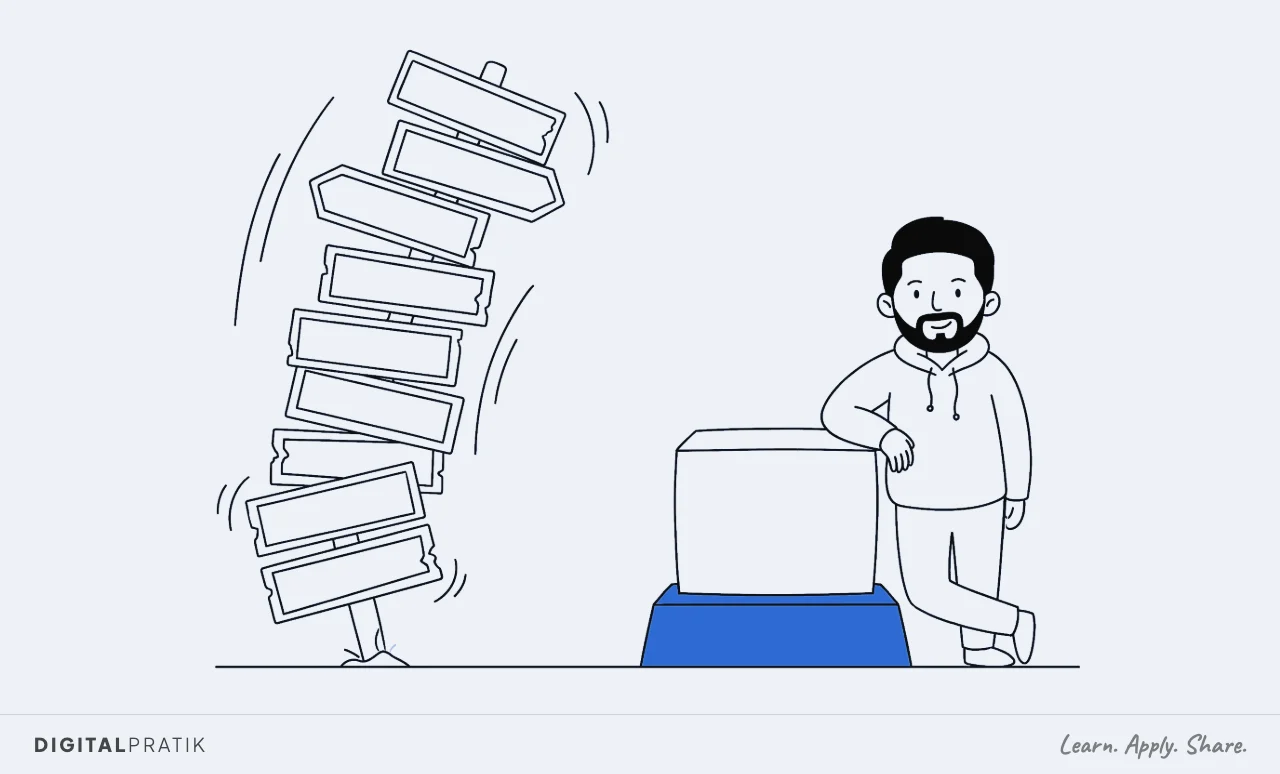
Your promise is not what differentiates you anyway. Everybody in your market is promising roughly the same outcome in roughly the same words.
What separates you is whether you can back it up. So when you want to stand out, add proof, do not invent a bigger claim.
I have written that out properly in proof beats promise.
Proof is also not all equally convincing, and the ranking is fairly stable. In person beats virtual.
Live beats recorded. Someone who looks like the buyer beats someone who does not.
The exact outcome they want beats one that is merely adjacent. Specific beats general every single time.

The other half of this dial is risk. Every buyer is carrying risk when they say yes, and you can take some of it off them.
That is what a guarantee is for, and a well-built one moves this dial harder than any testimonial. A badly built one destroys your margin instead, which is why it has its own article in risk reversal.
Dial three: time delay
How long between paying you and feeling something change. The shorter that gap is, the more the offer is worth, and this is true even when the total result takes exactly as long as it always did.

That last part is the useful bit. You are moving perceived speed to value.
A twelve week engagement where something real and visible lands in the first forty eight hours feels completely different from a twelve week engagement where the first thing they see is a kick-off deck. Same work, same timeline, different value.
So front-load a micro win. Whatever you can put in their hands in the first two days that is genuinely useful, do that first, even if it is not the logical first step in your process.
The logical order is for your convenience. The felt order is for theirs.
This is also why a specific timeframe outperforms a vague one so consistently. "In fourteen days" is a claim you can be held to.
"Eventually" is not a claim at all, and buyers read it exactly that way.
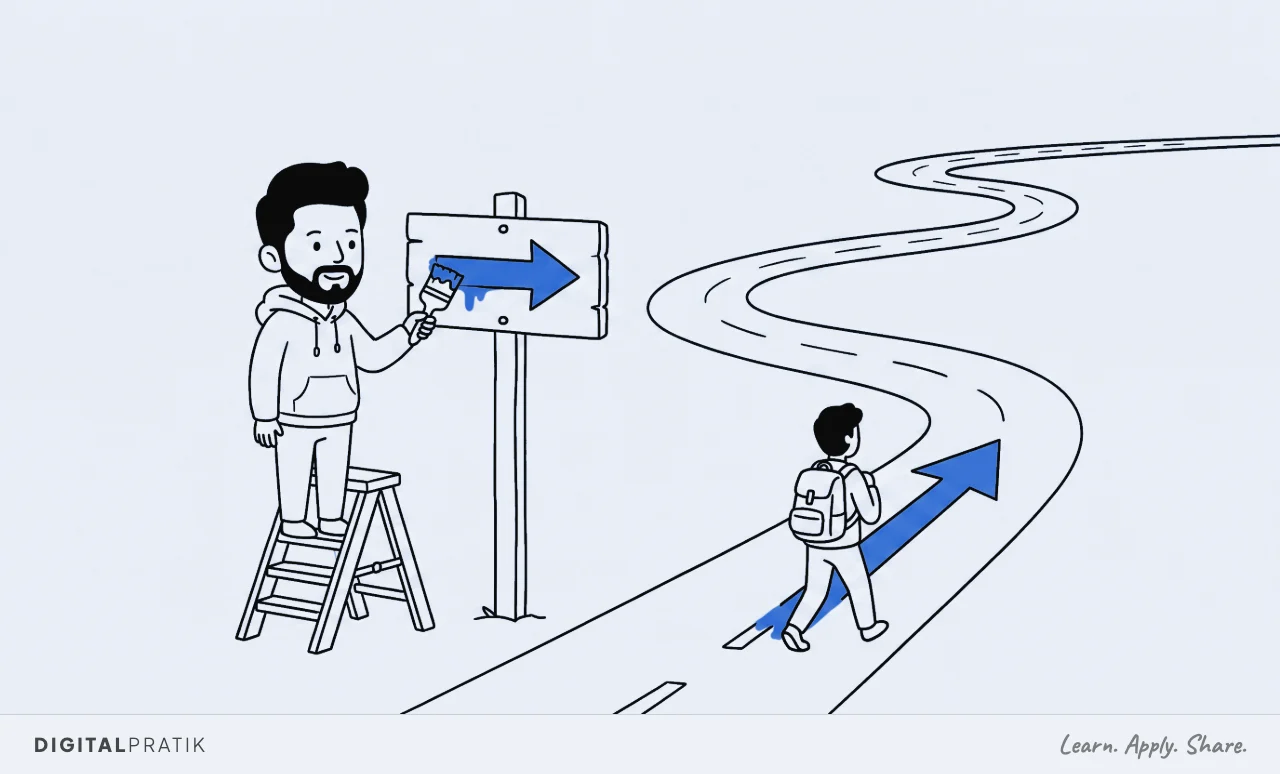
Dial four: effort and sacrifice
The last dial is the one almost nobody audits, and it is usually where the easiest wins are sitting.
There are two halves to it. Effort is everything the buyer has to start doing. Sacrifice is everything they have to stop doing, give up, or risk. Write both lists out honestly for your current offer.
Most people are surprised by how long they are.
Then remove items. Every single thing you take off those lists raises the value of the offer without changing the price by a rupee.
Do it for them instead of teaching them to do it. Automate the step rather than documenting it.
Put the accountability inside your process rather than requiring their discipline.

This is also the honest explanation for why done-for-you commands more than do-it-yourself, and why removing the founder from a business is worth so much. A two thousand dollar service becomes a ten thousand dollar retainer in the same conversation, and not because you raised the price.
Because you removed more. That whole dynamic is in what actually makes an offer high ticket.
The move most people never make
Here is what falls out of all four dials once you see them together, and it is the single most useful idea on this page.
You can make an offer dramatically more valuable without dropping the price at all. Raise the dream, stack the proof, compress the time to first result, strip out the effort.
Same price. A completely different offer as far as the buyer is concerned.
And when perceived value sits wildly above the price being asked, the buying decision stops being a decision. It becomes obvious.
That is the actual goal. Not to convince somebody, but to build something where saying no feels a bit stupid.
Put figures against it and the point stops being theoretical. Here is the same 3,000 offer scored twice, with nothing in the price column changing.
| Dial | Before | After |
|---|---|---|
| Dream outcome | We manage your ads | Your calendar fills without you chasing it |
| Proof they can see | 1 testimonial, nobody like them | 6, three from businesses their size |
| Time to first visible result | 12 weeks | 48 hours |
| Things they have to do | 11 | 2 |
| Price | 3,000 | 3,000 |
Read the two middle rows again, because those are the ones nobody works on. Twelve weeks to forty-eight hours is not a promise to finish faster, it is a decision about what you hand over first.
Eleven tasks down to two is not a discount, it is you absorbing nine jobs that were quietly making the offer expensive in a currency that is not money.
The price is identical in both columns. The second offer is worth several times the first and every bit of that difference was engineered.
Score your own offer on those five lines this week, and the row with the worst answer is where your money is.
Reading about a system and running one are different jobs. If your business does AED 10 million a year or more, this is what a working session looks like.
Where the equation meets the problem you actually solve
None of the four dials help if you are pointing them at a problem nobody urgently wants solved. So before the equation there is a prior question: which problem are you selling into?
Every market has a hundred problems, and only three of them are the kind a customer will gladly hand you money to fix, again and again, without being talked into it. Acquisition, they do not have enough new clients.
Conversion, they get inquiries and those inquiries do not turn into money. Capacity, they have both and the founder is now the bottleneck.
Here is the part that catches people out. You do not pick which of the three you solve. Your market picks for you. Read the first message your last ten paying clients ever sent you.
If it says "I just need more leads", you are an acquisition business whether you like the label or not. If it says "I get inquiries but they do not buy", you are a conversion business.
If it says "I am drowning", you are a capacity business.
Pick the biggest pile. Wear it on your forehead.
Take the other two off your home page, your ads and your first message, at least until you are big enough to run more than one. Niche is who you serve.
Problem is what you fix. The what is the part that prints money, and I have written the diagnostic out fully in the 3A Machine.
The equation then tells you how to build the offer once you know which problem it is aimed at. And the framing changes with the problem: people pay far more for the cure than for the prevention, so name the thing that is on fire rather than the thing that could go wrong later.
Specificity is a value lever, not a copywriting nicety
Two offers can solve the identical problem, at the identical price, and be worth wildly different amounts, purely because one is specific and the other is not.

"We help you close more" is a sentence with nothing in it. Nobody can picture it, nobody can be held to it, and nobody can tell whether it applies to them.
Compare it with a version that names the actual mechanism and the actual window: we rebuild your booking to show-up to paid pipeline, so that the calls you are already getting turn into paid clients inside a fortnight.
Put your own real numbers into a sentence like that. Not borrowed ones, and not aspirational ones.
The whole power of a specific claim is that it is checkable, and a checkable claim you cannot actually meet is worse than a vague one, because now you have taught them you are unreliable.
Specificity moves two dials at once, which is why it is worth this much attention. It sharpens the dream outcome, because they can finally see the thing.
And it raises perceived likelihood, because a person who can describe the mechanism in that much detail sounds like a person who has actually done it.
Bonuses raise value. Discounts lower it.
When a prospect hesitates, you have two ways to close the gap between value and price. You can lower the price, or you can raise the value.
Only one of those leaves you with a business.
A discount does not just cost you margin. It teaches the buyer that the original number was fiction, which quietly damages every future conversation you have with them and everyone they talk to.
You have not made the offer more valuable. You have confessed that it was overpriced.
A bonus does the opposite. It adds to the numerator.
The rule that makes one work is that each bonus has to solve a specific objection or remove a specific constraint, and it has to be genuinely valuable on its own. A pile of unrelated extras is not a stack, it is clutter, and clutter reads as filler.
So hold your bonuses back rather than firing them all in the first pitch. Present the core offer, listen for the actual hesitation, then introduce the one bonus that lands exactly on it.
That is a strategic move rather than a desperate one, and the difference is audible to the person on the other end of the call. The full treatment is in stack bonuses, never discount.
And when somebody buys quickly without needing any of it, give them the remaining bonuses anyway, after the fact. Costs you nothing you had not already budgeted, and it turns a fast buyer into somebody who talks about you.
How the four dials fail together
The dials are multiplied and divided, not added, and that matters more than it sounds. One dial at zero takes the whole offer to zero regardless of how good the others are.
An enormous dream outcome that nobody believes is worth nothing. A completely believable promise of something nobody wants is also worth nothing.
A great offer that takes eighteen months to show anything, or that demands the buyer restructure their week, gets divided down until it is not worth the price no matter how strong the top half looked.
This is why "our offer is not converting" is almost never a single problem, and why rewriting the headline over and over rarely fixes it. The headline is dial one.
If dial one was already fine, you have spent a month polishing the only part that was working.
Run all four before you change anything. Find the weakest one.
Fix that. Most people find their close rate moves before they have touched a single word of the pitch.

There is a second reason to look at all four together rather than one at a time. The dials interact.
Removing effort usually shortens time to first result as well, because the thing that was slowing everything down was waiting on the client. Adding proof from somebody who resembles the buyer sharpens the dream outcome at the same time, because they can finally see what the finished thing looks like on a person like them.
Pull one dial properly and two of them move.
Audit your own offer in twenty minutes
This is uncomfortable in a useful way, and it is worth doing before your next sales call rather than after it.
- Write the dream outcome in the buyer's words. Not yours. If you cannot find their words, you have not read enough of your own conversations.
- List every piece of proof you actually have. Then mark which ones feature somebody who resembles the person you are selling to. Usually a short list, and that is the finding.
- Time the first real win. How many days from payment until they hold something useful? If the honest answer is "the first call", that is your gap.
- Write the effort list and the sacrifice list. Everything they must start doing, everything they must stop. Then cross off two items by doing them yourself.
- Score each dial out of ten, quickly. Do not deliberate. The one you instinctively scored lowest is where the money is.
What the equation will not fix
It will not fix selling to the wrong person. If the individual reading your offer feels the pain but cannot authorise the spend, no amount of dial tuning helps, because you are pitching a real problem at somebody with no power to solve it.
That distinction is in consumer versus customer.
It will not fix a market that is exhausted by your promise. The same offer, engineered identically, lands differently in a market hearing the claim for the first time and one that has heard it a thousand times.
In the second case you have to compete on mechanism or proof rather than on the promise itself, which is market sophistication.
It will not fix a delivery capacity you do not have. An irresistible offer sold to more people than you can serve is not a win, it is a queue with your name on it, and the damage lands on the clients you already had.
And it will not tell you what to charge. High ticket is relative to where you are starting from, not a number you can copy off somebody else, which is the argument in what counts as high ticket.
Where this comes from
Credit where it belongs. The four-dial version of this is Alex Hormozi, and I have learned a lot from his material on offers.
The idea is not mine and I am not going to pretend it is.
What is on this page is how I actually use it: which dial to check first, why the bottom two are where the wins hide, and how it connects to the three problems a market will actually pay to have solved. That connection is the part I have not seen written down elsewhere, and it is the part that makes the equation usable rather than merely agreeable.
The one thing to take away
Stop competing on price. Value is not inherent in what you sell, it is engineered, and you have four dials to engineer it with.
Before you rewrite anything or discount anything, run your current offer through all four. Be honest about which one is weakest.
Fix that one first. You will almost certainly find that the answer was never the price, and that the offer you already have is worth considerably more than you have been asking for it.
Frequently asked questions
It states that the value of an offer is the dream outcome multiplied by the perceived likelihood that the buyer will actually achieve it, divided by the time delay before they see a result and the effort and sacrifice it costs them. Four variables. You raise the first two and lower the last two. Price does not appear in it, which is the point.
Because price is not one of the four variables that create value. Cutting it reduces your margin and simultaneously teaches the buyer that your original number was not real, which weakens every future conversation. Raising the perceived value costs you nothing structural and leaves the business intact. Lower the price only when you have a deliberate reason, not as a response to hesitation.
Whichever one is weakest, and it is usually not the one you have been working on. Most people spend their time on the dream outcome because it is the writing part, while the real damage sits in time delay or effort and sacrifice. Score all four out of ten quickly and trust the lowest score.
Yes, and that is the most useful move in the whole framework. Sharpen the dream outcome into the buyer's own words, add proof from people who resemble them, get something genuinely useful into their hands in the first few days, and remove steps they would otherwise have to do themselves. Same price, a substantially more valuable offer.
Your market has already told you. Read the first message your last ten paying clients sent you and sort them into three piles: not enough clients, clients who do not convert, and drowning in delivery. The biggest pile is the problem your business actually solves, regardless of what you would prefer to be known for.
Install this in your business
An article gives you the map. A working session gives you the system, built around what you actually sell and who actually buys it.