
The Show Don't Tell Funnel: Selling Before You Have a Case Study
 Digital PratikGrowth Marketing Consultant
 A show don't tell funnel puts visible proof at the front instead of claims.
If you have client results, the proof is the result.
If you do not, you manufacture proof of concept from your own work: do the thing publicly, record it, and let the recording sell for you.
I lost a year learning that you cannot talk your way into high-ticket clients without something to show.
I left my job in 2018 to run an agency and go straight after high-ticket clients. I failed, thoroughly, for about three months before I understood why.
The year I got this wrong
I worked a full-time job from 2010 to 2018, freelancing on the side and making decent money doing it. When I went full-time on my own business I decided I only wanted high-ticket clients, because I had left a product manager salary and did not want to earn less.
It went badly. I had freelance proof, but none of it was high-ticket proof, and that turns out to be a completely different thing.
Three months in I worked out the actual problem: I was describing what I could do to people who needed to see what I could do.
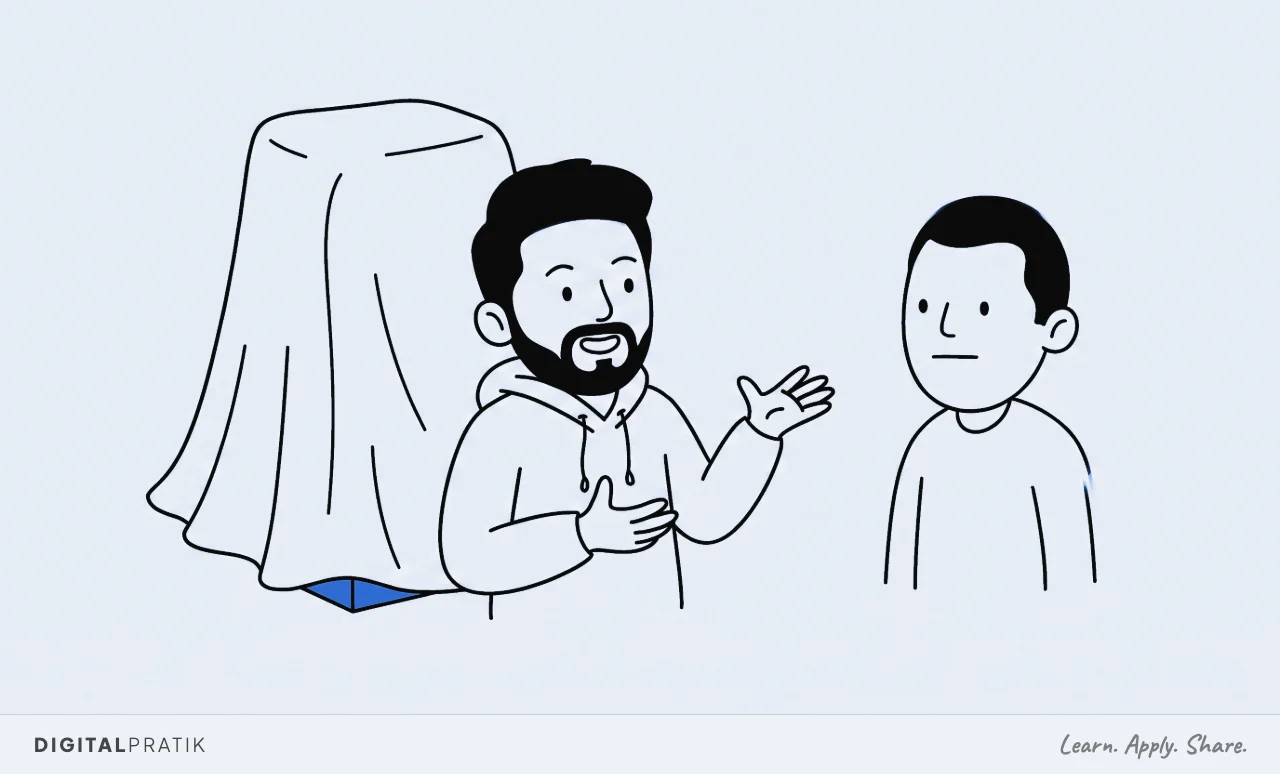
What I did instead
I started working for free, but not in the way people usually mean. I did not go and beg for unpaid client work.
I built proof in public.
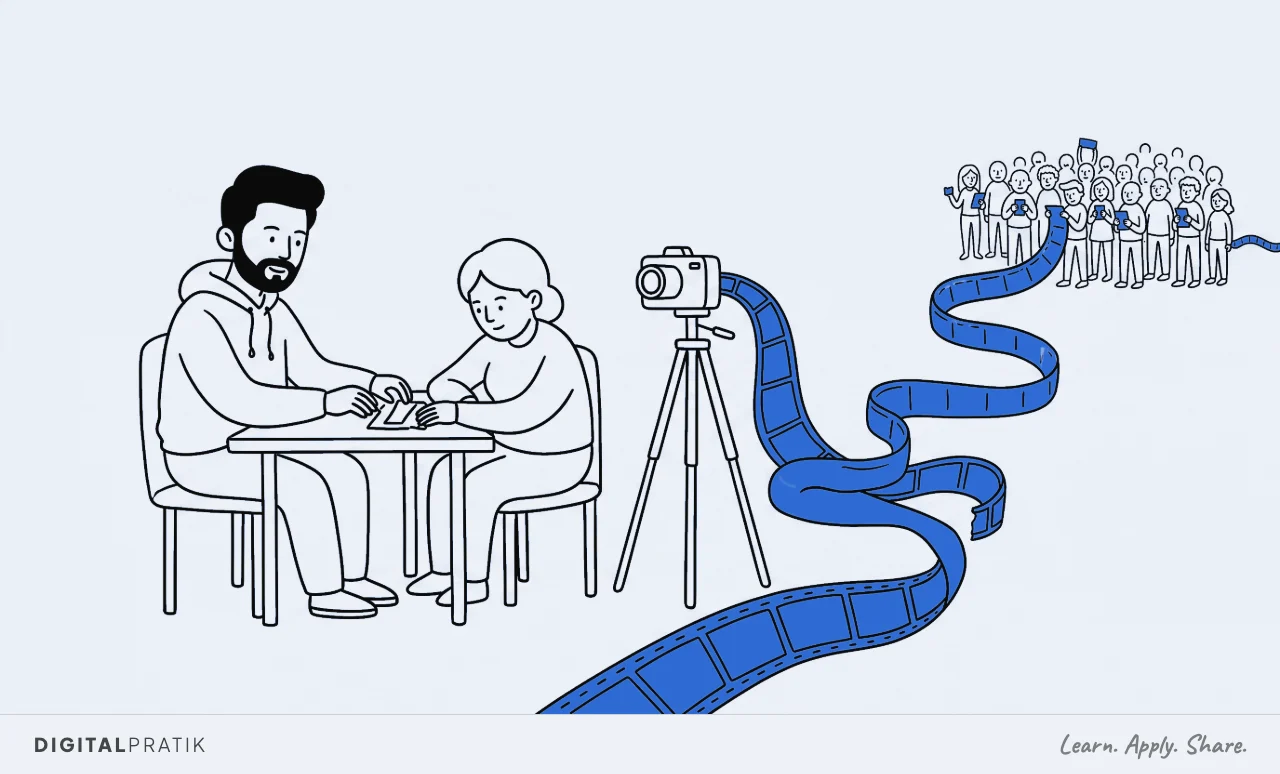
I promoted a free Q&A session, every weekday, and let people book time with me. Whoever showed up, I helped properly.
And I recorded the calls.
Over a year that was more than three hundred booked calls, of which maybe a hundred and fifty actually turned up. The no-shows did not matter, which is a point I will come back to.
What mattered was that I now had a large and growing body of recorded evidence of me solving real problems for real people, and I could put pieces of that anywhere.
The people who saw that material and eventually hired me were mostly not the people on the calls. They were the ones watching the clips.
In 2019 I closed my first genuinely high-ticket client, an annual contract worth roughly fifty thousand dollars. Then more the year after, and more the year after that.
The proof compounded.
Your time is the cheapest thing you own
The obvious objection is that a hundred and fifty no-shows is a lot of wasted time. It was not, and the reasoning here is worth being precise about because people get it wrong in both directions.
Your time is only wasted if you are currently being paid for that time. When you are starting, you are not.
Your time is the least valuable asset you own, which makes it the correct one to spend heavily. Later, when the same hour has a market price, that arithmetic reverses completely.
I do not do free calls now, and it would be a genuine waste if I did, because I have proof and clients and the hour costs something. That is not a contradiction.
It is the same rule producing a different answer at a different stage.
Reading about a system and running one are different jobs. If your business does AED 10 million a year or more, this is what a working session looks like.
If you already have proof
Then this is easier and most people still underuse it. Take the thing you actually do for clients, the process you would run tomorrow, and record yourself doing it properly once.
Not a testimonial, not a claim. The work itself.
A short walkthrough of a real process you run is worth more than a page of adjectives, because the prospect can evaluate it themselves rather than deciding whether to believe you. That single recording then becomes the raw material for everything downstream: the guide, the landing page, the ads.
I go through turning it into an asset in making a lead magnet out of one real process.
If you have no proof at all
You have something adjacent to proof, and it is usually one of two things.
- A skill you can demonstrate. Document yourself doing it on something real, even if the something real is your own business. A process that works on your own business is a legitimate proof of concept.
- A willingness to do one job properly for free or cheap. One, not ten. Then the result of that job becomes the proof, and you never need to do it again.
Either route ends in the same place: you have an artefact you can show. That artefact is the funnel.
Everything else is packaging around it.
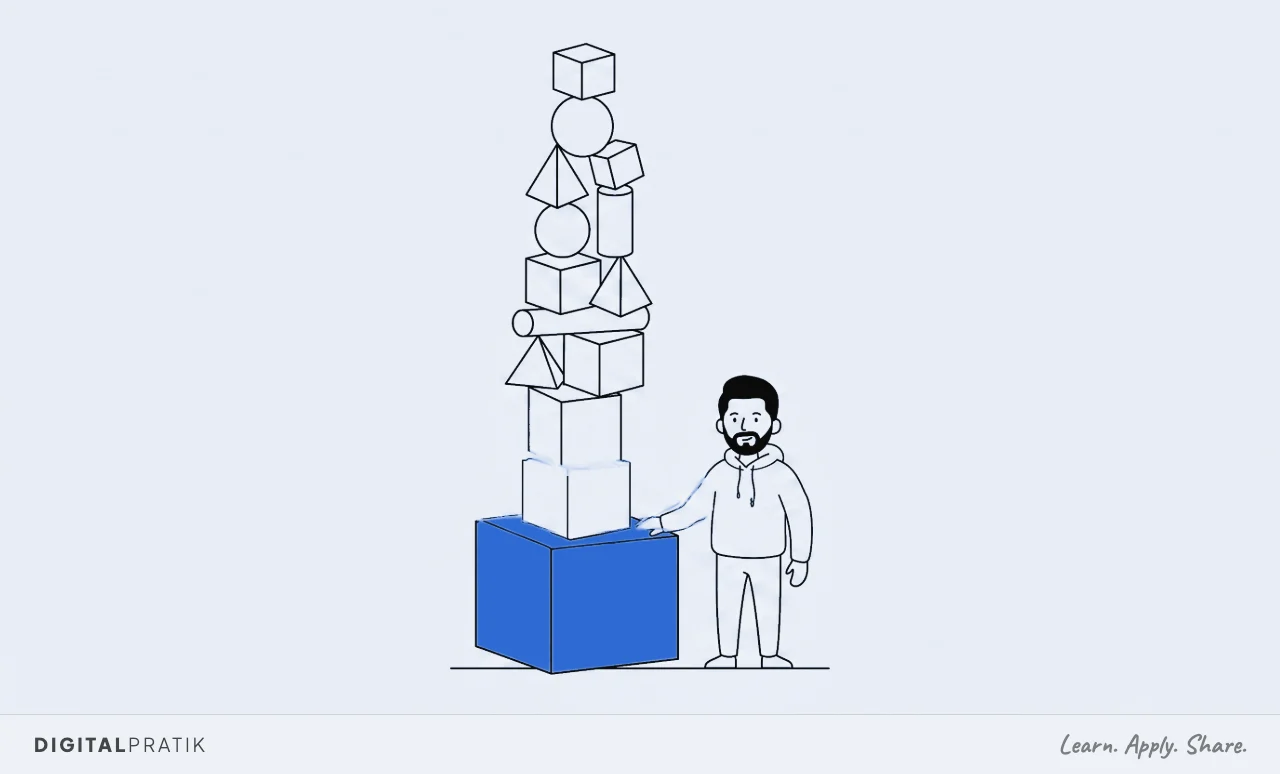
What counts as proof and what does not
People hear proof and reach for testimonials, which are the weakest form of it.
- Strong. A recording of you doing the actual work. The prospect judges it themselves.
- Strong. A result with the mechanism attached, so they can see how it happened rather than just that it did.
- Medium. A detailed account of a process, written, with the specifics intact.
- Weak. A testimonial saying you were great. It asks them to trust a stranger about a stranger.
- Worthless. Adjectives about yourself. Everybody has those and they cost nothing to write.
The ranking is really a ranking of how much the prospect has to take on faith. Less faith required means more persuasive, every time.
The trap of waiting until it is impressive
The commonest reason people never build this is that their proof does not feel good enough yet. They are waiting for the flagship result before they show anything.
That wait is usually permanent, because the standard rises with your ability. The proof you have now is more than enough to move you one bracket up from where you are, and moving one bracket is the whole objective.
You are not trying to convince the biggest buyer in the market, you are trying to convince the next one.
Why showing beats telling at a high price
At low prices a buyer will risk being wrong about you. At high prices they will not, and no amount of confident copy changes that calculation.
Showing removes the leap of faith. Instead of asking someone to believe a claim, you hand them something they can judge with their own eyes.
That is a fundamentally different transaction, and it is why the same offer, described versus demonstrated, converts at completely different rates.
It also protects you from the most common trap in this market, which is competing on how well you describe yourself. That is a race won by whoever is most comfortable overstating, and it is not a race worth entering.
Start with one artefact
Not a content strategy. One recording of one real process, done properly, of the kind you build up in building a personal brand from scratch.
That is the entire starting requirement.
Everything in this category builds on top of that one thing, and without it, the rest is decoration.
Frequently asked questions
A funnel that leads with visible proof rather than claims. Instead of describing what you can do, you put something a prospect can evaluate with their own eyes at the front: a recording of a real process, a demonstrable result, or work done in public. It removes the leap of faith that high-ticket buyers refuse to take.
Build proof of concept rather than waiting for client proof. Run your process on your own business and record it, or do one job properly at no charge and use that result. One artefact a prospect can judge for themselves is enough to build a funnel on, and it is worth more than a page of description.
Early on and once, yes. The rule is that your time is only wasted if you are currently being paid for it, so when you are starting and the hour has no market price, spending it to manufacture proof is the correct trade. Once that hour has a real price, the same rule says stop.
Far less than people assume when you are starting out. In a year of daily free sessions roughly half the booked calls turned up, and the value came from the recorded material produced by the ones that did, which reached far more people than were ever on a call. The people who eventually hired me were mostly watching the clips, not attending.
A recording of the actual work rather than a testimonial about it. A short walkthrough of a real process you genuinely run lets prospects evaluate you directly instead of deciding whether to trust your description, which is a completely different and much easier transaction for them.
Install this in your business
An article gives you the map. A working session gives you the system, built around what you actually sell and who actually buys it.