What Growth Marketing Actually Is for a Service Business (And What It Is Not)
 Digital PratikGrowth Marketing Consultant
 Growth marketing is not a channel and not a job title.
It is the practice of finding which single thing is limiting a business and fixing that one thing before touching anything else.
In a service business it is almost always one of three: acquisition, not enough new clients coming in; conversion, enough enquiries but too few become clients; or capacity, plenty of both and the founder is the bottleneck.
Everything else is tactics.
Ask ten people what growth marketing is and you will get ten answers, most of them a list of channels. Ads, email, SEO, content, funnels.
That is not what it is. That is a list of tools somebody might use once they have worked out what is actually wrong.
The version I work from is simpler and much less comfortable. Most businesses are not stuck because they lack a strategy.
They are stuck because they are solving the wrong problem, expensively, and with real conviction.
The definition that survives contact with a real business
Growth marketing is the practice of identifying the one constraint that is holding a business at its current size, and removing it. Then finding the next one.
It is closer to diagnosis than to advertising.
That framing matters because it changes what you do first. A channel-led approach asks "should we run ads?".
A growth-led approach asks "if we tripled the leads tomorrow, would anything actually change?". Very often the honest answer is no, and that answer saves somebody a year.
Every market has a hundred problems. Three of them pay.
A customer will hand you money, repeatedly, without being convinced, for a small number of problems. I call these income-class problems, and in a service business there are three of them.
Everything else is a nice-to-have that people agree is important and never fund.
Naming which of the three you are in is the single highest-leverage hour a founder can spend, and it costs nothing.

Problem one: acquisition
This is the one felt first thing in the morning. Not enough new clients are coming in.
The calendar has gaps in it and the gaps are visible from three weeks out. It reads as anxiety but it is arithmetic.
A physio clinic, a coach, an agency and a med spa all describe it in almost identical words. And what they are buying is not ads, leads or funnels.
They are buying the end of the six a.m. panic. You are selling certainty.
Problem two: conversion
The second most expensive problem and the one almost nobody names correctly. It gets described as "my leads are bad", "the market is slow", "people do not have money right now".
Those are all diagnoses of somebody else.
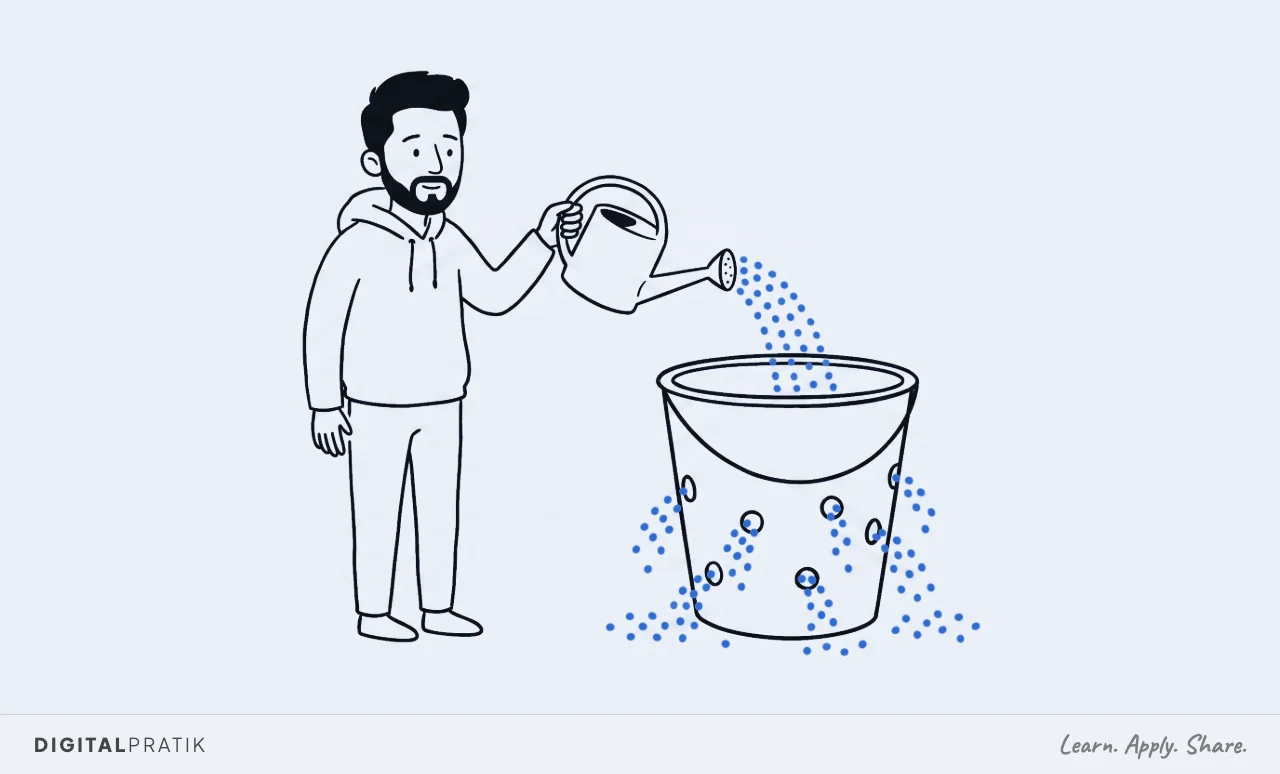
What is usually happening is that the offer is leaking, the sales process is leaking, and the follow-up and the show-up rate are leaking. It is pouring water into a bucket full of holes and blaming the rain.
This is the highest-margin problem in the world to solve, because the demand already exists and the infrastructure already exists. Nothing has to be built.
Something has to stop leaking. If you want the mechanics of the leak, name the problem before you build the funnel covers it directly.
Problem three: capacity
The most expensive of the three, and it only shows up once the first two are partly solved. There are leads.
They are closing. And the founder is the constraint.
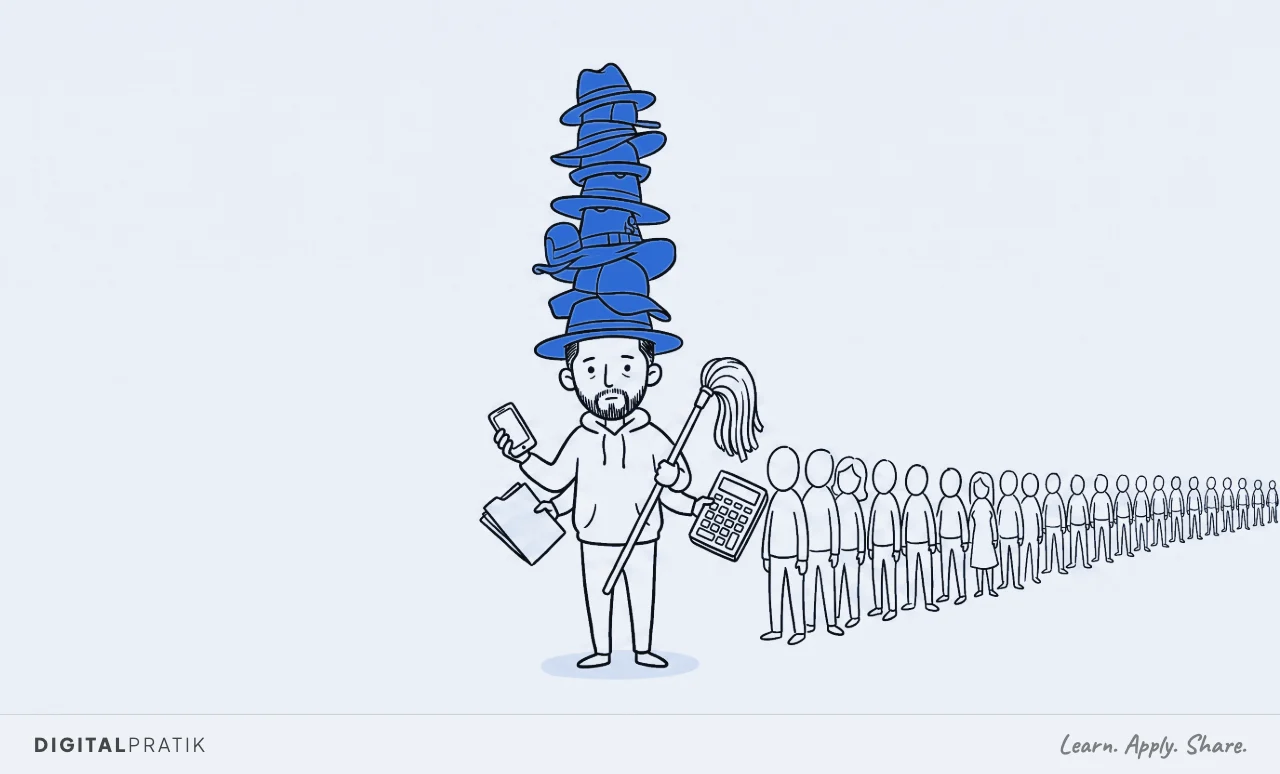
They are the brand, the closer, the operator, the billing department and the emotional support animal for ten members of staff. Adding leads at this point is pouring petrol into a flooded engine.
What is needed here is a system rather than a campaign. Booking that runs itself, sequences that pre-sell, qualification that happens before a human is involved.
That is the whole argument behind the 3A Machine: build it with AI, run it with automation, then scale it with ads, in that order.
You do not pick your problem. Your market picks it for you.
This is the part founders resist, because picking feels like losing the other two. It is not a preference.
It is already decided and the evidence is sitting in your inbox.
Open the first message from each of your last ten paying clients. Not your pitch, their words.
Highlight every line where they described their own problem, and sort those lines into three piles.
| What they wrote | The problem | What you sell |
|---|---|---|
| "I just need more leads" | Acquisition | Certainty. A calendar with no gaps in it. |
| "I get enquiries but they do not buy" | Conversion | A ratio. The same enquiries, more clients. |
| "I am drowning, I cannot keep up" | Capacity | Your time back. The business running without you. |

The biggest pile is your business. Not the one you find most interesting.
The one people are already paying you for.
Reading about a system and running one are different jobs. If you are a founder doing $50k a month or more, this is what a working session looks like.
Then commit to it in public
Once you know which pile is biggest, put it on the homepage. Name that one problem out loud, in the words your buyers used, and take the other two off the page until you are big enough to run more than one.
If committing to it makes you uncomfortable, that is usually the signal you have got it right. A page that promises to help with everything reads as a page that has helped with nothing.
Specificity is the whole difference
Two businesses can solve the identical problem and charge amounts that are not in the same universe, and the gap between them is almost always how specifically they can describe the outcome.
"We help you close more" is a sentence anybody could have written. "We rebuild your booking to show-up to paid pipeline so a much larger share of booked calls become clients inside two weeks" is a sentence only somebody who has done it could write.
Live in that difference. And put your own real numbers in it rather than borrowing anybody else's.
Why the channel question comes last
Once the constraint is named, the channel choice becomes almost boring, which is the point. An acquisition problem wants paid media pointed at a proven offer.
A conversion problem wants the offer and the follow-up rebuilt before a penny more goes into ads. A capacity problem wants automation and delegation, and often wants the ads turned down for a quarter.
That is why I do not lead with a channel. Channels are how the work gets done.
They are not the work.
So is growth marketing different from digital marketing?
In practice, not as different as people selling the distinction would like. Digital marketing is the whole trade.
Growth marketing is a way of practising it that starts with the constraint rather than the channel, and refuses to run a campaign that the rest of the business cannot survive.
The label matters far less than the order of operations. Diagnose, then fix, then amplify.
Most people amplify first and then wonder why it got louder rather than better.
What to do this week
- Read your last ten first messages. Sort them into acquisition, conversion, capacity. Do not skip to the answer you want.
- Say the biggest pile out loud. If you cannot say it in one sentence, you have not found it yet.
- Rewrite your homepage headline so it names that one problem in your buyers' language rather than your own.
- Check the order. If you are about to buy more leads for a conversion or capacity problem, stop and fix the leak first.
None of that requires a budget, a tool or a new hire. It requires an hour and a willingness to be told something you already half knew.
That hour is the most growth-marketing thing you will do all quarter.
Frequently asked questions
Growth marketing is working out which single thing is limiting a business, then fixing that one thing before spending money anywhere else. It is a diagnosis rather than a channel. In a service business the constraint is almost always acquisition, conversion or capacity, and the tools you reach for should follow from which one it is.
Digital marketing is the whole trade: ads, email, content, search, social. Growth marketing is a way of practising it that starts with the constraint instead of the channel. The practical difference is the order of operations. A growth approach refuses to pour traffic into a business that cannot convert or deliver it yet.
Read the first message from each of your last ten paying clients and sort their own words into three piles. "I need more leads" is acquisition. "I get enquiries but they do not buy" is conversion. "I am drowning" is capacity. The biggest pile is your problem, and it is decided by your market rather than by your preference.
Because leads only help an acquisition problem. If the real constraint is conversion, more leads simply leak out of the same holes and the cost per client gets worse. If the constraint is capacity, more leads make delivery worse and damage the reputation that was generating referrals. Fix the leak or the ceiling first, then buy volume.
Neither, until the constraint is named. Hiring before the diagnosis usually means buying the service that whoever you called happens to sell. Work out which of the three problems you have first, then hire specifically for that. The right question at the first meeting is which problem they think you have, and why.
Install this in your business
An article gives you the map. A working session gives you the system, built around what you actually sell and who actually buys it.