
Building a Personal Brand From Scratch When Nobody Knows Your Name
 Digital PratikGrowth Marketing Consultant
 You start by accepting that the platform is only a medium.
Everything you publish is one of four things: text, image, audio or video.
The moment you publish any of them consistently you are doing personal branding.
The reason nobody calls you a brand yet is not reach, it is that you have not yet built a visible body of work in one place long enough for anyone to notice the pattern.
I taught a version of this to a closed group years ago and gave it away free afterwards. The tools in it are dead now.
The part underneath the tools has not moved an inch.
Stop trying to become an influencer on a platform
This is the first thing I correct and people find it annoying. The question is usually some version of how do I become big on this app.
Wrong question, and it puts you at the mercy of whichever algorithm you picked.
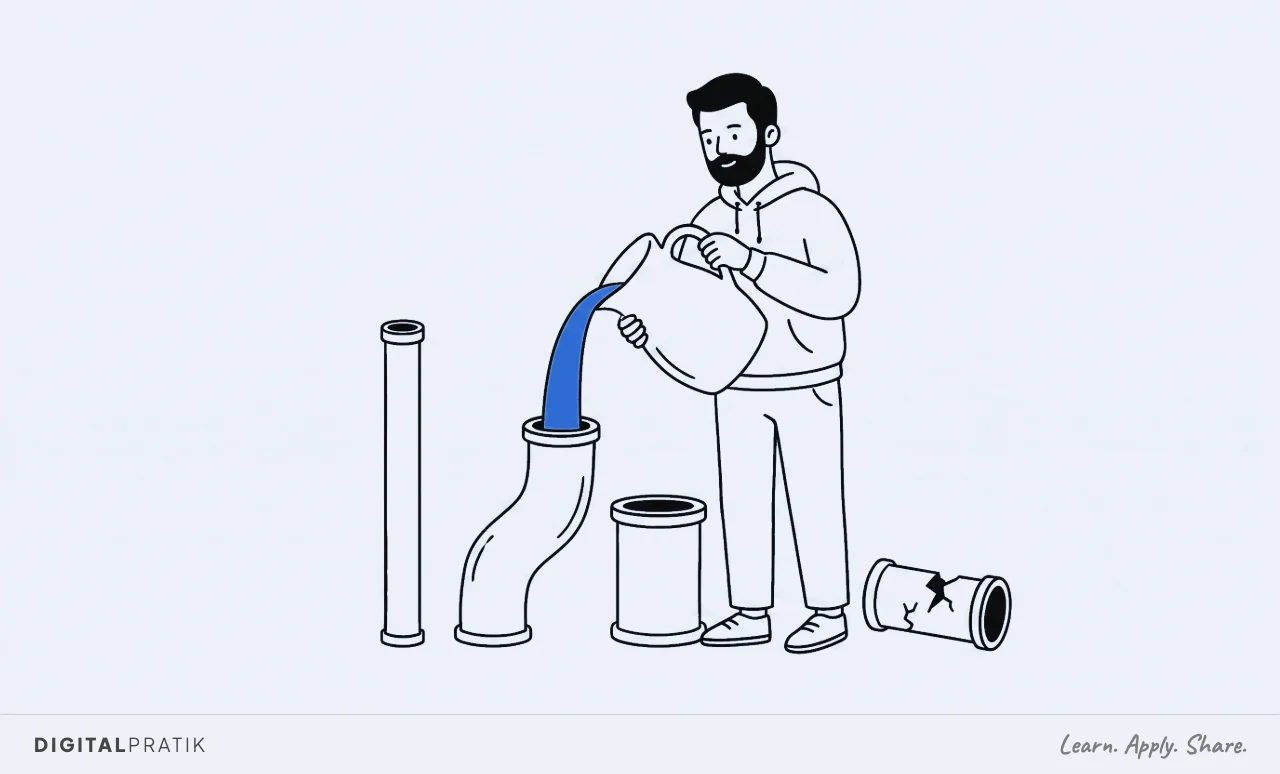
Every one of those apps is a medium. It is the pipe, not the water.
If you publish a podcast every week you are not becoming a podcaster, you are building a personal brand and podcasting happens to be the pipe you chose. Same with short video, same with writing.
That reframe matters practically, not just philosophically. If you are building a brand you can change pipes when a pipe stops working, and the asset comes with you.
If you are building a platform account, the platform owns the asset and one policy change ends you.
There are only four things you can make
Text. Image.
Audio. Video.
That is the entire menu, and it always has been. Every format anybody invents is a recombination of those four.
People overcomplicate this because new formats keep appearing and each one feels like a new skill to learn. It is not.
It is one of the four, in a new wrapper, on a new pipe. Pick the one you can do without dreading it, because the one you dread is the one you quit.
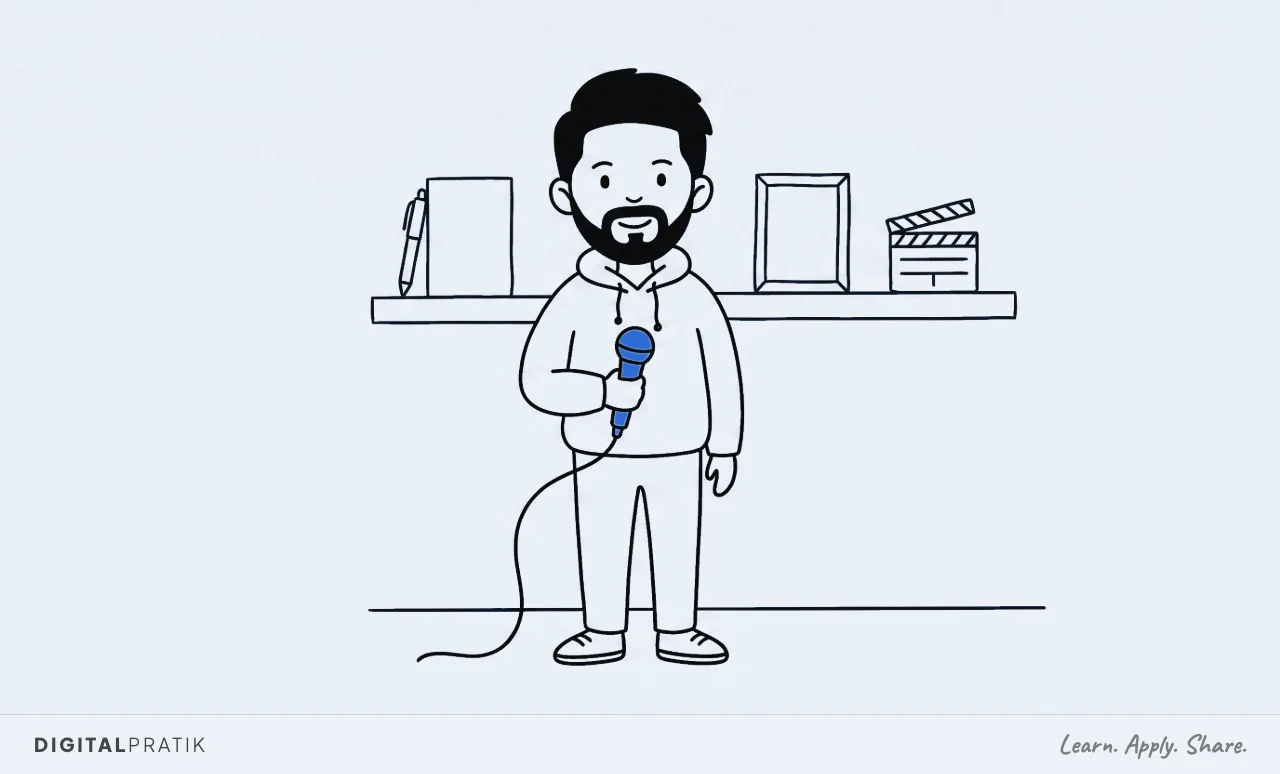
If you are not sure which, pick the format closest to how you already explain things to a client in a room. Most founders talk well and write badly, which means audio or video, and they resist it because they do not like their own face.
That resistance costs more than it saves.
Why nobody calls you a brand yet
Here is the blunt version. You are already doing personal branding from your very first post.
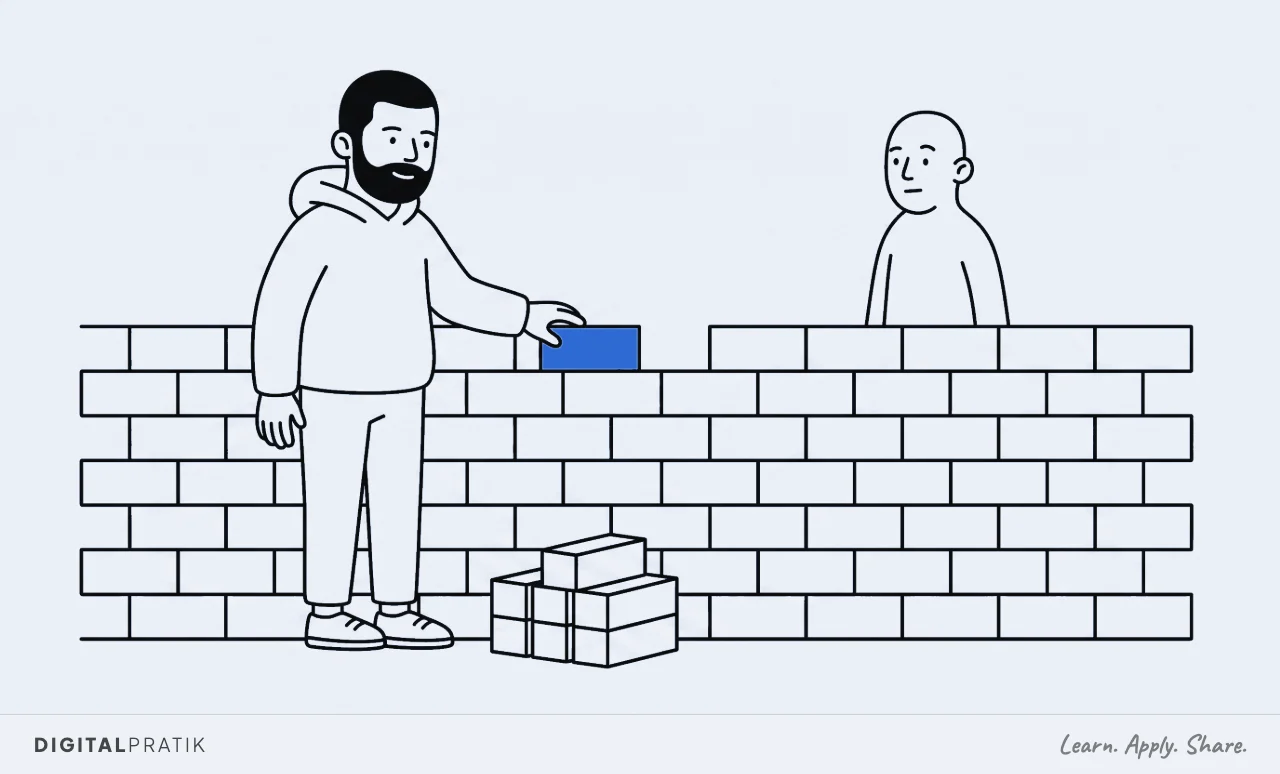
The reason people do not recognise you as one is that you have not done a significant enough body of work in your space for the pattern to be visible.
Not one viral post. A body.
Enough of it, in one identifiable lane, that someone landing on you can tell within thirty seconds what you are about. Until that exists you are a person who posts.
After it exists you are a person who is known for something, and the second one is what converts.
Consistency on one platform beats presence on five
The instinct with no audience is to be everywhere at once, because it feels like more chances to be found. In practice it is five half-efforts and no feedback loop anywhere.
Pick one and go until the consistency is automatic. What happens then is not really about the platform at all: your own head gets trained.
Publishing stops being a decision you make each day and becomes a thing you do, and that shift is what makes everything after it possible. Repurposing to other platforms is easy once the engine exists.
It is impossible while you are still deciding whether to post.
What has changed since I first taught this
The principles above are unchanged. The execution is unrecognisable, and I would be lying if I taught the old workflow as current.
When I first ran this training the stack was a page builder, a separate automation connector to pass data between apps, a scheduling link, and an email tool, all bolted together by hand. Every one of those was a subscription and a point of failure, and setting it up honestly took people weeks.
In 2026 I build the asset with AI in an evening, the follow-up runs through agents that read my actual pipeline rather than a connector firing a webhook, and the booking page is not a bare calendar link, it is wired into the same agents so that what happens after someone books is part of the system rather than an afterthought. Fewer tools, less duct tape, and the founder is no longer the integration layer.
What did not change: it still only works if you publish. No stack rescues an empty body of work.
Reading about a system and running one are different jobs. If your business does AED 10 million a year or more, this is what a working session looks like.
The first ninety days, honestly
If you are starting from zero and want the version I would actually give you, it is unglamorous.
- Pick the lane. One subject you can talk about for a year without faking interest. Narrower than feels comfortable.
- Pick one format and one pipe. The format you do not dread, the platform where your buyers already are.
- Publish on a rhythm you can survive. Three a week you keep beats daily for eleven days.
- Document rather than perform. Show the work you are already doing. It is infinitely more sustainable than inventing content.
- Do not sell for the first stretch. Build the body of work first. The offer lands on an audience that already believes you, or it lands on nobody.
Somewhere in the middle of that, the thing you have been building starts to be usable as proof, and proof is what lets you charge properly. That is the bridge into the show don't tell funnel, which is the next piece of this.
What to do when nothing happens for months
It will not happen for months. That is the normal experience and almost nobody says so plainly, which is why people assume they are uniquely failing.
The signal to watch in that stretch is not reach, it is whether the work is getting easier to make. If publishing is getting faster and the ideas are coming quicker, the engine is being built even though nothing external has moved yet.
If it is getting harder every week, you picked the wrong format or the wrong lane, and that is worth changing early rather than grinding through.
What you are really waiting for is the point where enough work exists that someone can land on you and immediately understand what you are about. Until then the numbers are noise.
The part people skip and regret
Record what you do. Not for an audience, for the archive.
The calls, the walkthroughs, the explanations you give a client for the fortieth time.
Almost everything I have ever published usefully was originally a thing I was doing anyway and happened to capture. That archive is also where your first real lead magnet comes from.
The founders who struggle hardest with content are usually not short of material, they are short of the habit of pressing record on the material they are already producing.
Start before you are ready
Nobody knowing your name is not a disadvantage you have to fix before you start. It is the condition everybody started in, and the only route out of it is a body of work.
Pick the lane. Pick the format.
Publish this week. The brand is a byproduct.
Frequently asked questions
By publishing consistently in one lane on one platform until a visible body of work exists. Reach is a result, not a starting requirement. The reason people are not recognised as a brand is rarely the algorithm and almost always that there is not yet enough work in one place for anyone to see the pattern.
The one where the people who could buy from you already spend time, using the format you can produce without dreading it. The platform is only a medium, so the choice matters far less than the consistency, and picking the format you avoid is the most common reason people stop.
No. Five half-efforts produce no feedback loop anywhere and burn you out faster. Go consistent on one until publishing stops being a daily decision and becomes automatic, then repurpose outward. Repurposing is easy once the engine runs and impossible before it does.
Longer than the content promising otherwise suggests, because authority accumulates before it converts. The useful marker is not follower count but whether a stranger landing on your profile can tell within thirty seconds what you are known for. Business tends to follow shortly after that becomes true.
The work you are already doing. Document rather than perform: the walkthroughs, the explanations you give clients repeatedly, the decisions and the mistakes. Founders are rarely short of material, they are short of the habit of capturing what they already produce.
Install this in your business
An article gives you the map. A working session gives you the system, built around what you actually sell and who actually buys it.