
The 90 Days Rule: Give One Thing Enough Time to Tell You Something
 Digital PratikGrowth Marketing Consultant
 Give one thing ninety days before you decide anything about it.
Publishing, a channel, an ad account, a new process.
The rule exists because almost every decision to quit is made impulsively at the point of maximum discouragement and minimum data, which is usually somewhere around week three, long before the thing has had a chance to say anything.
People ask how long they should give something before deciding it does not work. Ninety days.
One thing at a time. And most people will not do it, which is genuinely most of the advantage.
The rule
If you are not sure about something, you do not get to decide until day ninety. That is it.
The point is not that ninety days is magic. It is that having a fixed horizon removes the decision from your mood.
Without one you will judge on the day you happen to feel worst about it, which is not a measurement, it is a bad afternoon.
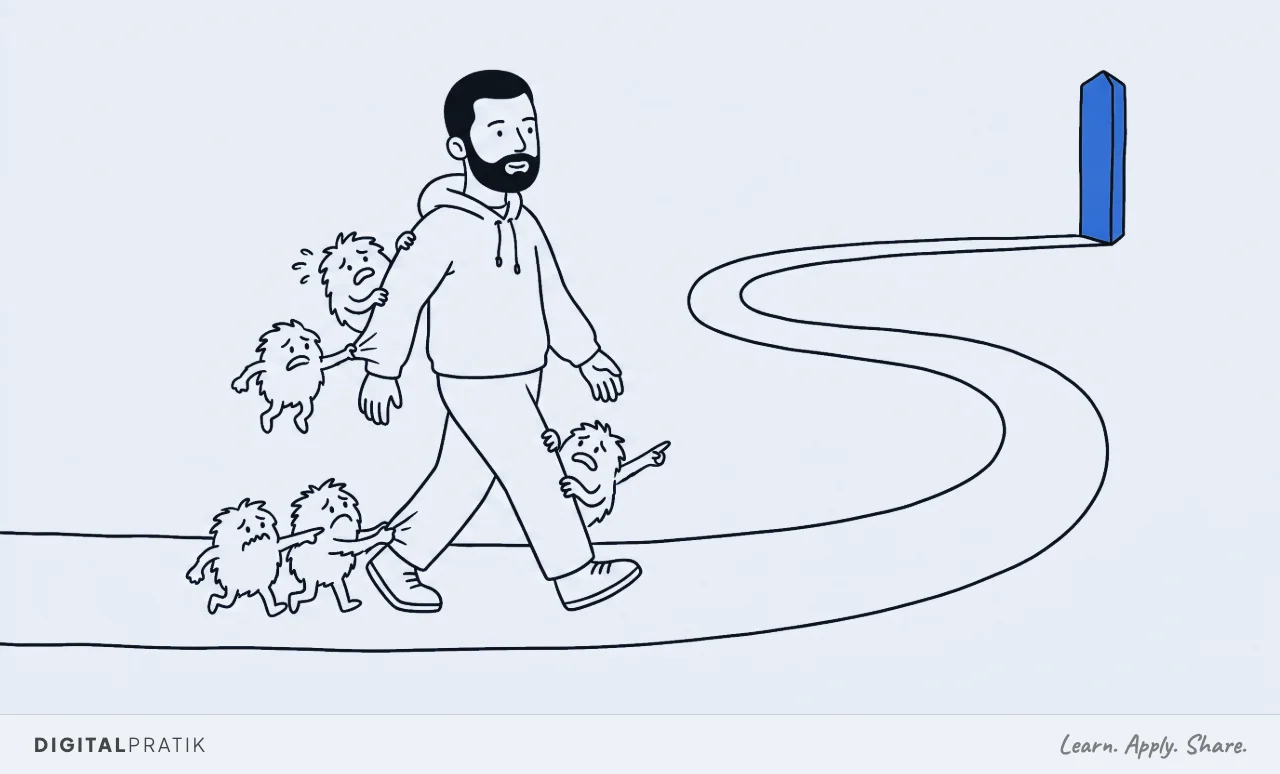
Why three weeks feels like enough and is not
At three weeks you have effort and no results, which is exactly what the early part of anything looks like whether it is working or not. The two are indistinguishable from inside.
So the quit decision gets made on feeling. And it always arrives with a plausible story attached: the market is saturated, the algorithm changed, this works for other people but not my industry.
Those stories are convincing precisely because they might occasionally be true.
The ninety day horizon does not make you more patient. It just stops you having the argument with yourself every week.
The comparison that ends the objection
Ninety days sounds like a lot until you hold it against anything else you have committed to.
A degree takes three or four years and most people commit to that without blinking, often before knowing whether they will enjoy the subject. If you can wait three years for a qualification, waiting three months to find out whether you are any good at something is not an unreasonable ask.
Put next to that, ninety days is a short experiment with a high information payoff.
One thing at a time, and that part matters
The rule is one thing for ninety days, not four things for ninety days. Running four experiments at once means that at the end you know something changed and not which of the four did it.

Give ninety days to advertising and you will learn why the next discipline also needs ninety. The rhythm transfers.
What you are really building in that first stretch is the ability to stay with something long enough for it to produce a signal, and that skill is worth more than the specific result.
Reading about a system and running one are different jobs. If your business does AED 10 million a year or more, this is what a working session looks like.
What to watch while you wait
Waiting is not the same as ignoring it. You are not allowed to make a quit decision, but you are supposed to be paying attention.
- Is it getting easier to do? The strongest early signal. If the work is speeding up, an engine is forming even if nothing external has moved.
- Is anything qualitatively different? A better conversation, a sharper question, one person who found you. Small, real, and invisible to any dashboard.
- Are you actually doing it? Most ninety day experiments that fail were never run. Three posts in eleven weeks is not a test of publishing.
That last one is the honest reason most people conclude something does not work. They did not do the thing consistently enough to find out.
What to do on day ninety
Actually decide. That is the part people skip in the other direction, drifting past the deadline because deciding is uncomfortable and continuing is easy.
Sit down with what happened and pick one of three: keep going as is, change one variable and run another ninety, or stop and put the effort somewhere else. All three are legitimate outcomes and only indecision is a waste.

Write the decision down along with the reason. In four months you will want to know what you actually thought at the time rather than what you have since decided you thought.
What ninety days is not for
It is a rule for judging something you have chosen to try. It is not a reason to persist with something clearly harmful, and it is not an excuse to avoid a decision you have already made and are dodging.
If a thing is actively costing you money every week with a mechanism you can name, that is information, not impatience. Act on it.
The rule protects you from quitting on a feeling, not from responding to evidence.
The two ingredients nobody wants
This whole rule reduces to patience and consistency, which is the least exciting answer available and the reason it stays a competitive advantage.
Everybody wants the tactic. Almost nobody will do one thing properly for three months.
So the people who will are competing against a very small field, which is a strange and reliable feature of this business.
Add applying and sharing what you learn along the way, which is the LAS formula, and the ninety days produces a body of work as well as an answer. That is how a personal brand gets built from scratch.
Start the clock
Pick one thing. Write today's date somewhere you will see it.
Do not allow yourself an opinion until day ninety.
Then have the opinion, and make it a real one.
Frequently asked questions
You commit to one thing and do not allow yourself to judge it until day ninety. The purpose is not that ninety days is magic, it is that a fixed horizon takes the decision away from your mood, so you stop re-litigating it every week at whatever moment you feel worst.
Because at three weeks effort with no results looks identical whether something is working or not, so the decision gets made on feeling and arrives with a plausible explanation attached. Those explanations are convincing precisely because they are occasionally true.
No, and it defeats the purpose. Running several experiments simultaneously means that at the end you know something changed but not which one caused it. One thing at a time also builds the habit of staying with something long enough to get a signal, which transfers to everything after.
Whether the work is getting easier to produce, whether anything has changed qualitatively such as a better conversation or one person finding you, and honestly whether you are doing it consistently at all. Most ninety day experiments that fail were never really run.
Yes, when you have actual evidence rather than a feeling. If something is demonstrably costing you money through a mechanism you can name, that is information and you should act. The rule protects against quitting on discouragement, not against responding to facts.
Install this in your business
An article gives you the map. A working session gives you the system, built around what you actually sell and who actually buys it.