
The LAS Formula: Learn, Apply, Share
 Digital PratikGrowth Marketing Consultant
 Learn, Apply, Share, in that order and with none of the three skipped.
Most people learn something and immediately share it, which produces content that is technically correct and carries no authority.
The missing step is applying it yourself first.
Knowledge is only worth what you can do with it, and the difference is obvious to anyone reading.
Years ago I was posting videos of things I had learned from other people. Not things I had done.
Things I had watched somebody else say, repackaged in my own voice, published with confidence.
What I was doing wrong
I was struggling in the early part of my career and doing what looked like the right thing. Consuming a lot, understanding a lot, and publishing what I understood.
The content was fine. It was accurate, it was useful in a general sense, and it went precisely nowhere, because none of it was mine.
I was a very enthusiastic messenger for other people's experience.
Around 2015 it finally landed: I was not investing any time in applying what I was learning. All the effort was going into the learning and then straight into the sharing, with nothing in between.
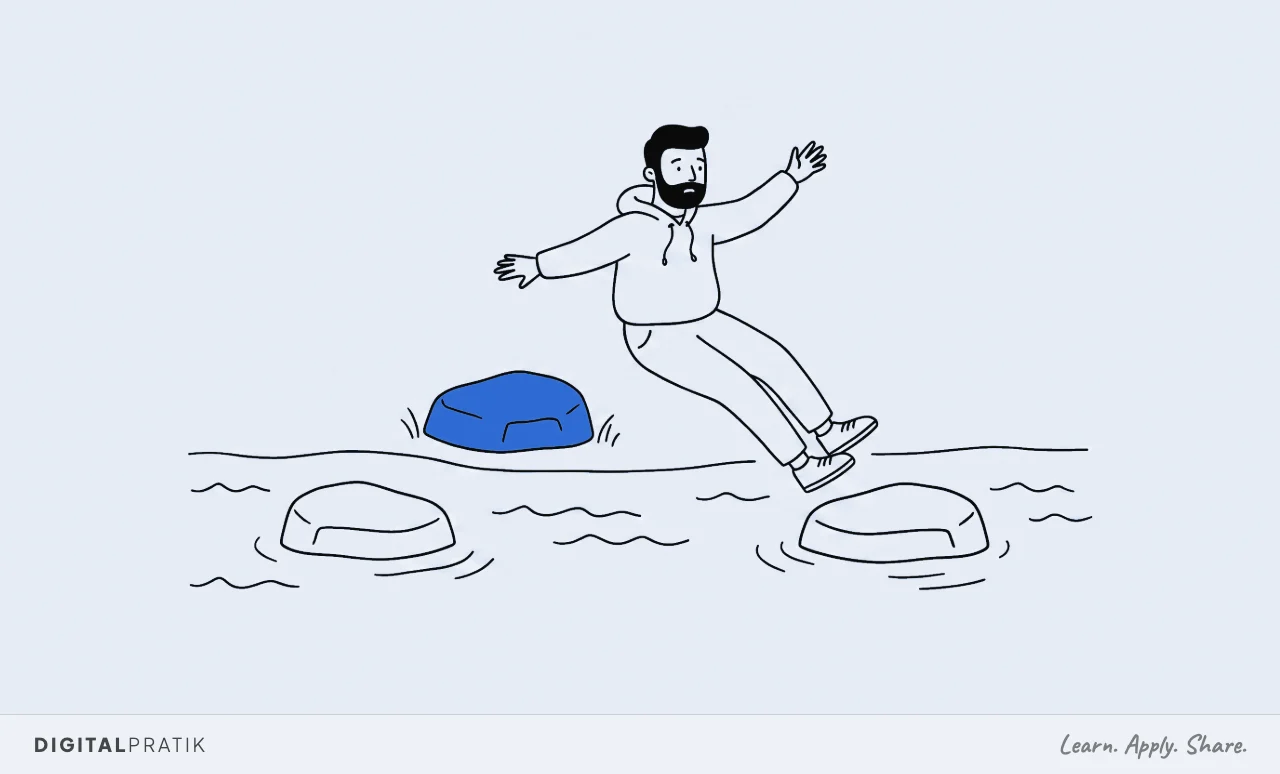
The line that changed it
The knowledge you have is only as good as your ability to apply it.
That sounds like a poster until you take it seriously, and then it reorganises how you spend your week. It means an hour spent applying something is worth more than three hours spent learning more things you will not apply either.
Most people, and I was firmly one of them, are hoarding knowledge and calling it progress. The hoard feels productive.
It is not doing anything.

What the apply step actually does
Three things, and only the first is obvious.
- It tells you what is actually true. Half of what you learn does not survive contact with a real situation. You only find out which half by trying.
- It generates the specifics. Applied experience produces detail: what broke, what it cost, what you would do differently. Detail is what makes writing credible.
- It gives you the right to say it. This is the one people underestimate. Readers can tell the difference between someone reporting and someone remembering.
Then share, including the failures
Once I shifted, the thing I started sharing most was what I had got wrong. I learned from my mistakes and then published the lessons from those mistakes, which felt exposing and turned out to be the most valuable material I had.
Nobody needs another person explaining how something works in theory. There is an unlimited supply of that.
What is scarce is somebody saying I tried this, here is where it broke, here is what I would do instead.
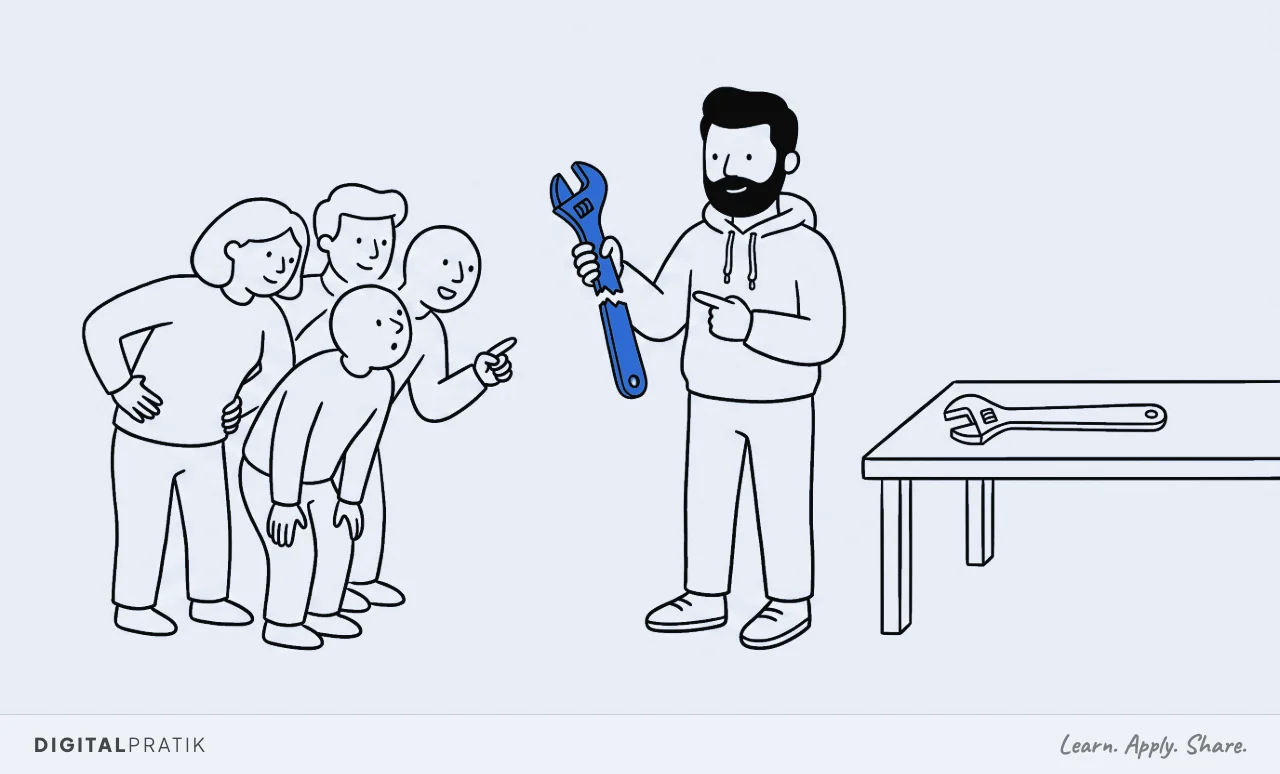
Why the order cannot be rearranged
Learn then share, skipping apply, is the default and it produces the content most people publish. Correct, generic, forgettable.
Apply then share, skipping learn, is possible but slow and expensive. You will rediscover things that were already written down, at full cost.
Learn then apply and never share is the one I have most sympathy for, and it is the most common among people who are genuinely good at their job. They have the experience and no visible record of it, so the market cannot tell them apart from someone who has done nothing.
Reading about a system and running one are different jobs. If your business does AED 10 million a year or more, this is what a working session looks like.
How this connects to everything else I teach
This is the personal version of an argument that shows up everywhere in my work.
It is why I insist on proof rather than description when selling, which is the show don't tell funnel. It is why a lead magnet should come out of something you genuinely do rather than a topic you invented, which is here.
It is the same principle at three different scales: the applied thing beats the described thing, every time.
It is also why I published my own honest scorecard of what I had and had not built rather than a polished version. Applied and admitted beats claimed and unverifiable.
The trap of applying in private
There is a version of this that still fails, and it is worth naming because it catches the most capable people.
You learn, you apply, you get good, and you never share any of it because sharing feels like showing off or because you assume everyone already knows. Ten years later you have deep experience and no public record of any of it.
From the outside that is indistinguishable from having done nothing. Not because the work was not real, but because nobody was ever shown it.
Sharing is not the vanity step at the end, it is what converts private competence into something the market can act on.
A practical version for this week
- Pick one thing you learned recently and have not used. There will be several. Choose the one that would change something if it worked.
- Apply it to your own business. Not a client's. Yours, where the consequences are yours and you can be honest about them.
- Record what happened, including the parts that did not go to plan.
- Share that. Not the theory you started with. What happened when you did it.
One cycle of that is worth more than a month of publishing summaries of other people's ideas, and it is the entire mechanism behind everything I have built since.
The short version
Learn it. Do it.
Then talk about it. Skipping the middle step is why so much good content changes nothing for the person who wrote it.
Add a little patience and consistency to that loop and you have the whole thing.
Frequently asked questions
Learn, Apply, Share, executed in that order with none of the three skipped. Most people learn something and share it immediately, which produces accurate but weightless content. Putting an application step in between is what turns information into experience worth publishing.
Because it carries no authority and readers can detect that. Content built from learning alone is smooth and general, while content built from applied experience is specific and carries the detail of what broke and what it cost. Only the second kind builds a reputation.
Three things: it reveals which of the things you learned survive contact with reality, it generates the specific detail that makes writing credible, and it gives you the standing to say it at all. Readers can tell the difference between someone reporting and someone remembering.
Yes, and they are usually the most valuable material you have. There is an unlimited supply of people explaining how something works in theory, and a shortage of people saying they tried it, showing where it broke, and explaining what they would do differently.
That is the most common position among people who are genuinely good at their work, and it is costly. Without a visible record of the experience, the market cannot distinguish you from someone who has done nothing, so the value you have built stays invisible.
Install this in your business
An article gives you the map. A working session gives you the system, built around what you actually sell and who actually buys it.