
Risk Reversal: Guarantees That Convert Without Destroying Your Margin
 Digital PratikGrowth Marketing Consultant
 Every buyer is silently carrying the risk that your thing will not work.
Moving some of that onto yourself raises perceived value more than almost anything else you can do to an offer.
The trick is moving enough to matter without absorbing risk you cannot control, which is why conditional and process guarantees usually beat an unconditional money-back promise for service businesses.
When someone is deciding whether to buy, they are running a private calculation you never see. Not "is this good" but "what happens to me if this does not work".
They lose money, time, and a bit of standing with whoever they told about it.
Why it works so well
Because value is not just about the upside. It is the upside multiplied by how likely they think it is, divided by what it costs them in time and effort and exposure.
A guarantee attacks two of those at once. It raises the perceived likelihood, because you would not offer it if you expected to fail, and it lowers what they stand to lose.
Same offer, same price, materially more attractive.
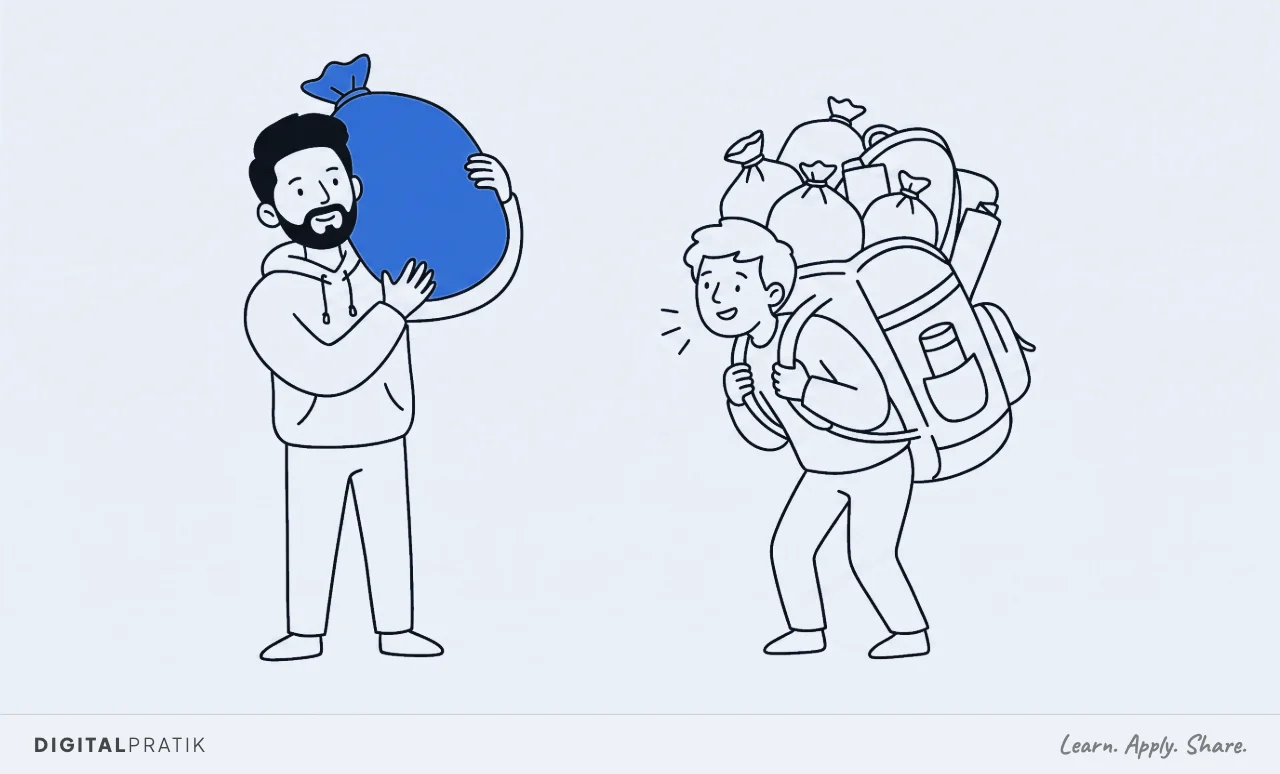
This is also why risk reversal is often a faster lever than improving the offer itself. You have not changed what you deliver.
You have changed who is holding the downside.
Work out what a guarantee actually costs you
Founders resist guarantees because they picture the refunds. Do the arithmetic and the picture changes, because you are comparing refunds against sales you would never have made.
Round numbers. A hundred calls a year, a 20 percent close rate, 3,000 an engagement.
That is 20 clients and 60,000.
Now add a real guarantee. Say it lifts your close rate to 30 percent, because the thing stopping people was risk rather than price.
That is 30 clients. Say 10 percent of them invoke it, so you refund 3 and keep 27.
Twenty-seven times 3,000 is 81,000.
| No guarantee | With a guarantee | |
|---|---|---|
| Calls | 100 | 100 |
| Close rate | 20% | 30% |
| Clients signed | 20 | 30 |
| Refunded | 0 | 3 |
| Clients kept | 20 | 27 |
| Revenue kept | 60,000 | 81,000 |
Twenty-one thousand better, after paying every refund. And here is the number worth carrying around: at a 30 percent close rate you would need roughly a third of your clients to invoke the guarantee before you were worse off than having no guarantee at all.
A third. If your refund rate is genuinely approaching that, the guarantee is not your problem.
The delivery is, and you have just been handed the most useful piece of information in your business.
The mistake: guaranteeing what you do not control
The tempting guarantee is a big outcome promise. Double your revenue or your money back.
It converts, and it can also destroy you.
In a service business the outcome depends on things you do not control. Whether they implement.
Whether they answer their leads. Whether they keep the offer you built the campaign around.
Whether the person you trained stays.

Guaranteeing an outcome that depends on their behaviour means you have taken on unlimited exposure to somebody else's decisions. And the clients most attracted to that guarantee are the ones least likely to do the work, because it is free to them either way.

What to guarantee instead
Guarantee what is genuinely within your control, and be specific about it. Specific beats generous almost every time, because specific is believable.
- Process guarantees. What will exist by when. "The system is live within thirty days or you stop paying until it is." You control that entirely.
- Conditional performance guarantees. The outcome, but with their obligations named. "If you do these three things and it does not work, we keep going free until it does."
- Effort guarantees. "We keep working past the term at no cost until the agreed outcome is hit." Costs you time, not cash, and only when you have underdelivered.
- Fit guarantees. A defined early window where either side can walk. Filters mismatches before either of you is deep in.
That second one is the strongest for most service businesses, because it is honest about the fact that this is a two-sided arrangement, and naming their obligations is itself a qualifying step.
Reading about a system and running one are different jobs. If your business does AED 10 million a year or more, this is what a working session looks like.
Say what they have to do
A conditional guarantee only works if the conditions are few, clear and reasonable. Three things, stated plainly, that a serious client would do anyway.
Show up to the calls. Respond to leads within a defined time.
Do not change the offer mid-campaign without telling us. That is not fine print, that is a description of a functioning engagement.
If your conditions run to a page of exclusions, you do not have a guarantee. You have a legal document pretending to be reassurance, and buyers can feel the difference immediately.
| You control it? | Use it? | |
|---|---|---|
| Deliverables exist by a date | Yes | Strong, safe |
| Outcome with named conditions | Partly | Strongest for services |
| Extra work until it lands | Yes | Costs time, not cash |
| Unconditional money back | No | Attracts the wrong buyer |
If you cannot guarantee anything
That is worth sitting with rather than moving past.
It usually means one of two things. Either you do not yet know your own delivery well enough to predict it, which is a maturity problem that time and record-keeping fix.
Or your outcome genuinely depends so heavily on the client that you should be selling something different, more done-for-you and less dependent on their execution.
Both are useful diagnoses. Neither is solved by writing a braver guarantee than you can honour.
Where it sits in the offer
Not in the opening. The guarantee is not the pitch, it is the thing that removes the last obstacle once they already want it.
Leading with a guarantee tells the buyer you expect them to be worried, which invites worry that was not there. Introduce it when the risk objection actually appears, the same way you would introduce a bonus.
That timing logic is in the bonuses article.
Honour it fast when it triggers
It is worth knowing which dial a guarantee is actually turning. It raises how likely the buyer believes success is for them specifically, and it lowers the risk half of what the purchase costs them.
Two of the four levers in the value equation, moved by one sentence, which is why a good guarantee is worth so much more than it costs.
The whole value of a guarantee is that the buyer believes it. Which means the moment one is invoked, the only correct behaviour is to honour it immediately and without friction.
Arguing over a guarantee costs more than paying it, every time. The refund is a number.
The story about how you behaved when it was called travels a lot further than the refund does.
Frequently asked questions
Yes, because they raise the perceived likelihood that the thing will work and lower what the buyer stands to lose. It is often a faster lever than improving the offer itself, since you have not changed what you deliver, only who holds the downside.
Usually not for a service business. It exposes you to outcomes that depend on the client's behaviour, and it changes who applies. You attract people who are unsure and treating it as a trial, which is the opposite of what a service engagement needs.
What you genuinely control. A process guarantee that deliverables exist by a date, a conditional performance guarantee with the client's obligations named, an effort guarantee where you keep working at no cost until the agreed outcome, or a defined early fit window.
Three clear, reasonable things a serious client would do anyway, such as attending calls and responding to leads within a defined time. If your conditions run to a page of exclusions, you have a legal document pretending to be reassurance, and buyers feel that immediately.
It usually means either you do not yet know your delivery well enough to predict it, which time and record-keeping fix, or your outcome depends so heavily on the client that you should be selling something more done-for-you. Neither is solved by writing a braver guarantee than you can honour.
Install this in your business
An article gives you the map. A working session gives you the system, built around what you actually sell and who actually buys it.