
Feeding the Pixel Back: The Loop That Makes Scaling Compound
 Digital PratikGrowth Marketing Consultant
 Accurate tracking tells you what worked.
Sending that data back to the platform tells the algorithm what worked, which is what actually improves the targeting.
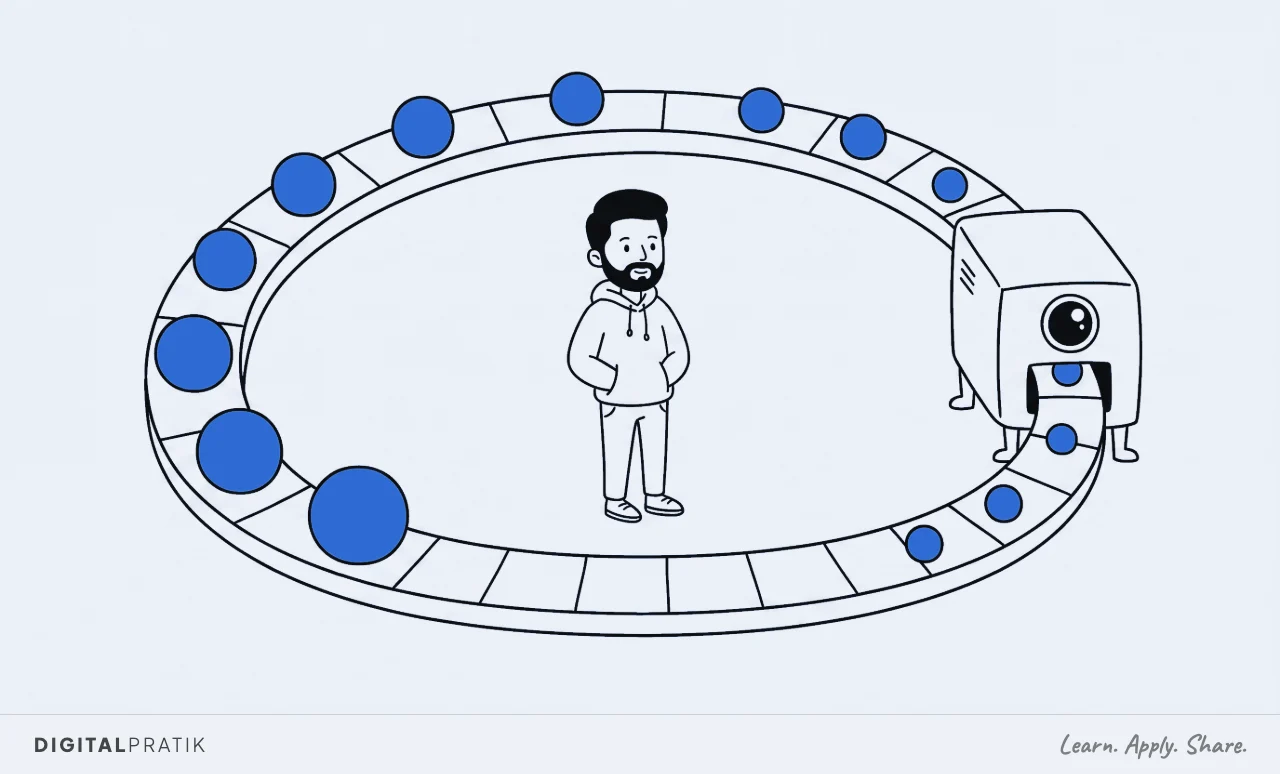
That loop is the difference between measuring your ads and compounding them: better data produces better optimisation, which produces more conversions, which produces better data.
Most people who fix their tracking stop halfway. They get accurate reporting, feel better about their decisions, and never close the loop that makes the accuracy pay for itself.
Why the platform needs your help
The algorithm is genuinely good at finding more people like the ones who converted. It can only do that for conversions it knows about.
Plenty of what happens in a real business is invisible to it. Somebody buys after a phone call.
A deal closes weeks later. A purchase happens through a channel the browser never reported cleanly.
From the platform's point of view none of that occurred, so none of it shapes who it looks for next.
You are effectively asking it to find more customers while hiding most of your customers from it.

What feeding back actually does
You take the conversions your own tracking captured, including the ones the browser missed, and send them back to the platform as signals. Now the algorithm knows about the sale that closed on a call, and it can go looking for more people who resemble that buyer.
The effect is not a modest reporting improvement. It changes the input the targeting system optimises against, which is the single largest lever available now that manual media buying skill has mostly stopped mattering.
The related argument is in creative is the new targeting.
The loop
- Track properly. Capture the real journey, including conversions the platform cannot see.
- Send it back. Feed those conversions to the platform as signal.
- It optimises harder. More accurate conversion data means better prospecting.
- You get more conversions. Which produces more data.
- Repeat. Each cycle is better informed than the last.
That is the whole mechanism, and the reason it is worth the setup effort is that it compounds rather than adding a fixed improvement. An account running this loop for six months is not slightly better than one that is not.
It is operating on a different quality of information.
Reading about a system and running one are different jobs. If your business does AED 10 million a year or more, this is what a working session looks like.
Get the measurement right first
This is the part to be careful about, because the loop amplifies whatever you put into it.
If your tracking is misattributing, you are not feeding back truth, you are feeding back a confident error, and the algorithm will faithfully go and find more people who match your mistake. Bad data fed back is worse than no data fed back, because it is wrong at scale and it looks like it is working.

So the order is fixed: get measurement accurate, verify it against real sales you can confirm independently, and only then close the loop. Verifying means opening actual customer journeys and checking they match reality, which I go through in reading a real customer journey.
Why this matters more for service businesses
If everything you sell is bought instantly on a website, the platform can already see most of what happens and the gain here is smaller.
Service businesses are the opposite case. The valuable conversion is a call that happened, a proposal that was accepted, a retainer that started, and almost none of that is visible to a pixel by default.
The gap between what the platform can see and what actually matters is at its widest exactly where the money is.
Which means the businesses with the most to gain from closing this loop are usually the ones least likely to have done it, because the setup is unglamorous and nobody is selling it to them as a growth tactic.
What counts as a conversion worth sending
Not every event deserves to be fed back, and sending everything blunts the signal rather than strengthening it.
Send the events that represent real commercial value: a purchase, a qualified call that actually happened, a proposal accepted. Sending page views and form fills teaches the system to find people who fill in forms, which is a category of person you can already reach far too easily.
The rule of thumb: if you would not be pleased to get a hundred more of them, do not optimise toward them.
Value matters as much as volume
Where you can, send what the conversion was worth rather than just that it happened. A system that knows one buyer was worth ten times another can go looking for the expensive kind.
This matters most for service businesses, where the spread between the smallest and largest client is enormous. Treating every conversion as identical throws away the most useful information you have, and it is usually information you already hold.
Who should actually set this up
This is one of the few places where I would tell a founder to get help rather than build it themselves. It is fiddly, it fails silently, and a misconfiguration produces confident wrong data rather than an obvious error.
Set the requirement yourself, because that is a business decision: which events matter, what they are worth, how you will verify them. Then have someone competent wire it and prove it works against sales you can name.
The honest expectation
This does not produce a jump on Thursday because you switched it on Wednesday. It needs volume flowing through it before the optimisation has anything to learn from, and the benefit shows up as an account that keeps getting better instead of plateauing.
That is an unsatisfying promise and it is the accurate one. Measure properly, close the loop, then let it run long enough to compound.
Frequently asked questions
Sending the conversions your own tracking recorded back to the advertising platform as signals, including the ones its pixel never saw. The platform can only optimise toward conversions it knows about, so supplying the missing ones changes what its targeting system is actually aiming at.
Because the algorithm finds more people resembling those who converted, and it can only do that for conversions it is aware of. Sales that close on a call or through a channel the browser did not report cleanly are invisible by default, which means you are asking it to find more customers while hiding most of them.
No, it is a loop. Accurate tracking feeds the platform, better signal improves targeting, better targeting produces more conversions, and those produce more data. The value comes from compounding across cycles rather than from a single configuration change.
The loop amplifies the error. Feeding back misattributed conversions teaches the algorithm to find more people matching your mistake, at scale, while appearing to work. Verify against real sales you can independently confirm before closing the loop.
Yes, and service businesses gain the most. When the meaningful conversion is a call, a signed proposal or a started retainer rather than an instant website purchase, almost none of it is visible to a pixel by default, so the gap between what the platform sees and what matters is at its widest.
Install this in your business
An article gives you the map. A working session gives you the system, built around what you actually sell and who actually buys it.