
Do Not Take a Niche: The Niche Obsession Is a Course Seller's Problem
 Digital PratikGrowth Marketing Consultant
 The advice to niche down mostly comes from people selling courses, because a course cannot be sold without a defined target audience.
If you run a real service business, restricting the whole business to one category is usually the wrong move.
Put the identity in the messaging instead: name who a specific message is for, without limiting who you are allowed to serve.
Every week someone asks me which niche they should take. It is the single most common question I get from service business owners, and my answer surprises people because it goes against almost everything they have been told.
Where the advice actually came from
Notice when the niche question became universal. It exploded after the pandemic, alongside an enormous wave of people selling courses and programmes online.
That is not a coincidence, and it is not a conspiracy either. It is a genuine feature of that business model.
If you are selling a course, the first thing you must establish is the target audience, because a course cannot be all things to all people. Nobody buys a course called "how to do marketing".
They buy "how to do marketing for dental clinics". The niche is load-bearing.
So the people teaching the loudest were the people for whom niching was genuinely essential, and the advice spread to everyone regardless of whether it fit their business.
Why it does not fit a real service business
A service business is not a product with a fixed audience. It is capability applied to a problem, and that capability usually transfers further than people expect.
If you can build an acquisition system for a clinic, you can very likely build one for a law firm. The mechanics are similar and the difference is context, which you can learn in a fortnight.
Declaring yourself the clinic person permanently means turning down the law firm that arrived with a bigger budget and less competition.
And it happens early, when you have the least information about which clients you actually want. People pick a niche in month three based on almost no data and then feel trapped by it in year two.

What to do instead: identity in the message
Here is the move. Do not niche the business.
Niche each message.

Take hoodies. Saying "I sell hoodies" is generic and it loses.
Saying "I sell hoodies for gym goers, cut so they actually show the shape you worked for" is an identity, and the person it is for feels seen immediately.
You did not stop selling hoodies to anybody else. Nothing about the business changed.
One message got specific, and that message will outperform the generic one by a distance.
Now run that same move for fifteen different identities. Fifteen specific messages, one business, and every one of them reads as though it was made for one kind of person.
That is the whole cohort creative approach, and it is in the cohort creative article.
Reading about a system and running one are different jobs. If your business does AED 10 million a year or more, this is what a working session looks like.
The words all mean the same thing
Worth clearing up, because the vocabulary makes this sound more complicated than it is. Segment.
Consumer segment. Niche.
Industry. Cohort.
Vertical. They all mean the same thing: a group of people you can address specifically.
Someone new arrives, needs to sound different from the last person, invents a new word for an old idea. Do not let five words for one concept convince you there are five concepts.
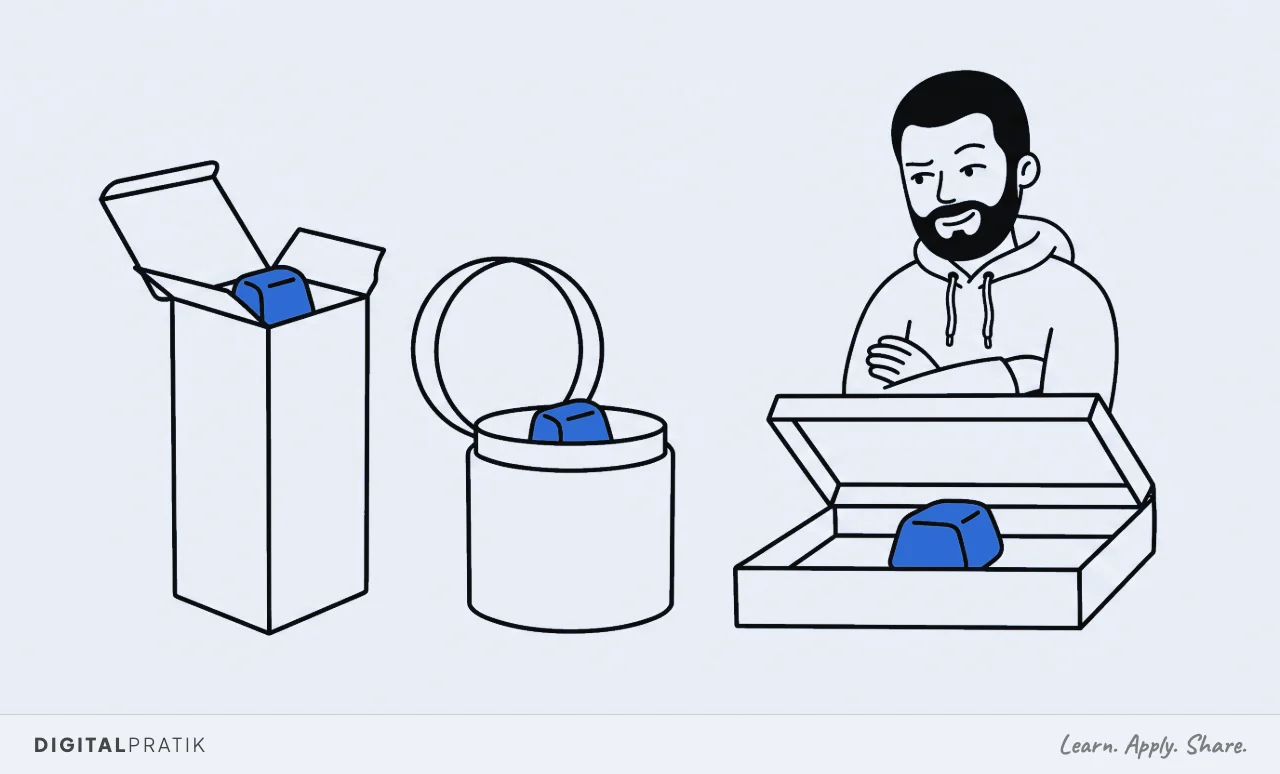
When niching genuinely is right
I am not going to pretend this is absolute, because there are real cases where committing is correct.
- You are selling a course or a productised programme. Then it is essential, for exactly the reason above.
- The domain requires genuine expertise you cannot learn quickly. Regulated industries, complex compliance, deep technical fields.
- You have real data. If two years of clients show one category is your best work and your happiest relationships, that is a discovery rather than a guess.
- Your delivery is genuinely built around one context. If the system only works for one type of business, you already niched, you just have not said it out loud.
Notice that three of those four are things you learn later. That is the actual point.
Let the niche emerge from evidence rather than choosing one from a blank page in month three.
The real question underneath
When someone asks me which niche to take, what they usually mean is: how do I stop feeling invisible. That is a genuine problem, and niching is one answer to it, but it is not the only one and it is the most expensive.
The cheaper answers are a sharper problem statement, a mechanism nobody else has named, and proof from someone who looks like the buyer. All of those make you visible without narrowing what you are allowed to do.
Niche is who. Problem is what.
In my experience the what is the part that prints money, and most people obsess over the who because it feels like a decision they can make in an afternoon.
Frequently asked questions
Usually not in the way the advice implies. Restricting the whole business to one category early, on very little data, tends to cost you better opportunities. Put the identity in each message instead, so a specific message reads as though it was written for one kind of person while the business stays open.
Because much of that advice comes from people selling courses, where a defined target audience is genuinely essential. Nobody buys a course called "how to do marketing", they buy one for their specific industry. The advice spread to everyone regardless of whether it fits their business model.
Niching restricts who you are allowed to serve. Specific messaging names who one particular message is for. Saying "hoodies for gym goers, cut to show the shape you worked for" is specific, and you have not stopped selling hoodies to anyone else.
When you are selling a course or productised programme, when the domain needs expertise you cannot learn quickly such as regulated industries, when two years of real client data show one category is your best work, or when your delivery is already built around one context. Three of those four are things you learn later.
A sharper problem statement, a mechanism nobody else has named, and proof from someone who looks like your buyer. Those make you visible without narrowing what you can do. Niche is who, problem is what, and the what is the part that tends to produce revenue.
Install this in your business
An article gives you the map. A working session gives you the system, built around what you actually sell and who actually buys it.