
What It Actually Costs to Win a High Ticket Client, and the Three Numbers That Decide If You Can Scale It
 Digital PratikGrowth Marketing Consultant
 Winning a high ticket client is decided by three numbers, not one. Blended LTV to CAC tells you whether it is a good business, measured against your own floor rather than the 3:1 you read online. Day zero payback tells you whether growth can fund itself. Payback period tells you how long your cash is locked.
A business can pass the first and still die on the third, which is exactly what happens to high ticket retainers sold on calls and delivered done-for-you.
A founder shows me a 9:1 ratio and expects applause. I ask one question back.
How much of that comes back on day one? Usually the answer is nothing, and what looked like a great business is a company that will run out of money the faster it grows.
Ratio and survival are two different conversations, and almost nobody has the second one until it is expensive.
The Three Lenses
Every money model gets judged on three questions. Each answers something the other two cannot, and looking at only the first is the most common expensive mistake in service businesses.
- Is it a good business? Blended LTV to CAC. Lifetime gross profit per buyer over what it costs to win them, measured against your own floor.
- Can you scale it for free? Day zero payback. How much of your acquisition cost the entry offer hands back on day one. Anything over 1x means growth self-funds, and that is the thing worth chasing.
- How long is your cash locked? Payback period. The days until one customer repays what you spent to win them. The longer it runs, the more cash you float to grow.
The first lens is the one everybody quotes. The third is the one that actually kills companies, because a ratio has no date attached to it and your payroll does.

Your Floor Is Not 3 to 1
The 3:1 rule you read everywhere is the number for a fully automated machine. Software, no humans, delivery that costs almost nothing to repeat.
Almost no service business is that.
Every human you put in the loop adds roughly +3 to the ratio you need. A salesperson taking calls, a person delivering the work, an account manager holding the relationship.
Each one adds inconsistency you cannot design out and cost you cannot automate away. Stack a sales call, live delivery and done-for-you service on top of each other and most service businesses need something closer to 12:1.
If you are running a 4:1 and celebrating because the internet told you 3:1 is healthy, you are running a business that looks fine on a slide and gets thinner every time you add a person.

How that floor moves with each human you add is worked through in LTV to CAC: the ratio you need changes with how many humans are in your machine.
Four Money Models, and Why the Prettiest One Is the Most Dangerous
These are the four shapes I put in front of founders. Round numbers, so you can redo every one of them against your own business in a few minutes.
Look at what happens when you read across the row instead of stopping at the ratio.
| Model | Ratio | Day zero | Payback | The verdict |
|---|---|---|---|---|
| Entry offer to a ladder, then a retainer | 5.4:1 | 1.8x | Day 0 | Below the 12:1 floor and still the best business here, because the front end pays back its own acquisition cost on day one. Cash flow beats ratio. |
| A $50 a month membership, 10 month average stay | 3:1 | 30% | 90 days | Clears the classic floor and is secretly a cash trap. You fund every member for three months before they break even. |
| A single $2,000 one-time offer, delivered automated | 3.5:1 | 3.5x | Day 0 | The simplest win on the board. One product, one price, no funnel, and it self-funds from day one. |
| A $3,000 a month retainer sold on a call, done-for-you | 9.5:1 | 0% | 60 days | Best ratio here by a distance, and nothing comes back on day zero. The prettiest ratio demands the most working capital. |
Read the first row and the last row together. The 5.4:1 is below the floor and it is the healthier business.
The 9.5:1 is the one that will bankrupt you if you scale it without cash behind you. That is the whole argument for looking at three numbers instead of one.
The Cash Trap, and the Structural Fix
The high ticket retainer is the trap most founders walk into, because everything about it looks like success. Big monthly number, long term, excellent ratio.
And day zero payback of zero. Nothing comes back on the day you win the client.
You fund delivery out of your own pocket for months while a lovely figure sits on a slide. The prettier the ratio, the more working capital the model quietly demands.
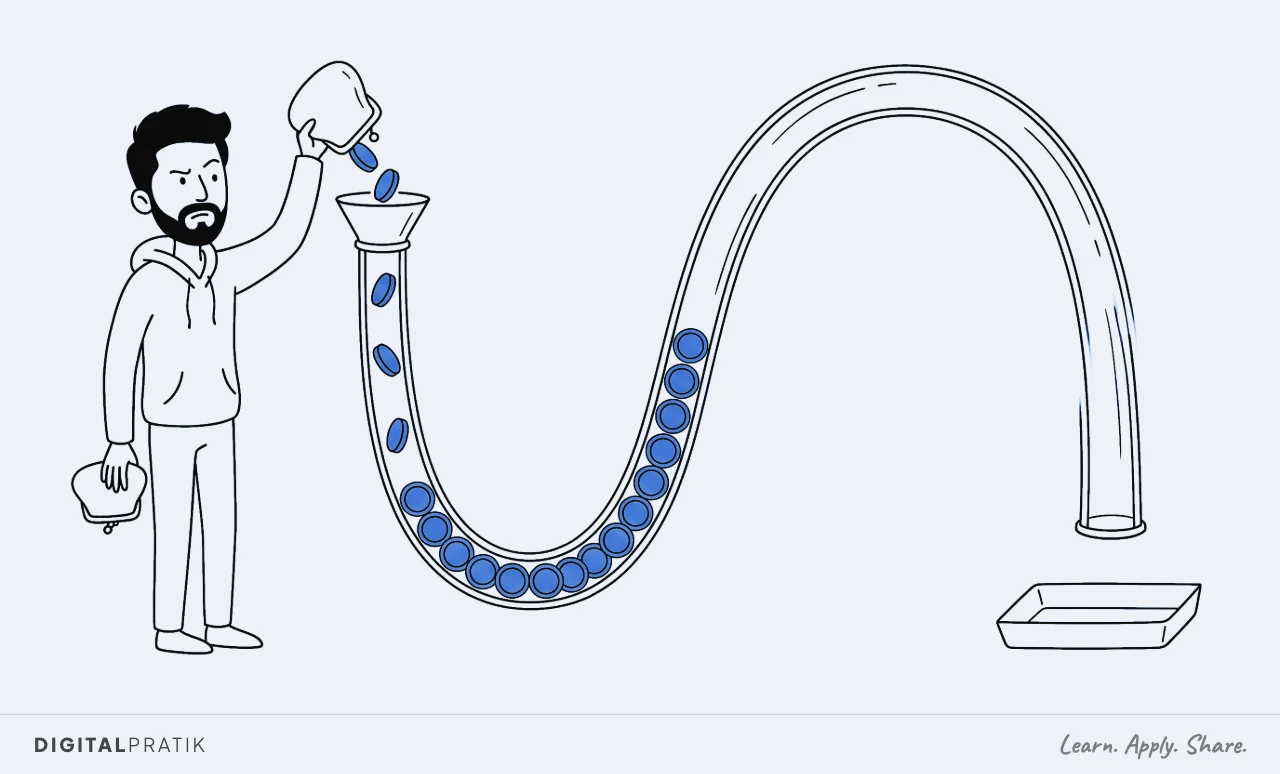
The fix is not to raise your price or find cheaper clients. It is structural. Put a one-time build fee in front of the retainer and tie its instalments to milestones that land fast.
Here is the arithmetic on round numbers. Say the retainer is $2,500 a month and you charge $10,000 for the initial build.
Reaching $10,000 on the retainer alone takes exactly four months. Collect the build fee inside the first month and you have pulled four months of cash forward, without raising your price, without a bigger audience, and without asking the client for anything they did not already want.
The formula is worth writing down. Build fee divided by monthly retainer equals the months of cash you pull forward. A build fee twice your monthly is two months. Six times your monthly is half a year.
That single decision is the difference between funding growth from the business and funding it from your savings.
The general version of this is in the payback window, and the two levers that move it are in the two levers of unit economics.
Make the Instalments Something the Client Can See
A build fee only pulls cash forward if it actually arrives. The structure that works is half on signing to start the work, a quarter at a live demo the client watches, and a quarter on final delivery.
Nobody argues with an invoice attached to something working in front of them.
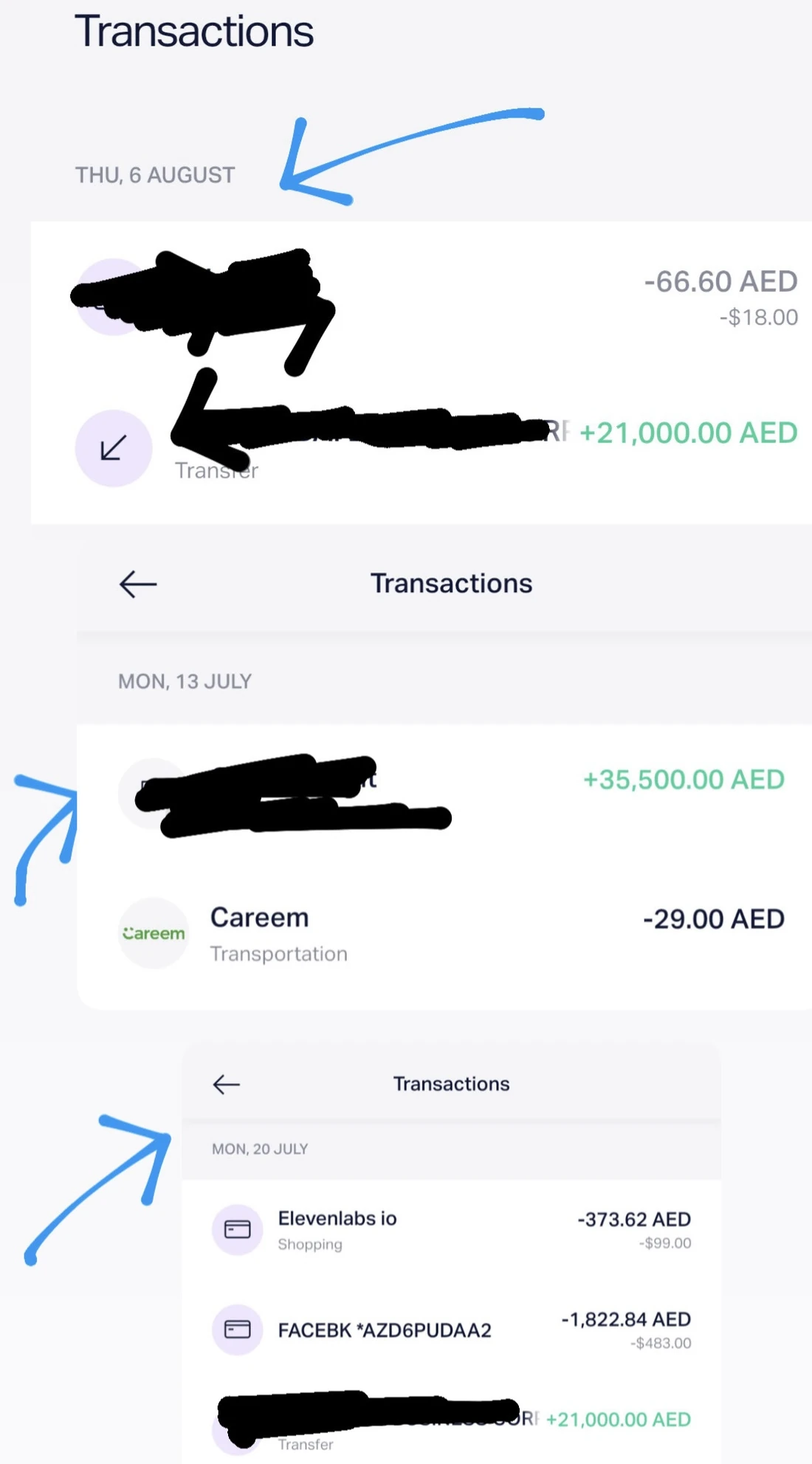
Which means delivery speed is not a nice-to-have, it is the mechanism. Put a real window in the contract and then beat it.
If the first working phase is live inside the first week or two, the second instalment arrives in the same month as the first. Slow delivery does not just annoy the client, it pushes your own cash out by months.
The Number I Am Actually Optimising
My own front door is a $97 workshop. Somebody pays $97, and some number of days later a few of them sign a high ticket engagement.
Right now that gap runs about 45 days of meeting, understanding the business and building a strategy they can see working.
Run the multiple from a $97 ticket to a five figure annual engagement and it looks absurd, which is exactly why it is the least useful number I could show you. It says nothing about whether it can be repeated.
The number that decides that is the 45.
Forty five days of my attention and my calendar, spent on one buyer. Cut it to 30 and the same capacity closes more contracts in the same year with no extra traffic, no extra ad spend and no new offer.
Cut it to 20 and the economics of the whole company change. That is the only lever I am actively working on, and it is the one I would tell you to write on the wall.
Why I Stopped Leading With Lifetime Value
Lifetime value is the most quoted number in service businesses and the least earned. It is a forecast wearing the costume of a fact.
Someone signs a 12 month retainer, somebody multiplies it by an assumed three year tenure, and now there is a slide claiming a five figure LTV from a client who has paid two invoices. I have done it.
It feels great and it tells you nothing.

Worse, it gets used backwards. A high assumed lifetime value becomes the excuse for a high acquisition cost, which becomes the excuse for spending that the collected cash never supported.
The forecast quietly starts funding decisions the bank balance would have refused.
There is one honest exception. On a subscription, every extra month of average stay lifts lifetime value with zero extra ad spend.
Retention is the cheapest growth lever there is, and it is worth measuring properly. What is not worth doing is treating an assumed retention curve as money you already have.
So here is the swap. Lead with two numbers nobody can argue with. Cash collected to date, and days to cash.
Both are facts sitting in your bank account. Neither needs a footnote about assumed tenure.

Run Your Own Model in Ten Minutes
- Work out your floor before you judge your ratio. Start at 3:1 and add about 3 for every human in the loop. Selling on calls and delivering done-for-you puts you near 12:1.
- Calculate day zero payback. What your entry offer returns on day one, divided by what it cost to acquire that buyer. Above 1x, growth funds itself. At zero, you need working capital and you should know that before you scale.
- Count the days, not just the ratio. How many days until one customer repays what you spent winning them. That number is how much cash you have to float.
- Split the build from the retainer. The build pays you now, the term makes next year predictable. A business that only sells builds starts every January at zero.
- Divide your build fee by your monthly. That is how many months of cash you have pulled forward. If the answer is under one, your structure is not doing any work for you.
- Then shorten the gap between the first small payment and the signature. That gap, more than your ratio, is what caps how many clients a year you can win.
None of this needs a bigger audience. It needs a cheap front door, a fast first delivery, and a payment structure that is clear about when money moves.
Do that and a mediocre ratio outperforms a beautiful one, because you will still be trading when the beautiful one runs out of cash.
If you sell services and the gap between interest and signature is what is slowing you down, that is the conversation.
Frequently asked questions
The 3:1 figure quoted online is the number for a fully automated business with no humans in delivery. Every human you add to the loop, a salesperson, a delivery team, an account manager, adds roughly 3 to the ratio you need. Most service businesses selling on calls and delivering done-for-you need something closer to 12:1.
Day zero payback is how much of your acquisition cost your entry offer returns on the first day. Above 1x, growth funds itself and you can scale without working capital. At zero, you fund every new client out of your own cash until they pay back, which is how businesses with excellent ratios still run out of money.
Because it produces the best looking ratio and the worst cash position. Sold on a call and delivered done-for-you, nothing comes back on day zero and the cash stays locked for months while you fund delivery. The prettier the ratio, the more working capital the model quietly demands.
Put a one-time build fee in front of the retainer and tie its instalments to fast, visible milestones. Divide the build fee by the monthly retainer and that is how many months of cash you have pulled forward. A $10,000 build in front of a $2,500 monthly moves four months of cash into the first month.
Be careful. Lifetime value is a forecast, not money in the bank, and using it to justify a high acquisition cost is how founders spend against revenue that has not arrived. Lead with cash collected to date and days to cash instead. Both are facts, and neither needs an assumption about how long a client will stay.
Install this in your business
An article gives you the map. A working session gives you the system, built around what you actually sell and who actually buys it.