
What Is an AI Operating System for a Business, in Plain English
 Digital PratikGrowth Marketing Consultant
 An AI operating system is the layer your business runs on rather than another app you open.
In practice it is six parts wired together: channels so it can hear you, a brain to reason, memory so it knows your business, tools so it can act, a cockpit where you see everything, and a loop that keeps it running and checks its own work.
Remove any one and you have a demo rather than a system.
The phrase gets thrown around badly enough that it has almost stopped meaning anything. So here is the plain English version, the six parts it is made of, and the honest account of what it is not.
The one line version
A normal piece of software is a place you go to do a task. An AI operating system is the thing that already did the task and is waiting to tell you about it.
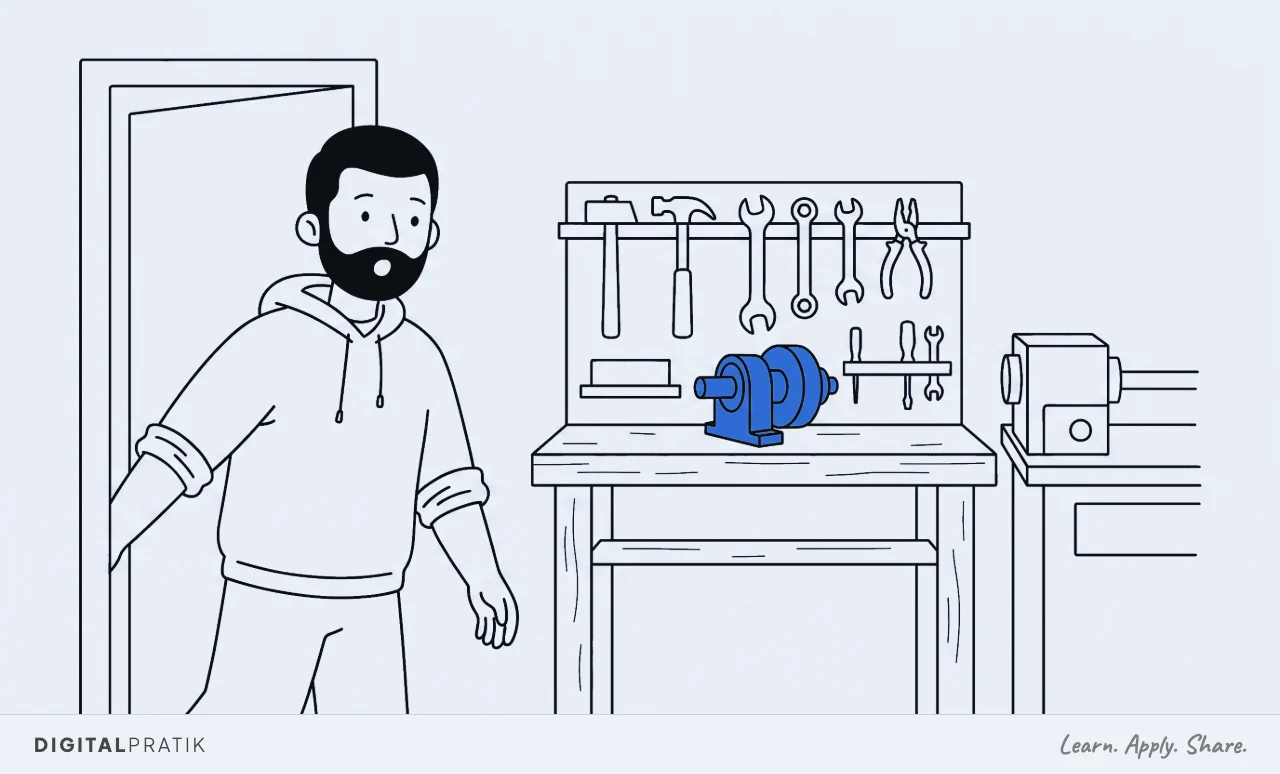
That is the practical difference and it is why "operating system" is the right word rather than marketing. An operating system is not an application, it is what applications run on.
This sits underneath your business the same way, holding the context and doing the work while the individual tools become places it reaches into.
Managing partners and founders do not want another tool to log into. They already have twenty.
They want to feel on top of it all again, the way they did when the business was small enough to hold in their head.
The six parts, and why there are only six
I think about it as an anatomy, because each part maps to something you already understand about how a body works. Senses, reasoning, memory, hands, a face, a nervous system.
The useful consequence of that framing is this: climbing to a more capable version of one of these systems does not add new parts. It makes the same six richer.
A basic version and an advanced version are the same anatomy at different levels of development, which means you can always locate what you are missing rather than shopping for something new.
One: channels, the senses
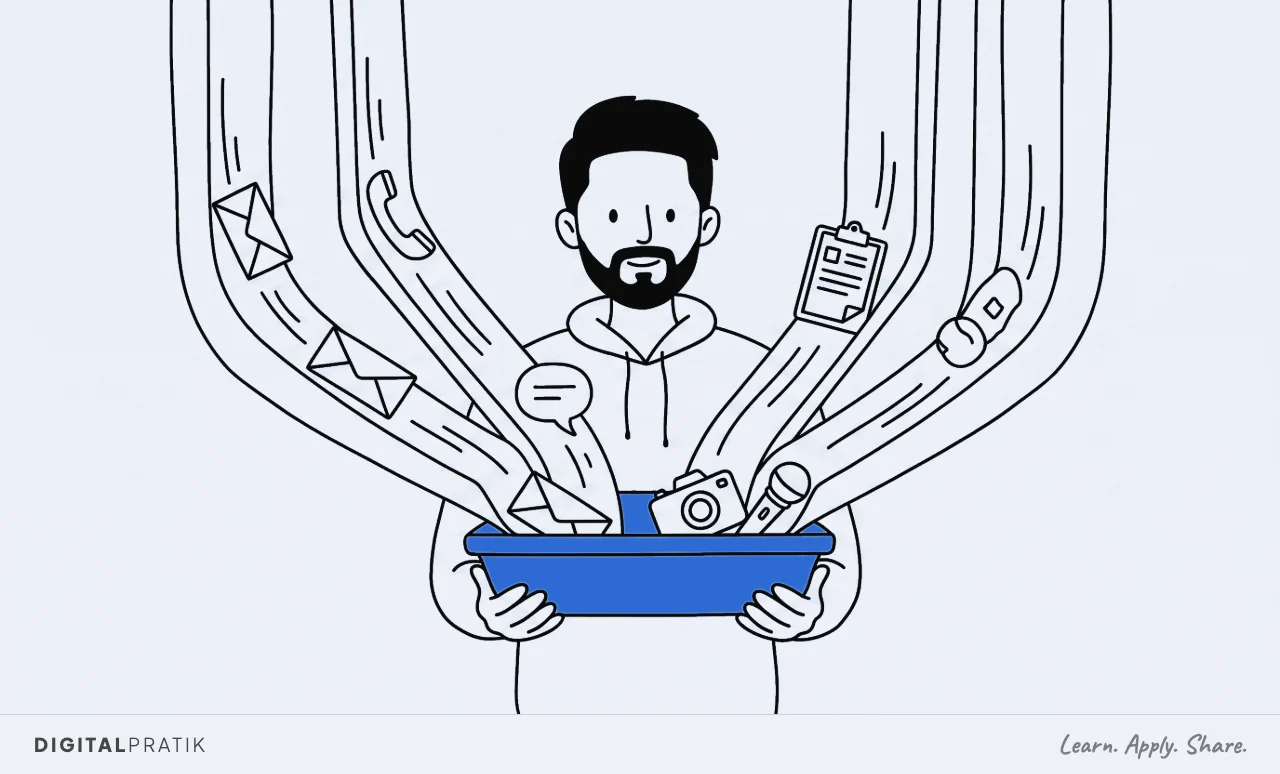
Where information comes in and goes out. Messages, email, voice, your social accounts, your forms.
The requirement is not that it touches everything, it is that everything lands in one place you actually check. Most businesses fail at this first step and then wonder why the clever parts later do not help.
Two: the brain, the reasoning
The AI that decides. This is the part everybody focuses on and it is the most replaceable.
Models improve constantly, and the businesses that built everything else properly can swap the brain without much drama. One rule here that I would not bend: keep your brain yours, meaning your knowledge and your context are not locked inside somebody else product.
Three: memory, the context
Your business facts plus a knowledge base it can search by meaning rather than by keyword. This is the part that makes it sound like you instead of like a generic assistant, and it is where almost all the real work is.
A model is brilliant and amnesiac. It forgets you the moment the conversation ends.
The founders getting real value are the ones who solved memory by writing their business down in a form a machine can read before every task. Start with one file: who you are, who you serve, what you sell, how you sound, what you never do.
When it gets something wrong you fix the file rather than the reply, and the mistake becomes a rule.
Four: tools, the hands
The real actions it can take, plugged in through one universal adapter rather than a custom bridge for every application. Without hands, the smartest model on earth can only give you advice.
This is the difference between a system that recommends and a system that does, and I have written the plain English version in what an MCP is.
Five: the cockpit, the face
One screen where you see everything and give commands. One command center beats ten browser tabs, and the value is not aesthetic.
It is that a founder can understand the state of the business in under a minute and approve what needs approving without hunting. The full version of this idea is the CEO command center.
Six: the autonomy loop, the nervous system
Scheduling, self grading and self healing. The part that runs on a timer, notices when something has broken, and either recovers or tells you.
This is the last part people build and the one that decides whether the system survives contact with a normal month.
Reading about a system and running one are different jobs. If your business does AED 10 million a year or more, this is what a working session looks like.
What it is not
It is not a chatbot with a nicer interface. A chatbot answers.
This runs functions. That distinction is worth its own read: AI employees, not chatbots.
It is not a particular piece of note taking software either, and I say that as someone whose knowledge base people constantly assume is the product. It is a pretty way to look at notes.
What makes a brain is a vault of your knowledge in plain text, a way for an AI to search it by meaning, and a model that reasons over it in your voice. The app is optional.
The system is everything. Stop shopping for tools and start feeding your brain.
And it is not autonomous in the way the demos imply. Every action that moves money, messages a real person or cannot be undone still stops at a human gate, by design and not as a limitation.
How you actually build one
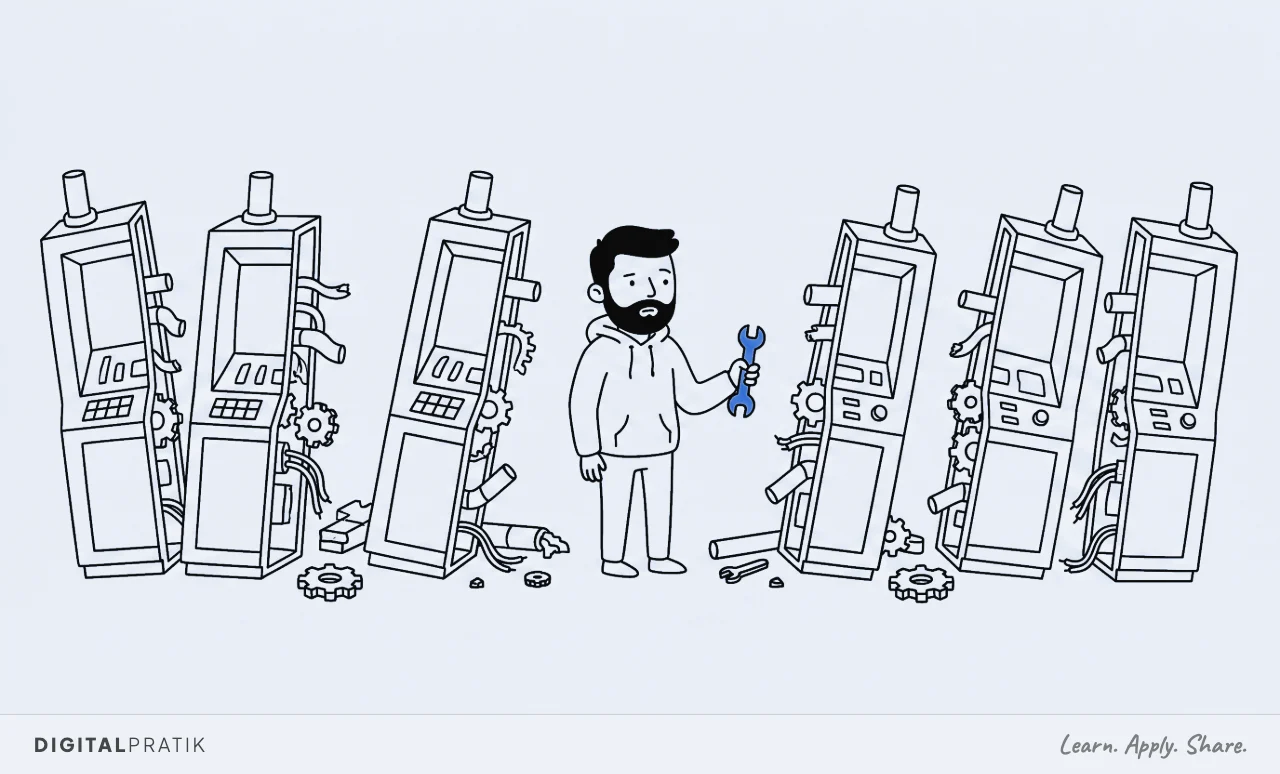
Not all at once. The businesses that try to stand up all six parts simultaneously produce something that half works in six places, which is unfixable because you cannot tell which half is failing.
- Map it. Write one real workflow on paper, step by step, exactly as a human does it today.
- Wire the handoffs. Each step has to pass clean, structured information to the next. Sloppy handoffs are the number one reason these fall apart.
- Build one. The single most valuable piece. Feed it ten real cases and tighten it until it is solid.
- Chain it. One reliable link at a time, testing each join alone, with a route back to a human when it is unsure.
- Break it. Throw messy inputs at it before a client does, and confirm it fails safely rather than confidently.
- Ship and improve. Go live on one workflow, watch what comes back, and feed every bad case into the memory.
Then run the loop again for the next workflow. That sequence is the same discipline as the second A in the 3A Machine, and it is the part people skip because it is less impressive than building everything.
The honesty test
Anyone can post a diagram of an architecture. Very few people can open the actual system behind it, and the gap between those two groups is widening every week.
When I checked my own system against the architectures everyone posts about, I published the parts that were only half built alongside the parts that were done, including naming my weakest area out loud before anyone else could. I would rather show a real sixty percent than fake a perfect hundred, because honesty about what you have not built is what makes everything you have built believable.
Apply that to your own. Write the six parts down, mark honestly what exists, what half exists and what is currently a slide, then go build the smallest real version of the weakest one.
Where to start if you have nothing
Start narrow, with the one or two things that hurt most, then expand as trust grows. In practice that almost always means getting everything landing in one place, then writing the memory file, then wiring the first real action.

The full six part system is where you are going. It is a terrible place to begin.
Frequently asked questions
It is the layer a business runs on rather than another application you open. In practice it is six parts wired together: channels so everything lands in one place, a reasoning brain, memory of your business, tools so it can take real action, a single cockpit to see and command it, and a loop that keeps it running and checks its own output.
A chatbot answers questions and then a human goes and does the work. An operating system runs whole functions, reading real data and taking real action, stopping only where a step is irreversible. The difference shows up in whether anything in your week is genuinely different a month later.
Memory. The model is brilliant and forgets you the moment a conversation ends, so the businesses getting real value are the ones that wrote down who they are, who they serve, what they sell, how they sound and what they never do, in a form the AI reads before every task. Without that it is confident and generic.
No. A knowledge app is a pleasant way to look at notes and nothing more. What actually makes a brain is your knowledge stored as plain text, a way for the AI to search it by meaning rather than keyword, and a model that reasons over it in your voice. The application is optional and the system is everything.
It is built in stages rather than shipped in one go, and the stage that works is one real workflow at a time: map it on paper, build the single most valuable piece, chain the next one, break it deliberately, then ship it and feed the failures back in. Attempting all six parts at once produces something that half works in six places and cannot be debugged.
Install this in your business
An article gives you the map. A working session gives you the system, built around what you actually sell and who actually buys it.