
Everything Goes Through You: The Founder Bottleneck Is a Decision Problem, Not a Knowledge Problem
 Digital PratikGrowth Marketing Consultant
 If everything in your business goes through you, the constraint is almost never knowledge.
It is decisions.
Knowledge can be written into an SOP; judgement cannot, so work keeps returning to you at every point where somebody has to choose.
The way out is to sort your decisions by whether they can be undone, hand over every reversible one immediately, and keep only the few that genuinely cannot be reversed.
Most founders I meet have already tried to fix this. They wrote the processes down.
They recorded the videos. They hired someone good.
And the work still comes back to them, so they conclude they hired wrong or documented badly, and they go round again. The loop is not a discipline problem.
They are solving the wrong problem with real effort, which is the most expensive kind of mistake there is.
You Did Not Document Badly
Here is what actually happens when a founder documents everything and stays stuck. The SOP tells someone how to do the task.
It cannot tell them what to do when the situation is slightly different from the one in the document. So they do the sensible thing and they ask you.
Multiply that by a dozen people and a hundred slightly-different situations a week, and you are the bottleneck again, this time with excellent documentation.
Knowledge is what you know. Judgement is what you decide when the knowledge runs out.
You can write down the first one. Nobody has ever successfully written down the second one, and the attempt is what produces those forty page manuals that no one opens.
The groundwork still matters, and if nothing is written down yet that is where to start. That case is made in why service businesses built on one person's knowledge always stop growing.
This article is about the part that remains after the documenting is done.

The Four Choke Points, and They Are the Same Everywhere
I have watched this pattern in a stevedoring operation, a company formation firm, an insurance brokerage and a physiotherapy clinic. Four businesses with nothing in common.
Different customers, different regulators, different equipment, different words for everything. The bottleneck was the same shape in all four, and it was always one of these.
- Pricing and quoting. The logic lives in the founder's head, or in one spreadsheet only they really understand. Every non-standard job routes through them, and almost every job is non-standard.
- Approval before anything leaves. No proposal, no invoice, no client-facing document goes out without the founder reading it. This one feels like quality control and behaves like a queue.
- Knowing where anything stands. The real picture lives across a dozen or more tabs, spreadsheets and chat threads, and only one person holds all of them in their head at once. Everyone else has to ask.
- The exception. The unusual case, the upset client, the thing the process does not cover. It escalates by default, because nobody has been told where their authority ends.
Notice that only the first one is really about knowledge. The other three are about permission.
That is the whole diagnosis in one line.
Sort Your Decisions by Whether They Can Be Undone
This is the part that actually moves. Stop sorting decisions by how important they are, because everything feels important when it is your company.
Sort them by whether they can be reversed.
A reversible decision is one where, if your team gets it wrong, you find out and you fix it, and the cost is a bit of rework and a slightly awkward conversation. Which discount to apply inside an agreed band.
Which slot to offer. How to word a reply.
Whether to redo a piece of work for an unhappy customer. Hand every single one of these over today. Not next quarter, and not once someone has proved themselves, because proving themselves requires making these decisions.
An irreversible decision is one you cannot walk back. Money leaving the business.
A signature. Firing someone.
A public statement. Anything that touches a regulator.
These are genuinely yours, and there will be far fewer of them than you expect once you write the list out.
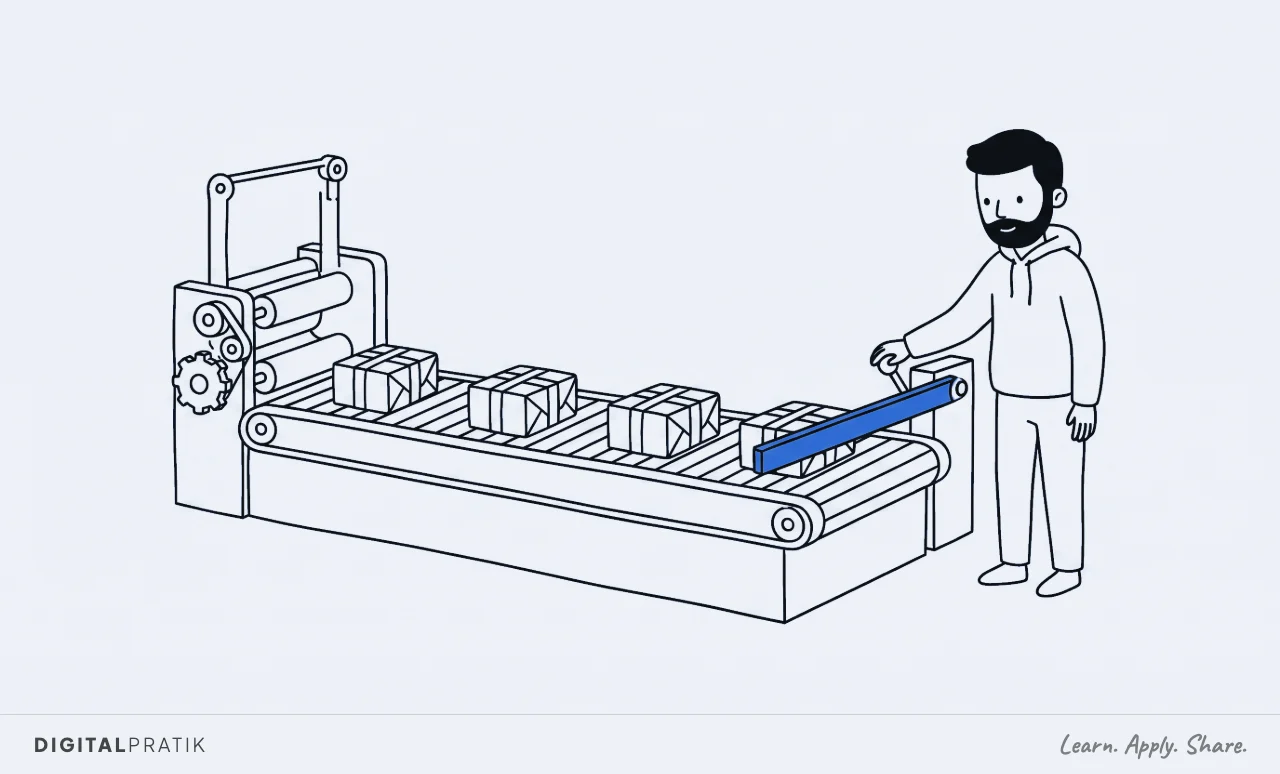
Most founders have this exactly inverted. They hand over the irreversible things by accident, usually under time pressure, and they hold on to the reversible ones out of habit.
Getting the sort right is worth more than any tool you could buy this year.
How to Actually Hand a Decision Over
Handing over a decision is not saying "you can handle this now". That is a wish, and it comes straight back to you the first time the person is unsure.
A handover only holds if it answers three questions before they are asked.
- Who decides. One named person, not a team. Shared authority means nobody feels safe using it, so it defaults back to you.
- Where the edge is. The exact boundary, in numbers where numbers exist. "Discounts up to fifteen percent, on your own call. Above that, come to me." A boundary somebody can measure themselves against is a boundary they will actually use.
- What happens when they get it wrong. Say it out loud, because they are already imagining the worst. If the honest answer is "we fix it and we talk about it", say that. Unspoken consequences are the single biggest reason delegated authority goes unused.
Then put it in writing where the rest of the team can see it, not in a private conversation. Half the reason work bounces back is that everybody else still assumes it needs you, so they route it your way out of habit.
Announcing the change is part of making the change.
And when the first decision comes back wrong, and one will, resist taking the authority back. Taking it back teaches the whole team that the handover was never real, and the next one you attempt will be believed even less.
Approving Everything Is Not Quality Control
The approval choke point deserves its own warning, because it is the one founders defend hardest. It feels responsible.
It is how you protect the standard.
Here is what actually happens. When everything needs your sign-off, the volume grows until you cannot read any of it properly.
So you skim. Then you approve on the strength of who sent it rather than what it says.
Within a few months you have a rubber stamp with your name on it, you are still the constraint, and the quality you thought you were protecting is being protected by nobody.

Approve the shape, not the instance. Agree what good looks like once, write down the boundaries, then let work go out inside them and review a sample afterwards.
Reviewing ten percent properly protects your standard far better than skimming all of it.
Why Buying Software Did Not Fix It Either
The other common attempt is a tool. New CRM, new project board, a chatbot, an automation.
Six weeks later the founder is still the bottleneck and now there is a subscription.
The reason is simple. The tool changed where information lives.
It did not change who is allowed to decide. If every request still ends up in front of the same person for a yes, you have not removed a constraint, you have given it a nicer interface.

The Test That Tells You the Truth
Forget dashboards and utilisation and how busy everyone looks. There is one test and it is brutally simple.
Could you take a genuine week off right now, phone away, and come back to nothing piled up waiting for you? Not a week where you check messages twice a day and quietly keep the business running from a beach. A real one.
Almost every founder answers no, then immediately explains why their situation is different. The explanation is the finding.
Whatever you just described as the reason you cannot go is the exact list of decisions to hand over first, and you produced it in about nine seconds without needing a consultant.
Run the test properly and note not just what breaks, but who was waiting and what they were waiting for. That list is your roadmap, in priority order, written by the business itself.
What Finished Actually Looks Like
Finished is not a business that makes no decisions without you. That business does not exist and would be badly run if it did.
Finished is a business where the decisions that reach you are only the ones that genuinely need your judgement, and they arrive with the context already attached.
So a normal morning stops being forty messages asking permission, and becomes three things that actually require you, each with the background already gathered. Everything else happened without you, correctly, and you can see that it did.

And this is the order that matters, because it is the one most people get backwards. Fix capacity before you buy more demand.
Pouring leads into a business that runs through one person does not produce growth, it produces a worse version of the same week. The arithmetic behind that is in fix your delivery system before you buy more leads.
Start This Week, in This Order
- Write down every decision that reached you in the last five working days. Not tasks, decisions. The list will be longer than you expect and that is the point.
- Mark each one reversible or irreversible. Be honest. Most things founders guard are reversible and merely uncomfortable.
- Hand over every reversible one this week, in writing. Name the person, state the boundary, say plainly what happens if they get it wrong. Ambiguous authority always returns to you.
- Pick your worst choke point of the four and fix only that one. Pricing, approval, visibility or exceptions. Fixing one properly beats touching all four.
- Book the week off before you feel ready. The date in the calendar is what forces the handover to be real, and nothing else does it as reliably.
None of this needs new software and none of it needs a bigger team. It needs you to decide, once, which decisions were never actually yours.
That is uncomfortable for a fortnight and then it is the most valuable thing you will do to the business all year.
If you are a founder and the honest answer to the week-off test is no, that is the conversation. We map where the decisions pile up and build the system that hands you only the ones that are really yours.
Frequently asked questions
Because you are a capacity constraint, not a marketing one. Every job has to pass through a single person, so the ceiling is that person's hours and attention, no matter how much demand you generate. Adding more leads to a business in that state produces chaos rather than growth, which is why fixing capacity has to come before buying more demand.
Because what keeps coming back to you is judgement, not knowledge. An SOP tells someone how to do the task, but not what to do when the situation differs slightly from the document, so they ask you. The fix is not more documentation. It is deciding in advance which decisions your team is allowed to make without you.
Every reversible one. A reversible decision is one where, if it goes wrong, you find out and fix it and the cost is rework and an awkward conversation. Discounts inside an agreed band, wording, scheduling, redoing work for an unhappy customer. Keep only the decisions that cannot be undone: money leaving, signatures, hiring and firing, public statements and anything a regulator touches.
Ask whether you could take a genuine week off right now, phone away, and return to nothing piled up waiting for you. If the answer is no, whatever you instinctively give as the reason is the list of decisions to hand over first. It is a faster and more honest diagnostic than any dashboard.
Not on its own. Software changes where information lives, not who is allowed to decide. If every request still needs your yes, the constraint is unchanged and you have only given it a better interface. Change the permission first, then buy the tool that supports the new arrangement.
Install this in your business
An article gives you the map. A working session gives you the system, built around what you actually sell and who actually buys it.