
The Two Types of Email Marketing, and Why Most Businesses Only Do One
 Digital PratikGrowth Marketing Consultant
 There are two, and they do different jobs. Automated emails fire off the back of an action someone took and run forever without you. Broadcasts are the ones you decide to send, to everyone, on a given day.
Most businesses do a bit of the second and none of the first, which means their list only ever works when they remember to work it.
This distinction sounds basic until you look at what it costs people. Almost every list I have been shown is doing one of the two, badly, and treating the gap as normal.
The two types
The first is the automated kind. Someone does something, an email goes out.
They downloaded the guide, so they get the guide. They bought, so they get the confirmation and the next step.
They booked a call, so they get the reminder. You set it once and it runs for everyone who ever takes that action.
The second is the broadcast. A newsletter, an announcement, a launch, a thought you wanted to share.
You write it, you choose who gets it, you send it. It happens because you decided it should.
Neither replaces the other. They are answering different questions: the automation answers what should happen when somebody does this, and the broadcast answers what do I want to say to everyone today.
Why most businesses only do broadcasts
Because broadcasts feel like work and automations feel like a project. Sending a newsletter is a visible act with a visible result.
Building a sequence is an afternoon of thinking with no immediate reward.
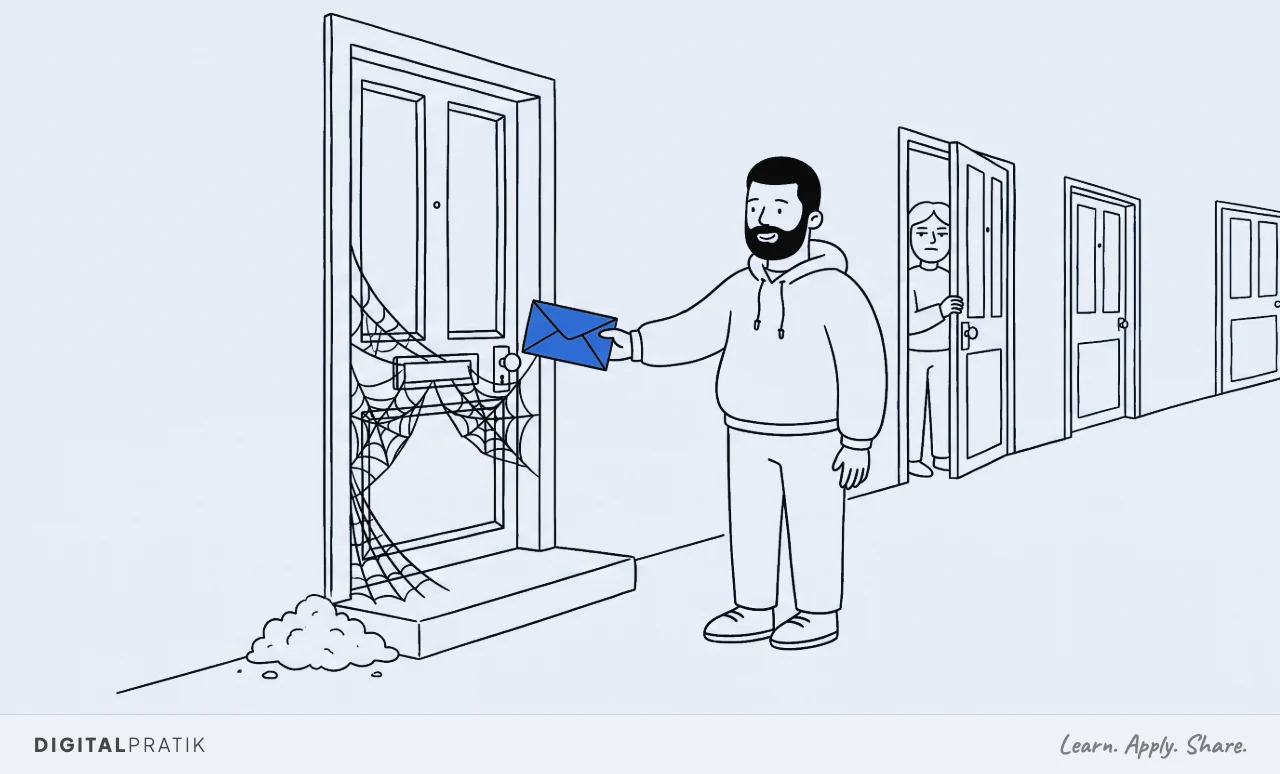
So people send when they have something to sell, go quiet for three months, then send again when they need money. The list learns exactly what that pattern means and stops opening.
That is not an email problem, it is the predictable result of only having the manual half.
Why the automated half is the one that compounds
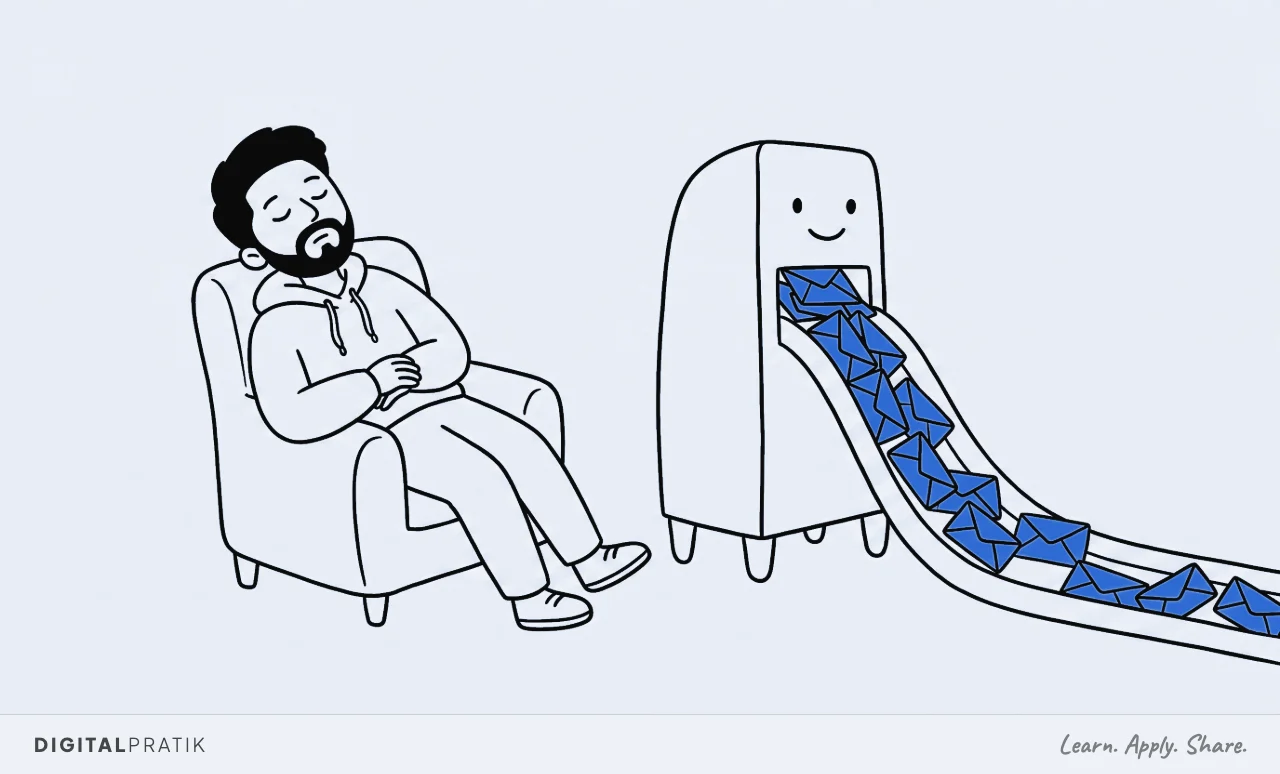
Every automated email you build keeps working for every future person, without you. Write the sequence that follows a download once and it runs for the person who downloads at two in the morning in eighteen months.
That is the difference between effort that repeats and effort that accumulates. A broadcast is worth something once.
An automation is worth something every time somebody triggers it, forever, and the value grows as traffic grows.
Reading about a system and running one are different jobs. If your business does AED 10 million a year or more, this is what a working session looks like.
The trigger matters more than the copy
People obsess over subject lines and ignore the thing that actually determines whether an email works, which is whether it arrives at a moment when it makes sense.
An ordinary email sent immediately after somebody did something relevant will beat a brilliantly written one sent on a Tuesday because it was Tuesday. Relevance is mostly a timing problem, and timing is what triggers are for.
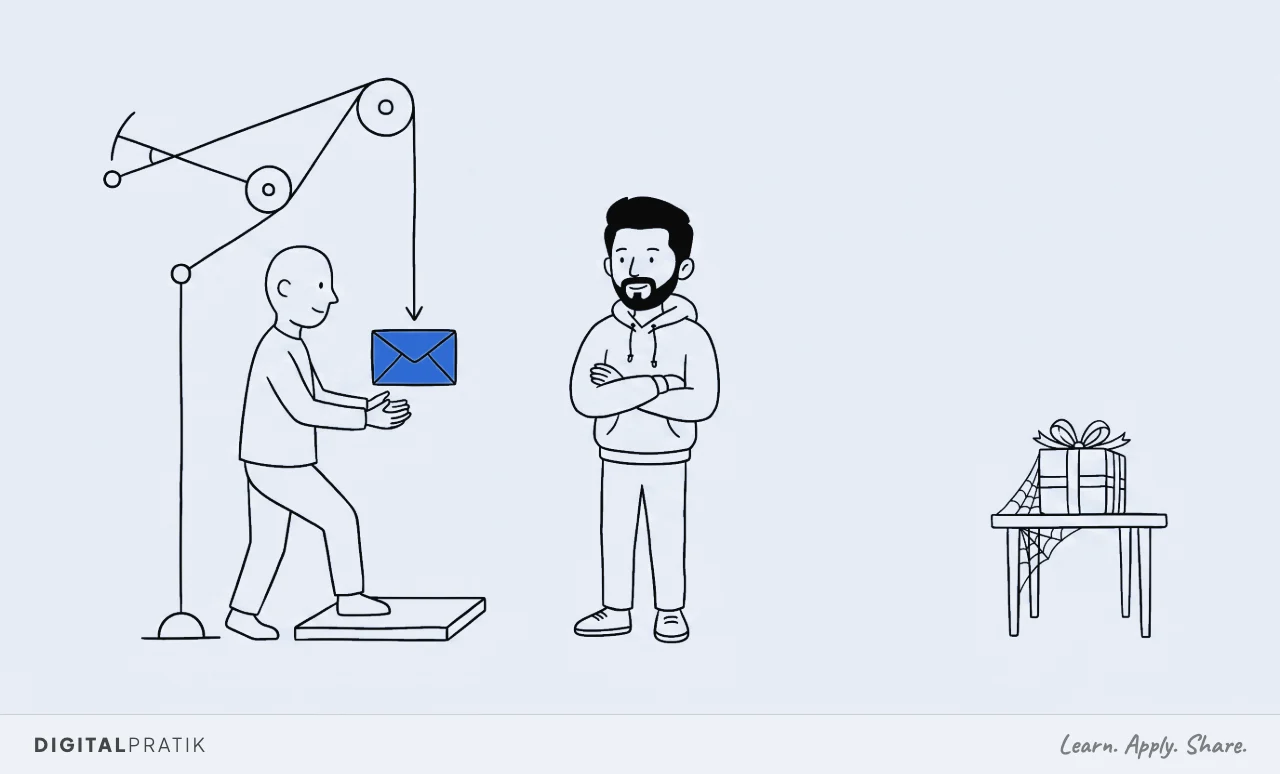
So before you write anything, decide what action starts this, and how quickly it follows. Then write to the person in that specific moment rather than to a generic subscriber.
What each one is genuinely good at
| Automated | Broadcast | |
|---|---|---|
| Triggered by | What they did | What you decided |
| Runs | Forever, without you | Once, when you send |
| Best for | Onboarding, follow-up, delivery | News, launches, opinions |
| Fails when | The trigger is wrong | You go quiet for months |
How often to send the manual half
Often enough that your name is familiar, rarely enough that you always have something worth saying. For most service businesses that lands somewhere around weekly to fortnightly.
The number matters far less than the consistency of it. A predictable rhythm trains people to expect you, and an unpredictable one trains them to assume that seeing your name means you want something.
What to send when you have nothing to sell
This is the question that stalls people, and it has an easy answer: send what you would tell a client on a call.
The thing you have explained four times this month, which is often the seed of a lead magnet too. The mistake you watched somebody make.
What changed in your market this week and what you are doing about it. None of that requires an offer attached, and all of it is the reason someone keeps opening you.
The businesses that struggle to email regularly are almost never short of material. They are waiting until they have something to promote, which is exactly the pattern that kills the list.
Do not let the list rot quietly
A list is only an asset while the people on it still recognise your name. After enough silence it becomes a liability that damages your delivery for everyone else.
If yours has gone cold, the honest move is to say so in the first message back rather than resuming as though nothing happened. People forgive an absence that is acknowledged and ignore one that is papered over.
Where this connects to everything else
The automated half is really a follow-up system wearing an email costume, and follow-up is where most of the revenue in a service business already sits, unclaimed.
The same logic extends past email into whatever channel the person actually replies on. The principle does not change: something happened, so something should follow, and it should not depend on you remembering.
What follows an opt-in specifically is in what happens after the opt-in.
Build the automated half first. Then send the broadcasts because you have something worth saying, rather than because the month has been quiet.
Frequently asked questions
Automated emails, which are triggered by something the recipient did and run continuously without you, and broadcasts, which you write and send on purpose to a group on a given day. They answer different questions and neither substitutes for the other.
The automated set, because it compounds. A sequence built once keeps working for every future person who triggers it, while a broadcast is worth something only on the day you send it. Start with the sequence that follows your most common action, usually a download or a purchase.
Frequently because you only appear when you want something. Sending during launches and going quiet in between teaches the list exactly what your name in the inbox means, and they respond accordingly. That is a predictable consequence of running only the manual half of email.
The timing, by a wide margin. An ordinary email arriving immediately after a relevant action will outperform an excellently written one sent on an arbitrary day, because relevance is largely a question of when something lands rather than how it is phrased.
Yes. Automations handle what should happen when someone does something, but they cannot say anything new. Broadcasts are how you share news, launches and opinions, and a list that only ever receives triggered messages never hears from you as a person.
Install this in your business
An article gives you the map. A working session gives you the system, built around what you actually sell and who actually buys it.