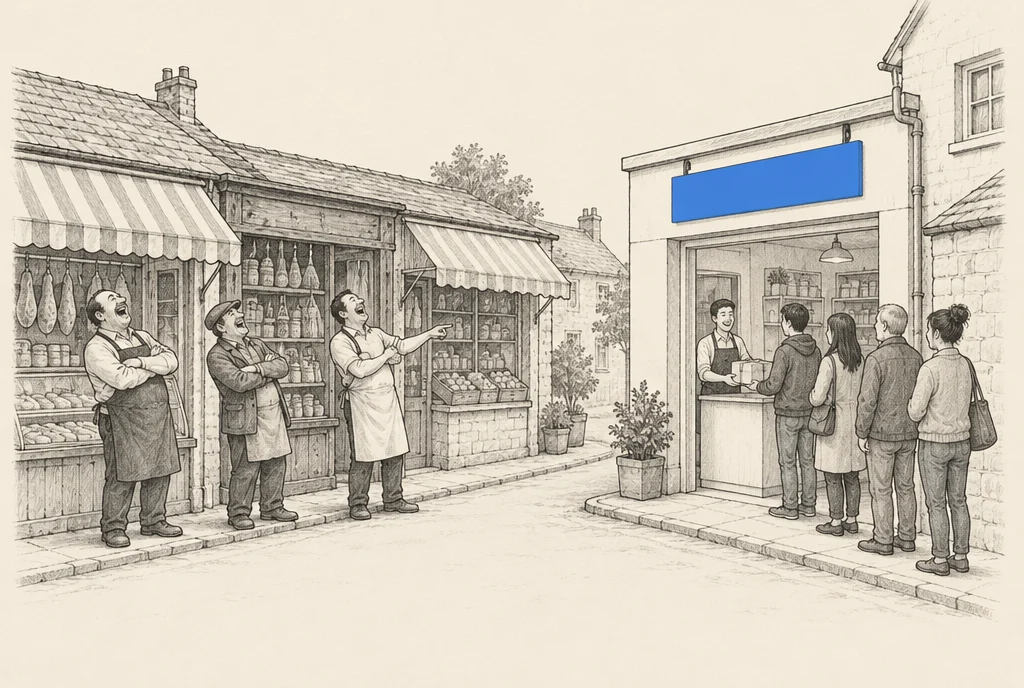
Clients do not leave because you are bad. They forgot you are good.
Most clients do not leave after a disaster. They drift away in the quiet months, because the good work they pay for is the work they never see.Clients rarely leave after a disaster. They drift away in the quiet months, when they see nothing.

- Good work is quiet. Nothing breaks, so the client thinks nothing happened.
- If the only message they get is the bill, you look like a cost, not a result.
- Send a short note every month, call before the renewal, and say thank you with a number.
- Give each part to 1 named person, and watch for the quiet signs of drift.
In this article
Think about the last good client your firm lost. Was there a big fight? A lost file? A missed deadline?
Most of the time, no. There was no disaster. The client just went quiet. Fewer calls, shorter replies. Then one day the renewal did not come back, and a cheaper firm had the work.
Here is the hard truth. They did not leave because you were bad. They left because they forgot you were good.

01Good work is quiet
Think about what a good accounting firm, a company setup firm or an advisor really does all year. The filing that went in on time. The fine that never came. The mistake you caught before it cost anything.
The client never sees any of it. That is the whole point of good work. Nothing breaks.

Nothing broke, so they think nothing happened.
So in the client's head, the year was empty. And an empty year is very easy to give to someone else.
02The only message they get is the bill
Between the big moments, most firms say nothing. No news is good news, we think. The client hears from you at only 2 moments: when there is a deadline, and when there is an invoice.
What you did and what they saw
Weeks of careful checks
A signature
A fine that never came
Nothing at all
You read it and acted
Nothing at all
A full year of quiet work
A bill
So when a cheaper firm calls, or a louder one shows up on their phone every day, it looks the same as you. Same service, lower price. Why not switch?
You are not losing on quality. You are losing on memory.
031/3 Send a short note every month
The fix is not a big event. It is a small rhythm of proof. 3 habits, done for every client, every time. The first one is a short note once a month.
What goes in it
- What we did for you this month, in plain words.
- 1 thing we caught or fixed that you did not have to think about.
- 1 thing coming up that you should know about.
- A real name at the bottom, not "the team".
Keep it to 3 or 4 lines. No sales talk, and no question at the end. Never send "just checking in". That message gives the reader nothing and asks them for an answer.

To make it easy, keep a plain list while the work runs. Not the technical notes. The plain version, 1 line each. At the end of the month the note is already written.
042/3 Call before the renewal, not after
Most firms talk about the renewal only when the client brings it up. And the client usually brings it up with a request for a discount. Now you are talking about price, and you are already on the back foot.
Turn it around. Put 1 date in the diary, a month before every renewal. Pick up the phone and talk about the year you had together, before anyone talks about money.
The same renewal, 2 ways
The client, with a discount ask
You, with the year in your hand
The price
What you did for them
A fight
A thank you
You are expensive
You are good

Remind them you are good before someone else tells them you are expensive.
053/3 Say thank you with a number in it
A plain thank you is nice. A thank you with a number in it is remembered. How many years they have been with you. How many filings went in on time. How many mistakes you caught before they cost anything.
A number gives the client something to repeat. When their partner asks why you are worth it, they have an answer in 1 line.
The easiest place to start is the invoice. It is the one message from you that always gets opened. Add 3 lines above the amount: what we did, what we caught, and thank you, with a real name.
- 3 linesabove the amount on every invoice
- 2 minto write them, per invoice
- 1 pageonce a year, what we did for you

06Give each part to 1 person
If everyone in the firm owns this, nobody does it. The note gets skipped in a busy month, then in the next one, and the quiet comes back.
A name next to every habit
- 01The account lead
Writes the monthly note. They know the work best.
- 02The owner
Makes the call before the renewal. It matters that it is you.
- 03Accounts
Adds the 3 thank you lines to every invoice.
- 04Everyone
Learns the names of the client's own staff.
That last one matters more than it looks. The owner signs your contract. But the owner's staff use your work every day. When the owner asks "should we keep them?", the staff are the ones who answer.

Do it for every client in the same week of the month. Then it becomes a habit, not a favour you do when you remember.
07How to tell a client is drifting
Drift is quiet, so you have to look for it. None of these signs means the client is gone. Each one means it is time to show up with something useful.
Signs a client is going quiet
- Their replies get slower and shorter.
- The owner stops coming to calls and sends someone junior.
- They stop asking you questions.
- A discount ask comes out of nowhere.

When you see a sign, do not send a discount. Send proof. A short note of what you did, a call, a thank you with a number. The same rhythm, just sooner.
Pick your 5 biggest clients. For each one, write 3 lines: what we did for you this year, what we caught, and thank you. Then send them, before anyone asks.
08Questions, answered
Will clients find a monthly note annoying?
Not if it is short and useful. 3 or 4 lines about their work, with no sales talk and no question at the end, is easy to read and easy to like.
What if nothing happened this month?
Something always happened. A check you ran, a date you watched, a rule you read. Write the plain version. If you truly did nothing, that is a bigger problem than the note.
Should the owner do all of this?
No. The owner makes the call before the renewal. The account lead writes the note, and accounts adds the lines to the invoice. Give each habit to 1 name.
Can we use AI or automation for this?
Yes, to keep the list of what was done and to remind the right person on the right day. The words the client reads should still come from a real person, with a real name.
If you want to see where clients go quiet inside your firm, that is one of the things the Capacity Diagnostic looks at.

Digital PratikA 37 year old, smiling, practical Gujarati, a Kathiyawadi businessman. Founder of JorrDaar LLC, Dubai.