
I Built a Team of AI Agents to Run My Business. Here Is What Actually Happened
 Digital PratikGrowth Marketing Consultant
 The shift was from asking one chatbot questions to running an org chart of specialist agents, each with a defined role, its own context and its own tools, reporting to an orchestrator.
What actually happened is less cinematic than the demos: the wins came from clean handoffs and honest role definitions, not from model intelligence, and every failure traced back to an agent that had a job but not enough context to do it.
Everyone is impressed by one AI chatbot. That is amateur hour.
The real unlock is a team of agents, each with a job, reporting to a boss, and the interesting part is what breaks on the way there.
The mental shift that made it work
Think about how a real company works. You do not hire one person to do everything.
You hire a marketing lead, someone to book calls, someone to close, an analyst to read the numbers, and then someone who orchestrates all of them and decides what matters this week.
I built exactly that, in software. An orchestrator agent that takes my intent and delegates it.
A market research agent that watches the landscape. An agent that drafts outreach.
One that handles client communication. And an analyst that grades the work and flags what needs my eyes.
They run on my own command center, on my own data: my email, my messages, my pipeline, my costs.
The mental shift is the whole thing. You stop thinking "what can this tool do for me" and start thinking "what role am I hiring for, and what would that person need on day one to do the job well".
Once you ask the second question, the build becomes obvious.
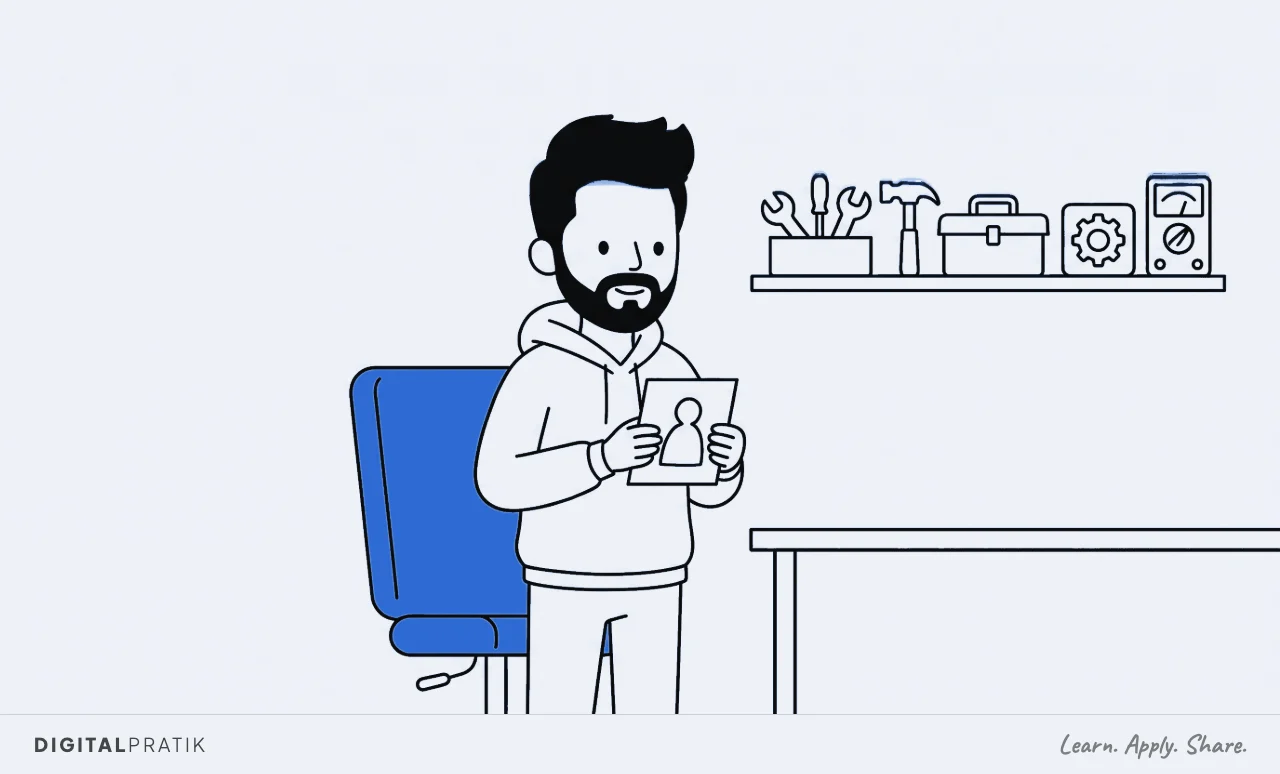
The org chart I actually run
Concretely, because "a team of agents" is the kind of phrase that means nothing until somebody lists the roles. Mine is six.
- An orchestrator. Takes my intent and decides who does what. Without this you have six tools, not a team.
- A marketing lead. Owns the content and campaign side rather than answering questions about it.
- A market research agent. Watches the landscape so I am not the only person noticing things.
- An outreach agent. Drafts the approaches that would otherwise sit on my list until Friday.
- A client communication agent. Handles the drafting on everything client facing, none of which sends on its own.
- A business analyst. Grades the work the others produced and flags what needs my eyes.
That last one is the least obvious and the most valuable, and it took me longest to build. More on it below.
The three things every agent needs
Every agent that worked had all three of these. Every agent that embarrassed me was missing one, and I could always tell which one afterwards.
- A clear role. One lane, described in a sentence. "Handles everything" is not a role, it is a wish, and it produces vague output in every direction.
- The right context. Who we are, who the client is, how we talk, what we never say, and the specific facts for this job. Without this it is confident and generic.
- The tools to act. Read the real data, take the real action. A brain with no hands can only give advice.
That third one is the part people underestimate. An agent with no connection to your actual systems is a very articulate consultant who has never seen your business.
Connecting it to real tools is what turns it into something closer to an employee, and the plumbing for that is worth understanding: I explain it in what an MCP is and why a marketing founder should care.
What actually happened, honestly
The first version was too ambitious. I tried to stand up the full team at once because the full team is what makes the good screenshot.
What I got was five agents that each half worked, and debugging them together was miserable because I could never tell whether a bad output came from the agent in front of me or from the mess it had been handed.
The rebuild went the other way. One agent, fed a pile of real cases, tightened until it was genuinely solid.
Then a second one, wired to the first, tested at the join. One reliable link at a time.
It felt slower and it was dramatically faster, which is the usual shape of this lesson.
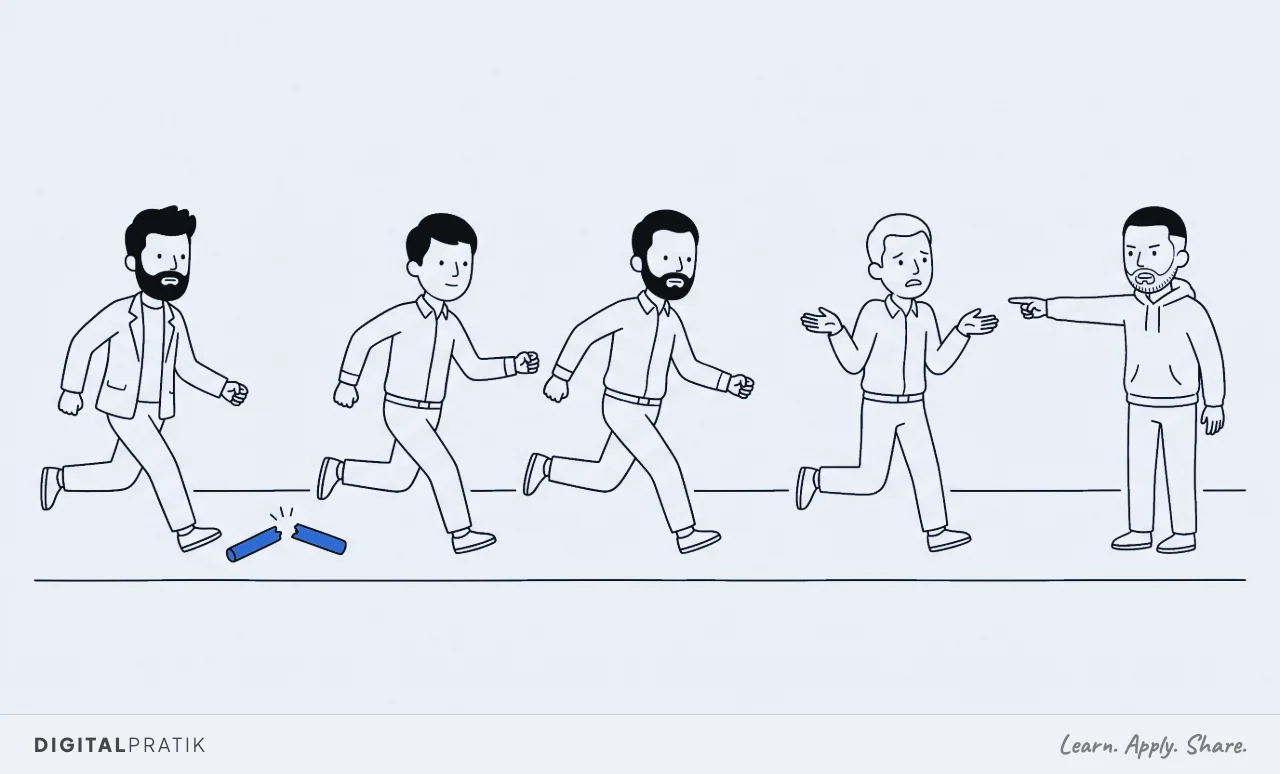
Handoffs are where these break
This is the single most useful thing I learned and the least discussed. An agent must pass clean, structured information to the next one.
Not a vague yes. Not a paragraph of prose that the next agent has to interpret.
Sloppy handoffs are the number one reason multi-agent systems fall over, and they fail quietly, which is worse than failing loudly.
When something goes wrong in a chain, resist the urge to blame the last agent in the line. Nine times out of ten it did a reasonable job with garbage it was handed two steps earlier.
Break it before a client does
Before any of this touched a real person I threw deliberately awful inputs at it. A one word message.
A different language. An angry complaint.
A lead that was completely out of scope. What I was checking for was not whether it handled them cleverly, but whether it failed safely to a human rather than improvising something confident and wrong.
The agent that grades the other agents
This is the piece that turned the whole thing from interesting into trustworthy, and almost nobody builds it because it is not the fun part.
One agent whose only job is to grade the output of the others against a stated standard, and to send weak work back to be redone before a human ever sees it. Not a vague quality check.
A rubric it can actually apply, written by me, describing what good looks like for each type of deliverable.
The effect is that quality compounds rather than drifting. Without it, a multi-agent system produces a large volume of adequate work and you become the quality control department, which is precisely the job you were trying to stop doing.
With it, the mediocre output gets caught and revised overnight, and what reaches you in the morning is the version that already survived a critic.

Build this second, right after your first agent works. Not last.
It is the difference between a system that makes more work for you and one that makes less.
What it did not do
It did not replace anyone, and I want to be precise about that rather than coy. What it removed was the production layer: the drafting, the sorting, the routing, the first pass on everything.
What it did not touch was judgment, taste, relationships and the decisions that carry consequences.
It also did not run itself out of the box for weeks on end. The early version needed watching, and the honest version of the early weeks is that I spent more time correcting it than it saved me.
That is normal and it is worth budgeting for, because the founders who quit at that point quit right before the curve turns.
The version I trust now earns that trust because it grades its own output and flags the weak work before I see it, which took real building and was not a setting I switched on.
Reading about a system and running one are different jobs. If your business does AED 10 million a year or more, this is what a working session looks like.
The gate on everything irreversible
The agents work overnight, queue up whatever needs a decision, and I approve with one tap in the morning. Anything that sends money, sends a message to a real person, or cannot be undone waits for that tap.
Everything reversible and cheap runs free.
That single design choice is what makes an agent team leverage rather than a liability, and it deserves its own read: the human gate.
How to start without being technical
You do not need to code this. You need to be able to describe a job well, which is a founder skill rather than an engineering one.
- Write one real workflow on paper, step by step, exactly as a human does it today. Not how you wish it worked. How it actually works, including the awkward bits.
- Name the roles in that workflow. Usually there are fewer than you expect and one of them is doing most of the work.
- Build the single most valuable one. Feed it ten real cases and tighten it until it is solid.
- Chain the next one to it, test that join on its own, and add a route back to a human when it is unsure.
- Break it deliberately, then ship it on one workflow and watch what comes back.
One agent that works beats five that half work, every time, and it is the only version that teaches you anything useful for the next one.
What this looks like in a normal service business
Mine runs a marketing company, which is not most people. In a professional services firm the same shape appears with different labels: an intake agent that captures and qualifies every inquiry the moment it lands, a drafting agent that assembles documents for a human to review, a follow up agent that chases the things everyone hates chasing, and an orchestrator that ties them together and surfaces the handful of decisions that actually need the owner.
The pattern holds because the underlying problem holds. In almost every service business the founder is the bottleneck, and the roles you would hire for first if you had unlimited budget are exactly the roles worth building first.
The part nobody says out loud
Most people will spend this year prompting one chatbot, one question at a time, like it is a search engine with better manners. That is fine and it is a real improvement over nothing.
It is also not what the people pulling away are doing.
They are architecting a team. One founder, running an org chart of agents, shipping like a company several times their size.
You do not need permission or a technical background to join that group. You need to name the roles, hand each one its context, put a gate on anything that cannot be undone, and start with agent number one.
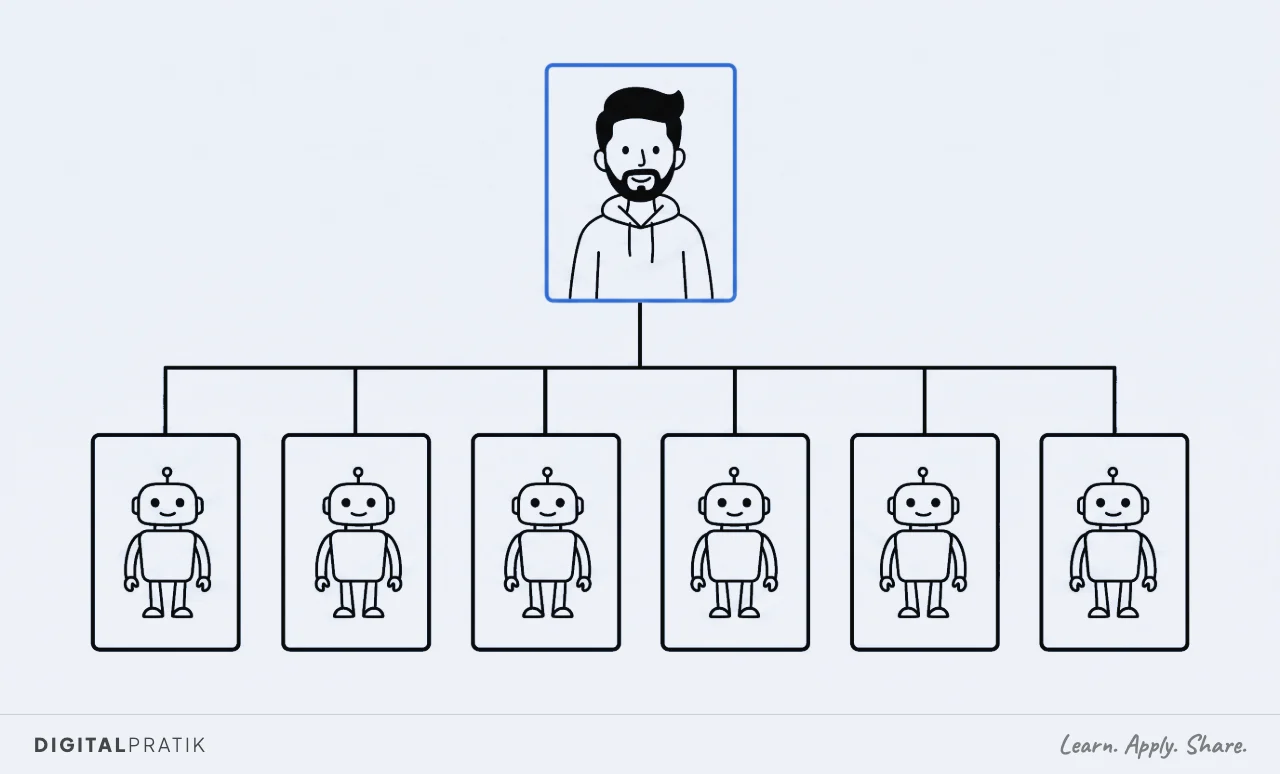
Start with one. Then hire the second.
Frequently asked questions
It is a set of AI agents that each own one defined role and pass work between them, coordinated by an orchestrator, rather than a single chatbot that answers everything. Think of it as an org chart in software: a research role, an outreach role, a client communication role, an analyst that grades the output, and a coordinator above them.
Three things. A clear role described in one sentence, the right context about your business and the specific job, and real tools so it can read live data and take action. Missing any one of the three produces the same symptom: confident output that is subtly wrong and expensive to catch.
Almost always at the handoffs. One agent passes vague or unstructured information to the next, and the failure surfaces several steps later where it looks like the last agent made the mistake. Building one agent properly, then chaining a second and testing that join on its own, avoids most of it.
No. The hard part is describing jobs well and deciding what each role needs to do them, which is a founder skill rather than an engineering one. The practical starting point is writing out one real workflow exactly as a human does it today, naming the roles inside it, and building the single most valuable one first.
Only on things that are reversible and cheap. Anything that sends money, messages a real person, or cannot be undone should stop and wait for a human yes. That gate is what separates an agent team that creates leverage from one that creates a mess you find out about later.
Install this in your business
An article gives you the map. A working session gives you the system, built around what you actually sell and who actually buys it.