1 sale took 5 ad clicks. Meta saw only the last one.
Meta gave 1 ad all the credit for a sale. The buyer had clicked 5 ads over 7 days. The other 4 looked dead.Meta credited 1 ad for a sale. The buyer clicked 5 ads over 7 days. The other 4 looked dead.

- 1 sale, 5 clicks, 4 different ads, 7 days. Meta handed all the credit to the last ad.
- The 4 ads that showed nothing built the belief that made the 5th ad work.
- An ad showing zero return in the dashboard is often doing the heaviest work in the account.
- Most owners switch ads off faster than their own buyers take to decide.
- Open 10 real sales instead of 10 summaries and your account looks like a different business.
In this article
People ask me a simple question. Are the ads working. So I open the ads manager and it looks clean. 1 campaign, 1 sale, and all the credit sitting neatly against 1 ad. If that screen was all I had, I would move the money to that 1 ad and switch the rest off. That decision would have been expensive.
Then I opened the same sale inside my tracking tool. Not a summary. The actual sale, click by click. That buyer had clicked 5 ads across 7 days. Meta knew about 1 of them.
This never lands when I say it as a theory. It lands the second you see 1 real journey. So let me walk you through this one, the way it actually happened.

01What the dashboard said
1 campaign. 1 sale. 1 ad with the credit against it. Every other ad in that campaign showed nothing. No sale, no return, a flat zero.
That report is clear, easy to read, and almost completely misleading. It is not a mistake and it is not fake. It is just a very small part of the story, shown with total confidence.
The cleanest report in your account is usually the one hiding the most.
02What actually happened
Inside the tracking tool I can open that 1 sale and see the full history of the person who bought. They did not show up on the day they paid. They had been circling for 7 days.
5 clicks, 4 ads, 7 days
- 01Day 1
Clicked an ad. Did not buy.
- 02Day 3
Clicked a different ad. Did not buy.
- 03Day 6
Clicked a video of real people from an earlier workshop. Did not buy. Then clicked that same ad again 2 minutes later.
- 04Day 8, early morning
Clicked a 3rd different ad. Did not buy.
- 05Day 8, that evening
Clicked a 4th ad, went to checkout and paid.
5 clicks. 4 separate ads. 1 purchase. Meta recorded the 5th click and knows nothing at all about the first 4. In its report, those 4 ads produced nothing.
- 1sale
- 5ad clicks before it
- 4different ads involved
- 7days from first click to payment
03The first 4 ads were not failing
They were working. Just in a way the dashboard has no column for.
Not every ad is there to get the sale, and it is not supposed to be. A lot of your ads do brand building. Someone sees one, does nothing, but now knows you exist. Then they see the video of real customers and a doubt gets weaker. Then they see another angle and the idea becomes real. Somewhere in there they often go and look you up on their own, find your posts or your profile instead of an ad, and no ad gets credit for that at all.
By the time the last ad shows up, it is not convincing anybody. The decision was already made. That ad just collects it.
The last ad does not win the customer. It picks up a decision 4 earlier ads already made.
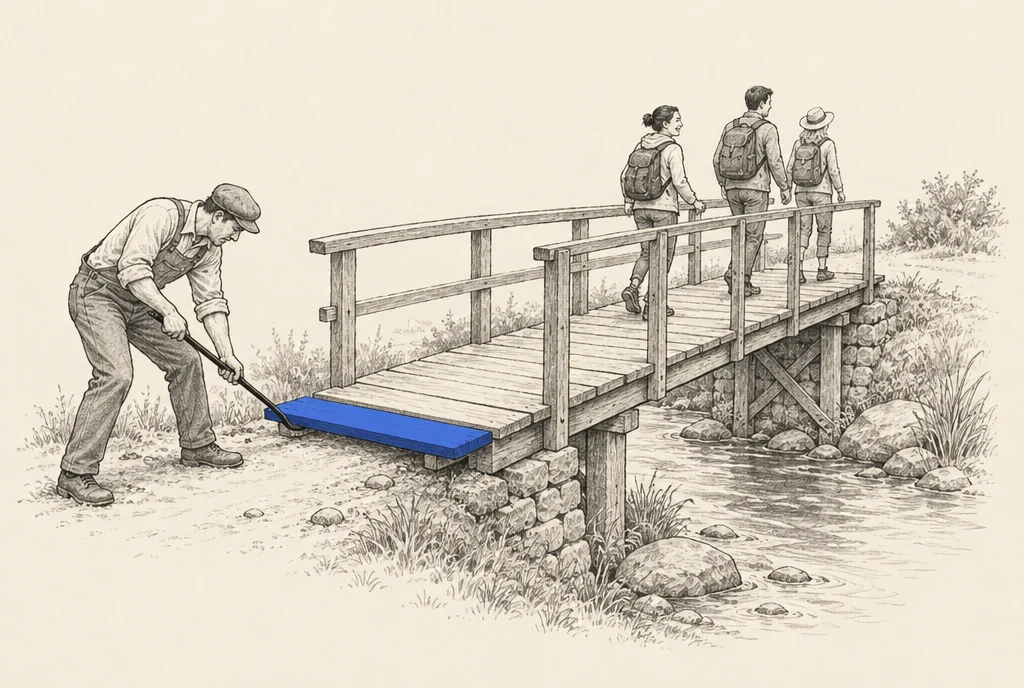
So here is the expensive mistake, and I see it every month. You cut the ad showing zero return, and you have just removed the thing that started the whole journey. The surviving ad keeps converting for a week or 2, because the belief it was harvesting is already built. Then it stops working and nobody can explain why. By then nobody connects it back to the ad they switched off.
04Why the ads manager cannot show you this
Meta reports on itself. Inside its own window. Using its own rules about what counts. It is not lying to you. It is answering a smaller question than the one you asked.
What you asked and what Meta answered
Which of our ads was clicked last
What made this person buy
Its own window, its own rules
The whole journey, first click to payment
Clicks on Meta only
Clicks, visits, and the days in between
No column for it anywhere
The strongest signal in the journey
Checking 1 ad set
Deciding what to scale and what to protect
Those are 2 different questions, and no amount of staring at the dashboard turns 1 into the other. This is why I do not use the platform report to decide what to scale. Not because the numbers are made up. Because they answer something else. True return on the money is a bigger number than the return the platform shows you, and it is measured on real sales, not on clicks inside 1 app.

05How to read 1 real journey yourself
Do not open a summary. Open an actual sale. Then look at only 3 things.
What to look at in a real journey
- 01The first touch
What started the whole thing. This is usually the ad your dashboard hates.
- 02The middle
What they came back to, and anything they clicked twice. A repeat click is a loud signal.
- 03The gap
How many days from first contact to payment. That number should decide how patient you are.
Do that on 10 real sales and you will know your account better than any amount of dashboard reading will ever teach you. You will also stop switching ads off as fast as you do today.
Look again at day 6 in that journey. The buyer clicked the same customer video twice, 2 minutes apart. That is the most useful moment in the whole sequence and no dashboard anywhere will ever show it to you.

Somebody going straight back to the same ad is not browsing. They are checking something. Usually that is the exact moment a doubt is being tested against proof. When you see that pattern again and again on 1 ad, you have found the piece that is doing the convincing, no matter what the report credits it with.
Then there is the gap. 7 days in this example. That 1 number should run far more of your decisions than it does. If your buyer takes 7 days to decide, judging an ad after 2 days is not being decisive. It is measuring a result before the result exists. Most accounts kill ads inside a window shorter than their own customers take to buy, and then decide nothing works. Work out your real gap from real sales, and make it the minimum time any ad gets before you form an opinion.
06What changes once the journey is written down
It changes what you scale and what you protect. Some ads exist to be found. Some exist to build belief. Some exist to collect the decision. They have different jobs, so they cannot be judged by the same single number.
It also changes how you talk to the person paying for the ads. When they ask whether the ads are working, the honest answer is yes, but only if you look at more than the last click. Opening a real journey and showing them the 7 days is far more convincing than arguing about attribution windows.
Here is the part that is different in 2026 for me. I used to read a journey like this by hand, once, and then it lived in my head or in a screenshot. Now it goes into the command center I run for my own business, the same kind I build for the owners I work with from Dubai, and into the company brain sitting behind it. The journeys get written down, so the next time I am deciding whether an ad stays or goes, I can ask over Telegram and get the pattern back instead of my memory of it. That is the whole point of Ai in a business like mine. Not a clever answer. A memory that does not forget what the last 10 sales actually looked like.
Let me be straight about what Ai does not do here. It does not fix attribution. It cannot see what Meta refuses to show. The tracking still has to be set up properly, and somebody still has to open real sales and read them. Ai only makes sure that reading is kept, searchable and in front of me when the decision comes. If you want to see what I actually pay for to run this, I wrote about the 5 Ai tools I use and how they work together.
What to do in the meantime
- Ask every buyer 1 question at checkout or on the first call. Where did you first come across us.
- Collect a few dozen answers before you decide anything from them.
- Accept it is rough. People misremember. It is still far better than nothing.
- It will show you first touches the platform never gave credit to, including your own posts.
A cruder instrument is still an instrument. The owners who ask that 1 question learn more about their own funnel in a month than the ones reading the dashboard every morning for a year.
Open 1 real sale from the last month, write down the first touch and the number of days to payment, and do not switch off a single ad until you have done it 10 times.
07Questions, answered
Is Meta lying about where the sale came from?
No. It reports on its own surfaces, inside its own window, with its own rules about what counts. It tells you which of its ads was touched last. That is a real answer to a smaller question than the one you are asking.
Do I need a paid tracking tool to do this?
It makes the journey easy to read, and I use one. Without it, ask every buyer where they first came across you and keep the answers in one place. Self reported and imperfect beats blind.
How long should I give an ad before I judge it?
Work out your real gap from first click to payment on actual sales. In the journey above it was 7 days. Make your own number the minimum time any ad gets.
So I should never switch an ad off?
You should judge an ad against its job. Check whether it is a first touch, whether people click it twice, and whether your gap has even passed yet. After that, a bad ad is still a bad ad.
Does Ai solve the attribution problem?
No. Ai does not create data Meta will not give you. It remembers the journeys you read, so the pattern across your last 10 sales is in front of you when you decide, instead of in your head.
If you want me to open your real journeys with you and tell you what your ads are actually doing before you cut anything, book a consulting call and we will go through your account together.

Digital PratikA 37 year old, smiling, practical Gujarati, a Kathiyawadi businessman. Founder of JorrDaar LLC, Dubai.