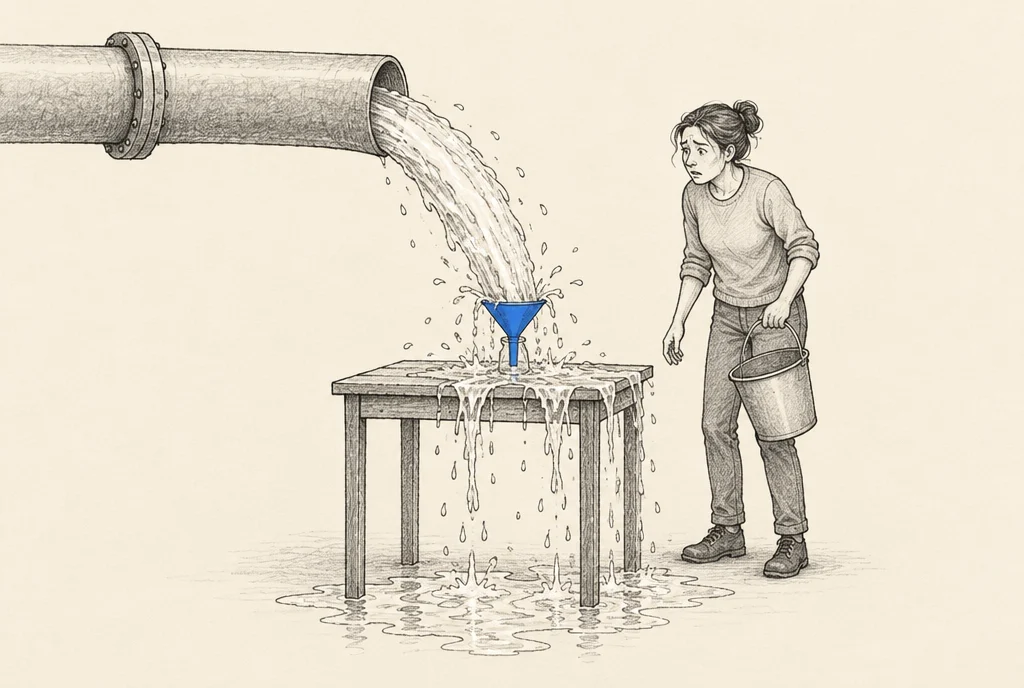
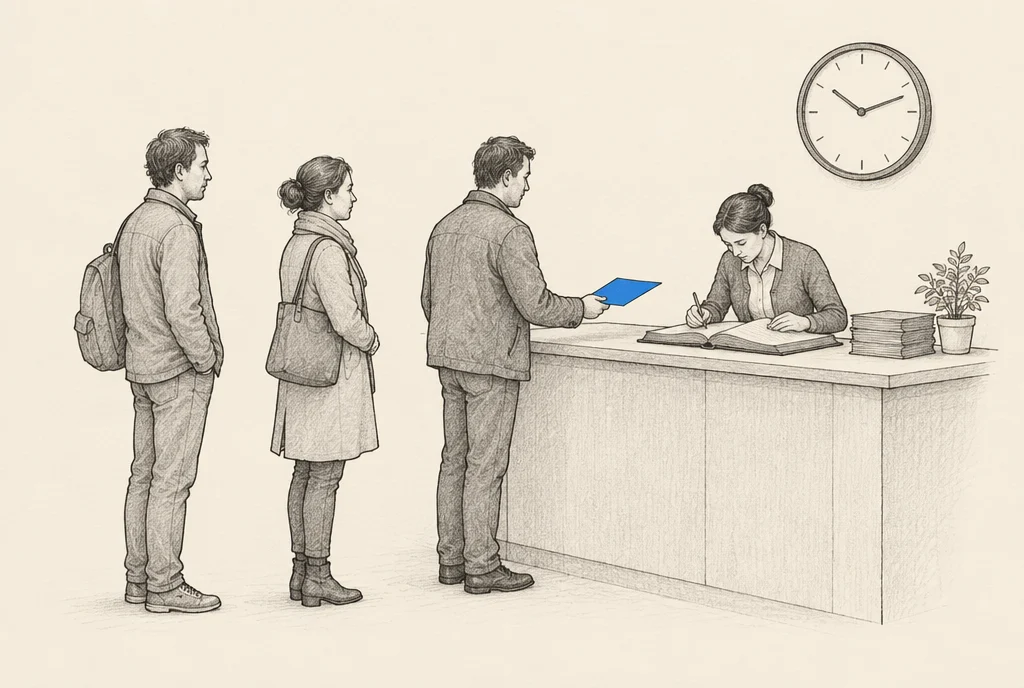
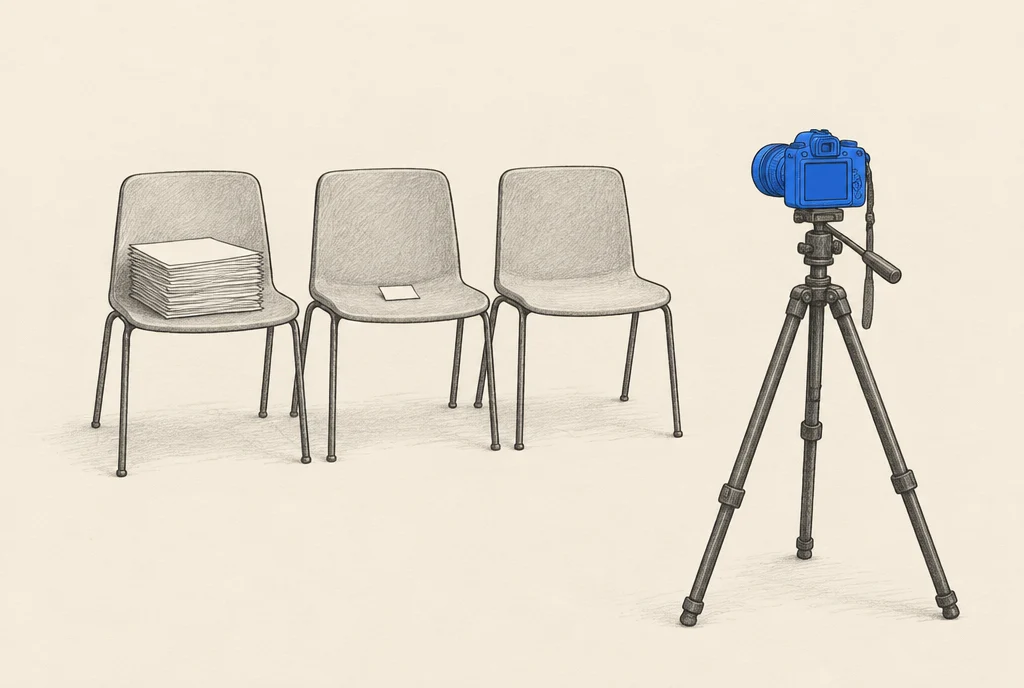
You stopped running the space. You became the operating system.
Somewhere between opening the doors and filling the floor, you stopped running the space. The space started running on you.You stopped running the space somewhere along the way. Now the space runs on your attention.

- Your coworking space already does these 9 jobs by hand. You are the system doing them.
- 4 of the 9 steps happen before you build anything. Skipping them is why most AI projects die.
- A member who left in silence and an overage never invoiced are growth losses, not admin ones.
- 4 safety rules: nothing outside the procedure, no access before the checklist, no message without a human yes, no guessed numbers.
- Step 9 is not training the team. It is taking the routing out of 1 person's head.
In this article
Here is the part nobody says out loud to a coworking space owner. You stopped running the space and became the thing that runs it. Every renewal, every trial, every member who quietly left waits for you to notice.
So the space moves as fast as 1 tired owner can notice things. This is the plan I use to hand that job to a system, without letting software loose near member billing and building access. 9 steps, 3 phases.
It is not a new booking app, and it is not let AI run the space. Who joins and how the place feels stays with you. Plenty of owners already bought something clever and changed nothing.

01You quietly became the operating system
It happened slowly. You gave every tour, onboarded every member and raised every invoice, because there was nobody else. The routing never left your head, because handling it was faster than writing it down.
Now you are the one who remembers a private office renews on Friday, that a trial ends this week with nobody asking them to stay, that 3 meeting room hours never reached an invoice.
What it costs to be the system
- The space runs at the speed of 1 person noticing things.
- 2 or 3 hours a day go on chasing, onboarding and billing.
- Members renew because somebody remembered. 1 busy week and a private office walks.
- Nothing survives your week off. You come back and rebuild the damage.
The first instinct is to hire another community manager. That adds a salary, somebody to supervise, and 1 more person learning rules you never wrote down. The day that person leaves, the routing goes with them.
02The member experience is the marketing
1 belief before the steps. In a coworking space, the member experience is the marketing. It is the tour followed up the same day, the card that worked on day 1, the renewal that came as a warm note.
A member who left in silence is not an admin slip. It is a desk to sell again and referrals you lost. An overage never invoiced is money you earned and gave away. Raising that invoice was a small annoying job nobody owned.

Fix the leaks first. Then fill the desks, because now the members you win stay.
The trap is spending more on marketing while onboarding, billing and renewals still run through you. Get the 9 jobs running and the same team holds a fuller floor and more locations without a renewal slipping.
03The 9 jobs, in 3 phases
Here is the whole map on 1 page. Your space already does all 9 jobs today, named or not. It names each job, then decides whether a person or a system does it.
9 steps, 3 phases
- 01Diagnose
Count what is bleeding.
- 02Shadow
Follow 1 real member.
- 03Write it down
Write the procedure down.
- 04Baseline
Agree today's numbers.
- 05Command center
1 screen: radar, renewal clocks, unbilled usage, documents, how full you are.
- 06The space's mind
Every rule, policy and playbook, searchable, with its source.
- 07Front desk assistant
Onboarding, invoicing and follow ups, under 4 safety rules.
- 08Handover
The team approves the work instead of doing it.
- 09Removal
You step out. A weekly report shows what it earned.
Skipping the first 4 is why a let us try some AI project quietly dies. People buy the clever part and get a fast tool that does not know how the space runs.
The 4 steps people skip
- 011/4 Diagnose
Count the losses: members gone in silence, trials nobody asked to stay, tours never followed up, usage never billed.
- 022/4 Shadow
Follow 1 real member from the tour through the trial, the agreement, the card and the first invoice, to the renewal.
- 033/4 Write it down
Plain language, in the real order, every exception stated, written for a new hire.
- 044/4 Baseline
How long onboarding takes, how many trials convert, how much usage sits unbilled.
Step 2 teaches you the space does not run on the written process. It runs on 100 unwritten rules in your community manager's head and the WhatsApp threads. That memory is the real manual, and it walks out the day they do.
Step 4 is 30 minutes that saves a year of arguing. In 3 months memory rewrites history and people forget how leaky it was. The baseline is the receipt.
04The 3 things you build
The first is the place you look. 1 screen showing the whole space in the order that costs money, so nobody rebuilds the picture every morning out of the booking tool, the access system and a group chat. 1 spine, not 12 tools.
We build it as a command center, an AiOS. The middle is a member radar: every membership and live lead ranked by what churns or bills first, not by name. The private office 48 hours from an unconfirmed renewal sits at the top, in red.
Around it, the renewal clocks pulled apart: a contract renewal, a trial ending and a tour going cold are 3 clocks, not 1 list. Beside them, the money on the floor: every overage, extra desk, guest pass and event hire never invoiced. And a document wall that reads your member files where they sit, so a record is a 2 second answer. Good tools exist, and not 1 does this job alone.
The second is the space's mind, the company brain. A procedure in a document just sits there. Here it becomes data the system can use, so anybody asks a plain question and gets your answer from your own rules, with the source. Change a rule in 1 place and every answer changes.
The third is the front desk assistant. An employee, not a chatbot. A chatbot waits to be asked. An employee wakes on a timer, does its round and flags what needs a human. Inside a Telegram bot the team already has: an onboarder that reads a photographed agreement and starts the checklist, an invoice filler that drafts the month from the meeting room logs, a follow up drafter, and a critic that grades the work first.
Why you can hand it real work
- It refuses work outside the procedure, and access stays off until the onboarding checklist is complete.
- It only touches the files it was given, and deletes go to a recycle bin.
- Every message to a member waits for a human yes. It drafts, then stops.
- An unclear figure or date comes back empty, never guessed. A blank is safe.
05Removal is the whole point
Decide which actions can never be undone, switching on access and sending an invoice, and put a human on exactly those. Build that gate first. Then people move from doing the work to approving it.
The piece everyone feels first is the morning brief. At 8 in the morning 1 message lands in the order that costs money: the memberships about to churn, the renewals due with offers drafted, the usage waiting to be invoiced, the tour going cold. The team walks in knowing the day.
Say removal to a team and they hear removing them, and a team that fears the system will starve it. Say it out loud, early and often. It removes the chasing and the file hunts, and leaves your people with the members.
Step 9 is not training. It is removal, and the test is plain. You take a real week off and nothing leaks. Members get switched on only once the checklist is complete. Trials convert, tours get a same day follow up, renewals get their warm note, overages get invoiced.
Every Monday a proof report comes in the numbers you agreed at the start. A member onboarded in about 2 minutes instead of about 20. Every overage billed. 0 members gone in silence. The system reports to you, unasked.
06What it costs, and where to start on Monday
Owners ask about money within about 90 seconds. The running cost is metered, shown like a utility bill, not hidden in a flat platform fee. The AI usage is a few dollars a day, hosting and the database a few tens of dollars a month, so roughly 100 dollars a month to run.
- 100dollars a month to run the whole system
- 55hours a month lost to admin at 2.5 hours a day
- 9jobs your space already does by hand
Put that next to what it replaces. Say the team loses 2 and a half hours a day to admin, chasing renewals, following up tours and working out who used what. Across 22 working days that is 55 hours a month. At even 50 dollars an hour, that is over 2,500 dollars a month of attention against roughly 100 dollars to run the system. It ignores the 2 biggest wins: the member who did not leave, and the usage that finally got billed.
Nobody builds all 9 at once. Start where the audit says you are bleeding worst, not with the screen that impressed you most. If overages go unbilled, the money on the floor wall and the invoice filler pay for the build in month 1. If silent churn is the fear, start with the radar and the clocks. If cards go out before agreements, start with the onboarding checklist.
This same plan runs in an accounting firm, a clinic, a law practice and a building consultancy, here and in Dubai. The labels change. The 9 jobs do not.
Count 1 number before Monday: how much usage your space delivered last month and never invoiced. That tells you which step to build first.
07Questions, answered
Is this another app for my team to log into?
No. Your space already does these 9 jobs by hand. This moves them onto 1 command center, and the assistant lives in a chat the team already has open.
Will it message my members without me?
No. It drafts the renewal offer, the follow up and the invoice, then stops until a person presses send.
What if it gets a number or a date wrong?
It comes back empty instead of guessing. A blank is safe. A wrong charge on a member's invoice is how a system loses you the member.
If you want this mapped onto your own space, with the 1 step to build first named for you, book a consulting call and we will walk your 9 jobs together.

Digital PratikA 37 year old, smiling, practical Gujarati, a Kathiyawadi businessman. Founder of JorrDaar LLC, Dubai.