
AI Employees, Not Chatbots: The Difference That Decides Whether It Is Worth Anything
 Digital PratikGrowth Marketing Consultant
 A chatbot answers questions.
An AI employee runs a function.
The dividing line is whether it can read your real data and take real action, or whether it can only talk about what you should do.
That single difference changes what it is worth, what you can charge for it, and whether anything in your business is actually different a month later.
Stop selling people a chatbot. Stop buying one.
A chatbot answers questions, and a system of AI employees runs entire functions, and those are completely different products at completely different prices.
The line between the two
Here is the cleanest test I know. Ask what happens after it responds.
If the answer is "the human goes and does the thing", you have a chatbot. If the answer is "the work is done and waiting for approval", you have an employee.
A chatbot with no connection to your systems can only talk. It is a brain in a jar.
It will give you excellent advice about your follow up sequence, and your follow up sequence will remain exactly as broken as it was this morning. The moment you give it the ability to read the real data and take the real action, in the real world, it crosses the line into something else entirely.
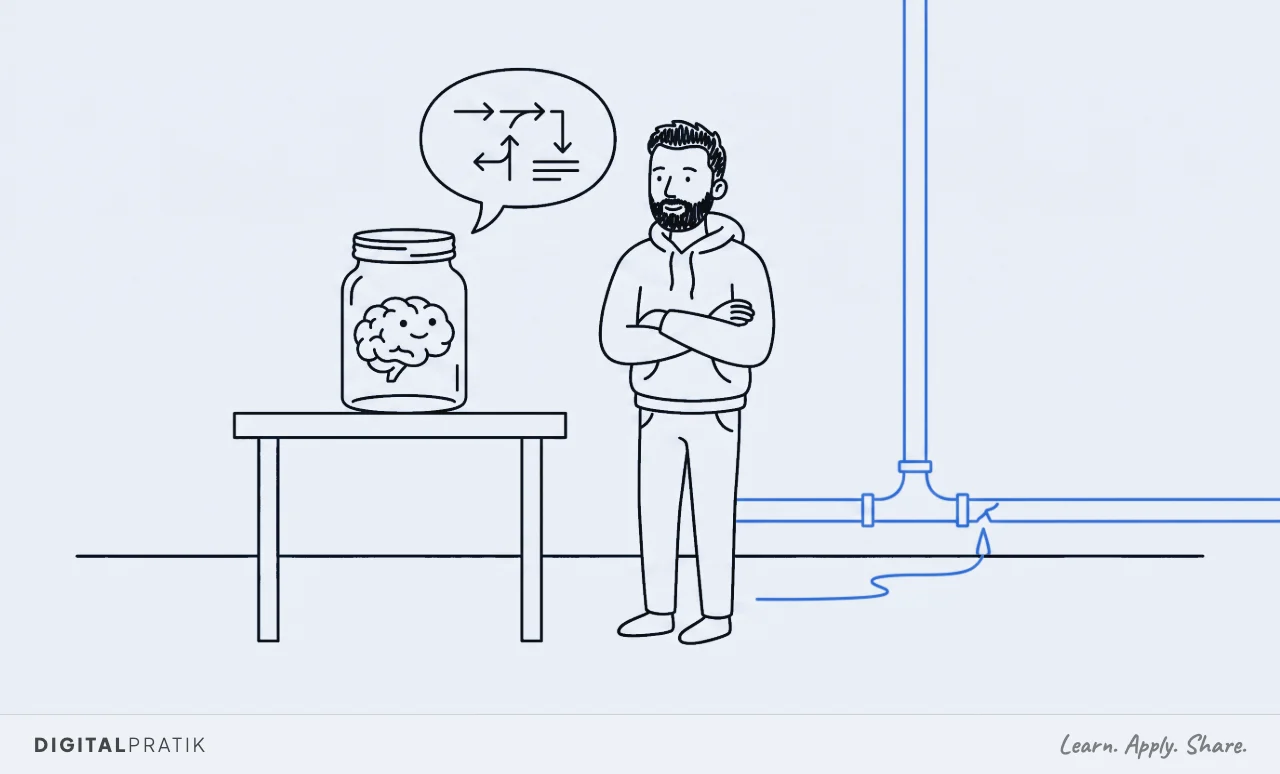
A brain with no hands is a consultant. A brain with hands is an employee.
Everything else in this article is a consequence of that one sentence.
What an AI employee actually looks like
Take a professional services firm, because the shape is clearest there. A chatbot on the website answers "what are your opening hours" and "do you handle this type of case".
Useful, mildly. Now compare a set of AI employees.
- An intake employee that captures every enquiry across every channel, qualifies it against the firm own criteria, responds instantly and routes the real ones to a person.
- A drafting employee that assembles documents from intake data into the right template, ready for a professional to review.
- A follow up employee that chases clients, documents and signatures without anyone having to feel awkward about it.
- A billing employee that flags unbilled work and ageing invoices before they become a cash flow problem.
- An orchestrator that ties them together and surfaces only the things that need a human decision.
Notice that none of those are described by what they know. They are described by what they do and what changes as a result.
That is the difference in a sentence, and it is also how you should describe yours to anyone who is paying for it.
I was building chatbots years ago
I am not sniffy about chatbots because I never used them. I was making tutorials on building them back when that was a genuinely useful skill, and they did exactly what they promised: they answered common questions and they saved somebody a bit of time.
What has changed is not that chatbots got worse. It is that the ceiling moved.
When answering questions was the most a machine could do, a chatbot was the whole opportunity. Now that a system can read your actual data and complete actual work, spending your build on something that only talks is choosing the smaller half of what is available.
That is the reason I am blunt about it. Not because the old thing was bad, but because a lot of people are being sold the old thing at the new thing price.
Where a chatbot is still the right answer
To be fair to the format, because the honest version of this argument has an exception in it.
If the job genuinely is answering repeated questions, and the questions have stable answers, and nothing needs to happen afterwards, a chatbot is the correct and cheapest tool. Opening hours, service scope, common process questions, the things a good frequently asked questions page already half solves.
The mistake is not using one. The mistake is buying one, calling it an AI transformation, and expecting the business to feel different in a month.
It will not, because nothing in the operation actually changed hands.
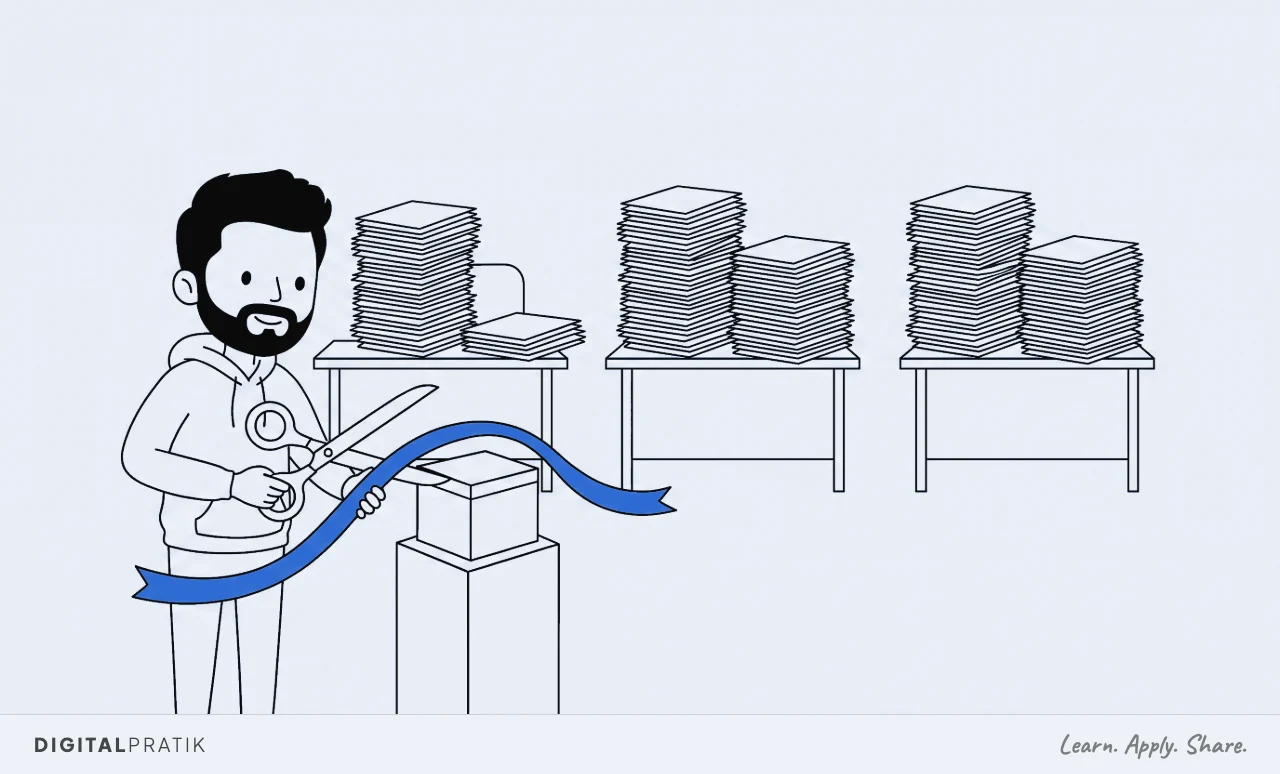
Why the distinction changes the price
A chatbot competes with software. There are a thousand of them, they are broadly interchangeable, and the buyer prices it against the cheapest one they can find.
You will spend the sales conversation defending a monthly fee.
An AI employee competes with capacity. It is priced against the alternative, which is a person, or the work not getting done at all, or the clients quietly lost to a competitor who answered faster.
That is a completely different conversation and the buyer does the arithmetic themselves without you pushing.
This is not a pricing trick, it is a reflection of what is actually being delivered. If the thing genuinely runs a function, it should be priced as though it does.
If it only talks, it should not be, no matter how impressive the underlying model is.
Sell the capability, never the feature
Nobody buys a feature. They buy what the feature lets them do.
Get this wrong and your best work sounds boring, get it right and the same thing sounds like magic.
A feature is what it has. A capability is what it lets them do.
Listing the model, the integrations and the architecture is selling the engine instead of the destination. The buyer does not care how the watch is made, they want to know what time it is.
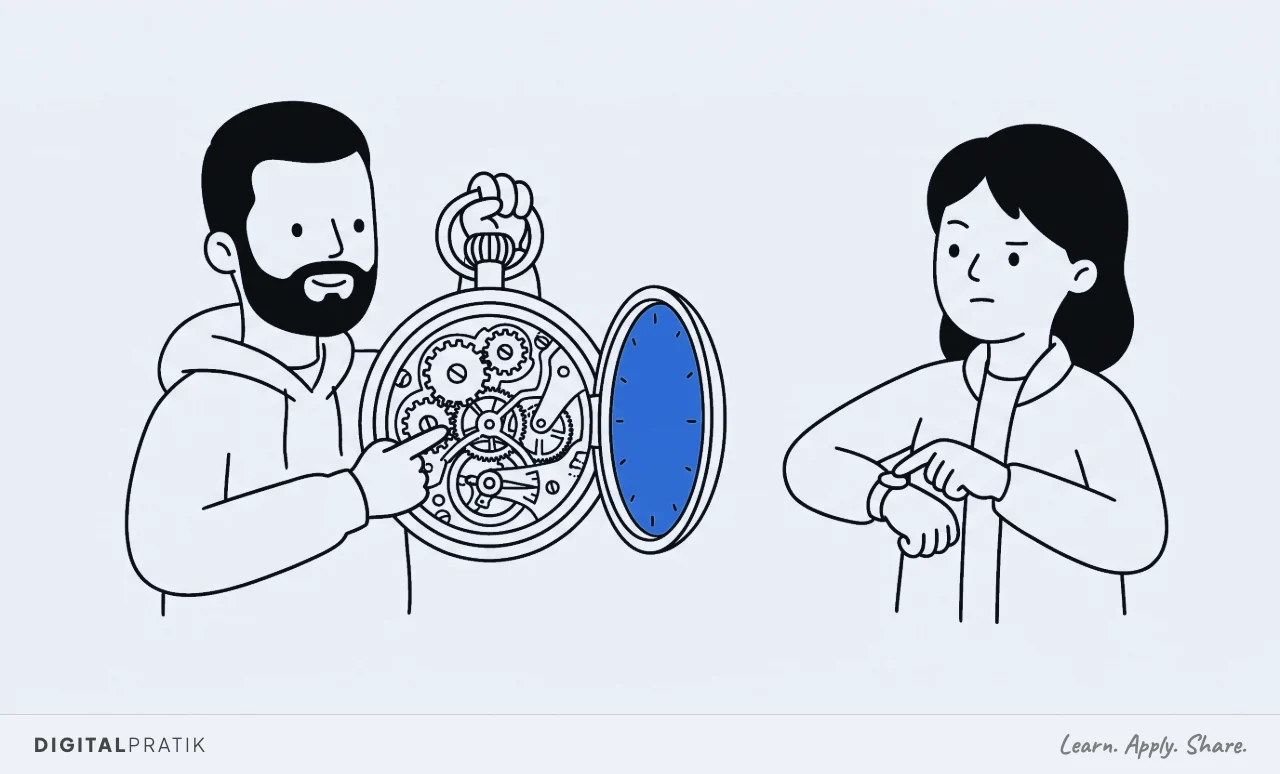
The fix is to ask "so what" until you hit something a human actually feels. It reads your email, so what.
It drafts replies in your voice, so what. You clear your inbox in ten minutes instead of two hours, so what.
You get your mornings back. That last one is what you sell.
The morning back, never the email reader.
And show rather than list. A capability is proven by a demonstration someone can watch working, not a bullet point they have to take on faith.
This is why the AI demos travel and the specification sheets do not.
Reading about a system and running one are different jobs. If your business does AED 10 million a year or more, this is what a working session looks like.
What an AI employee still needs from you
The same three things any of these need. A clear role in one sentence, the context to act like it belongs to your business rather than to nobody, and the tools to actually do things.
I go through the build in what happened when I built a team of AI agents, and the plumbing that gives them hands in what an MCP is.
It also needs a gate. An employee that can act is exactly as capable of acting wrongly as acting well, and the design choice that makes this safe rather than reckless is stopping before anything irreversible.
That is the human gate, and it is not optional at this level of capability.
The honest limits
An AI employee is not a person and pretending otherwise sets up a disappointment. It has no relationships, no accountability in any meaningful sense, and no ability to tell you that the thing you asked for is a bad idea unless you built it to.
What it has is tirelessness and consistency on the work that is genuinely repeatable, which turns out to be most of the work. That is enough to change a business without being enough to run one, and the businesses that get this right are the ones that were clear about the difference from the start.
The question to ask before you build or buy
One question. After this thing responds, is the work done or does a human still have to go and do it?
If a human still has to go and do it, you are buying a very articulate suggestion box. There is a place for that and it is not where the value is.
Build the one that finishes the job and stops at the point where a person should be looking, and you have something worth what you are charging for it.
Frequently asked questions
A chatbot answers questions. An AI employee runs a function end to end, reading your real data and taking real action, then stopping for approval where the action is irreversible. The practical test is what happens after it responds: if a human still has to go and do the work, it is a chatbot.
Because it competes against capacity rather than against other software. A chatbot is priced against the cheapest similar chatbot, while a system that runs a whole function is priced against the alternative of a person doing it, the work not getting done, or clients lost to whoever responded faster.
It replaces the repeatable production layer of a role, which is usually most of the hours, not the role itself. It has no relationships, no accountability and no ability to push back on a bad instruction unless you build that in. Businesses that are clear about this from the start get far more out of it than the ones expecting a person.
By what it lets them do, never by what it contains. Ask "so what" of every feature until you reach something a human feels, such as getting their mornings back or never losing another enquiry. Then demonstrate it working rather than listing what it has, because a capability is proven by watching it, not by a bullet point.
On anything irreversible, yes, and by design rather than as a precaution. Anything reversible and low stakes should run freely, and anything that moves money, messages a real person or cannot be undone should stop and wait for a human approval before the final step.
Install this in your business
An article gives you the map. A working session gives you the system, built around what you actually sell and who actually buys it.