Nobody can tell you a good cost per lead. Your own 2 numbers can.
Somebody asks me this almost every week. The honest answer annoys people, and then it saves them money.Somebody asks me this almost every week. The honest answer annoys people, then it saves them money.

- Cost per lead is your spend divided by your leads. That part is easy and it tells you almost nothing.
- The number that matters is what 1 lead is worth to you. Your price times your sale rate.
- A lead is worth what it is worth to YOUR business, not to your industry.
- Cost per sale is the same sum 1 step later, against a real paying customer.
- Ads get you customers. Looking after the ones you have is where the profit shows up.
In this article
Somebody asks me what a good cost per lead is almost every week. On a call, in a meeting in Dubai, in my Telegram at 11 at night. The honest answer annoys people, so let me say it first and then show you the sum behind it.
I cannot tell you. And nobody quoting you an industry number can tell you either. A good cost per lead is any number below what 1 lead is worth to your business, and that worth is built out of 2 numbers that only you have.
Copy somebody else's number and you will lose money with a very straight face. That is the part that hurts. The dashboard looks fine the whole way down.

01The easy half takes 10 seconds
Cost per lead is what you spend to get 1 person to put their hand up. Your spend divided by the number of leads. That is the whole thing.
You spend $600 testing a campaign and 100 people fill the form. Your cost per lead is $6. Nobody struggles with this part, and that is why everybody stops here.
And on its own, that $6 tells you almost nothing. It is a number with no job. It cannot tell you if you are making money or burning it.
02What 1 lead is actually worth to you
$6 a lead is either very good or very bad, and the number itself cannot tell you which. What decides it is what a lead is worth to you.
Take a coaching business. I am using round numbers here as an example, not anybody's real account. The programme is $300. Out of every 100 leads, 5 buy, so the sale rate is 5%.
What 1 lead is worth is your price times your sale rate. $300 times 5% is $15. So 1 lead is worth $15 to this business, and that $15 is the most you can ever pay for one.
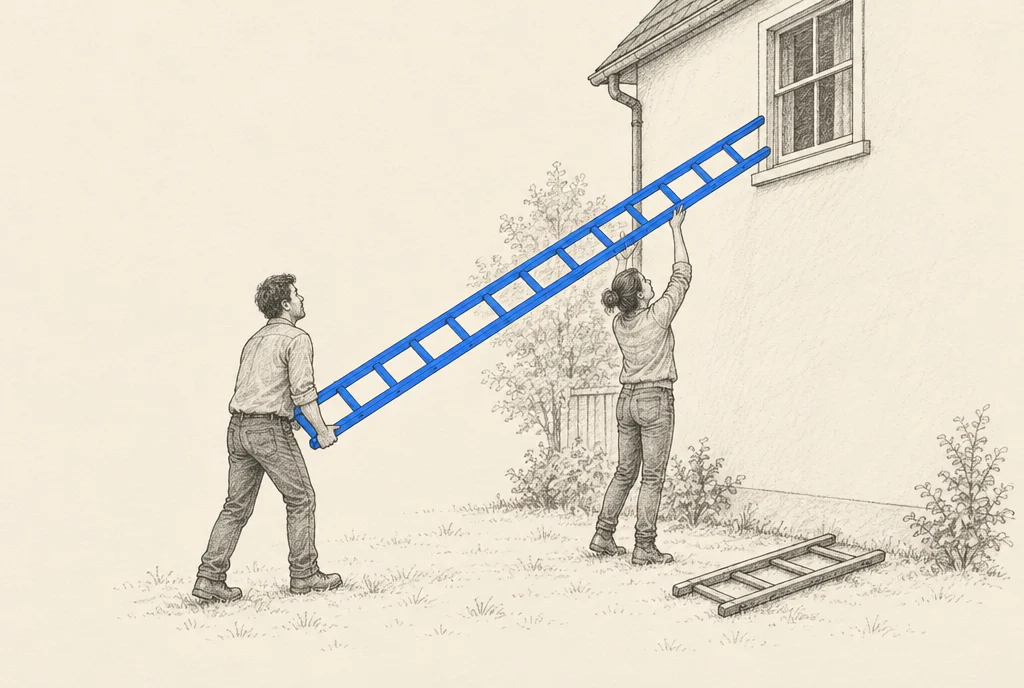
At $6 a lead you make money. At $20 a lead you lose money on every single lead, no matter how good the ad looked or how proud you were of the video. The creative was never the question.
That is the entire sum
- Your real price. What people actually pay on average, not the price written on the page.
- Your sale rate. Out of 100 leads, how many end up paying you.
- Multiply the 2. That is what 1 lead is worth to you.
- Pay less than that and you are fine. Pay more and you are not.
If you do not know your sale rate, you do not have a target. You have a preference. Go and count it before you judge another campaign.
03Then the same sum, 1 step later
Cost per sale, what most people call CPA, takes it 1 step further. Not what it costs to get a hand up. What it costs to get a paying customer. Your spend divided by your customers.
You spend $1,200 and get 10 customers. Your cost per sale is $120. Whether $120 is good depends on what is left after you actually do the work. Not your revenue. The money still sitting there once delivery is paid for.

That 1 difference catches people constantly. If delivery eats most of the money, a business can be busy, growing and quietly losing money on every new customer it wins. And the ads dashboard will look healthy the entire time.
04Why 2 businesses get wildly different answers
Put a property business next to that coaching example and the numbers stop looking like each other at all.
Say the average commission on a sale is $10,000, and 1 out of every 100 leads eventually closes. $10,000 times 1% is $100. So in that business a customer can cost up to $100 and everything is still perfectly healthy.
Same sum, 2 very different answers
$300 programme
$10,000 commission
5 out of 100 leads
1 out of 100 leads
$15 per lead
$100 per customer
$100 a lead would be a disaster for the coaching business. $100 a customer is completely sound for the property one. Same country, same platform, same auction, same ad account. That is exactly why an industry number is worse than useless. It is somebody else's business, handed to you as if it were yours.
A benchmark is a number from somebody else's business, handed to you with confidence.
05What actually moves your number
Once you know the most you can pay, there are 5 things worth doing. Roughly in the order of how fast they pay you back.
In the order I would pull them
- 01Speak to 1 group at a time
Pick a clear group and write the message for them. That lifts your sale rate, and your sale rate is half the sum.
- 02Test creative all the time
Copy, images, ideas, versions. Not once at launch and then never again.
- 03Take repeat business seriously
People buying again brings down what every customer really cost you, across the whole book.
- 04Score your leads
Rank them by how interested and how likely to buy, so your effort goes where it can land.
- 05Read the real journey
Look at what actually happens before somebody buys. That is where you find the leak.
Look at number 1 and number 4 again. Half of the sum is your sale rate, and your sale rate is a selling job, not an ads job. How fast you call back. What you send. How simple you make the yes. I wrote about that side of it in nobody reads your 20 page proposal.
And 1 line I keep repeating because people keep getting it backwards. Meta ads are for getting customers. Looking after the ones you already have is what brings the profit. If you are trying to fix your profit only by making leads cheaper, you picked the harder half of the job.
Cheap leads are easy to buy. You can have as many as you like, and they will not buy anything.
Here is the mistake sitting under all of this. People judge campaigns on the easiest number to see instead of the number that reflects the business. Cost per lead sits right there in the dashboard, updating live. What a lead is worth lives in your own books and takes an afternoon of work. So the easy number becomes the target, and the whole account gets pointed at cheap leads instead of profitable ones.
06Where your sale rate quietly hides
Half the sum is your sale rate, and most owners cannot tell me theirs. Which means most owners do not have a real target at all, only a mood about their ads.
The reason is boring. Leads sit in 1 place, the ad platform or a form tool. Customers sit in a different place, the invoices. Nobody joins the 2 up. So the sale rate becomes a feeling, and the feeling is almost always kinder than the truth.
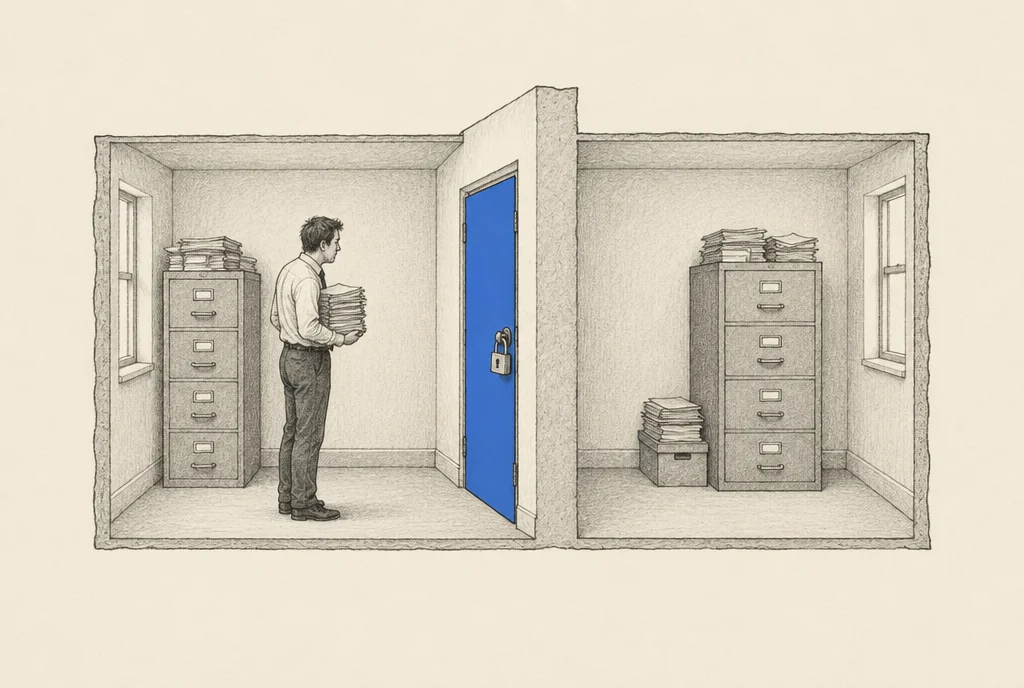
This is a big part of why we build a command center for a client now instead of posting them a report. Leads and paying customers sit on 1 screen in 1 place, with the company brain behind it, and the owner can ask a Telegram assistant what the sale rate was last month and get a number back. The sum in this article only works if somebody is keeping both halves of it in the same building.
Count it over a long enough window to cover how long your buyers really take to decide. If people take 6 weeks to say yes, a 2 week sample will tell you your sale rate is near zero, and you will decide the leads were bad. They were not. Your window was.
An afternoon of work, and every budget call after it is obvious
- 01Write down your real price
What people actually pay you on average, not the number on the website.
- 02Count your sale rate
Leads in, paying customers out, over a window long enough to be real.
- 03Multiply the 2
That is what 1 lead is worth, and the most you can pay for one.
- 04Work out what is left after delivery
So you know what a customer is really worth to you, not just what they paid.
- 05Now open the dashboard
The number in front of you finally means something.
A good cost per lead is any number below what 1 lead is worth to you. That is the whole answer.
The next question after this one is how long you can wait to get that money back, which is your payback window. That one deserves its own article. Do this one first.
Write 2 numbers on paper. Your real average price, and how many of your last 100 leads actually paid you. Multiply them. That is your number, and it is the only one that matters.
07Questions, answered
What is a good cost per lead?
Any number below what 1 lead is worth to your business. Work that out by multiplying your average price by your sale rate. Under that line you can make money. Over it you cannot, however good the ads look.
What is the difference between cost per lead and cost per sale?
Cost per lead is your spend divided by the people who put their hand up. Cost per sale is your spend divided by the people who actually paid. Judge the second one against what is left after you deliver the work, not against your revenue.
How do I work out my sale rate?
Count how many of your leads became paying customers, over a window long enough to cover how long people really take to decide. If your buyers take 6 weeks, never judge it on 2 weeks of data.
Can I just use an industry benchmark?
No. A benchmark is built from somebody else's price and somebody else's sale rate. A coaching business and a property business can sit in the same auction with limits very far apart, and both be perfectly healthy.
My leads are cheap but nothing is selling. What now?
Cheap leads are the easiest thing in the world to buy, and they will happily not convert. Work on your sale rate instead. Who you speak to, how fast you call back, and how simple you make the yes.
If you want me to sit with your numbers and tell you what you can really afford to pay for a lead, book a consulting call and bring your price and your last 100 leads.

Digital PratikA 37 year old, smiling, practical Gujarati, a Kathiyawadi businessman. Founder of JorrDaar LLC, Dubai.