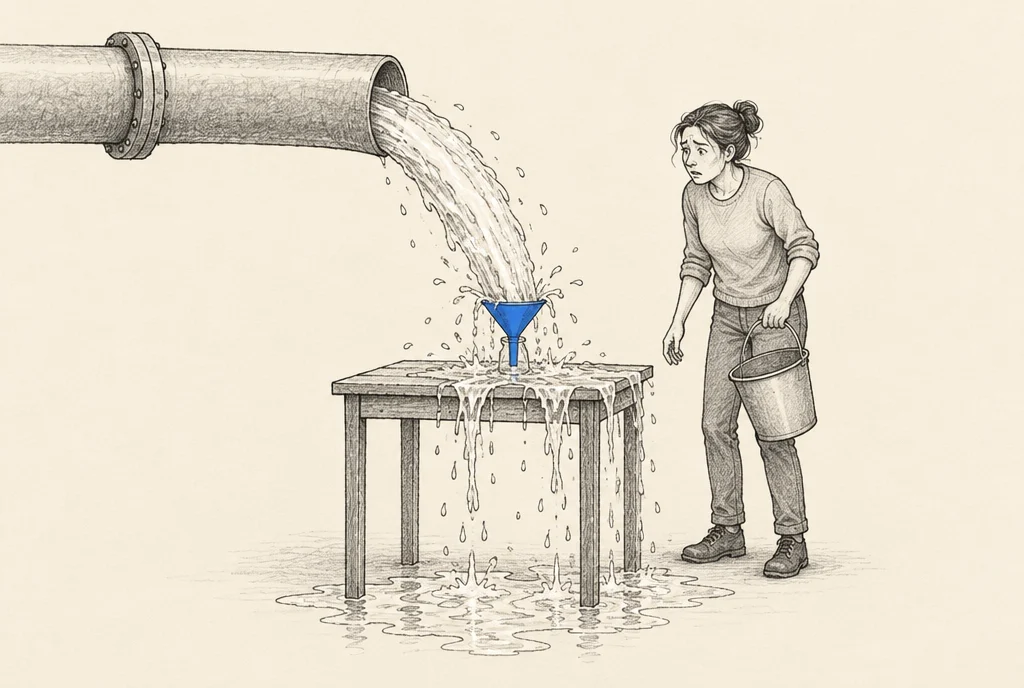
High ticket is not a number. It is a jump from where you stand.
People hear high ticket and ask for the number. There is no number. There is only a jump from your own average.People hear high ticket and ask for the number. There is no number, only a jump from your average.

- High ticket is not a fixed price. It is a multiple of what you charge today.
- Work out your real average from the last 6 months. It is lower than the one in your head.
- 3 times your average is the honest first target. 5 times usually means the offer itself has to change.
- The price can only move if the delivery moves with it.
- How the money lands matters almost as much as how big the number is.
In this article
People hear high ticket and the first thing they ask me is the number. What is high ticket, in dollars. Just tell me the figure. There is no figure.
Here is the real answer. High ticket is a multiple of what you charge today. If you usually charge 500 dollars and someone pays you 6,000, that is a high ticket client for you. If an agency normally runs a 12,000 dollar a month retainer and lands an annual contract worth several times that, that is their high ticket client. Same 2 words. Completely different numbers.
That is why the phrase confuses everybody. And chasing somebody else's number is how you end up selling a service you cannot deliver yet.
012 examples, both high ticket
Say you average around 500 dollars a client right now. Then one conversation goes well, they ask how to start, you send the link, and they pay 6,000 on the call. Against your average that is more than 10 times. For you, that is a high ticket client, no argument.
Now take an agency where a full marketing engagement starts at 12,000 dollars a month on retainer. They close an annual contract worth several hundred thousand across the year. That works out at roughly 4 times their normal month. For them, that is the high ticket client.
- 500a normal deal before the jump
- 6,000paid on 1 call, over 10 times that average
- 12,000a month where a full engagement starts for an agency
Both are right. The 6,000 deal is not small, and the annual contract is not the only real one. The word describes a jump, not an amount. That is how 2 people can use it about numbers 10 times apart and neither one is wrong.
High ticket is a jump. It is not an amount.
02Find your real average first
Before the phrase means anything for you, you need your own number. Go back over the last 6 months. Every client, every job, what you actually collected, not what you quoted and not what the good months looked like. Add it up and divide it properly.
Most people guess this badly, and always upward. Your memory holds on to the best deal you ever did and quietly treats it as normal. Your real average is usually lower than the one in your head, and everything after this depends on that number being honest.
Your average decides your band
1,500
2,500
6,000
10,000
15,000
25,000
Look at the top row and the bottom row. A 2,500 dollar deal is a real leap for the first business and a step backwards for the third. Same number, opposite meaning. That is exactly why a fixed figure is useless advice.
3 times your average is the honest first target. 5 times is the stretch, and it usually needs the scope to change, not just the price. Past that you are not raising a price any more, you are building a different offer, and it needs a different way of delivering behind it.
Work out your own 2 numbers right now. They will be smaller than the ones in the posts you have been reading, and far more useful, because you can go and sell them this quarter.
03Aim at the jump, not the figure
A jump of around 10 times brings a different kind of client. A different buyer, a different conversation, a different level of checking. Small steps change none of that. They only change the invoice. Going from 500 to 700 feels like nothing. Going from 500 to 6,000 feels like a different business, because it is one.

The failure I see most often is a price that moved and a service that did not. Somebody reads that they should charge several times more, changes the number, keeps delivering exactly what they delivered before, and then cannot understand the pushback.
Nudging the price while delivering the same thing fails, and it fails out loud on the call.
Buyers in a higher band are not paying more for the same thing. They are buying a different thing. More scope, more certainty, more of the problem taken off their desk. If nothing about your delivery changed, their objection is correct, and no sales technique gets around a correct objection.
04What you can charge follows what you fix
Price does not really follow effort or hours. It follows the size of the problem you take away.
Getting someone more leads is worth something. Fixing the reason their leads never turn into clients is worth more, because the demand is already there. Taking the daily load off a founder who is the bottleneck himself is worth the most, because you are handing back time he cannot buy anywhere else.
The further along you fix, the more it is worth
- 01More leads
You fill the top of the pipe. Useful, and the easiest thing to replace.
- 02Leads that convert
You fix why the demand they already have keeps leaking out.
- 03The founder's own load
You take the work off the person who is the bottleneck, and give him his week back.

That is also where most of my own work sits in 2026. The command center a founder opens in the morning, the company brain that remembers what the business knows, the Telegram assistants that do the chasing, the STORM content so the firm keeps showing up without the owner sitting down to write. Clients in Dubai do not buy any of that because the tools are clever. They buy it because somebody takes the load off them.
So if you want to move up a band, the reliable route is to fix further along that line, not to charge more for the same thing.
05How the money lands matters too
One part of this gets ignored almost every time. How a big contract is paid matters nearly as much as how big it is.
An annual engagement broken into a small number of milestone payments means a large payment lands at the start, covering several months of the work in advance, with the rest following at fixed points. That is a completely different cash position from the same annual value spread evenly, month by month. And it only happens if you ask for it. It is negotiated, never assumed.
Founders stare at the headline number and then find out later that the timing of the money is what actually decided whether the year was comfortable.
Ask these about the money
- How much lands in the first 30 days?
- How many months of work does that first payment cover?
- What has to happen before the next payment is due?
- If the work pauses on their side, does the money pause too?
06The room gets bigger and the yes gets slower
A bigger number changes who is in the room and how long it takes. More people involved, more questions, more interest in what happens if it goes wrong, and a slower decision. That is not a bad sign. That is what it looks like when somebody is spending serious money carefully. Founders moving up for the first time read all that checking as reluctance and start cutting the price to rescue a deal that was never in trouble.
What helps here is keeping your side short and clear instead of heavy. A big number does not need a big document, it needs a conversation, which is the whole point of why nobody reads your 20 page proposal and they call you after 1 page.

And do not move the whole business at once. Prove the higher band on 1 client before you reprice everybody. One engagement at the new level tells you if you can actually deliver it, what it really costs you, and where it strains. Then move the rest. Repricing your whole list on a theory is how people end up unable to keep the promises they just made, and that follows you around for longer than the extra money lasts.
The 4 moves
- 01Get your real average
Last 6 months, what you actually collected, divided honestly.
- 02Pick your 2 targets
3 times it, and 5 times it. Write both down.
- 03Change what is inside the offer
Decide what bigger problem you are taking off them to earn that number.
- 04Sell it to 1 client first
Deliver it fully once, see what it costs you, then move everyone else.
Open your last 6 months of invoices, work out your true average, and write your 3 times number on a sticky note where you make calls.
07Questions, answered
What is high ticket in dollars?
There is no single number. It is a multiple of your own average, which is why a 6,000 dollar deal and an annual contract worth several hundred thousand can both be high ticket, for 2 different businesses.
How do I work out my average?
Take the last 6 months, every client, what you actually collected rather than what you quoted, and divide. Do not use your best month, because that is the number your memory wants to hand you.
Is 3 times or 10 times the right target?
3 times is the honest first step. 5 times usually needs the scope to change, not just the price. Around 10 times is a different buyer altogether, and it needs a different way of delivering behind it.
Can I keep delivering the same thing and just charge more?
No. Buyers in a higher band are paying for more scope, more certainty and more of the problem taken off them. If the delivery did not change, their pushback is fair.
Should I reprice all my clients at once?
No. Do 1 client at the new level first and see what it really costs you to deliver. Then move the rest.
If you want help working out your real average, your jump, and what you would have to solve to deserve it, book a consulting call and we will go through your last 6 months together.

Digital PratikA 37 year old, smiling, practical Gujarati, a Kathiyawadi businessman. Founder of JorrDaar LLC, Dubai.