You talk for 3 minutes between meetings. The article is ready before your next one.
A lot of what you read from me started as me talking into my phone for 3 minutes. No document, no blank page, no hour set aside. Just me saying 1 thing out loud, and a finished article waiting for me by the end of the day.You are not short of ideas. You are short of typing time. Talk for 3 minutes and the article comes back.

- You are the only person who can have your ideas. You should not also be the typist.
- Talk for 3 minutes into your phone about 1 idea. That is your whole job in this system.
- Send every note to 1 place, and keep your old words in that same place so the writing sounds like you.
- The article comes back the same day. You read it, fix a line, and say yes before it goes live.
- A plain article every week beats a perfect one twice a year.
In this article
- 01You are not short of ideas. You are short of typing time.
- 02Step 1 of 4. Talk for 3 minutes, do not write.
- 03Step 2 of 4. Send it to 1 place, always the same place.
- 04Step 3 of 4. Feed it a bank of everything you have already said.
- 05Step 4 of 4. Read it, fix 1 line, then say yes.
- 06What this changes in your week
- 07Questions, answered
Most business owners I meet are not short of ideas. They have 10 good ones before lunch. They say the smartest line of their whole week on a sales call at 11 in the morning, and then the call ends and that line is gone.
It is not laziness. It is that the idea and the typing are 2 very different jobs, and only 1 of them needs you. Having the idea needs you. Typing it out for 60 minutes does not.
So here is the 4 step way I run my own writing. You talk for 3 minutes between meetings. Your words land in 1 place that already holds everything you have ever said. The article comes back the same day, in your voice. You read it, fix what is off, and say yes.

01You are not short of ideas. You are short of typing time.
In my 9 step work with clinics and firms I keep seeing the same thing. The owner slowly became the operating system of the business. Every reminder, every decision, every bit of routing lives in 1 head, because in the early years it was always faster to just do it than to write it down.
Content works exactly the same way. You know what your buyers get wrong. You know why your way works. You know the 1 thing you would never do, even for money. None of it is written down anywhere, because writing it down was always the job you would get to next week.
You are the only one who can have your ideas. You should not also be the typist.

And this costs real money. Your buyers look you up before they call you. If nothing has moved on your page for a year, they do not think you are busy. They think you are small, or closed, or gone. The reason nothing moved is not that you ran out of things to say. It is that nobody had a free hour to sit and type.
4 steps, and only 1 of them is yours
- 011/4. Talk for 3 minutes
Say 1 idea out loud into your phone, between meetings or in the car.
- 022/4. Send it to 1 place
Every note goes to the same inbox, so nothing is ever hunted for later.
- 033/4. Let it read your old words
The writing is grounded in your past articles, talks and notes, so it sounds like you.
- 044/4. Read it and say yes
A finished article comes back the same day. You check it and approve it.
02Step 1 of 4. Talk for 3 minutes, do not write.
Pick up your phone and hold the record button. That is it. No document, no heading, no plan. You are not writing an article, you are telling 1 person 1 thing.
The easiest moments are the ones you already waste. The 4 minutes outside a meeting room. The lift. The walk to the car park. A lot of my own notes come from the car here in Dubai, and if you are driving, keep the phone in the cradle, keep both hands on the wheel, and just talk. The article can wait 10 minutes.
What a good 3 minute voice note has in it
- 1 idea only. If you have 3 ideas, record 3 notes.
- The thing that annoyed you this week, said plainly.
- What most people get wrong about it, and what you do instead.
- 1 small real moment. A client question, a site visit, a thing someone said.
- The next step you would give a person who asked you this across a table.

Do not try to be neat. Say the same thing 3 different ways if that is how it comes out. Rambling is better material than a tidy summary, because the messy version is the one that still sounds like you.
03Step 2 of 4. Send it to 1 place, always the same place.
This is the step most people get wrong, and it is the cheapest one to fix. A note is only worth something if you can find it. If your ideas are spread over your notes app, your email drafts, 2 WhatsApp chats and a voice memo folder, you own nothing.
So pick 1 inbox and never use another. Mine is WhatsApp, because it is the app I already have open all day. I send the voice note to my assistant the same way I would message a person, and that chat is the only door.
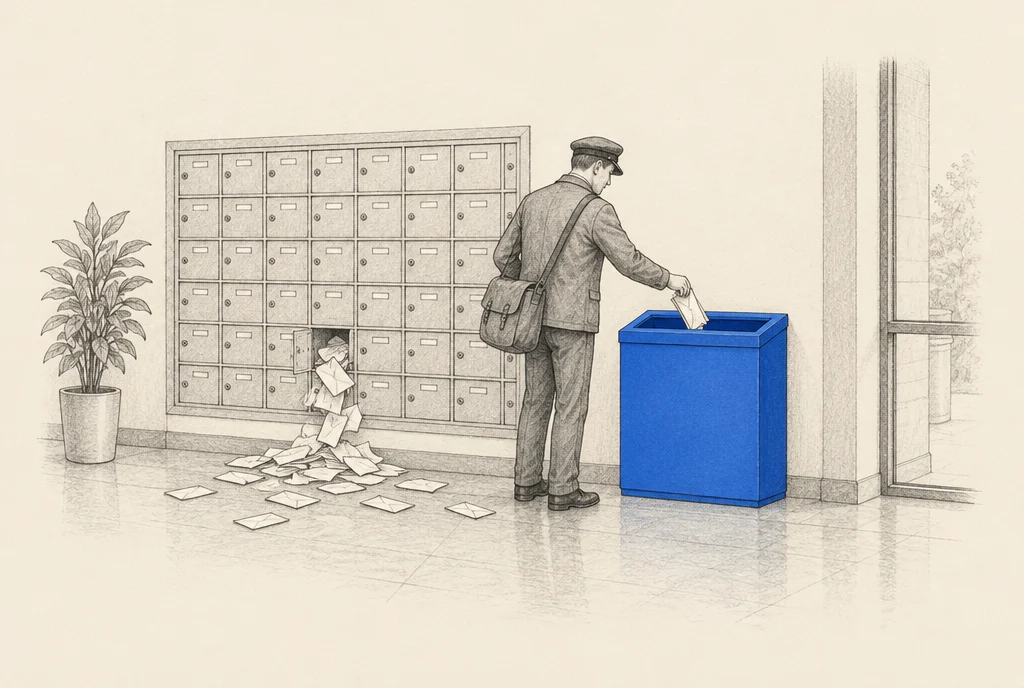
The other half of this step matters just as much. The voice note is written out word for word, not summarised. A summary keeps the facts and throws away the way you said them, and the way you said it is the only part nobody else can copy.
A summary keeps your facts and throws away your voice. Keep the words.
04Step 3 of 4. Feed it a bank of everything you have already said.
A 3 minute note on its own is thin. 3 minutes of talking is about 450 words, and an article is 1,200. So where does the rest come from? From you, 2 years ago.
Everything you have already said goes into 1 bank. Old articles. Talk transcripts. Podcast episodes. Your past WhatsApp chats, exported into plain notes. Workshop recordings. Even the voice notes you sent your own team. It sounds like a lot of work and it is mostly a 1 time job, done once and then topped up as you go.
- 800+podcast episodes I recorded to build a library of my own words
- 1,419of my own notes the bank searched before this article was written
This is the real answer to AI writing in my own voice. It is not a clever instruction telling a tool to sound like Digital Pratik. It is the tool reading 1,419 of my own notes first and only then writing. Same idea, said better, in the words I actually use.
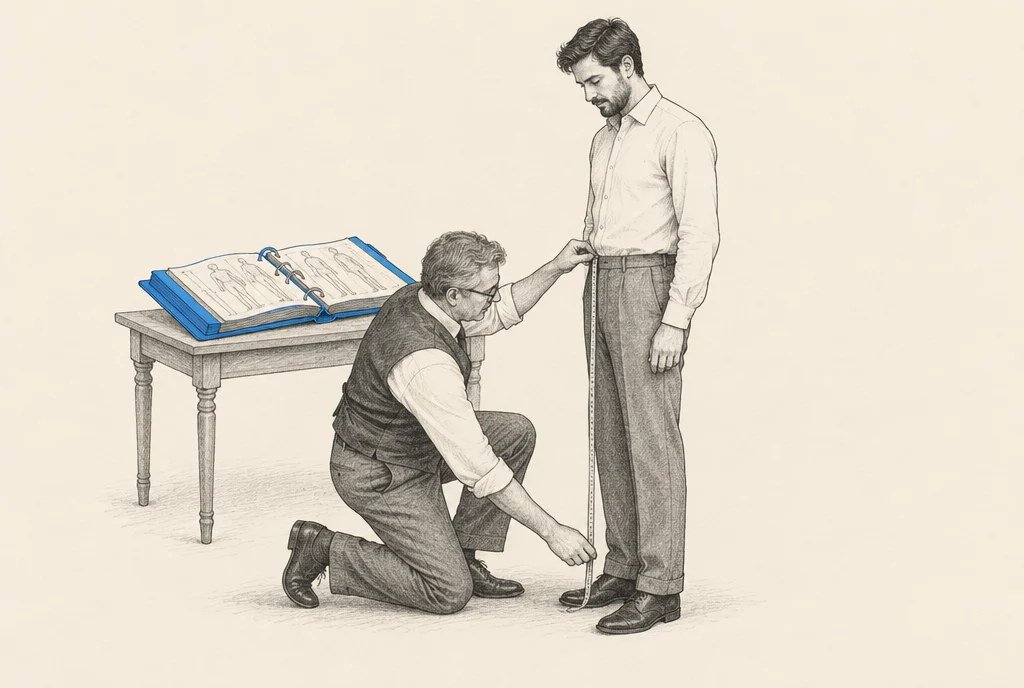
A good tailor does not ask your size every single time. He has your file. The bank is your file, and it is also your safety net, because an article grounded in your old words cannot go off and invent a number, a client or a result you never had.
05Step 4 of 4. Read it, fix 1 line, then say yes.
The draft comes back the same day. Not a bullet list, not an outline. A finished article with a headline, a short version at the top and the sections filled in.
Your job here is about 10 minutes of reading. You are not rewriting it. You are checking it, the same way you check work your team hands you. If a line is wrong, you say so in 1 sentence and it is fixed. You do not open the whole thing and start again.
What I look at before I say yes
- Would I say this out loud to 1 person across a table?
- Is every number and name real, or did something sneak in?
- Is there 1 clear next step for the reader?
- Does the first line get to the point, with no warm up?
- Is there anything in here a 12 year old would not follow?

And one hard rule. Nothing goes live until you say yes. Not a draft, not a test, nothing. The system writes and waits. The publish is always a human tap, and it should always be yours.
06What this changes in your week
The point of a content system for busy business owners is not more posts. It is that the owner stays the only source of ideas and stops being the bottleneck for everything after the idea.
The same idea, 2 different weeks
You remember it on Sunday, mostly wrong
You say it the minute you think it
Notes app, email drafts, 2 chats
1 inbox, written word for word
You, at 11 at night
The system, grounded in your old words
60 to 90 minutes
3 minutes talking, 10 minutes reading
Twice a year, when guilt hits
Every week, without a fight
The second thing it changes is smaller and better. Once talking is enough, you start saying more. You stop filtering ideas by how long they would take to write up, which is a terrible way to pick ideas and the way almost everyone does it.

Start smaller than you think. 1 note, 1 article, this week. Do not build the bank first and do not wait until you have a plan for 30 pieces. Talk for 3 minutes today and see what comes back.
Record 1 voice note of 3 minutes about the thing a client got wrong this week, and send it to 1 place. That is the whole task.
07Questions, answered
Can I dictate content while driving in Dubai?
Yes, and a lot of my own notes come from exactly there. Keep the phone in the cradle, keep both hands on the wheel, and just talk for 3 minutes. If it is not safe, the idea can wait until you park.
How do I write articles without typing at all?
You still read, you just stop drafting. You talk for 3 minutes, a finished draft comes back, and your typing is limited to a short fix and your yes before it goes live.
Will it really sound like me, or like a robot?
That depends entirely on step 3. A tool told to sound like you will fail. A tool that reads your past articles, talks and notes first, then writes, will sound like you, because it is using your own words.
How do I export WhatsApp chats into notes?
Open the chat, use WhatsApp's export chat option, and save that file into the same folder your bank reads. Make sure voice notes in it are written out word for word, so your real lines are kept instead of a summary.
What if I ramble and do not make sense?
Rambling is fine and it beats being neat. Say the same point 3 ways if that is how it comes out, and the clearest version gets picked out later.
If you want to see how many hours a week this hands back to you, take the Capacity Diagnostic and we will count them together.

Digital PratikA 37 year old, smiling, practical Gujarati, a Kathiyawadi businessman. Founder of JorrDaar LLC, Dubai.