
Name the Problem Before You Build the Funnel
 Digital PratikGrowth Marketing Consultant
 Every market has a hundred problems, and only three are the kind a customer will gladly pay to fix again and again: acquisition, conversion and capacity.
Before you build any funnel, decide which one it sells against, then say it specifically.
Most funnels fail because they are built beautifully around a promise too vague for anyone to recognise as their own problem.
You do not lack strategy. You are almost certainly aiming at the wrong problem, or at all three at once, which reads the same as none.
Problem one: acquisition
This is the one your customer feels the moment they open their eyes. Not enough new clients coming in.
Close your eyes and think about your own business and it is probably the first thing that surfaces.

It does not matter what the business is. A physiotherapy clinic, a media company, an agency, a solo video editor trying to build something.
The shape of the anxiety is identical.
The money rule underneath it: people pay roughly ten times more for the cure than for the prevention. That is why talking about growth in general sounds like everyone else, and talking about the empty calendar sounds like the person they have been looking for all year. Same service, completely different reception.
Problem two: conversion
The second most expensive problem in your customer's life, and they almost never call it by its real name.
What they say is that the leads are bad, the market is slow, people do not have money right now. What is actually happening is that a thousand perfectly reasonable leads are sitting in a pipeline and the machine around them is leaking: no follow-up system, no proper sales process, nobody working the list.
So they blame the agency for lead quality.

Sometimes the leads genuinely are bad. Often they are not.
And this is the highest margin problem in the world to solve, because the demand already exists and the traffic is already paid for. You are not creating anything, you are stopping a leak.
Problem three: capacity
This one only shows up once the first two are partly working, and it is the most expensive of the three.
The owner is the brand, the closer, the operator, the billing department, and the emotional support for a team of ten. They are up at six and still the bottleneck at eleven at night.
Adding more leads here is pouring fuel on a flooded engine.
Solve capacity and something interesting happens to your pricing. The same customer moves from buying a two thousand dollar service to a ten thousand dollar retainer inside the same conversation.
Not because you charged more. Because you removed more.
The fix is a system rather than more effort: AI to build the processes, automation to run them, ads to scale what works. That is the whole argument of the 3A Machine.
Reading about a system and running one are different jobs. If your business does AED 10 million a year or more, this is what a working session looks like.
How to tell which one you are in
You do not choose this. Your market chooses it for you, and it tells you in plain language if you go back and read.
| They say | The problem | You are a |
|---|---|---|
| I need more leads | Acquisition | Acquisition business |
| They enquire and never buy | Conversion | Conversion business |
| I am drowning, I cannot keep up | Capacity | Capacity business |
Open the first messages from your last ten paying clients and sort them into those three piles. The biggest pile is what you actually sell, regardless of what your website currently says.
Then say it specifically
Naming the problem is half of it. The other half is refusing to say it vaguely, and this is where most funnels quietly die.
We help you close more is weak. It could be said by anyone, about anything, which means it registers as nothing.
We install automation that books thirty percent more appointments is specific enough to be evaluated, argued with, or believed.
Better still is naming the whole mechanism: rebuilding the path from booking to showing up to paying, so that a defined proportion of booked calls become paying clients in a defined window. Now the prospect knows exactly what you are claiming to fix and can recognise their own situation in it.
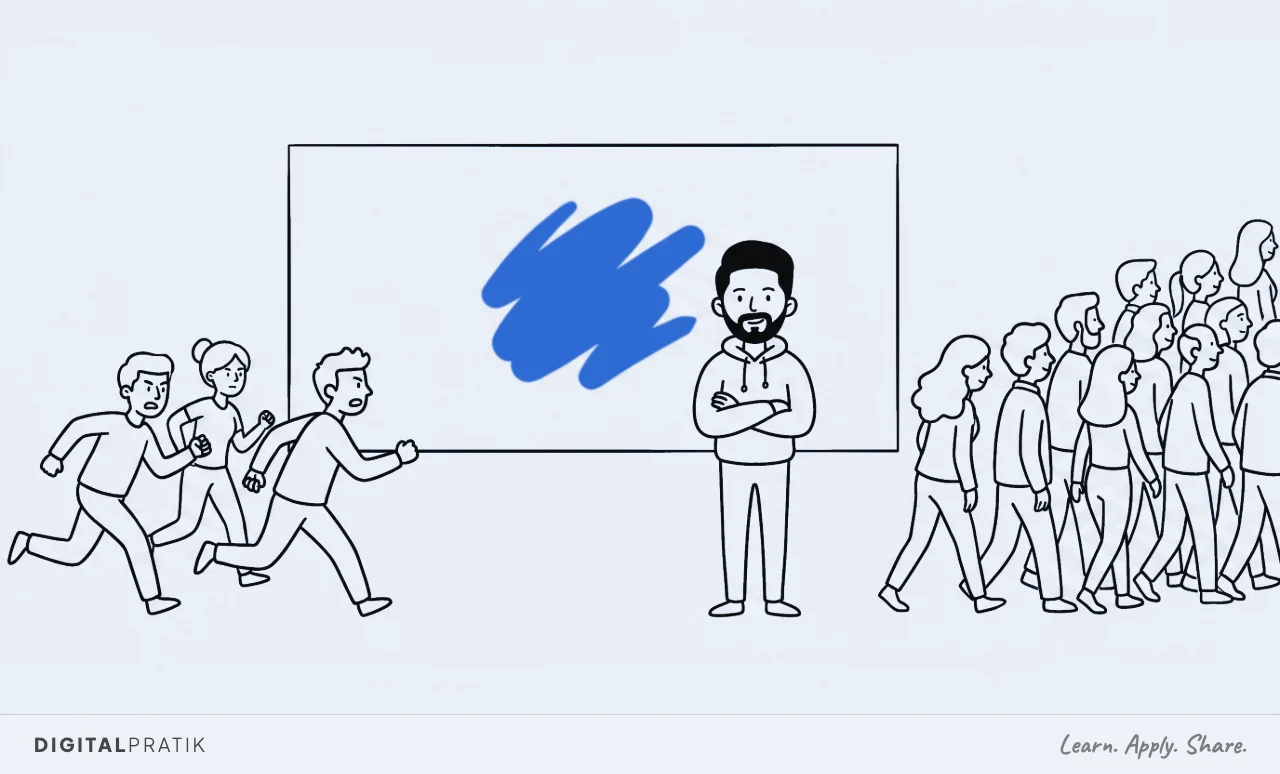
What happens when you name all three
The instinct is to claim all of them, because narrowing feels like turning away money. It reads as claiming none.
A page that says it helps with leads, conversion and operations describes a general business consultancy, and general is the hardest thing in the world to sell. The prospect skims it, recognises nothing of themselves, and leaves.
You did not widen the net, you removed the hook from it.
You can serve the other two later
Naming one problem publicly does not mean refusing work on the others. It means the thing that pulls people in is specific.
In practice a client who arrives for one problem usually turns out to have the next one too, and you solve it once you are inside and trusted. That expansion is where a large share of revenue comes from.
But it is expansion, not positioning, and confusing the two is what produces a homepage nobody responds to.
A quick way to test your claim
Read your current headline out loud and ask whether a competitor could put their name on it unchanged.
If they could, it is not a claim, it is a category description. Anything true of everyone in your market is doing no work for you at all, however well written it sounds.
The version worth keeping is the one that would be slightly awkward for a competitor to copy because it commits to something specific.
Why the funnel comes after this
A funnel is a machine for delivering one message to the right person repeatedly. If the message is not settled, you are building a machine to deliver vagueness at scale, efficiently.
Decide the problem, write the specific claim, and only then build the pages and the ads around it. Doing it the other way is how people end up with a beautiful funnel that everyone compliments and nobody buys from.
Pick one problem. Wear it openly.
The other two can wait until this one is working.
Frequently asked questions
Acquisition, meaning not enough new clients. Conversion, meaning enquiries that never become customers. Capacity, meaning the business cannot deliver what it already has without the owner doing everything. Every market has a hundred problems, but these three are the ones people hand over money for repeatedly without needing convincing.
Read the first messages from your last ten paying clients and sort them into the three categories by the words they used. The biggest pile is the business you are actually in, which is frequently not the business your website claims. Your market picks this for you rather than the other way round.
Because the demand and the traffic already exist and have already been paid for. You are not creating anything new, you are stopping a leak in a system that is otherwise working, which means results appear quickly and the cost of producing them is low.
Because solving it removes work rather than adding it. The same customer will move from a modest service to a substantial retainer in one conversation when you take the operational load off them, and that increase comes from removing more rather than charging more.
Specific enough that a prospect could argue with it. Saying you help people close more could be said by anyone about anything and therefore registers as nothing, while naming the mechanism and a defined outcome in a defined window lets the right person recognise their own situation immediately.
Install this in your business
An article gives you the map. A working session gives you the system, built around what you actually sell and who actually buys it.