
Market Sophistication: Why the Same Promise Stops Working
 Digital PratikGrowth Marketing Consultant
 Market sophistication is how tired your market already is of the promise you are about to make, and it moves through five stages.
Stage one you are first and the plain claim works.
Stage two you add specificity.
Stage three you introduce a mechanism.
Stage four you attach an identity.
Unless you understand which stage you are in, you will never stand out, unless your product is genuinely extraordinary.
Everybody wants to know how to stand out. The honest answer is that you cannot answer that question in the abstract, because it depends entirely on what your market has already heard, and most people have never assessed that.
Stage one: nobody has heard this before
You are first. The plain claim works, and it works easily.
Think of the first time anyone ever saw bottled water for sale. You were drinking from a tap, or at home, and here is water in a bottle that you can buy.
What is that? Instant curiosity, no persuasion required, because there is no sophistication in the market at all.
Twenty years ago, a health coach saying "lose weight" would have had people queuing up. Just those two words.
That was a stage one market.
Stage two: everyone says it, so get specific
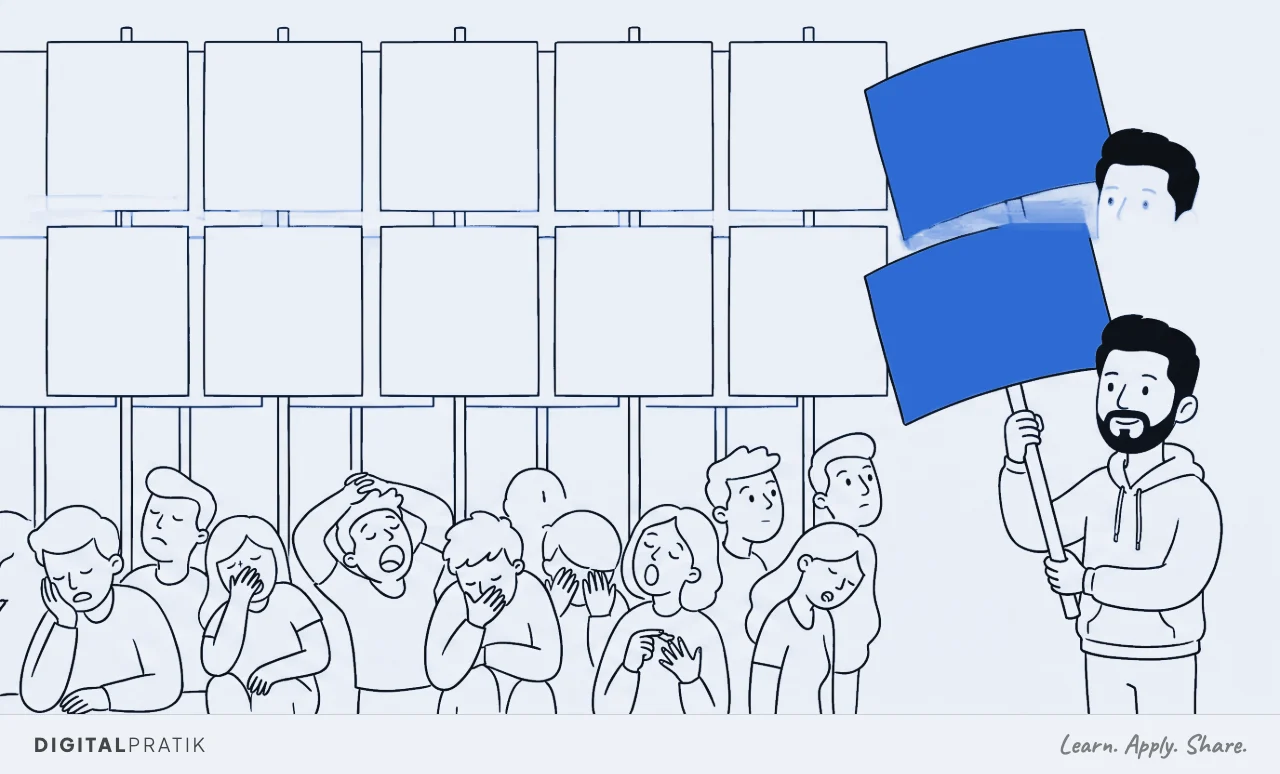
Now imagine ten more health coaches arrive in your city and every one of them says "lose weight". The words stop landing.
Today when you hear "lose weight", what actually happens in your head is: I know, that means dieting and the gym, and it is not happening in thirty days regardless of what the ad says. You have become sophisticated about the promise itself.
So somebody says "lose five kilos in thirty days" instead. A number and a timeframe.
It immediately stands out against a wall of "lose weight", because it is a claim you can hold them to.
Stage three: introduce a mechanism
Then fifty people say "lose five kilos in thirty days", and specificity stops being special.
So somebody smarter arrives and says "this simple technique helped me lose three inches off my waist". Look at what changed.
We are still fundamentally at lose weight. But there is now a mechanism in the message, and the mechanism is what grabs attention, because it implies a route that is not the route that already failed you.
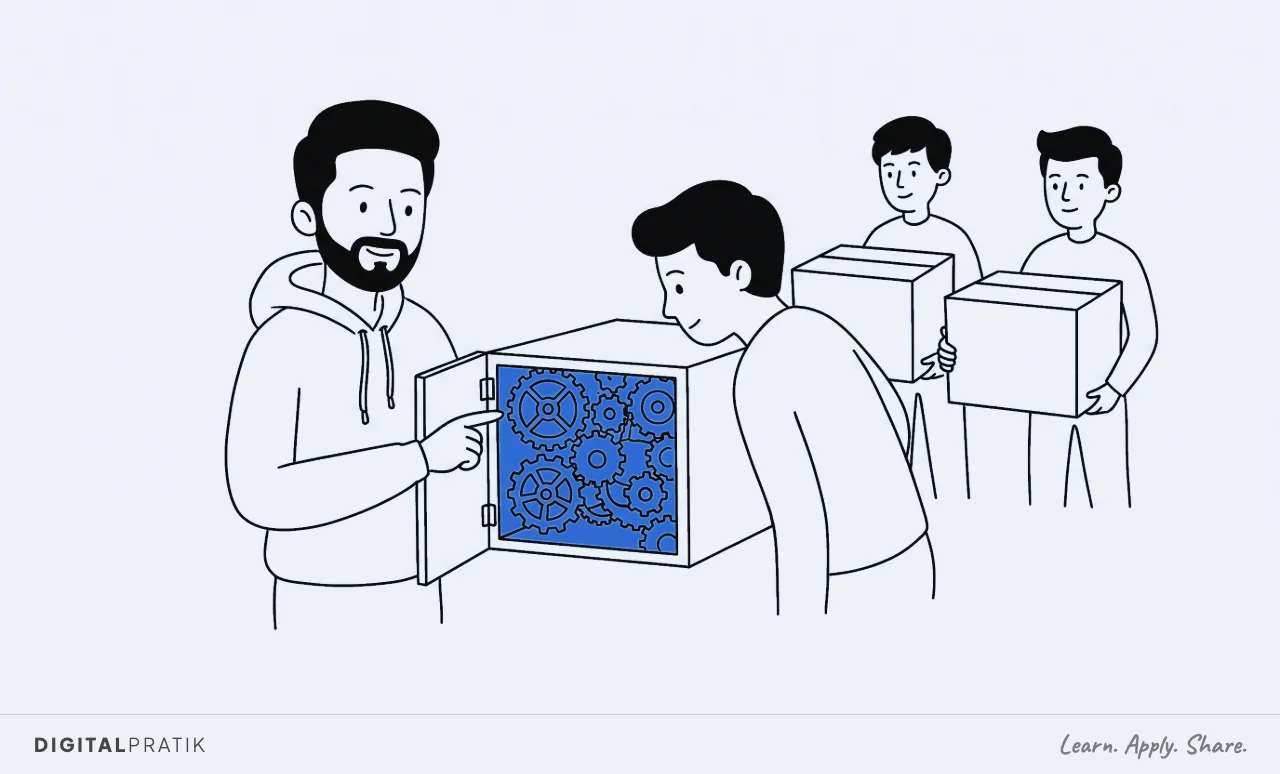
Mechanism is the most important word in this entire framework. Most markets you will ever advertise in are sitting at stage three, which means a promise without a mechanism has almost no chance.
I will grade my own marketing on this
It is easier to see when someone applies it to themselves, so here is mine.
| Stage | What I could have said | Result |
|---|---|---|
| 1 | "Create ads" | Nobody buys |
| 2 | "How to create Facebook ads that convert" | A bit more specific |
| 3 | "How to scale your ad campaigns using our framework and creative workflow" | A named mechanism plus an outcome |
If I had run the first one, not a single person would have turned up. Same event, same content, same person teaching.
The only difference is where the message sat relative to what the market had already heard.
Reading about a system and running one are different jobs. If your business does AED 10 million a year or more, this is what a working session looks like.
Stage four: you need an identity
Now everyone has a mechanism, because everyone learned this. What is left is who it is for.
Take hoodies. "I sell hoodies" is generic and it is stage one language in a stage four market.
"I sell hoodies for gym goers, cut so they actually show the shape you worked for" is an identity. Same product.
The second one belongs to somebody.
Identity in the messaging is a genuinely powerful move and it is where most good positioning ends up. It is also where people take a wrong turn, which I have written about separately in why I tell people not to take a niche.
Naming who a message is for and restricting your entire business to a category are two different decisions, and they get confused constantly.
How to work out your stage
Look at what your closest five competitors say in their ads, then be honest about it.
- Nobody is making this claim at all. Stage one. Say the plain thing and go fast, because it will not last.
- Everyone makes the claim, nobody quantifies it. Stage two. Add the number and the timeframe.
- Everyone quantifies it. Stage three. You need a mechanism, and results behind it.
- Everyone has a mechanism. Stage four. Attach an identity.
Most people reading this are in a stage three or four market and are writing stage one copy. That gap is the whole reason their ads feel invisible.
Why this matters more than your creative
You can have a beautifully produced ad, a strong hook and a good offer, and still be ignored, because the promise you made was one the market stopped hearing three years ago.
That is not a creative problem and no amount of creative volume solves it. It is a positioning problem, and it gets solved before anyone opens a design tool.
Where it fits with everything else
Sophistication tells you how hard you have to work to be heard. Awareness tells you what the person already knows.
You need both, and they answer different questions.
A stage three market full of unaware people needs a mechanism explained gently. A stage one market full of most-aware people just needs the offer.
Same business, opposite messaging, and the only way to know which you are in is to look rather than assume.
Credit where it belongs, same as with the awareness levels. Both frameworks come from Eugene Schwartz and Breakthrough Advertising.
He is the original on this and I have learned a lot from that book. What is on this page is my working version of it, sharpened on live accounts rather than lifted from the text, and if you want the original it is worth owning even though it is a dense read.
Frequently asked questions
It is how tired your market already is of the promise you are about to make. It moves through five stages, from nobody having heard the claim to everybody having heard it with a mechanism attached, and your stage decides what you are allowed to say.
Stage one you are first and the plain claim works. Stage two everyone makes the claim so you add specificity, a number and a timeframe. Stage three everyone is specific so you introduce a mechanism. Stage four everyone has a mechanism so you attach an identity.
A named route to the outcome that is not the route that already failed people. "Lose weight" is a promise. "This simple technique that took three inches off my waist" is a mechanism. You cannot invent one without your own results behind it, because it is a claim about how you specifically get the result.
Read what your five closest competitors say in their ads. If nobody makes the claim, you are at stage one. If everyone makes it but nobody quantifies it, stage two. If everyone quantifies it, stage three. If everyone has a mechanism, stage four. Most people are in a stage three market writing stage one copy.
Often because the promise is one the market stopped hearing years ago. That is a positioning problem rather than a creative one, and no amount of production value or creative volume fixes it. It gets solved before anyone opens a design tool.
Install this in your business
An article gives you the map. A working session gives you the system, built around what you actually sell and who actually buys it.