
The Lead Magnet That Attracts Buyers, Not Freebie Seekers
 Digital PratikGrowth Marketing Consultant
 A lead magnet that attracts buyers is useful to your ideal client and useless to everybody else, on purpose.
It solves one specific problem rather than covering a broad topic, it delivers a real quick win so your paid work has credibility, and it opens a gap that your core offer fills.
A magnet that anyone would want attracts nobody who pays.
Niche it down until it feels almost too narrow, and that is usually when it starts working.
The story is always the same. Someone offers a free generic guide, a thousand people download it, not one of them ever buys anything, and the conclusion is that the funnel failed.
The funnel was fine. The magnet was the problem.
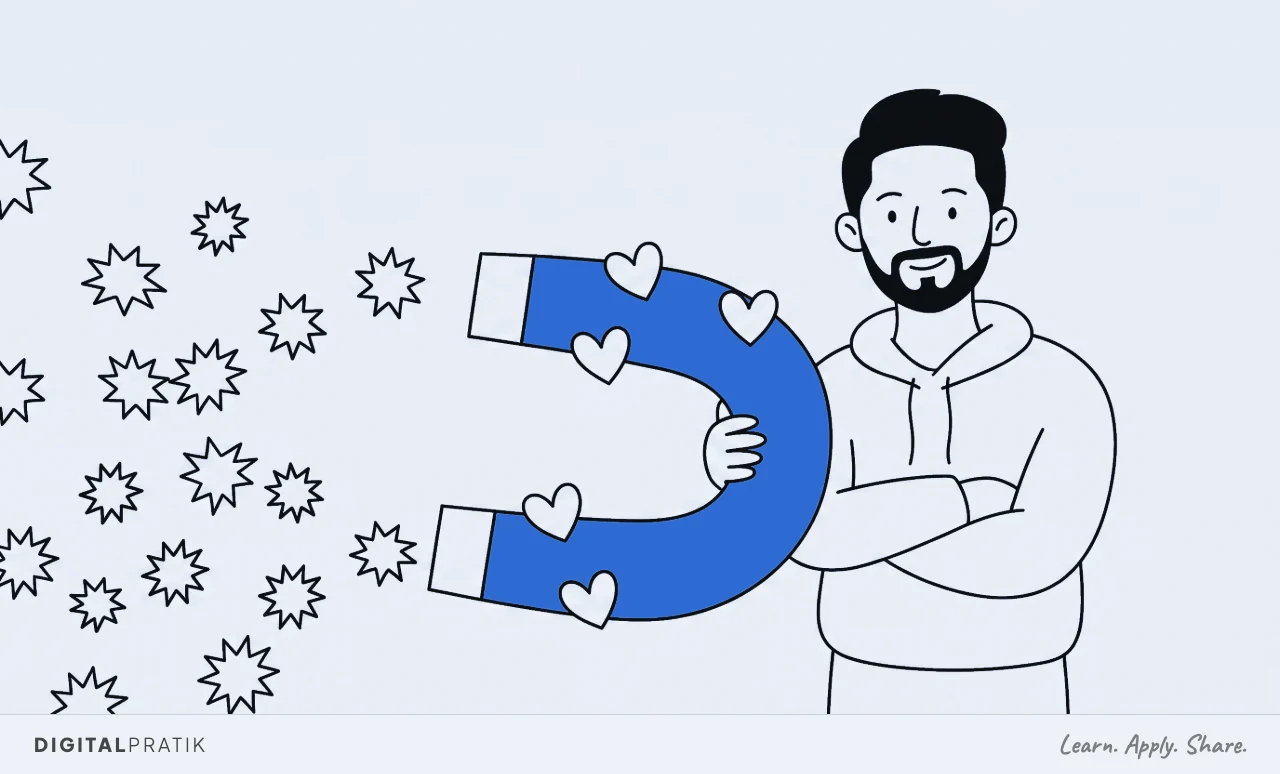
A great lead magnet is not about giving away the most. It is about attracting exactly the right person, and being of no interest whatsoever to everybody else.
Rule one: solve a problem, not a topic
This is the rule that does most of the work. A topic attracts everybody who is curious.
A problem attracts the person who has it right now.
"How to write better ads" is a topic. Everybody who has ever run an ad is mildly interested and none of them are urgently interested.
"The five ad hooks that book discovery calls for coaches" is a problem, and it is a problem that a coach running ads has this week.
Specific magnet, specific buyer. The narrowness is not a cost you pay for quality.
It is the mechanism.
Rule two: deliver a real quick win
The magnet should get somebody one small, real result, quickly. Not a promise of a result.
An actual one, inside a day or two of reading it.
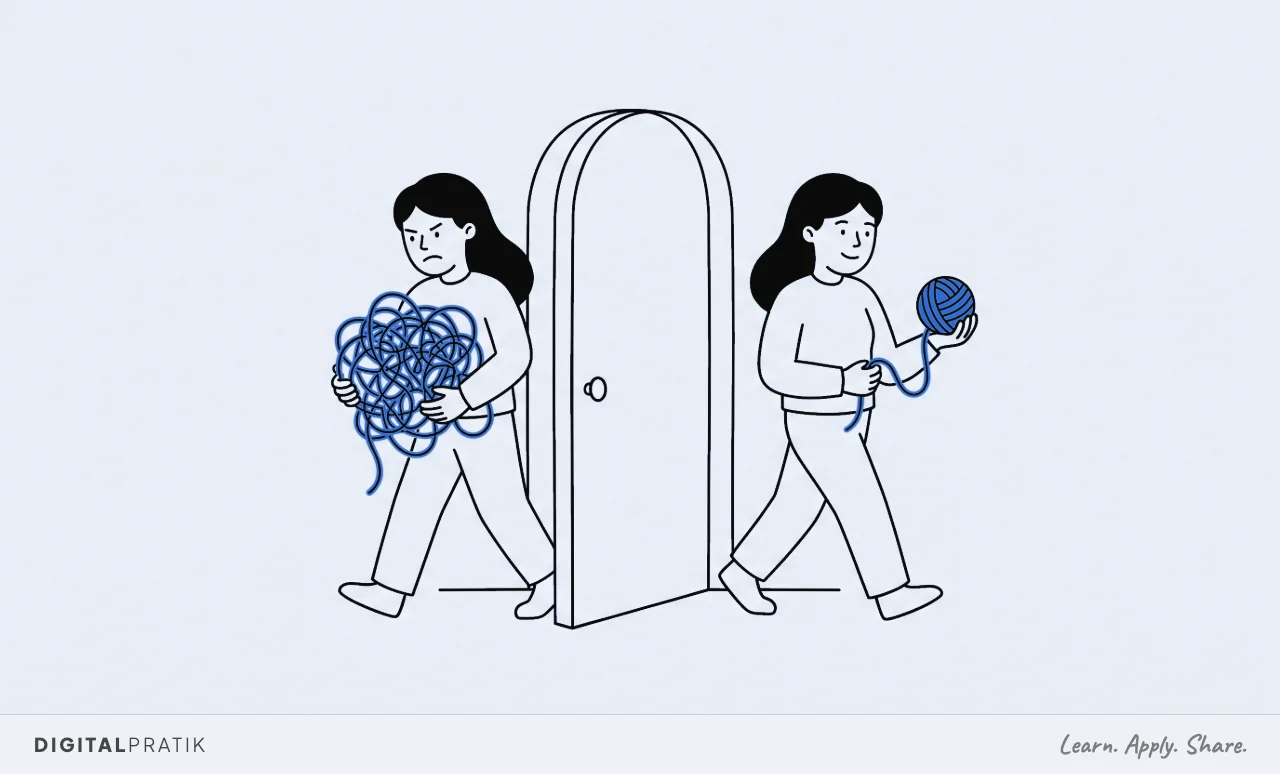
That win is doing something specific: it is proof that you can help with the big result. If the free thing changed nothing, there is no reason to believe the paid thing will change anything either, and no amount of testimonial fixes that.
Rule three: open the gap your offer fills
The best magnets solve one problem completely and, in doing so, expose the next one. They fix the hook and discover the offer underneath it is weak.
They get the leads and discover the follow-up is not there.
That is not a trick. It is what genuinely happens when somebody moves forward: the next constraint becomes visible.
Your job is to be standing at the next constraint with an answer, rather than sending them off to discover it alone.
If the magnet solves nothing, no gap opens. If it solves everything, no gap opens either.
One rung at a time.
Why treating it as charity backfires
The instinct to give away as much as possible comes from a good place and it produces a list of people who like free things. That is a real audience.
It is not a pipeline.
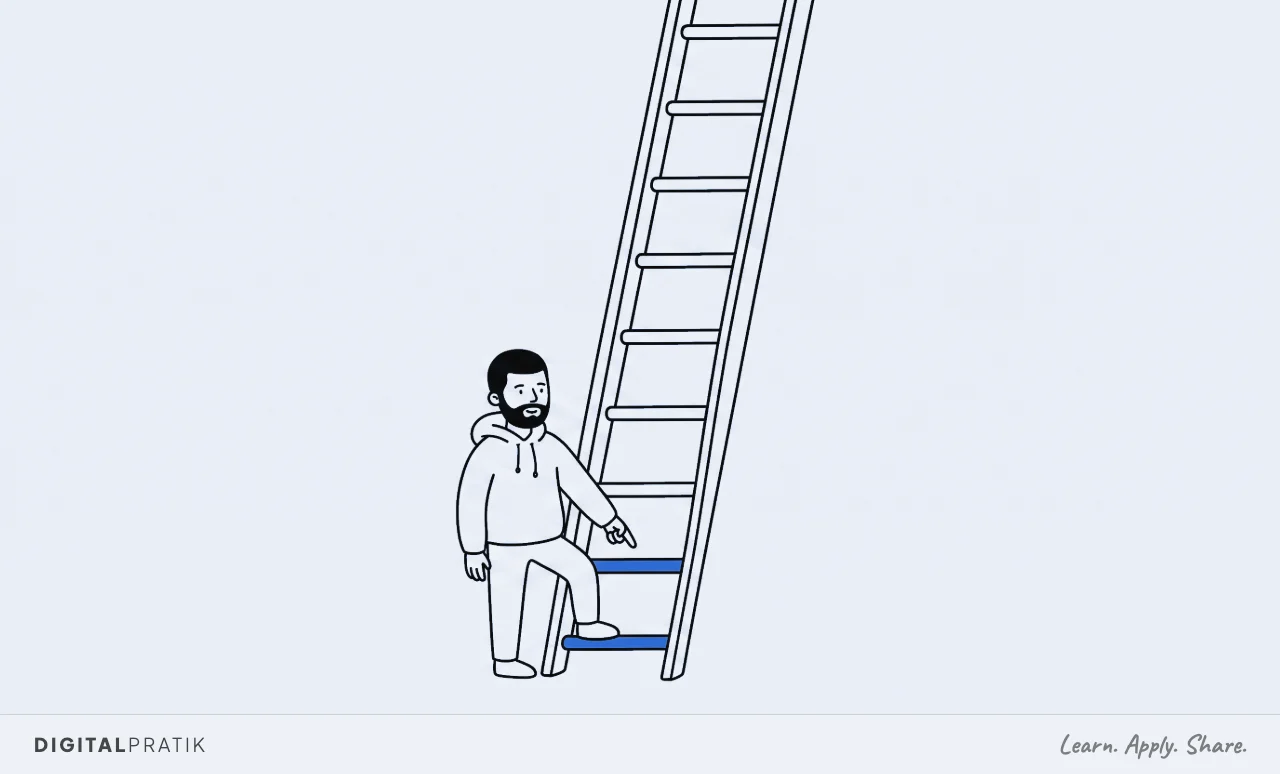
A magnet is the first rung of the ladder and the first filter of your audience, at the same time. Judge it on both.
A thousand downloads and no conversations is not a win with a lag on it. It is a filter that was set to let everybody through.
Reading about a system and running one are different jobs. If your business does AED 10 million a year or more, this is what a working session looks like.
Repelling people is a feature
This is the part that feels wrong to write down. You want a meaningful number of people to look at your magnet and think, that is not for me.
If nobody is scrolling past, the promise is too general to be doing any sorting. The right ones raise their hand precisely because the wrong ones did not.
You cannot have the first without the second.
Where the magnet should come from
From something you genuinely already do, not from a brainstorm about what people might want. The proof has to exist before the asset is built out of it, or the whole thing reads as invented, because it was.
Turning one real process into a lead magnet is the practical build: record yourself doing the thing once, then expand that recording into the asset. This article is about who it should be aimed at.
That one is about how to make it.
Format matters much less than you think
People spend weeks choosing between a PDF, a video, a template, a checklist, a mini course. The format is close to irrelevant next to the promise on the front of it.
What the format should do is get somebody to the win in the shortest possible time. If the fastest route to the result is a one-page checklist, make a one-page checklist and stop apologising for it being short.
Length is a proxy for effort, and nobody is buying your effort.
The only real format rule is that it should be the thing the buyer would have built for themselves if they had the time. A template beats an explanation.
A worked example beats a theory. A recording of you doing the real thing beats a summary of how it is generally done.
It is one rung, not the whole ladder
A magnet that tries to do the whole job creates a person who feels finished. That is a strange kind of failure: you helped, and there is nowhere for the relationship to go next.
Think of it as the free rung at the bottom of a ladder. Its job is to be genuinely worth having and to make the next rung obvious.
If somebody reads it and thinks "that worked, what else is broken", you built the right thing.
How narrow is too narrow
In practice, almost nobody overshoots. The failure is nearly always the other direction, so if you are unsure, go narrower.
Name the exact person, the exact problem and the exact quick win, and then read it back. If it sounds like it would only appeal to a few hundred people in the world, and those few hundred people are the ones you want as clients, it is correct.
What to check before you promote it
- Can you name the one person it is for? Not a segment. A person, with a job and a problem.
- What is measurably different for them in 48 hours? If nothing, it is content, not a magnet.
- What gap does it open? If none, there is nothing to sell next.
- Who does it repel? If nobody, it is not sorting anyone.
- Does the proof behind it already exist? If you invented it for the magnet, it will read that way.
And once it is working, the people it attracts should land somewhere that keeps qualifying them rather than just adding them to a list. That is what the application funnel is for.
Frequently asked questions
Specificity. A magnet aimed at a narrow person with a narrow problem attracts people who have that problem right now, and those people are much closer to buying. A broad, generic giveaway attracts everybody who is curious, and curiosity does not convert. The magnet should be useful to a buyer and genuinely useless to a tire kicker.
It should give away a complete solution to one small problem, which often means giving away something good. What it should not do is try to solve everything, because then no gap remains for your paid work to fill. Solve one rung of the ladder properly, and let the next constraint become visible on its own.
Short enough that somebody finishes it and gets a result within a day or two. Length is not the measure of value here, speed to a first win is. A two-page checklist that changes something beats a forty-page ebook that gets downloaded and never opened.
Not on its own. A high download count with no conversations usually means the filter was set to let everybody through. Judge a magnet on the quality of the conversations it starts, not on the size of the list it builds. Fewer, better-fitting downloads is the intended result.
They should get the promised quick win first, without being sold to immediately. Then the next step should be obvious and small. The strongest pattern is to let the magnet expose the next problem, and to have the path to a conversation about that problem sitting right there when they notice it.
Install this in your business
An article gives you the map. A working session gives you the system, built around what you actually sell and who actually buys it.