
Creative Is the New Targeting: Why Media Buying Skill Collapsed to Near Zero
 Digital PratikGrowth Marketing Consultant
 Creative is the new targeting means the ad itself now does the job audience settings used to do.
You are not telling the platform who to find.
You are making an ad so specific to one kind of person that the platform works out who they are from who responds.
The scarce skill moved from media buying, which is now close to a commodity, to creative strategy: knowing which cohorts exist and what they actually say.
For about a decade, the valuable person in a paid ads team was the one who knew the account. They knew which interest stacks worked, how to build a lookalike ladder, when to consolidate and when to split.
That knowledge was worth real money because the platform genuinely needed the help.
That person is now much less valuable, and everyone in the industry knows it even if they are not saying it out loud yet. I told my own creative strategist this directly on a call: you are no longer an organic creative strategist, you are actually a creative strategist, because that is where the scarce skill went.
What the phrase actually means
Creative is the new targeting is not a slogan about making prettier ads. It is a description of a mechanism.
When you write an ad that opens with "if you are a video editor using Premiere Pro", you have targeted video editors who use Premiere Pro. Not through a settings panel.
Through the sentence. The people who are not video editors scroll past and give the platform a signal.
The ones who stop give it a much stronger signal. Within a day or two the platform has a better model of who this ad is for than any interest stack you could have built.
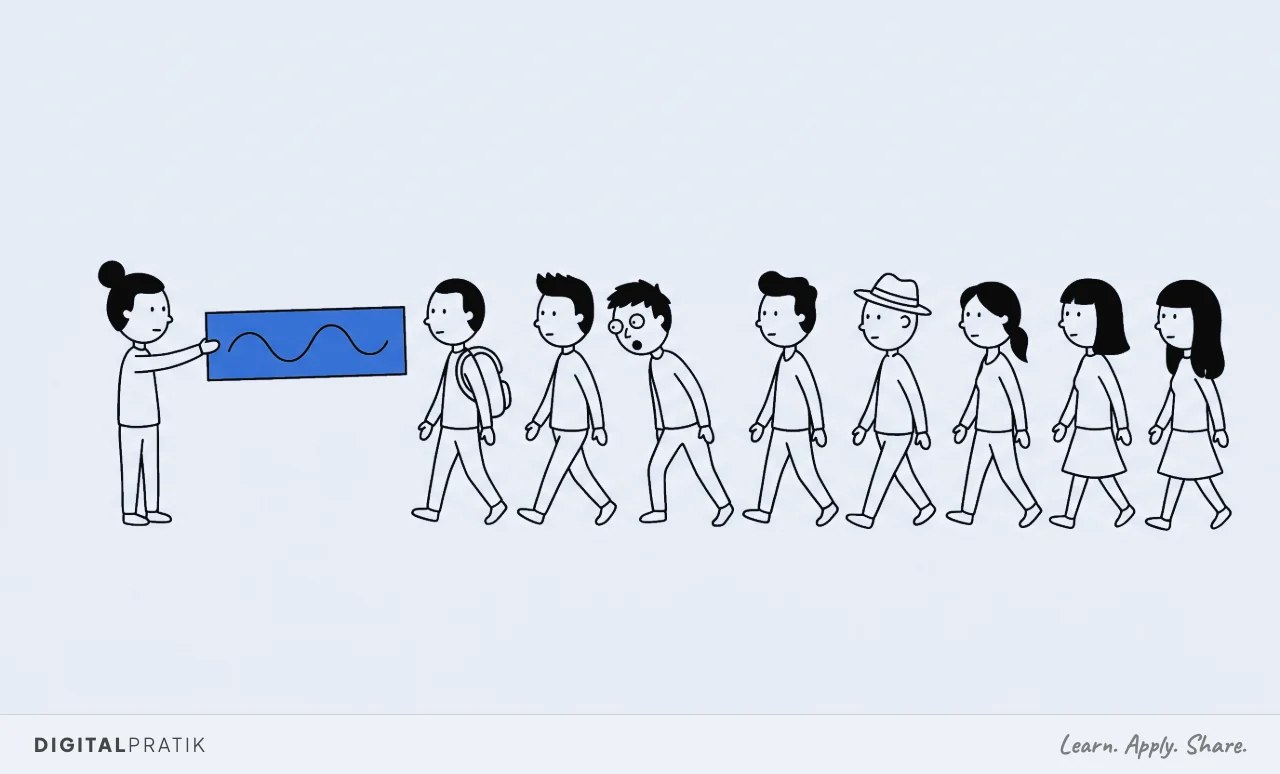
The ad is the targeting instrument. That is the whole idea, and once you see it you cannot unsee it in your own account.
Why the platform stopped needing your help
Two things happened at once. The delivery systems got substantially better at prediction, and the signal available from a narrowed audience got worse relative to the signal available from response.
Feeding a very good prediction system a hand-built audience is like giving detailed driving directions to someone who has already been to the address a thousand times.
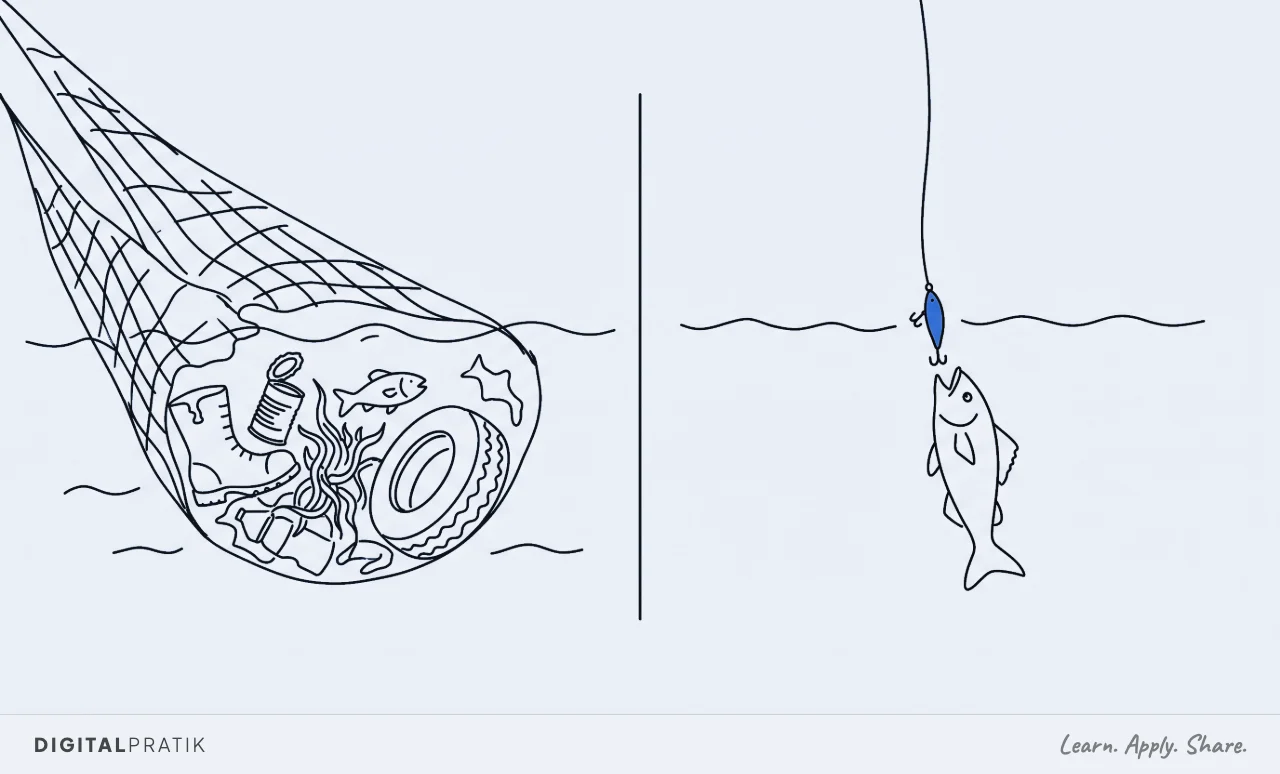
Worse, a narrow audience actively costs you. Every constraint you add removes people the system would have found.
In a small service business account that can be the difference between finding your buyer and running out of audience in three weeks.
There is a trap here that I want to name, because it is the single most common reason people try this and decide it is nonsense. Broad targeting and cohort-specific creative are one move, not two.
They are halves of the same thing.
Go broad while still running two or three general creatives and you have made your account worse, not better. You have removed the only steering you had and replaced it with nothing.
That genuinely performs worse than the old detailed targeting did, and the people who report exactly that are usually telling the truth about what they did.
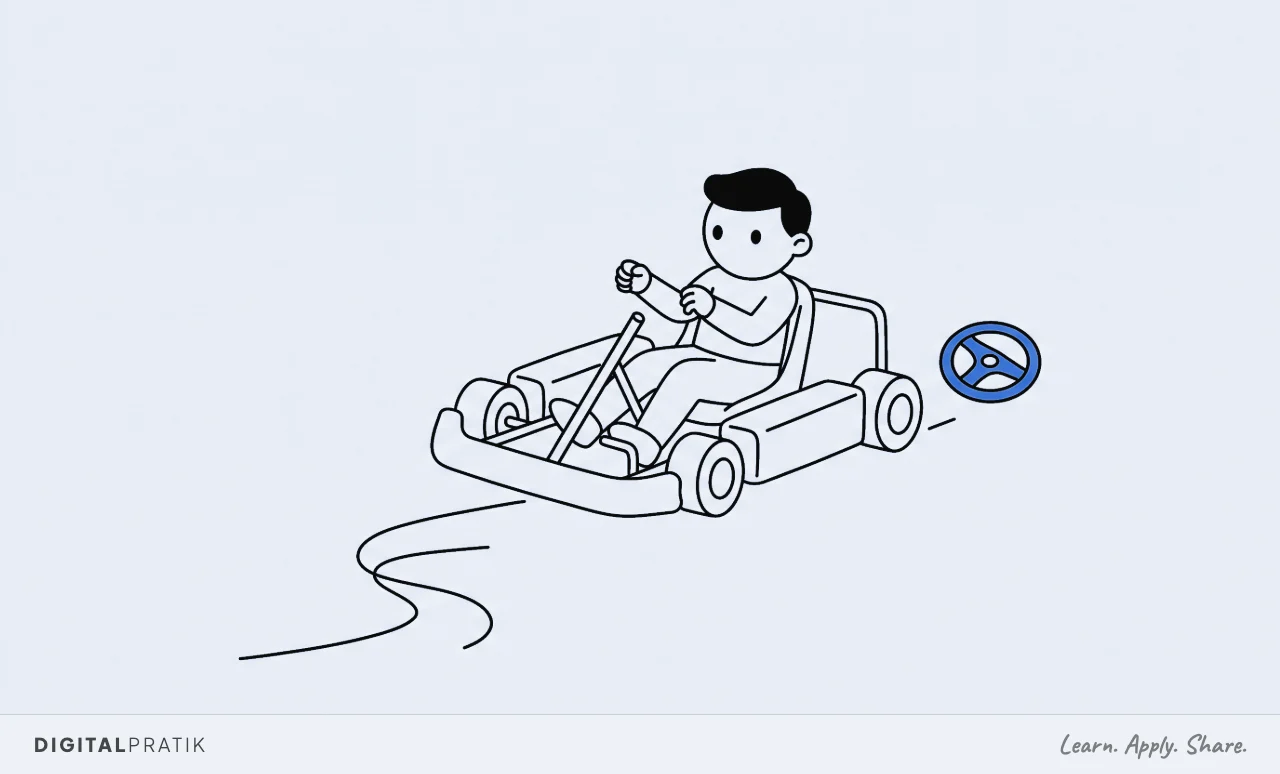
Go broad with ten or fifteen creatives that each name a specific kind of person, and the steering comes back, except now it lives in the copy where it belongs. The full comparison is in broad versus detailed targeting.
What replaces it
The work moves to three questions, and none of them are answered inside the ads manager.
- Which cohorts actually exist in my market? Not personas invented in a workshop. Real groups with real distinct situations.
- What does each cohort say about their problem, in their own words? Their words, not your category words.
- What is the one variable I change to move from one cohort to the next? Usually a role, a tool, a life stage or a specific symptom.
A cohort is not a demographic
This is the part that gets skipped, and skipping it is why a lot of people try cohort creative and conclude it does not work. They read "cohort" and hear "age and gender and city".
That is not what a cohort is.
A cohort is a person, at a particular awareness level, at a particular moment. All three parts matter.
Someone seeing your ad at eight in the evening while they are having dinner with their family is not in the same state as the same person an hour later. And the number of times they have already run into you changes them again.
Three touchpoints in and they are a different person from the one who has never heard your name.
So the same human being can belong to three different cohorts depending on when the ad reaches them and how much of you they have already seen. Demographics cannot express that.
Awareness can. I have written the five levels up properly in the awareness levels article, and they sit underneath everything on this page.
The default failure is assuming the viewer is further down the funnel than they actually are. Take a microphone brand.
If every ad says "look at the sound quality, buy this", that message only lands on someone who already knows the brand and already knows they have a sound problem. Almost nobody watching is that person.
The ad is not bad. It is pitched at the wrong level.
The five things you do before you write a line
If the creative carries the targeting, then the research carries the creative. There is no way around it.
When ads are not converting, the cause is almost never the ad account, it is that nobody did the market research the creative was supposed to be built on.
Before I write anything, I want five things on paper. All five are research outputs.
None of them is a creative decision.
- Pain points. The top three to ten pains, written in the words the customer uses, not the words your industry uses.
- Mass desires. The top three to ten things they actually want. This is not the same list as the pains. The absence of a pain is not a desire.
- Benefits and outcomes. What they actually get if they buy. Concrete, not adjectival.
- Market awareness level. Which of the five stages this person is standing in right now. See the awareness levels.
- Market sophistication. How tired this market already is of hearing your promise. See market sophistication.
I know how basic that list looks written down. People sit in the room and wonder what I am lecturing them about.
But this is exactly what is missing in the market. Everyone jumps to hooks and edits and thumbnails, and nobody has done the work that tells them what to say or who to say it to.
There is a distinction sitting underneath all five that is worth naming, because it quietly breaks ads. Babies are the consumers of a diaper.
Parents are the customers. Babies do not shop, do not know the product exists, and cannot be sold to.
Your ad has to know which of the two it is speaking to, because the pain, the desire and the benefit are different for each. That one is worth its own read in consumer versus customer.
A real example of question three
On a client group chat, someone mentioned plantar fasciitis in passing. Not a strategy session, just chat.
That became a cohort angle on the spot: an ad for people whose first step out of bed hurts. One variable, changed.
It cost nothing to find because we were paying attention to a conversation that was already happening.
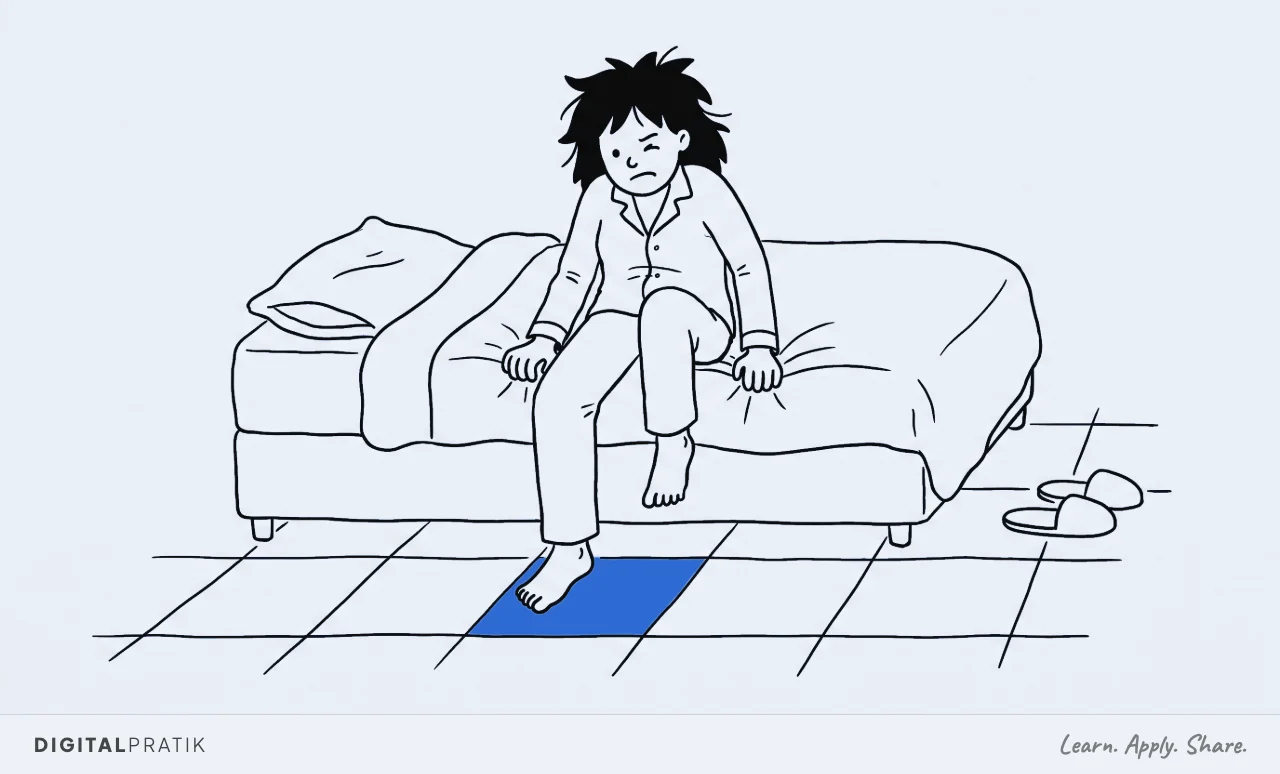
That is what creative strategy actually looks like day to day. It is not a whiteboard exercise.
It is a habit of listening to the exact words people use and then using those words back.
Client group chats are the most underrated source there is, because nobody in them is performing. People describe their problem the way they would to a friend, which is exactly the register a good ad needs.
A strategy meeting produces category language. A casual message produces the sentence you should actually run.
Once you have the phrase, keep the specificity all the way through. "Back pain" is a category.
"At forty-two, recovery stops being about rest and starts being about knowing which muscle stopped doing its job" is a cohort. The second one is longer, narrower, and will out-perform the first, because the person it describes recognises themselves in it and everybody else scrolls past.
Both of those outcomes are useful to you.
Reading about a system and running one are different jobs. If your business does AED 10 million a year or more, this is what a working session looks like.
The volume question
If the creative is the targeting, then creative volume is reach. That reframes what feels like a production burden into what it actually is: coverage.
Fifteen creatives is not fifteen times the work if you build them modularly. It is one recorded body and fifteen short openings, which I break down in the structure article.
And there is a free version of this. Post the fifteen cohort variations as fifteen slides of one carousel on Instagram.
The per-slide engagement data tells you which cohort leans in before you have spent a rupee on ads. That is covered properly in the cohort creative article.
The reason that works is a feature most people never open. Inside a carousel post the insights break engagement down slide by slide, not just for the post as a whole.
Fifteen cohorts on fifteen slides therefore becomes fifteen simultaneous tests, run for free, in front of an audience that already knows you.
Read it with one adjustment. The first slide is always inflated, because everybody sees it whether they meant to or not.
Ignore its absolute number and look for the spikes after it. A cohort that pulls people deeper into a carousel is a cohort that will stop the scroll in a paid feed, and you found that out before spending anything.
This is why I keep saying the organic side and the paid side are not two departments. A winning slide is not a nice piece of content.
It is pre-validated ad creative that has already been tested on real people.
The modular ad: one body, many openings
Here is the structure that makes the volume affordable, and it is the one we run on our own account.
You record one body once. It is the same for everybody, and it is the part that explains what you do and why it works.
Then you swap only the first five to seven seconds for each cohort. That opening is a real, current story about somebody in that cohort.
So one opening might be about a call with the co-founder of a hospitality insurance provider who wanted a CFO dashboard. Another is about a call with the managing director of a company in Dubai who needed the renewals side automated.
Same body underneath. Different first seven seconds.
The rule that makes it work is that the opening story is real and it is recent, pulled from calls that actually happened that week. Never invented.
The moment you fabricate the opening it starts to sound like every other ad, and specificity was the entire point.
What this changes is the economics of testing. A new cohort no longer costs you a new ad.
It costs you one new seven-second opening. That is the difference between testing three angles a month and testing fifteen.
Simple beats produced, again
A consequence people find hard to accept: a plain written-text ad works when the context nails the cohort. A heavily edited emotional video can lose to it.
We have watched this happen in our own accounts, repeatedly, and it is not close when it happens.
The reason is straightforward once you accept the mechanism. Polish signals "this is an ad".
Specificity signals "this is about me". In a feed, the second one wins, because the first thing a person does is decide whether something is for them, and they do it faster than you can show them a nice transition.
| Then | Now | |
|---|---|---|
| Audience | Days of building and layering | Broad. Ten minutes. |
| Structure | Many ad sets, careful budget splits | One campaign, few ad sets |
| Creative | Two or three, made well | Ten to fifteen, made specific |
| Research | Optional | The entire job |
What creative strategy cannot fix
I want to be honest about the limit of all this, because "creative is the new targeting" gets repeated as if creative alone decides everything. It does not.
The real obstacle when you scale is trust. The further you push spend, the colder and more skeptical the people you reach become.
Specificity gets you their attention. It does not get you their belief.
Proof does.
And your promise is not unique. Everybody in your market promises the same outcome, in roughly the same words.
What separates you is whether you can back it up. So when you want to differentiate, the move is to add proof, not to invent a cleverer promise.
Proof is not equally convincing in all forms, and the order runs roughly the same way every time: in person beats virtual, live beats recorded, someone who looks like the prospect beats someone who does not, and the exact outcome they want beats one that is merely nearby. The strongest version is a person who looks like your buyer saying plainly what changed for them.
I have written that out in full in proof beats promise.
The related thing worth saying: you only lose trust when you say something untrue. So let the facts and the client do the talking, and resist the urge to improve the story.
Squeeze the winner before you make another one
When something works, the instinct is to go and make the next new thing. That instinct is expensive and mostly wrong.
Most of your creative effort should go into reskinning what already won, not into fresh concepts. Take your top few percent of ads and treat them as raw material.
Slice the first three seconds off a winner and paste that hook onto everything else you have. Take one strong piece of proof and rebuild it many times over: reordered, recoloured, different headline, different subhead, different opening line, different font.
One winner, used properly, produces far more usable creative than a fresh idea does, and it produces it at a fraction of the cost, because the hard part was already validated. Use and abuse it until it genuinely stops working.
A simple way to divide your effort, in both time and budget: about seventy percent on the main proven thing, about twenty percent on close permutations of it, and about ten percent on genuinely new ideas. Do the seventy first.
Do the ten only if you still have energy left, which some weeks you will not.
| The instinct | The better use | |
|---|---|---|
| Where the time goes | Three brand new concepts | One new concept, many reskins of last month's winner |
| What you learn | Whether three ideas work | Which variable inside a working idea matters |
| Cost of a miss | The whole week | One variant |
| What compounds | Very little | A library of hooks that already earned attention |
How you know it is working
Give a test around ten days before you judge it. Less than that and you are reading noise and calling it a decision.
Then read cost per result by angle, not by ad. For a local service business that is cost per appointment.
The number you care about is which angle is producing outcomes, not which video got views.
Then do the part most people leave out. Hand the winning signal to your organic side.
If the desk-job angle is pulling in paid, go and make more desk-job variations organically. Organic will tell you cheaply which of those variations has life in it, and the winners come back into ads as pre-validated angles.
That is the loop, and once it is turning it does not stop. Paid finds a signal, organic multiplies and filters it for free, paid scales what survived.
Neither side is guessing, because each one is being fed by the other.
The one thing that will quietly break the loop is running every angle at the same awareness level. If all fifteen of your creatives speak to people who are already ready to buy, you will exhaust that pool and watch performance fall off a cliff, and it will look like creative fatigue when it is not.
That is a whole problem of its own, and it is covered in why ads stop working after two weeks.
The credit problem, briefly
I have taught broad targeting plus creative volume for three years. It is only becoming mainstream now, mostly through much bigger accounts than mine saying the same thing.
That is how the industry works and it is not worth being bitter about. But it is worth noticing what it tells you: the ideas that work are usually available well before they are popular, and by the time they are popular the advantage has thinned.
Which means the question worth asking is not "what is everyone doing now". It is "what is the thing that works that everyone is still calling lazy".
What to get good at
If you are running your own ads, get good at listening. Keep a running document of the exact phrases prospects use.
Not summaries. Phrases.
That document is your creative brief for the next year.
If you have a team, promote the person who understands your customers, not the person who understands the interface. The interface knowledge has a shelf life measured in months now.
Customer knowledge compounds.
And if you are hiring for this, I would take courage and speed of execution over a certification every single time. That is not a general life philosophy, it is a specific observation about which people actually ship fifteen creatives in a week.
Frequently asked questions
As a specialist skill it has collapsed in value, yes. The technical work of building audiences and structuring campaigns takes far less expertise than it did, because the platform now does most of that job better than a person can. The strategic work of deciding what the ad says and who it says it to has become the scarce, valuable skill instead.
Identifying the real cohorts in your market, capturing the exact language they use about their problem, and turning each of those into a creative where one variable names that cohort specifically. Most of the work happens outside the ad account, in sales calls, client conversations, comments and reviews.
Only the coarse ones: country, language, and an age band if your service genuinely has one. Everything beyond that tends to remove people the platform would have found for you, which in a small account can exhaust your reach in a few weeks.
It means you should stop assuming production value causes performance. Polish signals that something is an ad, specificity signals that something is about the viewer, and in a feed the second one usually wins. Make a produced ad if you have a reason, not as a default.
Read the first message every prospect ever sent you and group them by the problem they described in their own words. Add anything you overhear in client group chats, comments and reviews. The cohorts are already there in the language, you just have to stop paraphrasing them into your own category words. If you want a cheap way to check your guesses before spending anything, post the variations as slides of a single carousel and read the per-slide engagement, which tells you which cohort leans in.
Install this in your business
An article gives you the map. A working session gives you the system, built around what you actually sell and who actually buys it.