
Hooks: The First Three Seconds That Decide Whether You Spent Money or Wasted It
 Digital PratikGrowth Marketing Consultant
 A hook has exactly one job: stop your ideal customer from scrolling.
Every hook that works does three things at once.
It calls out a specific audience, it implies a benefit, and it creates curiosity.
You can have a great hook with a mediocre ad and still get results.
You cannot get results with a weak hook and a brilliant ad, because nobody reaches the brilliant part.
I spend about eighty percent of my writing time on the hook. Not because the rest does not matter, but because the rest only gets read if the hook works.
It is the most powerful control lever you have when building an ad, and it is the one most people write last, in a hurry, after the interesting work is done.
What a hook is actually for
It is not to explain your offer. It is not to establish credibility.
It is not to be clever. Its only goal is to get the right person to stop, and to let the wrong person keep going.
That second half matters more than people think. A hook that stops everybody is a failure with good numbers.
You will pay for the attention of people who were never going to buy, and your cost per result will quietly tell you about it three weeks later.
The three elements
Every hook that has ever worked well for me has all three of these. Not two.
Three.
- Calls out your ideal audience. The person should recognise themselves in the first few words.
- Implies a benefit. Something they want, or something bad they avoid. Implied is fine, stated is fine, absent is fatal.
- Drives curiosity. An open loop that the rest of the ad closes.
Here is a hook that has spent an enormous amount of money: "Little-known secret about Medicare that could cost you thousands." Look at how it does all three. It calls out people on Medicare.
It implies a benefit, in this case avoiding a loss, which people feel more sharply than a gain. And it opens a loop: what secret?
Another, in a completely different register: "This is for my girlies who need a girl's night soon." Calls out an audience. Implies a benefit that is felt rather than argued.
Opens curiosity: what is this?
Text first, always
The hook is the first thing people see on the creative, which is both the visual and the text. But the text creates the visual, so you always start with the text.
People do this backwards constantly. They design a beautiful image, then write a line to sit on it.
That produces a line constrained by a layout rather than a layout built to deliver a line. Write the sentence that stops the person, then build the visual that carries it.
The three questions before you write
Before putting anything on paper, answer these. They are what turn hook writing from a creative gamble into a process.
- What does my customer actually desire? In their terms, not in my category terms.
- How many things have they already tried before mine? This decides how sceptical they are and therefore how hard you have to work.
- Who is my customer, specifically? Not a demographic. A person in a situation.
That middle question is the one people skip and it changes everything. Someone who has tried nothing needs a simple promise.
Someone who has tried four things needs a reason this one is different, or they will not even register your promise as new information.
Reading about a system and running one are different jobs. If your business does AED 10 million a year or more, this is what a working session looks like.
Three positions you can take
Once you know how much your market has already tried, you have three ways to position the hook.
| Position | Sounds like | |
|---|---|---|
| A | Same mechanism, done better | The approach you already use, without the part that keeps failing |
| B | New mechanism | A different way to get the result you have been chasing |
| C | Call out an identity | For the specific kind of person you are |
A market that has tried nothing responds to A. A market that is tired and sceptical needs B, because A sounds like the thing that already failed them.
C works across both and is the easiest to execute, which is why cohort-specific creative has become so effective.
The conversation in their head
A hook grabs attention based on the conversation people are already having with themselves. You are not starting a conversation.
You are joining one, mid-sentence.
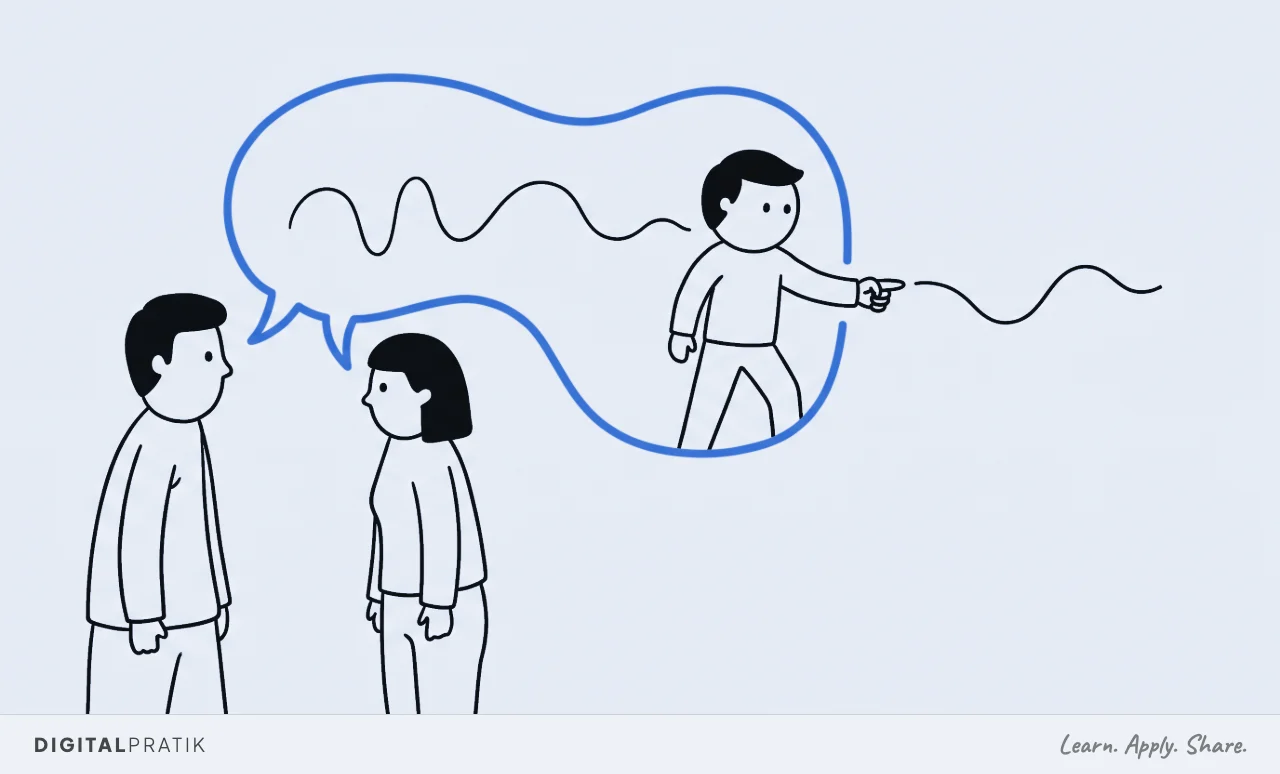
This is why research matters so much and why hook writing is mostly a listening job. If you know that your buyer thinks "I am 42 and I do not recover from anything the way I used to", you can write a hook that sounds like their own thought.
If you do not know that, you will write something about wellness solutions and they will scroll.
A real example from an account we run: "The 40s reality check: at 42, recovery stops being about rest. It becomes about knowing exactly which muscle stopped doing its job, and most people never find out." That is somebody's internal monologue, said out loud.
How to know if it worked
Hook rate. That is the metric that tells you how many people stopped.
It is separate from hold rate, which tells you whether the body kept them.
On a live ad we run for a UAE audience, hook rate sits around 41 percent and hold rate around 17 percent. Those are our numbers on our account, not a benchmark to measure yourself against.
The value is in comparing your own ads to each other: a hook that stops half as many people as your best one is a hook problem, regardless of what anyone else's screenshot says.
Practical habits
Write ten hooks before you like any of them. The first three are always the obvious ones and the obvious ones are what your competitors also wrote.
Keep a running file of the exact phrases prospects use on calls. Not summaries, phrases.
Most of my best hooks are lightly edited quotes from people who did not know they were writing an ad.
And test hooks against each other with everything else held constant. If you change the hook and the visual and the offer at once, you have learned nothing, which is the most common way testing budget disappears.
Cheapest place to test a hook first is organically, before you pay for it.
Frequently asked questions
Three things at once: it calls out a specific audience, it implies a benefit, and it creates curiosity. Missing any one of the three weakens it noticeably. Missing the audience call-out is the most expensive, because it stops people who were never going to buy and you pay for their attention.
Most of it. Roughly eighty percent of the writing time on an ad belongs in the hook, because the rest of the ad only gets read if the hook works. A great hook with a mediocre ad still produces results, while a weak hook with a brilliant ad produces almost nothing.
The hook first, always. The text creates the visual. Designing an image and then writing a line to fit it produces a line constrained by a layout, which is backwards. Write the sentence that stops the right person, then build the visual that carries it.
Hook rate measures how many people stopped on your ad, as distinct from hold rate which measures how many stayed. There is no universal target worth chasing. Compare your own ads to each other: a hook that stops half as many people as your best performing one has a problem, whatever anyone else reports.
Listen to the conversation your buyer is already having with themselves and join it mid-sentence. Keep a file of exact phrases people use on sales calls, not summaries of them. The strongest hooks are usually lightly edited quotes from customers who had no idea they were writing an ad.
Install this in your business
An article gives you the map. A working session gives you the system, built around what you actually sell and who actually buys it.